WasteAid and IOM Launch Groundbreaking Waste-to-Use Pilot in South Sudan
News
Author: Admin
Published: 15 December 2025
In the heart of South Sudan, where communities continue to recover from conflict and flooding, a new initiative is turning one of the region’s greatest challenges into a source of hope. WasteAid, in partnership with the International Organization for Migration (IOM), has launched a pioneering waste-to-use pilot project, funded by the Kingdom of the Netherlands, that will transform waste into livelihoods in Bentiu and Rubkona.
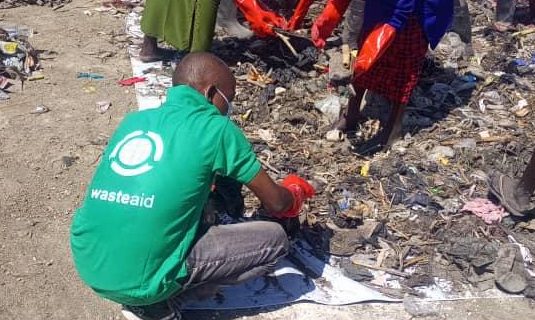
The project builds on a comprehensive waste assessment carried out by WasteAid and IOM in late 2024 across Bentiu and Malakal. That assessment – WasteAid’s first in a humanitarian context – revealed both the scale of waste generation and the potential for circular solutions to drive economic opportunity.
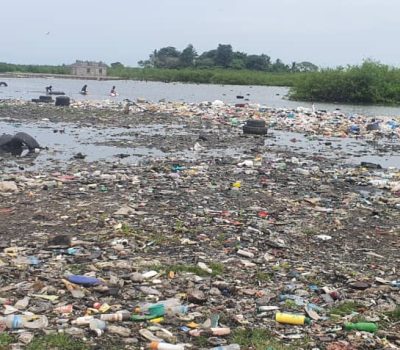
Each month, over 1,800 cubic metres of waste are collected across IOM-supported camps and the Humanitarian Hub which houses UN bodies and INGOs working in the area. Much of this is either biodegradable or recyclable. Without intervention, this waste contributes to pollution and health risks – but with innovation and collaboration, it can become a valuable local resource.
“Across our programmes, we’ve seen how waste can be a catalyst for change,” said Ceris Turner-Bailes, WasteAid CEO. “This pilot is about proving that even in fragile, hard-to-reach environments, circular economy solutions can empower people, protect the environment, and create lasting impact.”
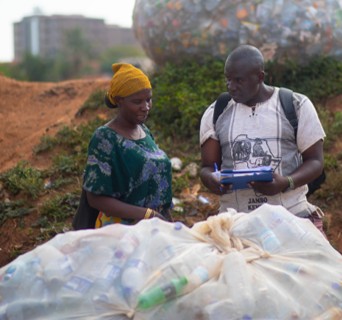
Through the new waste-to-use pilot, WasteAid and IOM will train around 30 participants in waste value techniques, enterprise development and circular business models. The training will prioritise inclusion, ensuring women, young people and those with disabilities play a leading role.
The pilot builds on concepts explored in the earlier research, including the potential to divert organic waste into fuel through IOM’s Sludge2Briquettes initiative and to repurpose plastics into building materials via the Plastic4Bricks project. Participants will gain hands-on experience in these and other locally relevant recycling and reuse activities, testing practical business models that improve sanitation while generating income.
“Managing waste effectively is essential in South Sudan,” said Vijaya Souri, IOM South Sudan Chief of Mission. “This pilot shows how locally adapted approaches can reduce health and environmental risks, support community recovery, and provide meaningful opportunities for displaced and host populations.”
For WasteAid, the collaboration marks a significant step forward, building on its global Wastepreneur® Programme and adapting it to a humanitarian setting for the first time. The pilot will provide essential evidence on how circular economy approaches can be introduced in fragile contexts, offering a model for replication in other displacement settings across South Sudan and beyond.
As WasteAid and IOM move from research to implementation, the partnership is setting an important precedent: that waste can be transformed into opportunity, even in the most complex environments. By linking environmental recovery with skills development and enterprise, this initiative is paving the way for cleaner, more resilient communities and a more circular future for South Sudan.