Beyond the Numbers: The Human Impact of WasteAid’s Work
News
Author: Admin
Published: 7 September 2026
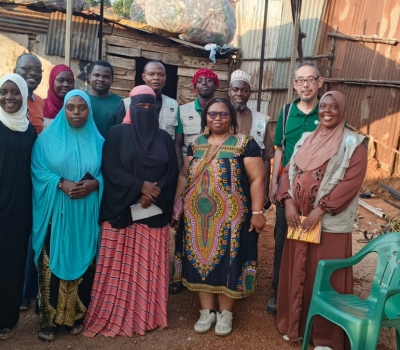
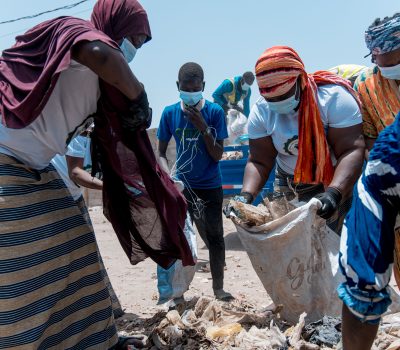
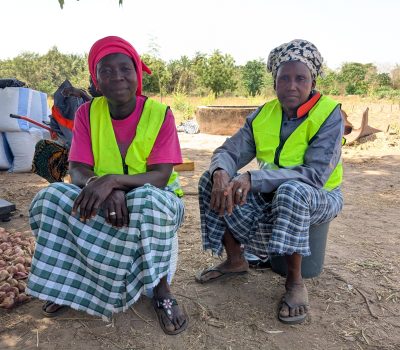
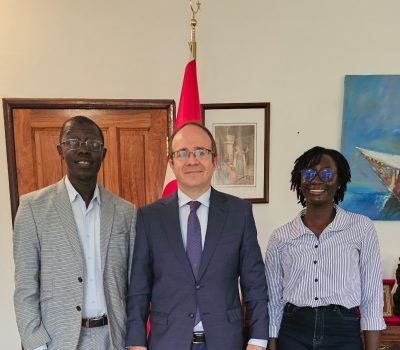
Members of WasteAid’s Gambia team, Lamin Janneh and Jojo Saho, recently investigated what our programmes mean to our individual participants by speaking to members of WasteAid’s plastic collection groups in the Greater Banjul Area. These groups are trained and supported through a generous grant from Veralto.
At WasteAid, we believe that tackling waste can transform lives. While our work reduces landfill sites, improves safe waste collection, prevents plastic pollution, and creates livelihood opportunities through waste management, its greatest impact is felt within the lives of the vulnerable in these communities. From parents being able to afford their children’s education, to providing food security, the benefits extend far beyond cleaner environments. These are the stories at the heart of our work.
In The Gambia, WasteAid’s First Step Resource Management Programme, supported by Veralto, is helping communities establish local systems to collect and recover plastic waste. But behind that relatively simple description is something much more human.
A recent study spoke to 14 people from seven WasteAid-supported waste collector groups. The average person interviewed was supporting a household of 13 people, including nine dependants. Eight of the 14 participants were women. And their experiences show just how far the impact of better waste management can reach.
For Ndey, it means security throughout the year
Ndey Manga, a member of the Sanyang Group, collects plastic alongside oyster harvesting. Oyster harvesting can provide a good income, but it is seasonal. When the season ends, so does that source of money. Plastic waste, by contrast, is there throughout the year. For Ndey, that makes waste collection more than an additional job. It provides another layer of security for her household.
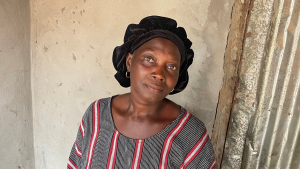 “The plastic waste collection business is more sustainable than oyster harvesting because it provides income throughout the year.”
Her experience is reflected across the groups. People combine plastic collection with informal trading, fish processing, construction, oyster harvesting and small businesses. Many of those income sources are seasonal or irregular. Plastic collection can provide something extremely important alongside them: a more consistent source of income.
And sometimes a relatively small amount makes a surprisingly big difference.
Participants told us that an additional D500–720 a month – around £5–£7 – could meaningfully improve their household finances. That money could contribute towards food, school fees, uniforms and books. It could help meet an unexpected healthcare expense. It could reduce the need to borrow in an emergency or allow a family to put a little money aside.
One participant described the security of receiving that income very simply:
“Receiving the income feels like having savings when I need them.”
For Mama, it means living somewhere cleaner
The benefits are not only financial. Mama Camara, from the FANDEMA Group, remembers what happened to plastic waste before the programme. It was commonly discarded or burned. WasteAid’s training has helped change her understanding of that waste – and what her community can do with it.
“We now have a cleaner environment. Before, we used to burn plastics, but since this project started, we are much more aware of the dangers of plastic waste.”
That is an important part of the human impact of waste management too.
Globally, one in three people has no waste collection service, leaving many communities with little alternative but to dump or burn their waste. WasteAid works with communities, waste collectors and local authorities to create practical collection and recycling systems where they are needed.
For the people living there, success is not an abstract environmental outcome. It means the place where their children play is cleaner. It means less plastic being burned close to homes. It means people beginning to see discarded material not simply as rubbish, but as something with value.
As another participant told us:
“The project has not just benefited me as an individual, but the community as a whole through a cleaner plastic-free environment.”
For Jim, it means seeing a bigger future
Jim Nyass of the Gomsa Bopa Group is a tailor as well as a plastic waste collector. For him, one of the most important benefits has been knowledge. The training provided through the project has strengthened his technical understanding and given him greater confidence in the potential of the group’s business.
“The knowledge gained through the trainings has greatly benefited us.”
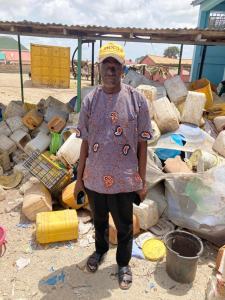 Jim can already see what could come next. With more equipment and suitable workspace, he believes the group could increase its productivity and create further employment. That is when the impact begins to multiply.
One person develops skills. A group becomes more productive. A small enterprise grows. More waste acquires a value. More people potentially earn an income. And a community develops more of the knowledge and infrastructure it needs to manage its own resources.
For Ebrima, it means dignity
There is another impact that is harder to measure. Waste collection can carry stigma. Ebrima Bah of the Seneya Group was aware of the negative perceptions associated with the work when he became involved. But he saw something different: an opportunity to earn an honest income while doing something useful for his community.
“This work allows me to support my family while helping keep my community clean.”
That sense of pride appears elsewhere in the participants’ words:
“I am proud that my work contributes to a cleaner environment.”
And:
“Waste has value, and it can improve people’s lives.”
Perhaps those words get closest to what WasteAid’s impact really means. Of course, we need the numbers. We need to know how much waste is collected, how many people are trained and whether the systems we help establish continue to work.
But behind every number is a person.
A parent who can buy school materials. A household with a little more money when an emergency comes. A waste collector proud of the contribution they make. A community where less plastic is burned or dumped. An individual who has gained the skills and confidence to imagine turning waste collection into a growing business. That is the human impact of WasteAid’s work.
We don’t simply see waste as something that needs to disappear.
We see what can happen when people are given the knowledge, tools and opportunity to turn it into something valuable: cleaner communities, stronger livelihoods, greater dignity and a better future built locally.