News
How one community in The Gambia is changing its relationship with plastic
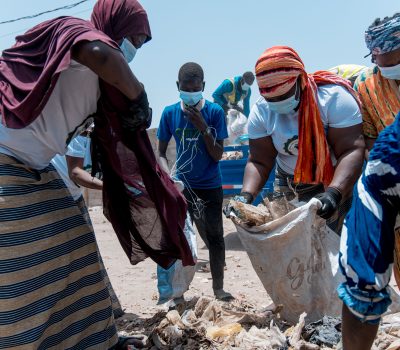
In Bakoteh, a community in the Greater Banjul Area of The Gambia, plastic waste has long been a serious problem. Home to the largest dumpsite in...

In South Africa, disadvantaged rural communities face many challenges caused by poverty and a lack of education, skills, and employment opportunities. The country has the second highest youth unemployment rate in the world at 51.5%, while in the Thembisile Hani municipality of Mpumalanga 49.4% of youth are unemployed, with only 11.7% completing secondary school.
Often, collecting and selling waste is the only way people can make a living. However, picking through toxic waste that clogs the streets, waterways and informal dump sites has a multitude of risks, while the lack of business skills and opportunities limits income generation potential.
A new WasteAid initiative backed by the John Lewis Partnership Foundation will see 100 waste collectors and artisans in rural Mpumalanga given the skills and resources they need to improve their income potential.
WasteAid, a UK-based environmental and development charity has been active in South Africa since 2020 and in 2022 undertook a feasibility study to identify opportunities to reduce plastic waste; launching an education and infrastructure programme to improve livelihoods through waste management.
The new project will expand and replicate WasteAid’s approach in two new rural locations in Mpumalanga, supporting predominantly youth waste pickers and artisans through a bespoke training programme that will equip them with business, waste management, personal development, and upcycling skills and provide basic resources needed to increase their livelihood opportunities.
As well as empowering the waste collectors, artisans, and their families, it is anticipated the programme will positively impact around 21,000 members of the community by reducing the amount of dumped and burned waste, which in turn will improve environmental and health outcomes.
WasteAid will also be working with communities and government institutions including The Department of Agriculture, Rural Development, Land And Environmental Affairs (DARDLEA) and The Thembisile Hani District Municipality to provide educational awareness, establish recycling collection and storage points, and identify markets to sell recyclables and upcycled products; providing an enabling environment for waste pickers.
Ceris Turner-Bailes, CEO of WasteAid, said: “Our project aims to help create dignified and safe livelihoods for young people who lack formal employment opportunities and work as informal waste pickers. Through our interventions, waste pickers will have an opportunity to upskill themselves, generate incomes and benefit both their communities and environments by providing alternative options to harmful dumping and burning practices.”
In informal settlements and underserviced rural communities where waste management is limited or non-existent, approximately 84% of people are forced to dump and burn their waste, while the majority of first-step waste recovery is undertaken by the informal sector. An estimated 90,000+ people live a hand-to-mouth existence as waste-pickers in South Africa. However, waste pickers often live and work in dire conditions and do not receive recognition or support for the valuable work they do.
According to WasteAid’s data, waste reclaimers earn an average of only £55 per month with 70% of those living under the lower-bound poverty line. They experience harsh living conditions including homelessness, food insecurity, lack of formal housing and access to basic services (electricity and water). They operate in dangerous conditions such as mismanaged dumpsites; exposing them to toxic chemicals from burning waste and decomposing organic matter, putting their health and lives at risk. They also lack access to finance, resources, and support to help them elevate their position in life.
By investing in education and support for young people we aim to empower and create meaningful livelihood opportunities that contribute to the economic and social development of disadvantaged communities, whilst addressing the global waste crisis.
The project ultimately contributes to the John Lewis Partnership Foundation’s vision of working in partnership for happier people, happier business, and a happier world.
Nicola Waller, John Lewis Partnership Foundation Chair of Trustees, said: “At the John Lewis Partnership Foundation, we’re excited to be supporting WasteAid to empower vulnerable young people employed in the informal waste picking sector in Mpumalanga, South Africa. By providing waste pickers with technical training and entrepreneurial skills, young people will be able to access improved livelihoods, bringing to life our mission of creating a happier world.”

News
How one community in The Gambia is changing its relationship with plastic
In Bakoteh, a community in the Greater Banjul Area of The Gambia, plastic waste has long been a serious problem. Home to the largest dumpsite in...
News
Women farmers in Kalaji turn organic waste into opportunity through the S-ORGANIC project
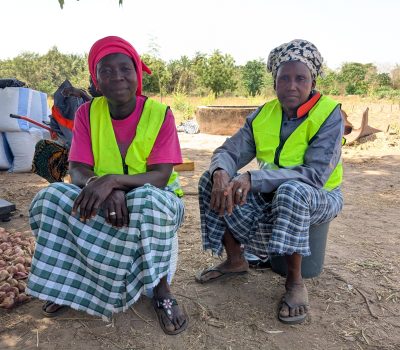
In Kalaji, a group of women farmers is demonstrating how organic waste can become a productive resource — supporting sustainable agriculture, strengthening livelihoods, and...
News
WasteAid and the Turkish Embassy: A New Partnership for Sustainable Change in The Gambia
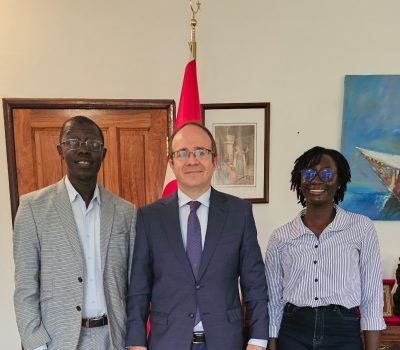
On 12 May 2026, WasteAid’s Director of Programmes and Project Officer met with Turkish Ambassador F. Turker Oba at the Turkish Embassy in The...
News
WasteAid and Kanifing Municipal Council sign MoU to strengthen long-standing partnership on sustainable waste management
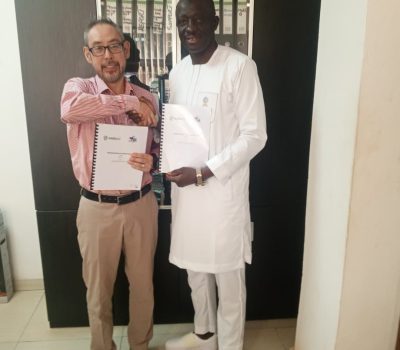
WasteAid and Kanifing Municipal Council have signed a new Memorandum of Understanding (MoU), marking an important milestone in a partnership that has developed over more than a decade. ...
News
Responding to Community Needs: The Commencement of HUBLINK with Halal Waste Group in Uganda
We have a wealth of evidence demonstrating the positive impact of our Wastepreneur programme. A key driver of this success is our proactive approach—identifying and resolving challenges as soon...
News
Strengthening The Gambia’s Circular Economy: Insights from WasteAid’s Stakeholder Engagement
We have huge plans to further strengthen and scale our programmes in the countries we work in, evidenced by our recent expansion of our...
A second initiative to support the development of a formalised approach to waste management in The Gambia has been announced by WasteAid, a UK-based international non-governmental organisation, and the Chartered Institution of Wastes Management (CIWM).
The project, involving senior policymakers and local authority leaders as well as leading entrepreneurs, academics, and community leaders, will see WasteAid and CIWM members share best practices and technical skills. The approach will provide mentoring, technical training, and support to private enterprises and local councils.
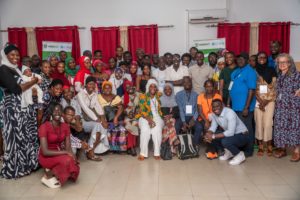
Named by the Gambian project participants as Dennakuwo (which translates as ‘together we can’), it builds on the recently completed and highly successful first phase which established a Circular Economy Network in Greater Banjul. This network was the first of its kind in The Gambia and has brought the issues of circular economy and the need to support local solutions into the spotlight. The second phase of the project will continue to develop the network and deepen ties with CIWM members through knowledge transfer and exchanges on technical issues. This will include support to local authorities through a soon to be established Local Authorities Working Group which will be co-chaired by CIWM and Gambian representatives.
The Circular Economy Network, which now boasts 165 active members, aims to bring together those who can make the circular economy a reality in Banjul. It provides a collaborative forum to explore innovative solutions to local circular economy issues. By providing training and mentoring to members and supporting fledgling green businesses, WasteAid aims to identify and implement practical, circular economy solutions for communities.
Ceris Turner-Bailes, Chief Executive at WasteAid, said: “Our activity in The Gambia is a flagship example of what WasteAid is all about – convening diverse actors to support the transition from linear to circular economies and we are hugely grateful to CIWM for its continued financial and advisory support.
“The first phase of our work in the country enabled us to launch the Circular Economy Network which is already helping to deliver transformative waste initiatives in Greater Banjul. Our partnership with CIWM is helping members of the Circular Economy Network to learn from best practices in the UK and identify steps that they can take to reduce pollution in The Gambia and turn waste into economic opportunities.
“By working together, we are taking a huge step towards a cleaner and healthier future for all in The Gambia. Providing people at all levels of the waste management value chain with training, coaching, and access to targeted funding to deliver innovative and impactful waste management solutions to the people who need help the most.”
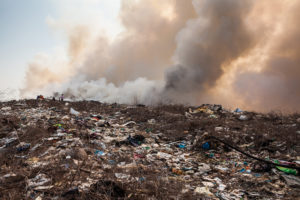
The Gambia is Africa’s smallest mainland country and has very limited waste management capacity often resulting in open dumping and burning of waste. This leads to poor health, economic losses and climate emissions. The challenges have been recognised at both local and national levels as a priority for sustainable development. The Gambia is one of the few countries committed to meeting the Paris Agreement to keep global warming below 1.5C. Alongside reducing climate emissions, the Ministry of Environment is also focused on protecting the country’s natural resources and building resilience to climate shocks such as drought and floods.
CIWM represents and supports over 6,500 individuals and 250 organisations in the resource and waste management sector. It has supported WasteAid’s activity in The Gambia since 2021.
Sarah Poulter, CEO of CIWM, said: “We are proud to have supported WasteAid’s activity in The Gambia since 2021 and are delighted to have the opportunity to expand on the project’s successes so far through this important second phase. There are currently no similar initiatives in the country which makes it even more crucial that we work with people at every level of the waste value chain to help them identify long-term solutions to their waste management challenges.
Resource efficiency is a global social responsibility, and inspiring and enabling action worldwide is a key aspect of CIWM’s strategy. Our purpose is to move the world beyond waste, and the collaboration and innovation facilitated by international initiatives such as the Circular Economy Network in Greater Banjul are vital to achieving this.”
While this project firmly connects key players from within the waste value chain to create an enabling environment so that the circular economy can flourish, WasteAid remains committed to reaching out to some of the poorest and most marginalised to offering training, mentoring, and a small amount of investment to help them improve their income potential. The project with CIWM will offer 25 vulnerable women guidance on turning food waste into compost, creating agri-products and deriving income from these activities.
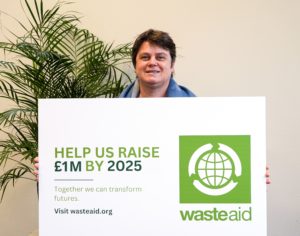
News of the partnership follows the launch of a major fundraising campaign by WasteAid to raise £1 million before its 10th anniversary in 2025. The money raised will be used toward continuing existing projects and expanding the charity’s support to more communities around the globe.
The charity helps communities around the globe who are negatively affected by the global waste crisis to reduce waste pollution. Through its collaborative approach with local authorities, businesses, and community leaders, WasteAid delivers targeted, impactful programmes that support a local circular economy, and provide livelihood opportunities, training and skills for its programme participants, while also investing in locally appropriate infrastructure.
It is committed to supporting the informal sector – which is often among the most marginalised – and showcasing how a circular economy benefits everybody. Its response is always practical, locally appropriate, and focused on delivering lasting sustainable change. WasteAid’s whole-systems approach combines community behaviour change programmes, household collection infrastructure, and supporting collector groups, right through to identifying end-market solutions for waste.
News
How one community in The Gambia is changing its relationship with plastic
In Bakoteh, a community in the Greater Banjul Area of The Gambia, plastic waste has long been a serious problem. Home to the largest dumpsite in...
News
Women farmers in Kalaji turn organic waste into opportunity through the S-ORGANIC project
In Kalaji, a group of women farmers is demonstrating how organic waste can become a productive resource — supporting sustainable agriculture, strengthening livelihoods, and...
News
WasteAid and the Turkish Embassy: A New Partnership for Sustainable Change in The Gambia
On 12 May 2026, WasteAid’s Director of Programmes and Project Officer met with Turkish Ambassador F. Turker Oba at the Turkish Embassy in The...
News
WasteAid and Kanifing Municipal Council sign MoU to strengthen long-standing partnership on sustainable waste management
WasteAid and Kanifing Municipal Council have signed a new Memorandum of Understanding (MoU), marking an important milestone in a partnership that has developed over more than a decade. ...
News
Responding to Community Needs: The Commencement of HUBLINK with Halal Waste Group in Uganda
We have a wealth of evidence demonstrating the positive impact of our Wastepreneur programme. A key driver of this success is our proactive approach—identifying and resolving challenges as soon...
News
Strengthening The Gambia’s Circular Economy: Insights from WasteAid’s Stakeholder Engagement
We have huge plans to further strengthen and scale our programmes in the countries we work in, evidenced by our recent expansion of our...
We are taking part in this year’s Big Give Christmas Challenge. It’s the UK’s biggest match-funded campaign and will enable us to double the value of your donations meaning your support will have twice the impact!
The week-long challenge runs from Tuesday 28 November until Tuesday 5 December and, with the help of our supporters, we aim to raise £10,000. The total raised will then be doubled by match-funding from our corporate supporter Beyondly and our Big Give champion funders, Mike and Helen Brown. In April, we participated in the Big Give’s Green Matching Appeal where we raised a fantastic match-funded total of £10,000 in one week – an amount we are hoping to double with our Christmas challenge.
We recently launched our 10th anniversary fundraising campaign which aims to raise £1 million over the next two years. Funds raised from the Big Give Christmas Challenge will be the first step towards reaching this target, allowing us to continue our projects and provide support to vulnerable communities.
With your support, we can transform the lives of people living in communities most severely impacted by the global waste crisis. WasteAid works to give individuals the skills, expertise, support, and investment to empower them to earn a decent income from waste management and recycling.
Together we can reduce pollution from plastic, organic, textile and electrical waste, alleviate poverty by creating sustainable employment opportunities, and develop an inclusive circular economy that works for the benefit of all. A donation of £30 can buy a complete community recycling kit for one village and just £2 could buy a simple mould which turns organic waste into valuable fuel. So why not take the opportunity to see your impact doubled?
You can donate to our Big Give Christmas Challenge here.
News
How one community in The Gambia is changing its relationship with plastic
In Bakoteh, a community in the Greater Banjul Area of The Gambia, plastic waste has long been a serious problem. Home to the largest dumpsite in...
News
Women farmers in Kalaji turn organic waste into opportunity through the S-ORGANIC project
In Kalaji, a group of women farmers is demonstrating how organic waste can become a productive resource — supporting sustainable agriculture, strengthening livelihoods, and...
News
WasteAid and the Turkish Embassy: A New Partnership for Sustainable Change in The Gambia
On 12 May 2026, WasteAid’s Director of Programmes and Project Officer met with Turkish Ambassador F. Turker Oba at the Turkish Embassy in The...
News
WasteAid and Kanifing Municipal Council sign MoU to strengthen long-standing partnership on sustainable waste management
WasteAid and Kanifing Municipal Council have signed a new Memorandum of Understanding (MoU), marking an important milestone in a partnership that has developed over more than a decade. ...
News
Responding to Community Needs: The Commencement of HUBLINK with Halal Waste Group in Uganda
We have a wealth of evidence demonstrating the positive impact of our Wastepreneur programme. A key driver of this success is our proactive approach—identifying and resolving challenges as soon...
News
Strengthening The Gambia’s Circular Economy: Insights from WasteAid’s Stakeholder Engagement
We have huge plans to further strengthen and scale our programmes in the countries we work in, evidenced by our recent expansion of our...
WasteAid, the UK-based environmental and development charity, is aiming to celebrate its 10th anniversary by raising £1 million over the next two years.
The non-profit organisation will mark a decade of reducing the environmental impact of dumped and burned organic, plastic, electronic, and textile waste around the globe in 2025. The campaign will allow it to continue existing programmes and expand its support to even more communities in need.
WasteAid’s work supports communities around the world that are facing some of the greatest challenges caused by the global waste crisis. The charity connects key decision-makers at every level of the waste value chain, from governmental representatives to waste collectors, to find lasting solutions to waste management. By providing technical expertise, training, mentoring, investment, and creating circular economy networks it not only aims to reduce the environmental impact of dumped waste but to also alleviate poverty and reduce the health impact caused by toxins leaking into the water and air.
Ceris Turner-Bailes, Chief Executive at WasteAid, said: “There has never been a more urgent need to empower communities around the world to find lasting solutions to the global waste crisis. This isn’t someone else’s problem. It’s something that impacts all of us – dumped and burned plastic, organic and textile waste, as well as electronic items account for more CO2 released into the atmosphere than the aviation industry. That’s why at WasteAid we think globally but work at a local level to deliver lasting solutions.
“As we look towards celebrating a decade of making a difference in 2025, we want to launch an ambitious campaign that will allow us to continue to make positive changes to communities and the environment. This is our largest campaign to date, and we hope that with the help of our supporters, it will be a huge success and allow us to make an even greater difference in the future.”
WasteAid helps some of the most vulnerable communities around the globe to reduce waste pollution. Through its collaborative approach with local authorities, businesses, and community leaders, WasteAid delivers targeted, impactful programmes that support a local circular economy, and provide livelihood opportunities, training and skills for its programme participants, while also investing in locally appropriate infrastructure.
The charity is committed to supporting the informal sector – which is often among the most marginalised – and showcasing how a circular economy benefits everybody. Its response is always practical, locally appropriate, and focused on delivering lasting sustainable change. WasteAid’s whole-systems approach combines community behaviour change programmes, household collection infrastructure, and supporting collector groups, right through to identifying end-market solutions for waste.
Since 2020, more than 1.3 million people have been positively impacted by WasteAid’s work. In the last year alone 228 entrepreneurs have completed their green business incubation training and almost 1,600 people have taken part in circular economy network events, webinars, and campaigns while WasteAid has invested more than £113,800 in waste entrepreneurs’ business initiatives.
The charity has most recently implemented programmes in Cameroon, Egypt, South Africa and The Gambia. Its fundraising efforts will focus on expanding its partnerships with organisations in the UK and internationally to expand its programmes. It already enjoys successful collaborations with organisations including Biffa, Bunzl Plc, Chartered Institution of Wastes Management (CIWM), Norwegian Retailers Environment Fund (NREF), Partners Group and Huhtamaki. WasteAid’s programmes have equally been supported by UK Government and European Union grants. It will also be appealing to individual donors through its participation in the Big Give charity appeal later this month and another high-profile broadcast appeal in the new year.
WasteAid’s circular economy networks deliver long-term solutions to the waste crisis by bringing together key local stakeholders from government, commerce, academia, and the community. They provide a forum to develop a tailored response to local waste and recycling challenges. They also help to develop an integrated approach to a circular economy by providing access to training and support for people at every level of the waste management value chain.
Within these networks, there are opportunities for mentoring of green businesses, support for ‘wastepreneurs’ and fast-tracking local solutions through piloting innovations. These networks are key to ensuring that an inclusive circular economy is on the policy agenda and WasteAid’s programmes provide strong evidence of the positive impact of this approach on people and the planet.
Find out how you can support WasteAid’s campaign here.
News
How one community in The Gambia is changing its relationship with plastic
In Bakoteh, a community in the Greater Banjul Area of The Gambia, plastic waste has long been a serious problem. Home to the largest dumpsite in...
News
Women farmers in Kalaji turn organic waste into opportunity through the S-ORGANIC project
In Kalaji, a group of women farmers is demonstrating how organic waste can become a productive resource — supporting sustainable agriculture, strengthening livelihoods, and...
News
WasteAid and the Turkish Embassy: A New Partnership for Sustainable Change in The Gambia
On 12 May 2026, WasteAid’s Director of Programmes and Project Officer met with Turkish Ambassador F. Turker Oba at the Turkish Embassy in The...
News
WasteAid and Kanifing Municipal Council sign MoU to strengthen long-standing partnership on sustainable waste management
WasteAid and Kanifing Municipal Council have signed a new Memorandum of Understanding (MoU), marking an important milestone in a partnership that has developed over more than a decade. ...
News
Responding to Community Needs: The Commencement of HUBLINK with Halal Waste Group in Uganda
We have a wealth of evidence demonstrating the positive impact of our Wastepreneur programme. A key driver of this success is our proactive approach—identifying and resolving challenges as soon...
News
Strengthening The Gambia’s Circular Economy: Insights from WasteAid’s Stakeholder Engagement
We have huge plans to further strengthen and scale our programmes in the countries we work in, evidenced by our recent expansion of our...
Taking a smart approach to Africa’s waste management is fast gaining momentum in The Gambia, as well as other parts of the continent. One charity working hard to deliver long-term solutions to the growing waste and plastic crisis is UK-based WasteAid.
The organisation, which supports some of the most vulnerable communities around the globe, has been active in The Gambia since 2015 and has seen interest in its initiatives skyrocket in recent years. The charity is founded on a ‘think global, act local’ philosophy that focuses on bringing people together from all walks of life – from waste collectors to government officials, business owners to academics, to tackle waste pollution at a community level.
The country is one of the few African countries committed to meeting the Paris Agreement to keep global warming below 1.5C. Alongside reducing climate emissions, the Ministry of Environment is focused on protecting the country’s natural resources and building resilience to climate shocks such as drought and floods.
One of WasteAid’s most recent projects in The Gambia is a new plastic recycling scheme that aims to empower young and vulnerable people in three Gambian communities. Funded by the Norwegian Retailers’ Environment Fund (NREF), WasteAid has partnered with local recycling company, Plastics Recycling Gambia to work with local waste collectors to find ways to improve how plastic waste is collected, sorted and recycled.
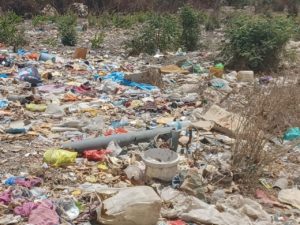
Giving communities the skills, infrastructure and support to make an impact.
As part of the project, 40 waste collectors will receive training on collection and recycling techniques. They will also undertake a life skills training programme developed by WasteAid on basic accounting, business skills and other critical skills. In addition, the Plastic Recycling Gambia centre will receive business training support to help them expand its services to more regions and upgrade its equipment. It’s hoped the expansion of the centre will create 30 new jobs.
Improving the collection of plastic waste will not only significantly reduce the amount of plastic that is either dumped or burned but will also help build sustainable income streams for waste collectors, assisting the development of a vibrant circular economy in The Gambia.
Ceris Turner-Bailes Chief Executive of WasteAid said: “No child should have to play next to piles of burning rubbish yet across some of the most vulnerable communities in the world this is a tragic reality. In countries where there is no official waste management infrastructure, communities are forced to burn or dump the majority of their waste and rely on individual waste collectors to clean up the rest.
“By bringing waste collectors together with mentors, government officials, and businesses we are able to break the stigma that they face and empower them to become wastepreneurs in their own right. Building an effective circular economy that can deliver a lasting improvement both to the environment and the health and wellbeing of people living in affected communities.
“That’s why projects such as the NREF-backed initiative in The Gambia are so critical. It’s thanks to the support of organisations such as NREF and other corporate backers that we are able to make such a transformational impact in the communities where we are active.”
A survey by WasteAid of the communities participating in the plastic recycling initiative showed that with a bit of education and support, people are willing to take responsibility for their waste management which is important for the sustainability of these types of projects. initiatives
The survey found that 92% of people asked in the communities where the initiative is active said that dumped waste and littering was a problem in their area, while 53% of respondents said they burned their waste, 30% said they dumped it. Just 22% said they took their waste to a bin, official dumps or landfill sites. Yet, everyone said they would use bins if they were made available.
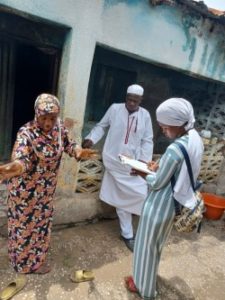
Supporting the wastepreneurs who can make it happen.
Plastics Recycling Gambia was launched by 26-year-old Gambian entrepreneur, Alieu Sowe. He was forced to close the business because of Covid but another WasteAid programme called the Waste to Use Challenge, sponsored by the Chartered Institution of Wastes Management, provided him with the investment, mentoring, and skills he needed to kick-start his enterprise and get it back up and running.
His facility is the only organised collection service of high-density plastic in The Gambia. Once collected, the company then cleans and chips plastics so they can be processed by larger companies, including GamPlast, which is currently importing recycled plastics from outside the region, as it is unable to source the HD locally without improvements in the collection system.
Plastics Recycling Gambia currently collects 15 tonnes of hard plastic a month from 21 collection points across the region, providing income for up to 21 waste collectors who collect and bag up the plastics. The company then gather the plastics to wash, sort, chop and chip them. They are then sold to companies including GamPlast who then pelletise them to make consumables including water pipes, basins, and buckets locally.
WasteAid’s initiative aims to increase the volume of plastic recycled at the plant to 50 tonnes each month. It will also create job opportunities for people wanting to enter the waste sector as well as educating the wider community on the potential value of materials they currently consider to be waste. The charity is drawing on its wide network to open up end markets for the collected and recycled waste – helping to increase the economic outlook across the region.
Mr Sowe added: “I’m very grateful to WasteAid and NREF for their support which will be transformational for our business and will have a big impact on removing more plastic from our environment. We are hoping that by reaching our target of recycling 50 tonnes of plastic every month we will be able to reinvest the small profit to ensure the organic growth of the company, which will include expanding to other regions.”
WasteAid works with communities and policymakers in low and middle-income countries to implement circular solutions focused on waste management and recycling. This latest project will run for the next two years. As Norway’s largest private environmental fund, NREF supports national and international projects to reduce plastic pollution, increase plastic recycling and reduce the consumption of plastic bags.
Cecilie Lind, CEO of the Norwegian Retailers’ Environment Fund said: “Our vision is to ensure plastics circularity and a pollution-free environment, and WasteAid’s latest project in The Gambia is a perfect fit for funding as it plays a significant role in the implementation of circular waste and recycling initiatives. We will follow the project’s journey as it works to help prevent climate emissions, build climate resilience, and create much-needed sustainable livelihood opportunities.”
A Gambian businessman with a green vision
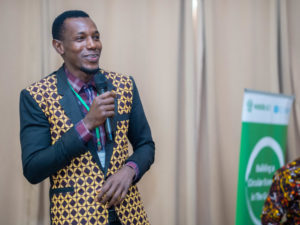
Another Gambian wastepreneur to benefit from WasteAid’s support is Sulayman Darboe who is also 26 years old. As the first in his family to go to university, the pressure was on to take a well-paid office job, but Sulayman set his sights on loftier ambitions. Having grown up witnessing the health impacts of burning wood for fuel he decided to find an alternative.
Today, having received mentoring and financial support from WasteAid, he runs a green business, providing a sustainable, healthier alternative to burning wood by turning coconut husks and peanut shells, which would usually be shipped to other countries as waste, into briquettes that can be burned for cooking.
“People often ask me why, with my degree, I don’t go work in a bank. They say, ‘Why are you struggling and taking a difficult path?’ but you have to make an impact even just a small one and that’s what I’m trying to do,” said Sulyaman.
“We cannot do it alone. We live in a community that really needs help. We cannot do it without support. I was just a university student coming up with an idea. To make an impact we need partners and investment so we can help our women and children,” he added.
Supporting communities around the globe
Now in its ninth year, WasteAid has grown from strength to strength and has more than quadrupled in size since 2020. Waste management helps address some of the world’s most pressing issues and is critical to achieving sustainable development; the organisation has most recently implemented programmes in Cameroon, Egypt, India, South Africa, The Gambia, and Vietnam.
From training women in waste processing activities and running an international conference on Waste Management for Community Resilience to delivering an EU-funded project in partnership with a key municipality, to divert food waste from disposal and train women farmers to make compost and sustainable cooking fuel or helping to develop circular economies, WasteAid’s positive impact is clear.
*Article first published in MRW magazine
News
How one community in The Gambia is changing its relationship with plastic
In Bakoteh, a community in the Greater Banjul Area of The Gambia, plastic waste has long been a serious problem. Home to the largest dumpsite in...
News
Women farmers in Kalaji turn organic waste into opportunity through the S-ORGANIC project
In Kalaji, a group of women farmers is demonstrating how organic waste can become a productive resource — supporting sustainable agriculture, strengthening livelihoods, and...
News
WasteAid and the Turkish Embassy: A New Partnership for Sustainable Change in The Gambia
On 12 May 2026, WasteAid’s Director of Programmes and Project Officer met with Turkish Ambassador F. Turker Oba at the Turkish Embassy in The...
News
WasteAid and Kanifing Municipal Council sign MoU to strengthen long-standing partnership on sustainable waste management
WasteAid and Kanifing Municipal Council have signed a new Memorandum of Understanding (MoU), marking an important milestone in a partnership that has developed over more than a decade. ...
News
Responding to Community Needs: The Commencement of HUBLINK with Halal Waste Group in Uganda
We have a wealth of evidence demonstrating the positive impact of our Wastepreneur programme. A key driver of this success is our proactive approach—identifying and resolving challenges as soon...
News
Strengthening The Gambia’s Circular Economy: Insights from WasteAid’s Stakeholder Engagement
We have huge plans to further strengthen and scale our programmes in the countries we work in, evidenced by our recent expansion of our...
Seven tonnes of plastic waste has been successfully diverted from the environment thanks to a pioneering new collaboration in South Africa which aimed to change behaviours through art, song, comedy skits, as well as practical measures.
Researchers from the University of Portsmouth’s Revolution Plastics team and the Department of Agriculture, Rural Development and Environmental Affairs (DARDLEA) partnered with UK-based charity WasteAid to run a pilot study in the Thembisile Hani Local Municipality of the Mpumalanga Province. They combined creative ways to educate people about the dangers of dumping and burning waste with on-the-ground action to increase waste recycling including supporting informal waste collectors and introducing community drop-off points for recyclables.
The pilot study has made promising strides in combating the problem of plastic waste; with two-thirds of local people reporting a positive change in their environment as a direct result of the project. A survey of local residents showed that arts-based methods – in particular the creation of murals – were significant drivers in the success of the project. Murals sensitised 86 percent of those who saw them on how to separate waste; and changed the attitudes and behaviours of 80 per cent of those who saw them.
By the end of the project the amount of waste managed by burning or dumping had fallen by 27.7% per cent.
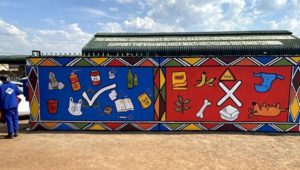
In just three months, the Masibambisane project successfully diverted seven tonnes of plastic waste, the equivalent weight of a large African bush elephant, from entering the environment. The uncontrolled disposal of plastic waste in the area poses a severe threat to the environment and human health, with waste often burned, contributing to climate change and poor air quality.
Working closely with the local community, WasteAid implemented strategies to enhance plastic waste collection and boost the revenue for local collector groups. The project focused on both supply-side factors, such as educating households on better waste separation and providing collection bins, and demand side factors, including training collectors on the types of plastics with value and promoting good business management. Additionally, the project facilitated connections with off-takers committed to purchasing plastic waste regularly from collectors.
The University of Portsmouth played a crucial role in designing a creative sensitisation campaign to support the pilot scheme. Collaborating with local stakeholders including artists, musicians, and waste collectors, the campaign aimed to demonstrate the value of waste and raise awareness about the harmful impacts of dumping and burning waste on human health.
Dr Cressida Bowyer, Deputy Director of Revolution Plastics at the University of Portsmouth, said: “Sensitisation is a vital process for educating communities, raising awareness and inspiring behaviour change. To make messaging more effective, it’s important for the message creators to reside in the target community, understand local social and cultural contexts, and actively participate in the production of campaign materials.”
Ceris Turner-Bailes, CEO of WasteAid added: “This is a great example of the positive outcomes that can be achieved through collaboration between the third sector, academia, and private sector. The educational and creative elements for this project made it almost impossible for people in the community to ignore our initiative. It sparked interest and helped facilitate important discussions on the steps people could take to improve waste collection and increase recycling.”
Embracing arts-based sensitisation methods such as murals, music and street theatre skits, the campaign was accessible to old and young alike, making the messages easily comprehensible and encouraging open discussions.
Two murals were created in the project area, featuring clear graphical guides to aid recycling efforts and encourage separation of recyclables at source. These murals adorned with vibrant Ndebele patterns to resonate with the local culture, effectively communicated the different types of plastics and other recyclable materials suitable for recycling.
Recognising the power of music as a driver for social change, a locally crafted song was composed and performed by talented local waste pickers and musicians, tapping into the emotional resonance that music brings. The catchy chorus and captivating video showcasing the murals, theatre skits and community events reinforced the campaign’s core messages and the lyrics and performance reflect the pride that the waste collectors have in their work.
Community-based participatory research was integral to the design and implementation of these creative interventions. Engaging with local creatives and waste collectors as equal partners ensured the campaign was ethically and contextually relevant.
The campaign showed promising results in just a short period of time. Nearly 21 percent of community members surveyed now use the community bins for better waste separation and segregation. Most importantly two-thirds of respondents noted a positive change in their environment, with nearly half attributing the transformation to the presence of community bins.
The feasibility study was funded by the Waste & Resources Action Programme (WRAP) and UKRI International Circular Plastics Competition, which aimed to address plastic waste collection challenges in specific geographies.
News
How one community in The Gambia is changing its relationship with plastic
In Bakoteh, a community in the Greater Banjul Area of The Gambia, plastic waste has long been a serious problem. Home to the largest dumpsite in...
News
Women farmers in Kalaji turn organic waste into opportunity through the S-ORGANIC project
In Kalaji, a group of women farmers is demonstrating how organic waste can become a productive resource — supporting sustainable agriculture, strengthening livelihoods, and...
News
WasteAid and the Turkish Embassy: A New Partnership for Sustainable Change in The Gambia
On 12 May 2026, WasteAid’s Director of Programmes and Project Officer met with Turkish Ambassador F. Turker Oba at the Turkish Embassy in The...
News
WasteAid and Kanifing Municipal Council sign MoU to strengthen long-standing partnership on sustainable waste management
WasteAid and Kanifing Municipal Council have signed a new Memorandum of Understanding (MoU), marking an important milestone in a partnership that has developed over more than a decade. ...
News
Responding to Community Needs: The Commencement of HUBLINK with Halal Waste Group in Uganda
We have a wealth of evidence demonstrating the positive impact of our Wastepreneur programme. A key driver of this success is our proactive approach—identifying and resolving challenges as soon...
News
Strengthening The Gambia’s Circular Economy: Insights from WasteAid’s Stakeholder Engagement
We have huge plans to further strengthen and scale our programmes in the countries we work in, evidenced by our recent expansion of our...