News
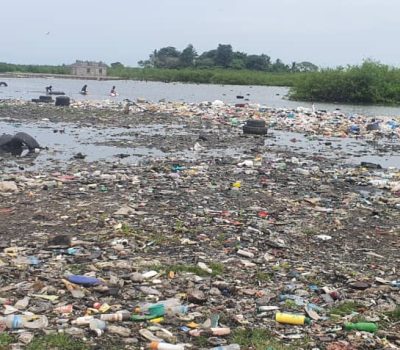
Protecting the Tanbi Wetlands through Waste Entrepreneurship in The Gambia
Celebrating continued support from Veralto on World Water Day Plastic waste is a growing challenge across The Gambia. Rapid urban growth, limited waste services...

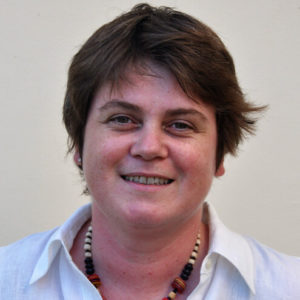 When writing these pieces, it’s always a great opportunity to reflect on just how much WasteAid has achieved since my last update. I am also pleased to say that it is always a question of selecting the very best of a great body of work, rather than struggling to fill the page!
So, what have we been focusing on these last few months? Firstly, we have now closed the Zero Waste Cities Competition receiving over 100 applicants and some fabulous ideas. The team had a tough job to shortlist the thoughtful and innovative entries, but in the end a shortlist of 12 entrants from each country was finalised.
Ideas ranged from diverting chicken feathers from landfill and reusing them, to apps that encourage segregation and collection of waste and even use gamification to promote green living.
There are too many good ideas to mention here, but it was a great response. WasteAid is now supporting 36 shortlisted organisations through an intensive 8-week business incubation period before selecting 5 entrants from each country to participate in a Dragons’ Den pitch. Please follow our social media channels @WasteAid and @CircEconNetwork for the latest updates.
Outside of that, we have been delighted to welcome our Project Coordinator in The Gambia, Ingrid Henrys to the WasteAid team. Ingrid is leading our EU-funded project addressing climate change through the recycling of organic waste from markets. The waste will then be turned into compost to increase crop yield for market sellers and woody waste will be turned into briquettes for fuel. In this project we are working in partnership with a municipal council as well as a women’s empowerment organisation. The project has got off to a great start with a series of launch events and an initial KAP survey (Knowledge, Attitudes and Practices) to understand how people engage with waste.
In other news, we said ‘au revoir’ to WasteAid’s Head of Programmes and Impact, Angela McDermott as she heads off on a period of maternity leave. We wish her a blissful time off! Angela’s replacement has been selected and will be announced shortly. However, before Angela left, she was able to complete a crucial piece of work to further improve WasteAid’s impact monitoring. This is a fantastic initiative that will really allow WasteAid to prove the wide-ranging impact of its work by measuring it against health, economic, behaviour change and environmental indicators. This is so important in our mission to ensure waste management is prioritised within the development agenda.
This period has also seen a phenomenal boost to WasteAid’s corporate partnerships and whilst I cannot name each and every company, I did want to highlight a couple of our new partners.
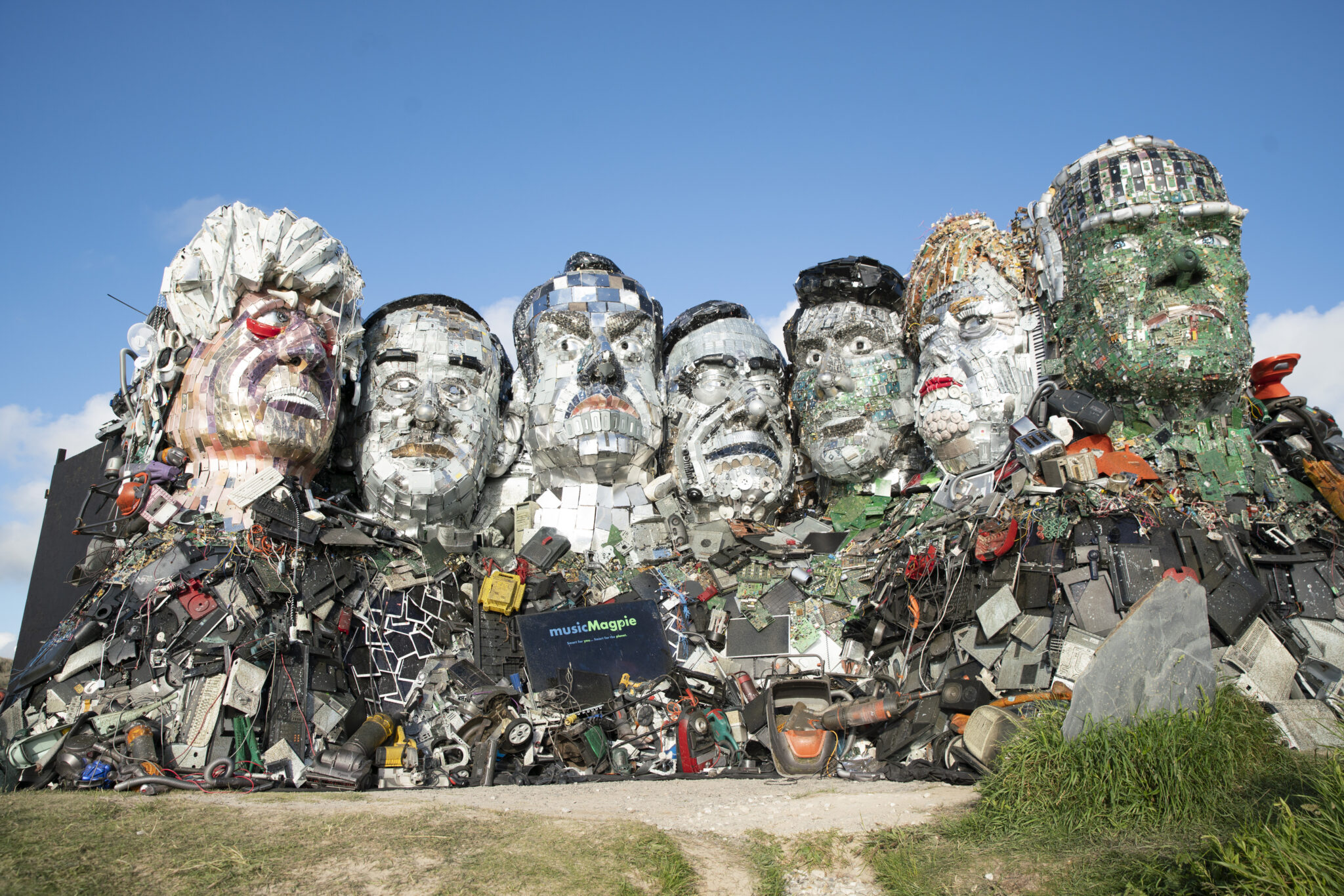
Firstly, we were delighted to partner with music Magpie on their ‘Mount Recyclemore’ campaign which also saw WasteAid name-checked in the national press – something we definitely want to see more of! As well as running an attention grabbing campaign to highlight the problem of e-waste, music Magpie contributed a very generous donation to WasteAid. We will be using part of this donation to develop further guidance on e-waste as this is a growing issue in the countries where we work.
Secondly, we were delighted to receive a significant donation from Finnish company Neste Oyi who felt that WasteAid’s approach, values and impact deserved their support. We really enjoyed learning more about their approach to sustainability and are delighted to have them as a supporter.
If you are a corporate reading this update and feel that WasteAid could contribute to your CSR/ESG goals, please get in contact.
 Finally, many of the WasteAid senior team are preparing to attend the RWM Exhibition on 22-23 September. Both myself and our Senior Technical Advisor, Zoë Lenkiewicz, will be speaking and we hope to meet as many of our supporters and friends (new and old) as possible.
It just remains for me to thank you for your continued support of WasteAid and to wish you all well. So until my next update, please take care and continue to follow WasteAid on our social media channels for all the latest news.

News
Protecting the Tanbi Wetlands through Waste Entrepreneurship in The Gambia
Celebrating continued support from Veralto on World Water Day Plastic waste is a growing challenge across The Gambia. Rapid urban growth, limited waste services...
News
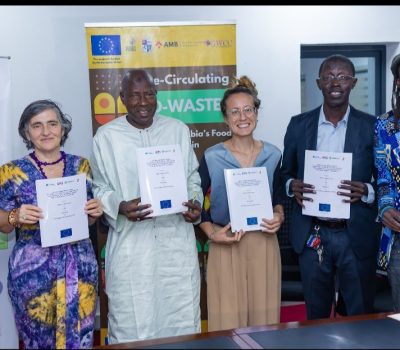
The Gambia takes a major step towards sustainable farming with new Organic Fertiliser Standard
On Monday 16 March, The Gambia marked an important step towards sustainable agriculture with the launch of work to develop a National Organic Fertiliser...
News
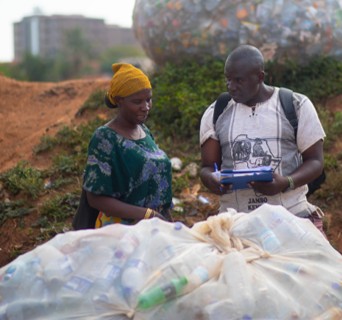
Global Recycling Day: Empowering Communities to Turn Waste into Opportunity
Every year on Global Recycling Day, organisations around the world highlight the importance of reducing waste and protecting natural resources. For us here...
News
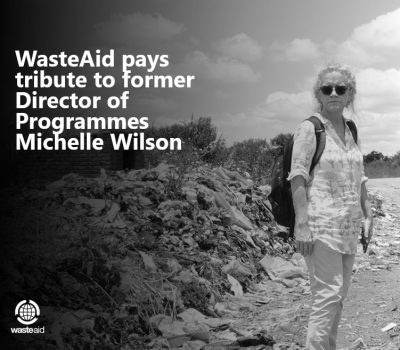
WasteAid pays tribute to former Director of Programmes Michelle Wilson
It is with great sadness that WasteAid must inform all of our friends, followers and funders of the passing of Michelle Wilson, WasteAid’s first...
News
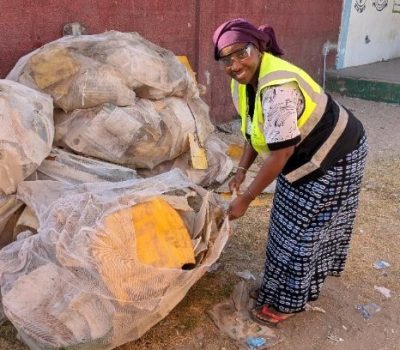
Visit to The Gambia shines light on plastic progress
WasteAid’s newly-appointed Director of Programmes, Akira Akazawa, recently visited two community plastic collection groups in a coastal area of The Gambia to understand how...
News
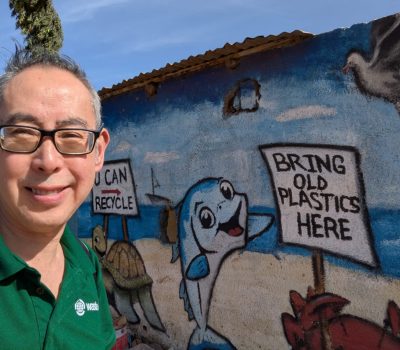
WasteAid appoints Akira Akazawa as new Director of Programmes
WasteAid is delighted to announce the appointment of Akira Akazawa as our new Director of Programmes. Akira brings with him a wealth of experience across...
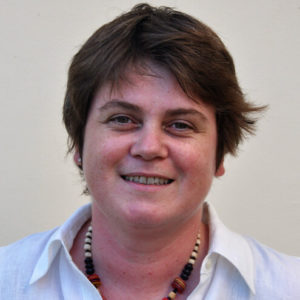
The first part of 2021 has been difficult for all, but here at WasteAid it feels as if things are moving in the right direction – the lockdowns across the UK have lifted and WasteAid managed its first socially distanced UK-based staff meeting in too long. It was so important to meet face to face and great to catch up and share ideas. All of us who attended felt refreshed and re-energised and we were able to welcome in person our new Head of Finance, Charles Njoko. I hope that many of our supporters, donors and partners are feeling equally optimistic as we head into Summer. However, in some countries where WasteAid has a presence, we know that staff and partners are still facing incredibly tough challenges due to the pandemic and our thoughts are with you all.
Quite a lot has happened since my last update, our programmes team, headed by Angela McDermott has been preparing for the launch of our European Union funded Global Climate Change Alliance Plus (GCCA+) project in The Gambia. We are delighted to be working in partnership with Kanifing Municipal Council on this circular economy initiative that focuses on reducing food waste and supporting women’s livelihoods. It is very exciting to be working with a new institutional donor on this project and we hope that this also will be the start of a fruitful collaboration. Since its inception, WasteAid has been active in The Gambia and we are pleased that our work is able to influence local government practice when it comes to waste and recycling. There’s so much positive energy in the country towards the green recovery initiative, and WasteAid is honoured to be able to play a small part in its journey. That said, there is still so much more to do, and we have a list of priority projects that we would like to fund. If you would be interested in funding our work in The Gambia, perhaps as part of your CSR strategy, then please get in contact.
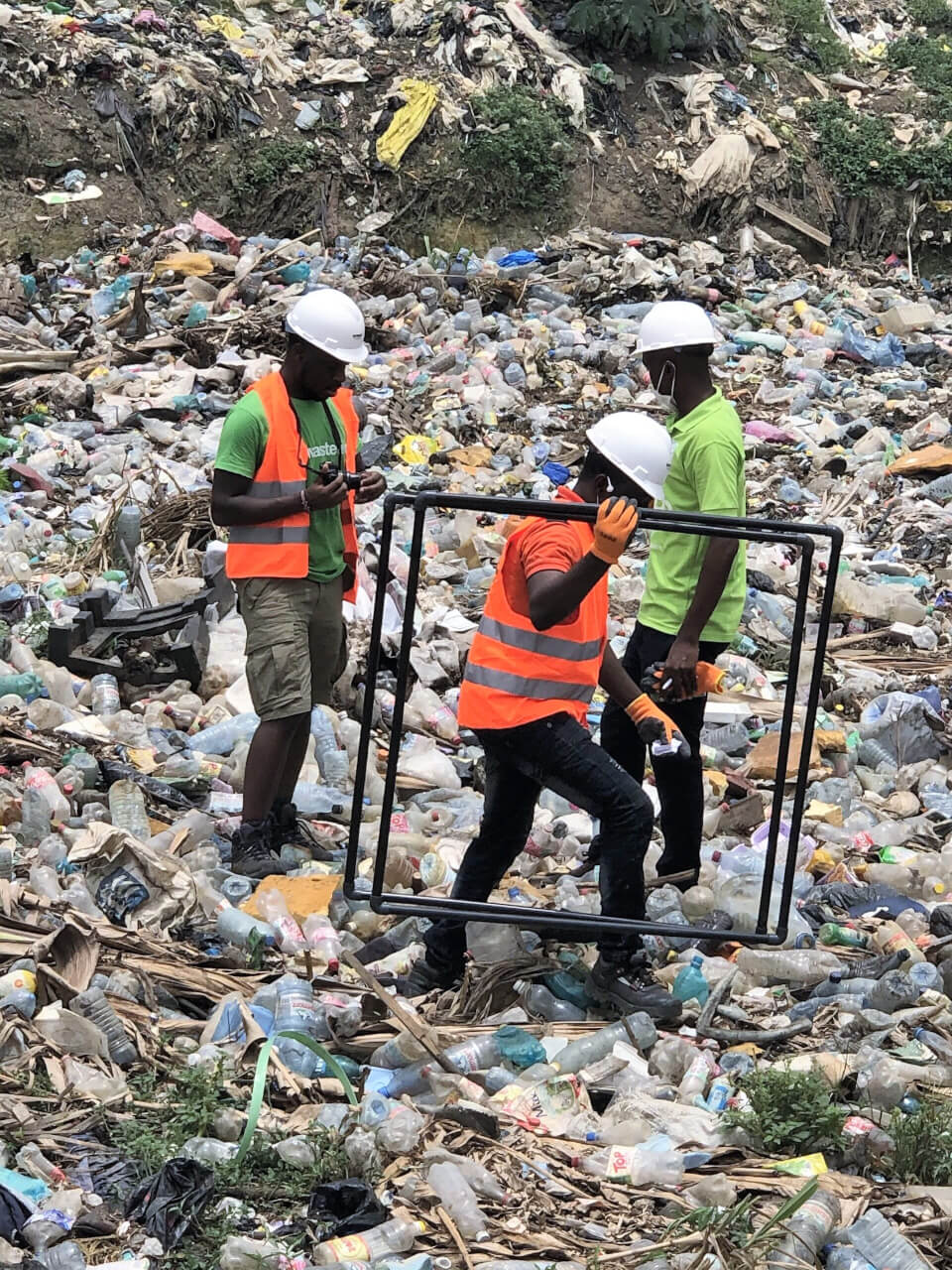
It was also fantastic to have the WasteAid team travel again to project sites too. Last month, our project manager Luther Hinga, travelled to Douala in Cameroon to follow up on two of WasteAid’s projects there. He liaised closely with our partner organisation, RED PLAST, and was able to support project activities and work with RED PLAST and beneficiaries to ensure that our UK Aid Match project and our Bunzl Plc funded projects were transforming lives and reducing plastic waste. At the same time, he found time to pass his DELF B1 French language exam and introduce a potential new corporate partnership focused on WasteAid activities in Cameroon. Well done, Luther!
One of the key events in the last month has been the launch of WasteAid’s Circular Economy Network Zero Waste Cities Challenge. This is a fabulous initiative to support innovators and entrepreneurs to solve the waste crisis in Ho Chi Minh, Johannesburg and Guwahati. In each of these locations WasteAid will be supporting businesses through incubation and training and will be offering 10,000 Euros seed funding to two organisations in each location. The network also continues to deliver inspiring and educational content through webinars and through its website. The network is growing and I am constantly amazed and inspired by all those involved in developing the circular economy and reducing waste in these locations.
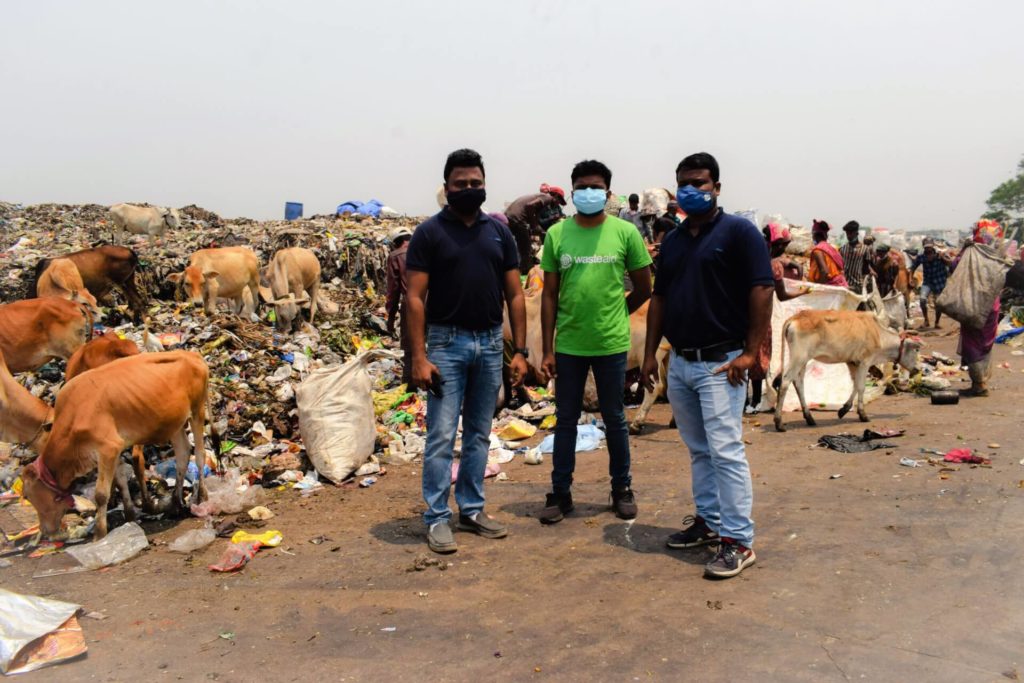
Since my last update, it has also been hugely heartening to see a real leap in corporate engagement with WasteAid. We are all delighted that our work on building a circular economy network and advancing solid waste management in areas of the world not served by it is really resonating with socially aware, responsible corporate entities. WasteAid individually tailors its corporate partnerships to ensure that these are mutually beneficial and have the greatest impact for our programme beneficiaries. If you are developing a CSR or sustainability policy and are looking for an organisation that can help deliver your goals, please do get in contact with us. WasteAid’s work transforms livelihoods, the environment and communities and we would love to hear how we may work together with you. We will be announcing more exciting corporate partnerships in the coming weeks.
Finally, to all our partners, supporters and donors, please stay safe during these uncertain times. Our thoughts are particularly with our friends and partners in India as the country battles a huge wave of Covid cases.
News
Protecting the Tanbi Wetlands through Waste Entrepreneurship in The Gambia
Celebrating continued support from Veralto on World Water Day Plastic waste is a growing challenge across The Gambia. Rapid urban growth, limited waste services...
News
The Gambia takes a major step towards sustainable farming with new Organic Fertiliser Standard
On Monday 16 March, The Gambia marked an important step towards sustainable agriculture with the launch of work to develop a National Organic Fertiliser...
News
Global Recycling Day: Empowering Communities to Turn Waste into Opportunity
Every year on Global Recycling Day, organisations around the world highlight the importance of reducing waste and protecting natural resources. For us here...
News
WasteAid pays tribute to former Director of Programmes Michelle Wilson
It is with great sadness that WasteAid must inform all of our friends, followers and funders of the passing of Michelle Wilson, WasteAid’s first...
News
Visit to The Gambia shines light on plastic progress
WasteAid’s newly-appointed Director of Programmes, Akira Akazawa, recently visited two community plastic collection groups in a coastal area of The Gambia to understand how...
News
WasteAid appoints Akira Akazawa as new Director of Programmes
WasteAid is delighted to announce the appointment of Akira Akazawa as our new Director of Programmes. Akira brings with him a wealth of experience across...
Corin Williams, Editor of MRW, interviewed WasteAid’s Chief Executive, Ceris Turner-Bailes.
CW: You joined WasteAid just a few weeks into the first lockdown. What challenges did you have to overcome and how did the organisation have to change its operations?
 CTB: The most challenging thing about the whole lockdown period has been an inability for me to visit our projects, partners and beneficiaries, and to have regular team sessions with the WasteAid team in the UK. Given that we work remotely and manage projects and partnerships from a distance, in many ways our day to day operations were not affected. However, our ability to add value for our partners through regular visits to offer support and guidance has had to change to more online contact.
It has been particularly tough for the launch of our Circular Economy Network, which really relies on relationship building and networking. The project team have done so well to move activities online.
For the initial part of lockdown, our UK government-funded projects were suspended, although we continued to support partners financially for a period of time from WasteAid’s own funds. This break in project activities did provide us with a great opportunity to review progress and ensure our inputs were achieving the desired objectives.
Lockdown also meant difficult times for some of our corporate supporters, but we have such great partnerships that in the long term these remain unaffected.
CW: How has the pandemic affected the communities with which WasteAid works?
CTB: Much as in the UK, the pandemic has had a terrible effect on economies and both lockdowns and restrictions have meant that our projects are now trying to regain that lost momentum. We’re not hearing about massive infection rates in the communities where we work, and we hope that it stays that way. Large households and poorer sanitation are risks for the communities where WasteAid has a presence. Waste handling can be even more hazardous in these times and WasteAid has developed resources to help communities navigate this. We have also funded measures help resilience to Covid such as handwashing stations in Kenya.
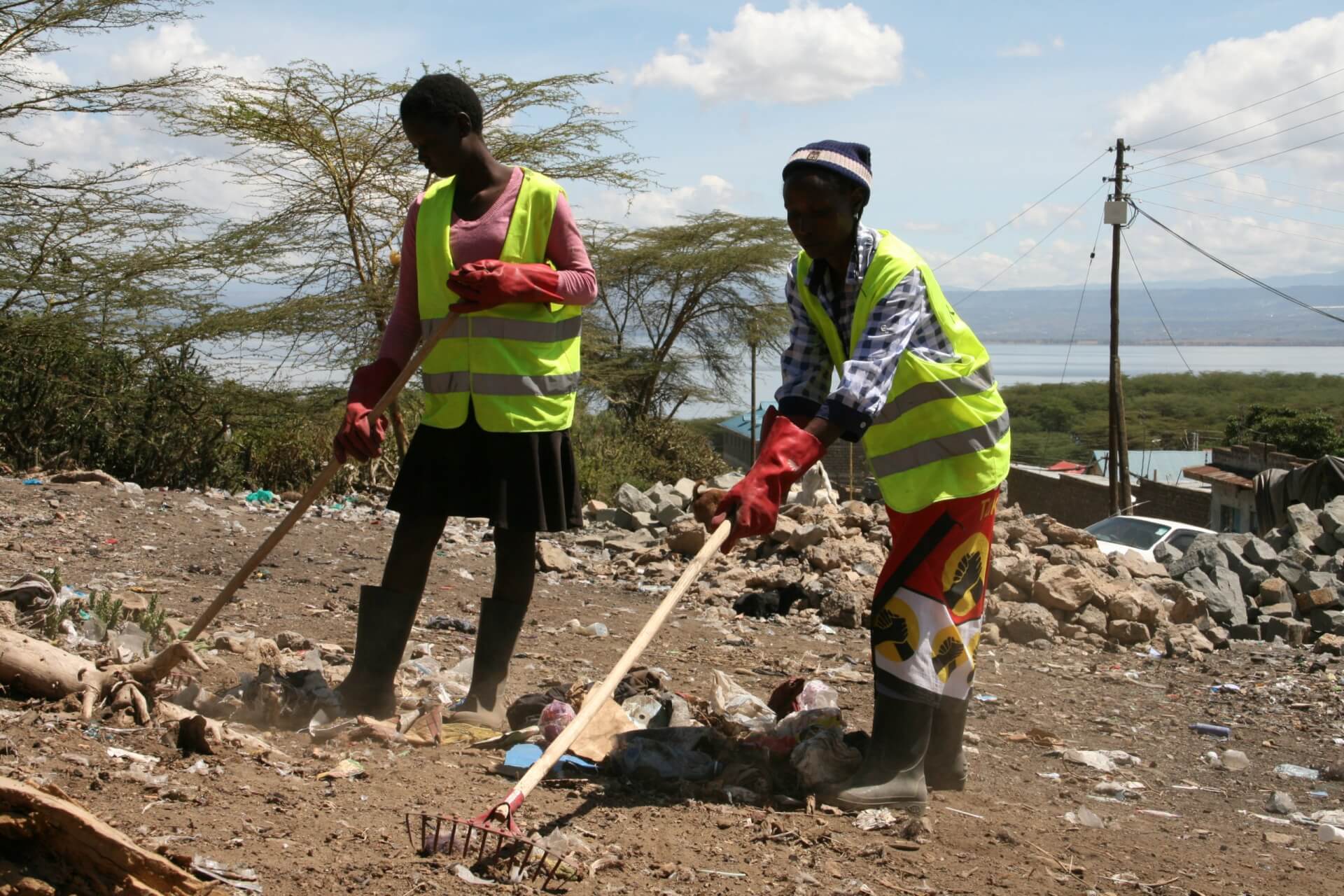
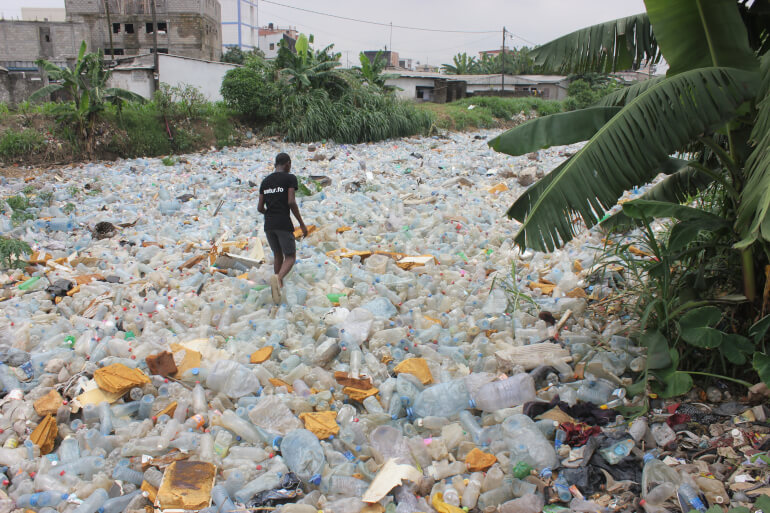
CW: What are the most pressing issues facing your partner organisations on the ground – for instance the plastics recycling training in Douala – in the context of Covid-19?
CTB: Our change model involves project beneficiaries and partners deriving an income from waste. One of the most challenging aspects of the work is to develop a market for recycled goods in order to build sustainable businesses. The enormous economic shock of the pandemic can negatively affect fledgling businesses, as we have seen here in the UK. Our partners must also follow local regulations when carrying out project activities which can make the situation more complicated and cause delays.
Aside from that, in most of the countries we work in, we would like to see local or central government investment and support for waste management to really have an impact. The pandemic will clearly take both attention and funds away from that goal, making ours and our partners’ work just that little bit harder.
CW: You have a wide and varied CV – what awareness of the importance of waste management did you have before joining WasteAid?
CTB: Having worked extensively in Africa and Asia, I was fully aware of the waste crisis in low income countries having seen it up-close in countries such as Dem Rep Congo, Ghana, Mali and Afghanistan. I have also managed health and water and sanitation programmes in the past, and could easily understand why waste management is so important. I was also aware of the plight of waste pickers through previous roles delivering poverty alleviation programmes. I certainly had less of a detailed knowledge of the impact of poor waste management practices on climate change and marine biodiversity.
Since joining WasteAid I have learned a lot about waste management practices in lower-income countries and what can practically be done to improve the situation. Locally appropriate solutions are crucial and in order to promote sustainability, low tech solutions can often have the greatest impact.
CW: Are your experiences in the Royal Air Force and the diplomatic service proving useful in your current role?
CTB: Both of those careers seem quite a long way behind me now (clearly getting old), but obviously the military teaches you some great skills in terms of management, problem solving and getting things done! The Diplomatic Service certainly furnished me with an understanding of how government policy is developed and the importance of linking in with British diplomatic representation in the countries where we work. I would say that my previous 13 years in international programme management for governments, non-profits and the private sector working across Africa and Asia are probably the most relevant to this role though!
CW: What’s your view on international efforts to prevent exported waste being dumped in Africa and Asia?
CTB: It’s a global market, so by its nature recycling also involves some degree of international trade. Where products are genuinely going to be repaired e.g. WEEE or materials recycled e.g. paper and plastics, then of course international trade is welcomed. The real challenge is a lack of regulation and enforcement, both in waste producer countries and receiving countries. However, the amount of waste being shipped around is tiny in comparison to the waste that is already generated in these countries and simply isn’t being collected – so that will remain our priority.
CW: What targets do you have for WasteAid over the next five years?
CTB: I have huge ambitions for WasteAid, and really believe that we are on the cusp! I think we are really making the switch from an organisation that may have been seen as niche to becoming more of a mainstream development actor – and with this we are constantly raising the profile of waste management in the sector.
At the moment, we are increasing our presence in the countries where we work and have over 2020 put together some compelling programmes that will be funded this year (I am just not yet able to announce full details). We are looking to grow our presence in Sub Saharan Africa and are hoping to work in new countries such as Democratic Republic of the Congo and potentially Sierra Leone as we feel that the needs and our proposed responses would really add value. We are developing our Circular Economy Network programme in Vietnam, South Africa and India and are hoping to establish a greater presence in these countries, as there is so much work to be done.
We are also working on further developing our impact measurement and continually improving our model of transformational change.
Our work is all about partnership. As a small and agile organisation, we know we can have a greater impact if we work together with other organisations that complement our work. Therefore, we will be looking to continually develop strategic partnerships to bring about the change we want to see – to reduce waste, enhance waste management systems, support innovation, promote the circular economy and improve livelihoods.
If your business is looking for the right charity partner to make lasting impact, please visit our CSR page.
This Q&A was originally published in MRW.
News
Protecting the Tanbi Wetlands through Waste Entrepreneurship in The Gambia
Celebrating continued support from Veralto on World Water Day Plastic waste is a growing challenge across The Gambia. Rapid urban growth, limited waste services...
News
The Gambia takes a major step towards sustainable farming with new Organic Fertiliser Standard
On Monday 16 March, The Gambia marked an important step towards sustainable agriculture with the launch of work to develop a National Organic Fertiliser...
News
Global Recycling Day: Empowering Communities to Turn Waste into Opportunity
Every year on Global Recycling Day, organisations around the world highlight the importance of reducing waste and protecting natural resources. For us here...
News
WasteAid pays tribute to former Director of Programmes Michelle Wilson
It is with great sadness that WasteAid must inform all of our friends, followers and funders of the passing of Michelle Wilson, WasteAid’s first...
News
Visit to The Gambia shines light on plastic progress
WasteAid’s newly-appointed Director of Programmes, Akira Akazawa, recently visited two community plastic collection groups in a coastal area of The Gambia to understand how...
News
WasteAid appoints Akira Akazawa as new Director of Programmes
WasteAid is delighted to announce the appointment of Akira Akazawa as our new Director of Programmes. Akira brings with him a wealth of experience across...
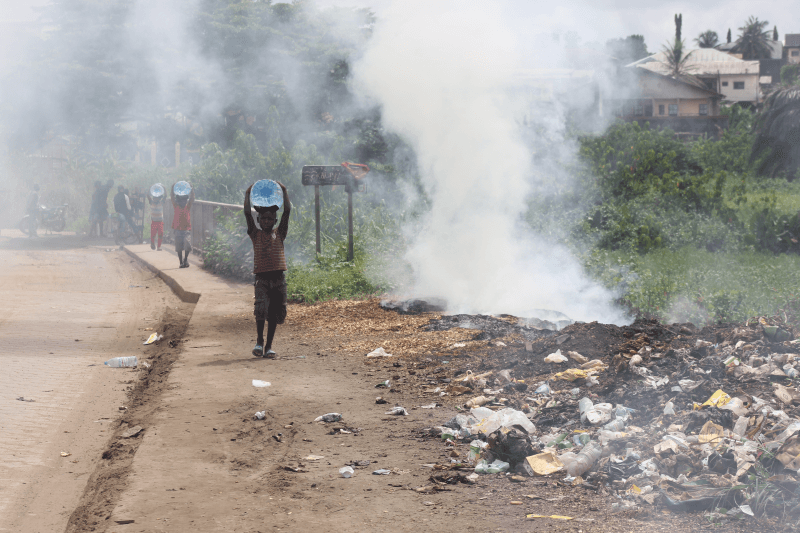
At WasteAid, we work with communities and policy makers in low and middle-income countries to implement waste management and recycling programmes. Our work improves the livelihoods of some of the poorest and most marginalised, promotes circular economy innovation and contributes to a cleaner and healthier future for all.
WasteAid is active in eight countries across Africa and Asia.
Anyone who has travelled or worked overseas in a development context will have had some exposure to the critical issue of waste management – whether this is through the sight of waste-filled open sewers, waste-strewn streets or polluted waterways, perhaps too the acrid smell of burning plastics adding to air pollution.
This is a sensory reminder that 1 out of 3 people worldwide are forced to dump or burn their waste. Apart from the obvious immediate unpleasantness of tonnes upon tonnes of unmanaged waste, perhaps there is little further consideration of ‘the waste crisis’.
Although rarely at the top of the agenda, waste poses a significant risk to public health and the environment, as well as the climate. Those working informally in waste management (0.5% urban populations in LMICs) are usually among the most vulnerable, and WasteAid is all too familiar with the harsh realities these communities face in their day-to-day work.
Despite the negative effects of poorly managed waste, what we discard can also offer opportunities that may not be entirely obvious at first glance. WasteAid will soon be celebrating six years of its pioneering approach to waste and development. Our programmes focus on waste management, recycling, microbusiness support and enterprise development, as well as circular economy innovation.
Through our growing Circular Economy Network in India, South Africa and Vietnam, we are supporting grassroots initiatives and the most marginalised whilst also rewarding innovation through business incubation opportunities and seed funding. We work at community level, we engage municipalities and interact with policy makers to improve systems and share knowledge. We take a market systems approach to our work. Our funding support and our response to the waste crisis can be rooted in both civil society responses and corporate sector collaboration.
The consequences of poor waste management are severe, particularly for lower and middle income countries, affecting both people and planet.
Health consequences include increased respiratory illnesses due to burning waste, higher levels of insect borne illnesses due to open dumping, and greater prevalence of watery diarrhoea and other illnesses due to blocked and polluted waterways. In the era of COVID 19, effective disposal of face masks and of potentially contaminated materials adds an extra layer of complexity for countries already struggling to dispose of their waste safely. It is the poorest that often bear the heaviest disease burden and for those living in extreme poverty, this can lead to increased mortality. The environmental consequences of poor waste management are no less serious: burning waste contributes to the climate crisis through greenhouse gases, contaminated soil and waterways put ecosystems at risk and the dirt and odour from unmanaged waste degrades the general environment.
Waste and the work of WasteAid cuts across most of the Sustainable Development Goals and our work impacts directly at least eight of them. It is for this reason that waste management and recycling opportunities should be recognised as a crucial vehicle for sustainable development. In certain contexts, WasteAid recognises that technical innovation is critical to development, but the majority of our work in LICs, particularly in Africa, is centred around low tech, locally appropriate solutions to ensure sustainability.
The link between waste, clean water and improved sanitation and health is likely clear to all, even if the direct contribution of waste management alone is often difficult to quantify.
Waste collection and recycling opportunities can provide sustainable livelihood opportunities (particularly in green recovery activities). Livelihoods opportunities in waste can span the use of recycled materials to make crafts to the production of artisan-made household objects, right through to the cleaning, sorting and selling of waste materials, particularly plastic, on an industrial scale.
Many of these types of responses can lend themselves well to poverty alleviation activities that are pro-poor and inclusive of the most vulnerable groups. At WasteAid, we recognise opportunities for an ever-stronger gender focus in our programmes. Women are well represented in the informal waste management and recycling sector, since it can offer decent, flexible work; and women are also the most affected by a lack of waste management services as they are responsible for domestic waste disposal, often burning household waste in the yard while taking care of children. WasteAid is currently further developing its gender policy and reflecting on how we can strengthen this element of our work.
Waste occupies a central point in development where people and planet meet. By recognising the economic value of waste and developing responses that generate income, we are at the same time reusing items of no or low value and cleaning the environment. Never has this approach been more recognised than in the post-Blue Planet world. Preventing waste, particularly plastics, from reaching waterways and the world’s oceans allows eco-systems to thrive, and the marine life on which so many livelihoods are based to flourish.
Waste management and all its constituent parts is as much needed for land and sea as for the air we breathe! Urbanisation has a compounding impact on waste, as more people require more packaged products. In Asia the waste crisis is growing, out of control even, although it is heartening to see engagement in circular economy initiatives. In Africa there is still some way to go before the waste crisis reaches such levels. There is still time to act to prevent high economic, human and environmental costs. We ask that waste is always considered in whatever programming you implement – be it prevention, reuse or recycling.
Globally, if we want to reach a point where waste ceases to pollute the very environment we need to live, we must work together in a cross-sectoral, collaborative way to achieve results. If policy makers receive compelling evidence of the cost saving that can be achieved by pro-poor waste management delivered from several diverse perspectives, if entrepreneurs recognise the potential business to be made through waste, if communities are enabled to avoid dumping or burning waste, and if funders recognise the central role waste management plays in development, then we will be well on the road to success. As 2021 is the year of COP26, WasteAid will be disseminating this message as widely as possible and we are optimistic of an increasingly receptive audience.
News
Protecting the Tanbi Wetlands through Waste Entrepreneurship in The Gambia
Celebrating continued support from Veralto on World Water Day Plastic waste is a growing challenge across The Gambia. Rapid urban growth, limited waste services...
News
The Gambia takes a major step towards sustainable farming with new Organic Fertiliser Standard
On Monday 16 March, The Gambia marked an important step towards sustainable agriculture with the launch of work to develop a National Organic Fertiliser...
News
Global Recycling Day: Empowering Communities to Turn Waste into Opportunity
Every year on Global Recycling Day, organisations around the world highlight the importance of reducing waste and protecting natural resources. For us here...
News
WasteAid pays tribute to former Director of Programmes Michelle Wilson
It is with great sadness that WasteAid must inform all of our friends, followers and funders of the passing of Michelle Wilson, WasteAid’s first...
News
Visit to The Gambia shines light on plastic progress
WasteAid’s newly-appointed Director of Programmes, Akira Akazawa, recently visited two community plastic collection groups in a coastal area of The Gambia to understand how...
News
WasteAid appoints Akira Akazawa as new Director of Programmes
WasteAid is delighted to announce the appointment of Akira Akazawa as our new Director of Programmes. Akira brings with him a wealth of experience across...