News
How one community in The Gambia is changing its relationship with plastic
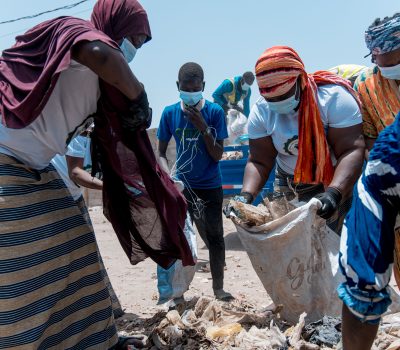
In Bakoteh, a community in the Greater Banjul Area of The Gambia, plastic waste has long been a serious problem. Home to the largest dumpsite in...

This week as part of the pathway to an internationally legally binding instrument on plastic pollution, known as The Plastics Treaty, the Intergovernmental Negotiating Committee will meet in Nairobi to consult on the Zero draft[1]. Given the huge challenge of developing a treaty that that will fit the context of 193 member states once ratified (by the end of 2024) it will contain both binding and voluntary approaches.
The Business Coalition for a Global Plastics Treaty, convened by The Ellen MacArthur Foundation and WWF states that the treaty is:
“..the single most important opportunity to accelerate progress towards a circular economy in which plastic never becomes waste or pollution, and the value of products and materials is retained in the economy”[2]
WasteAid has been reflecting on the potential impact of The Treaty in countries where we work such as The Gambia, Cameroon, and South Africa. We agree that the Global Plastics Treaty could be a force for good in forcing countries to prioritise the issue of plastic pollution and to catalyse investment. The Business Coalition have been pushing three core principles that they believe should be central to the Plastics Treaty:
1. Reducing the production of plastics with high leakage rates and those reliant on fossil fuels
2. keeping materials in the loop at the highest value; and
3. prevention and remediation of macro and micro-plastics leaking into the environment.
Inherent to the application of these principles is the need for a functioning waste management system.
It is estimated that 2 billion people globally do not have access to a waste collection service and as a result open dumping results in over a third of all waste disposal[3]. In a study in The Gambia, the budget allocation for waste collection was sufficient for the collection of only 10% of the waste in the country[4]. Cost recovery for waste services differs drastically across income levels. User fees range from an average of $35 per year in low-income countries to $170 per year in high-income countries, with full or nearly full cost recovery being largely limited to high-income countries[5].
We agreed with Professor David C Wilson’s latest blog released by ISWA where he states “extending municipal solid waste collection to all and phasing out uncontrolled dumping and open burning would halve plastic leakage into the oceans and cut by more than 90% the open burning of plastic waste[6]”. It is encouraging to see Waste Management discussed in the Plastics Treaty zero draft:
‘…a portion of the fees collected through EPR schemes to be used to improve infrastructure and improve the livelihoods and opportunities for, and develop the skills of, workers in the waste sector, including waste workers in informal and cooperative settings;’
However, our concern is the big emphasis placed on EPR as the key source of financial investment to set up basic collection systems up and running in low-income countries. We agree that EPR can be a piece of the jigsaw but in countries that have no collection system in place whatsoever, the finance available will not be sufficient to create a fully functioning waste management system. An EPR system operational in the global north helps to drive the collection of recyclables alongside a functioning waste management system. In countries like South Africa where we have seen EPR help drive healthy rates of collection levels of PET (estimated to be around 60%) where there are markets/incentives. However, materials that have no market value no value continue to leak into the environment.
After the ratification of the Treaty in 2024 there will be a long process for countries to think through how they will develop and operationalise policies that will assure compliance to the Treaty. In the meantime, millions of tonnes of low-value plastics and other materials will be entering the environment or will be burnt. Let’s not let discussions around The Plastics Treaty stop us from taking simple action now to support member states to arrest the mismanagement of waste. This could be through increasing institutional development funding (where funding on waste is less than 0.3%) or through allocating a greater share of EPR levies to municipalities (rather than going to PROs) to support the informal sector to collect all materials and not just ones where there is a market.
There is a U2 song that includes the line, “the wheels are turning but the car’s upside down”. There is a lot of talk and activity but we need to act on these issues now if we want to move and see change.
In the meantime, be sure to visit www.wasteaid.org to find out more about our whole-systems approach to tackling the global waste crisis.
[2] Business coalition for a global plastics treaty (ellenmacarthurfoundation.org)
[3] Wasteland; Oliver Franklin Wallace, pg 7
[4] The state of solid waste management in the gambia by United Purpose – Issuu
[5] Trends in Solid Waste Management (worldbank.org)
[6] Guest Blog: Waste Management needs to be on the main agenda for the ‘plastics treaty’ negotiations | ISWA

News
How one community in The Gambia is changing its relationship with plastic
In Bakoteh, a community in the Greater Banjul Area of The Gambia, plastic waste has long been a serious problem. Home to the largest dumpsite in...
News
Women farmers in Kalaji turn organic waste into opportunity through the S-ORGANIC project
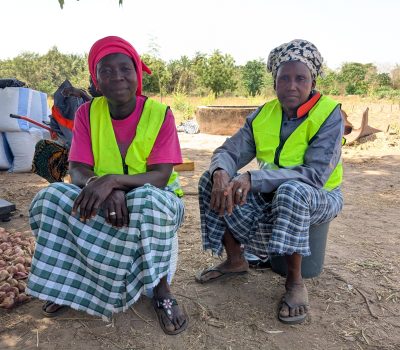
In Kalaji, a group of women farmers is demonstrating how organic waste can become a productive resource — supporting sustainable agriculture, strengthening livelihoods, and...
News
WasteAid and the Turkish Embassy: A New Partnership for Sustainable Change in The Gambia
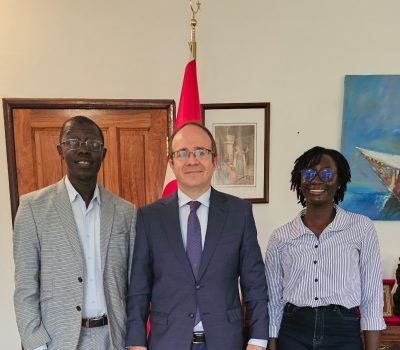
On 12 May 2026, WasteAid’s Director of Programmes and Project Officer met with Turkish Ambassador F. Turker Oba at the Turkish Embassy in The...
News
WasteAid and Kanifing Municipal Council sign MoU to strengthen long-standing partnership on sustainable waste management
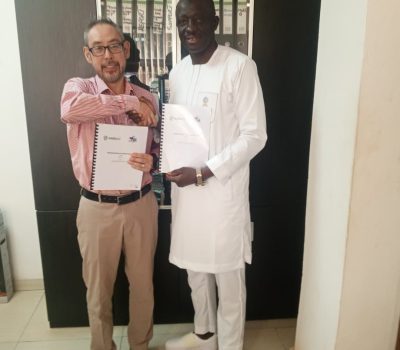
WasteAid and Kanifing Municipal Council have signed a new Memorandum of Understanding (MoU), marking an important milestone in a partnership that has developed over more than a decade. ...
News
Responding to Community Needs: The Commencement of HUBLINK with Halal Waste Group in Uganda
We have a wealth of evidence demonstrating the positive impact of our Wastepreneur programme. A key driver of this success is our proactive approach—identifying and resolving challenges as soon...
News
Strengthening The Gambia’s Circular Economy: Insights from WasteAid’s Stakeholder Engagement
We have huge plans to further strengthen and scale our programmes in the countries we work in, evidenced by our recent expansion of our...
The Dixon Foundation has supported WasteAid since 2021 and is now supporting the delivery of an e-waste repair programme in South Africa.
The primary aim of the programme is to extend the life of small electronic items through maintenance and repair, by supporting community-based waste-entrepreneurs (‘wastepreneurs’) to repair appliances and equipment for re-use, through a training and mentorship programme.
South Africa has a robust entrepreneurial landscape with informal reclaimers and grassroots wastepreneurs active across communities and informal settlements. The business of waste as a resource has escalated, and the Dixon Repair Programme aims to accelerate and embed a culture of repair and reuse into the livelihood opportunities of micro businesses that are already embracing this model to make a living.
The Electronic and Electrical Equipment Waste (W-EEE) Repair Programme will start in Johannesburg, engaging with active waste EEE repairers who are working at a grassroots level and do not currently have access to resources and capacity.
A tailored EEE Repair Programme will focus on developing entrepreneurs who are currently already repairing EEE equipment in some way. It is aimed at improving the income potential of waste reclaimers and microbusinesses who are working in the informal waste value chain, by professionalising their work, improving their knowledge and skills, opening up network access, and providing business incubation and seed-funding opportunities.
The W-EEE training curriculum will have a strong practical application of training to augment skills and will include business finance skills and have a marketing digital component to support enterprise development of EEE repair models
The support of the repair enterprises through this programme will accelerate the circular economy within communities, and amplify the upskilled micro entrepreneurs’ participation in the waste recovery industry.
WasteAid is extremely grateful for the Dixon Foundation’s ongoing support.
News
How one community in The Gambia is changing its relationship with plastic
In Bakoteh, a community in the Greater Banjul Area of The Gambia, plastic waste has long been a serious problem. Home to the largest dumpsite in...
News
Women farmers in Kalaji turn organic waste into opportunity through the S-ORGANIC project
In Kalaji, a group of women farmers is demonstrating how organic waste can become a productive resource — supporting sustainable agriculture, strengthening livelihoods, and...
News
WasteAid and the Turkish Embassy: A New Partnership for Sustainable Change in The Gambia
On 12 May 2026, WasteAid’s Director of Programmes and Project Officer met with Turkish Ambassador F. Turker Oba at the Turkish Embassy in The...
News
WasteAid and Kanifing Municipal Council sign MoU to strengthen long-standing partnership on sustainable waste management
WasteAid and Kanifing Municipal Council have signed a new Memorandum of Understanding (MoU), marking an important milestone in a partnership that has developed over more than a decade. ...
News
Responding to Community Needs: The Commencement of HUBLINK with Halal Waste Group in Uganda
We have a wealth of evidence demonstrating the positive impact of our Wastepreneur programme. A key driver of this success is our proactive approach—identifying and resolving challenges as soon...
News
Strengthening The Gambia’s Circular Economy: Insights from WasteAid’s Stakeholder Engagement
We have huge plans to further strengthen and scale our programmes in the countries we work in, evidenced by our recent expansion of our...
Waste collectors in a township near Johannesburg who took part in a programme to help them improve their earning potential have been awarded a share of almost R240,000 to help them launch green businesses.
The initiative, organised by international non-governmental organisation (NGO) WasteAid and supported by sustainable packaging company Huhtamaki, aimed to give 18 waste collectors, in the Diepsloot community, north-east of Johannesburg, the skills, mentoring, and financial support they needed to improve their income. The programme culminated in a Dragon’s Den-style pitch day with the participants attempting to convince judges to help them turn their business ideas into a reality. But, after much deliberation, judges decided everyone was deserving of support.
WasteAid’s 16-week Huhtamaki Wastepreneur Challenge was developed with training partner The Wot-If? Trust which has been working with young people in Diepsloot for several years. The programme provided the wastepreneurs with business, financial, and waste stream training as well as mentoring to help them unlock their entrepreneurial potential and prepare for the pitch day.
The event at The Shack @ Glenda’s conference venue in Midrand, saw participants pitch their business idea to a panel of independent judges in a bid to secure funding.
WasteAid’s Director of Programmes, Michelle Wilson said: “WasteAid is committed to working with communities to bring the right people together to achieve a lasting positive impact on the environment and wellbeing of those living there. There’s nothing more rewarding than seeing waste collectors, who battle every day for the recognition and respect that they deserve, transform into wastepreneurs.”
“The pitch day is a significant moment in our training programme. It’s so rewarding to see how far the wastepreneurs have come. Through a blend of personal coaching and practical training they grow in confidence and the gem of an idea they start the course with flourishes, and they can map out the steps they need to take to make their idea a reality and improve their earning potential. The judges were so impressed by everyone’s pitches that they decided to invest in all 18 participant’s businesses.”
The business ideas presented by the wastepreneurs ranged from the need for equipment like trolleys to transport waste and cages and fencing to secure the aggregation of waste, as well as operational set-up support like compliance and governance for a satellite buy-back centre.
One of the wastepreneurs will be expanding on his idea of a circular economy business by fixing furniture using his carpentry skills, alongside mending the dumped clothing that he collects and sells.
Three other participants have formed a group to have a soup kitchen that will trade waste for soup, and so they will collect more waste to sell which will feed into another newly formed group of wastepreneurs close by who are establishing a collection centre.
To enable all the wastepreneurs to be supported, the judges agreed to take advantage of ‘economies of scale’ and buy the equipment and items the participants needed to achieve a better price.
Huhtamaki has been very supportive of WasteAid’s programme. Members of their South African team hosted a mentoring day before the pitch day and are arranging first aid training for the wastepreneurs as well as providing personal protection equipment (PPE).
Juan Mulder, Huhtamaki South Africa’s Sustainability Specialist was joined on the judging panel for the pitch day by colleagues Shane van der Nest, General Manager of Huhtamaki SA and Melissa Rossouw, a Business Analyst at the company, and entrepreneurial mentors and business practitioners Ashleigh Dlamini and Aaron Mathe.
Mr Mathe said: “We were extremely impressed by everyone’s pitches. It was obvious that they take their business ideas very seriously and were committed to making the most of the opportunities available to them. It’s clear that they want to improve their current situation. At the end of the day, all of their business ideas will benefit the whole community, so we decided that everyone was deserving of financial support”.
WasteAid will continue to mentor the wastepreneurs through the implementation phase of their businesses and hopes to expand its support to more waste collectors as part of a further phase of the programme next year.
News
How one community in The Gambia is changing its relationship with plastic
In Bakoteh, a community in the Greater Banjul Area of The Gambia, plastic waste has long been a serious problem. Home to the largest dumpsite in...
News
Women farmers in Kalaji turn organic waste into opportunity through the S-ORGANIC project
In Kalaji, a group of women farmers is demonstrating how organic waste can become a productive resource — supporting sustainable agriculture, strengthening livelihoods, and...
News
WasteAid and the Turkish Embassy: A New Partnership for Sustainable Change in The Gambia
On 12 May 2026, WasteAid’s Director of Programmes and Project Officer met with Turkish Ambassador F. Turker Oba at the Turkish Embassy in The...
News
WasteAid and Kanifing Municipal Council sign MoU to strengthen long-standing partnership on sustainable waste management
WasteAid and Kanifing Municipal Council have signed a new Memorandum of Understanding (MoU), marking an important milestone in a partnership that has developed over more than a decade. ...
News
Responding to Community Needs: The Commencement of HUBLINK with Halal Waste Group in Uganda
We have a wealth of evidence demonstrating the positive impact of our Wastepreneur programme. A key driver of this success is our proactive approach—identifying and resolving challenges as soon...
News
Strengthening The Gambia’s Circular Economy: Insights from WasteAid’s Stakeholder Engagement
We have huge plans to further strengthen and scale our programmes in the countries we work in, evidenced by our recent expansion of our...
A new plastic recycling initiative that aims to empower young and vulnerable people in The Gambia has been launched by WasteAid.
The project, which is funded by the Norwegian Retailers’ Environment Fund (NREF), will see the charity partner with recycling company, Plastics Recycling Gambia, which was launched by young Gambian entrepreneur, Alieu Sowe; three communities; and local waste collectors to improve how plastic waste is collected, sorted and recycled.
As Norway’s largest private environmental fund, NREF supports national and international projects to reduce plastic pollution, increase plastic recycling and reduce the consumption of plastic bags.
Set to run for the next two years, the project will involve the training of collector groups, setting up collection infrastructure, behaviour change campaigns as well as business training support to Plastics Recycling Gambia to help expand the business.
It is hoped that the scheme will drive the recovery of recyclables, not only significantly reducing the amount of plastic that is either dumped or burned but will also help build sustainable income streams for waste collectors, assisting the development of a vibrant circular economy in The Gambia.
The country is one of the few countries committed to meeting the Paris Agreement to keep global warming below 1.5C. Alongside reducing climate emissions, the Ministry of Environment is focused on protecting the country’s natural resources and building resilience to climate shocks such as drought and floods.
Mr Sowe, 26, set up his recycling company in 2019, and following challenging times due to COVID, he received support from a previous WasteAid programme, sponsored by the Chartered Institution of Wastes Management to support Gambian ‘wastrepreneurs’. The Waste to Use Challenge not only provided him with the investment needed to kick-start his enterprise but also gave him the skills and mentoring to ensure it was a success.
His facility is the only organised collection service of high-density plastic in The Gambia. Once collected, the company then cleans and chips plastics so they can be processed by larger companies, including GamPlast, which is currently importing recycled plastics from outside the region, as it is unable to source the HD locally without improvements in the collection system.
Plastics Recycling Gambia currently collects 15 tonnes of hard plastic a month from 21 collection points across the region, providing income for up to 21 waste collectors who collect and bag up the plastics. The company then gather the plastics to wash, sort, chop and chip them. They are then sold to companies including GamPlast who then pelletise them to make consumables including water pipes, basins, and buckets locally.
WasteAid’s initiative aims to increase the volume of plastic recycled at the plant to 50 tonnes each month. It will also create more than 30 jobs for young people wanting the enter the waste sector as well as educating the wider community on potential value of materials they currently consider as waste. The charity will draw on its wide network to open up end markets for the collected and recycled waste – helping to increase the economic outlook across the region.
News
How one community in The Gambia is changing its relationship with plastic
In Bakoteh, a community in the Greater Banjul Area of The Gambia, plastic waste has long been a serious problem. Home to the largest dumpsite in...
News
Women farmers in Kalaji turn organic waste into opportunity through the S-ORGANIC project
In Kalaji, a group of women farmers is demonstrating how organic waste can become a productive resource — supporting sustainable agriculture, strengthening livelihoods, and...
News
WasteAid and the Turkish Embassy: A New Partnership for Sustainable Change in The Gambia
On 12 May 2026, WasteAid’s Director of Programmes and Project Officer met with Turkish Ambassador F. Turker Oba at the Turkish Embassy in The...
News
WasteAid and Kanifing Municipal Council sign MoU to strengthen long-standing partnership on sustainable waste management
WasteAid and Kanifing Municipal Council have signed a new Memorandum of Understanding (MoU), marking an important milestone in a partnership that has developed over more than a decade. ...
News
Responding to Community Needs: The Commencement of HUBLINK with Halal Waste Group in Uganda
We have a wealth of evidence demonstrating the positive impact of our Wastepreneur programme. A key driver of this success is our proactive approach—identifying and resolving challenges as soon...
News
Strengthening The Gambia’s Circular Economy: Insights from WasteAid’s Stakeholder Engagement
We have huge plans to further strengthen and scale our programmes in the countries we work in, evidenced by our recent expansion of our...
The scale of the global environmental crisis can often feel overwhelming. That’s why WasteAid’s mantra of think global, act local has never been more needed.
By working at a local level, supported by regional, national, and international partners we are delivering sustainable improvements that not only help remove waste and other harmful pollutants from communities but also deliver health, economic, and educational benefits too.
This World Environmental Day we’re shining the spotlight on some of our projects that are helping to transform lives.
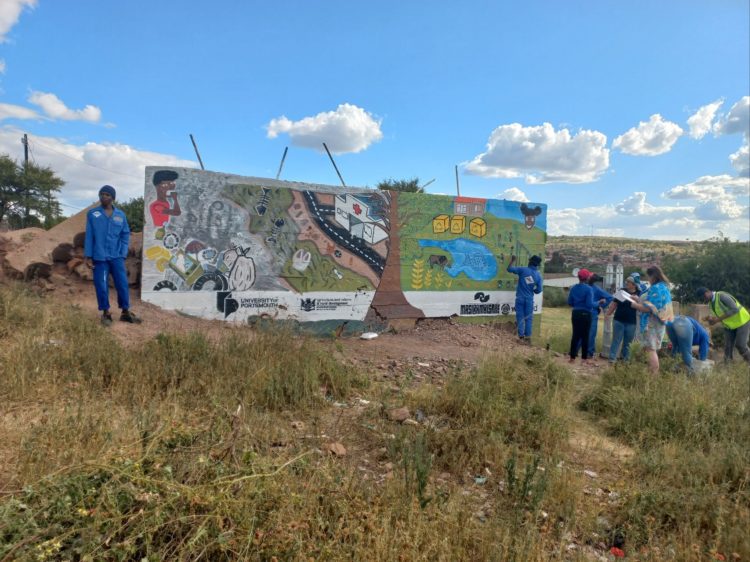 Using art and music to inspire and educate the community of Masibamisane in South Africa turned to dance, rap, and song to educate people about the value of waste. The Waste Aid project, funded by WRAP and UK Research and Innovation, focused on removing the stigma of collecting waste by highlighting how repurposing materials, instead of burning them or sending them to landfill, can lead to increased economic opportunity, improved livelihoods, and better public health while protecting the environment.
As part of the same project, WasteAid worked in partnership with the University of Portsmouth and the Department for Agriculture, Rural Development Land and Environmental Affairs (DARDLEA) to test new approaches for separating, decontaminating, collecting and processing waste including low value plastic. Our whole system approach to waste ‘from household to end markets’ was rigorously tested during the project and the findings are helping to inform our future programmes.
As part of our wider work to support the Circular Economy in South Africa funded with an initial investment from Huhtamaki in 2020 , WasteAid has now run four programmes in country developing a network of engaged members to tackle the waste crisis and to support local environmental innovators and grassroots ‘wastepreneurs’ develop the skills needed to grow their environmental businesses.
WasteAid in partnership with the Chartered Institute of Wastes Management (CIWM) supported the creation of an eye-catching mural on the perimeter wall of the Bakoteh Dumpsite in The Gambia to promote awareness and educate the community on the environmental dangers of burning and dumping waste. The Bakoteh dumpsite occupies a 1 sq/km space right in the centre of the country’s capital which means the mural cannot be missed by residents and visitors alike when travelling around Banjul.
The team worked with community members, volunteers and the Dennakuwo Circular Economy Network to successfully launch the programme which aimed to get people talking about the campaign and create a sense of public ownership to encourage a change in behaviour.
In partnership with Douala III and IV Municipalities and a local plastic recycling enterprise, WasteAid provided young vulnerable and unemployed people in Cameroon with the skills and knowledge to enable them to gain long-term jobs in the green economy.
This UK government-funded project saw the group collect plastic waste from local markets and businesses, after which it was recycled or shredded and sold on to plastic recycling companies. The project in total trained 165 young people in waste, business and life skills and removed almost 50 tonnes of plastic from the environment that would otherwise be destined for rivers, gutters and landfill.
News
How one community in The Gambia is changing its relationship with plastic
In Bakoteh, a community in the Greater Banjul Area of The Gambia, plastic waste has long been a serious problem. Home to the largest dumpsite in...
News
Women farmers in Kalaji turn organic waste into opportunity through the S-ORGANIC project
In Kalaji, a group of women farmers is demonstrating how organic waste can become a productive resource — supporting sustainable agriculture, strengthening livelihoods, and...
News
WasteAid and the Turkish Embassy: A New Partnership for Sustainable Change in The Gambia
On 12 May 2026, WasteAid’s Director of Programmes and Project Officer met with Turkish Ambassador F. Turker Oba at the Turkish Embassy in The...
News
WasteAid and Kanifing Municipal Council sign MoU to strengthen long-standing partnership on sustainable waste management
WasteAid and Kanifing Municipal Council have signed a new Memorandum of Understanding (MoU), marking an important milestone in a partnership that has developed over more than a decade. ...
News
Responding to Community Needs: The Commencement of HUBLINK with Halal Waste Group in Uganda
We have a wealth of evidence demonstrating the positive impact of our Wastepreneur programme. A key driver of this success is our proactive approach—identifying and resolving challenges as soon...
News
Strengthening The Gambia’s Circular Economy: Insights from WasteAid’s Stakeholder Engagement
We have huge plans to further strengthen and scale our programmes in the countries we work in, evidenced by our recent expansion of our...
WasteAid, an environmental and development charity working to implement sustainable waste management and inclusive circular economy programmes across the globe has appointed a new chairman.
The UK-based non-profit organisation, has welcomed environmental entrepreneur Jonathan Straight in the role on its board of trustees.
 WasteAid works with communities and policymakers in low and middle-income countries to implement waste management and recycling programmes. WasteAid’s work improves livelihoods where training and employment opportunities are often lacking, supports grassroots entrepreneurs and promotes circular economy innovation contributing to a cleaner and healthier future for all. Waste management helps address some of the world’s most pressing issues and is critical to achieving sustainable development; the organisation has most recently implemented programmes in Cameroon, Egypt, India, South Africa, The Gambia, and Vietnam.
Programmes conceived and run by WasteAid are helping to reduce climate emissions by reducing the amount of waste that is burned, creating livelihood opportunities for vulnerable communities, improving people’s health and well-being and helping keep plastics out of the world’s oceans.
Previously a trustee with WasteAid, Dr Straight has an impressive track record in the recycling industry spanning three decades across public and private sector organisations. He was a pioneer in the waste industry in the UK, establishing the country’s leading supplier of waste and recycling containers, which he headed for 21 years before exiting in 2014.
Dr Straight said: “WasteAid’s mission is very close to my heart and I’m looking forward to working with the board and the wider team to help the continued expansion of our activity. At a time when the world is facing an environmental crisis, WasteAid and its partners have a critical role to play in empowering local communities to safely manage their waste while also delivering important socioeconomic benefits at a grassroots level.”
Straight previously chaired food recyclers, The Real Junk Food Project, and was a non-executive director of Waterwise for 10 years. Today, along with his role as chairman of WasteAid, he is a trustee with several other charities, a board advisor to surplus food traders, Surplus Group Limited, and a member of the British Library Advisory Council.
Dr Straight takes over as chair of the board from Sarahjane Widdowson who has ably steered the charity through a phenomenal period of growth since 2015. Ms Widdowson will still remain on the board of trustees.
Ceris Turner-Bailes, Chief Executive, WasteAid, added: “We are delighted to welcome Jonathan as chairman and equally offer our heartfelt thanks to Sarahjane for her tireless work for the charity.
Jonathan offers a wealth of expertise in the field of recycling and his commercial knowledge and charitable work are invaluable to us. I look forward to working with him closely as WasteAid continues to develop.
“Jonathan will bring a strong governance voice to the charity as we strive to promote and share locally appropriate, evidence-based and inclusive waste management practices, supporting and empowering others to take positive action.”
Now in its ninth year, WasteAid has grown from strength to strength and has more than quadrupled in size since 2020.
News
How one community in The Gambia is changing its relationship with plastic
In Bakoteh, a community in the Greater Banjul Area of The Gambia, plastic waste has long been a serious problem. Home to the largest dumpsite in...
News
Women farmers in Kalaji turn organic waste into opportunity through the S-ORGANIC project
In Kalaji, a group of women farmers is demonstrating how organic waste can become a productive resource — supporting sustainable agriculture, strengthening livelihoods, and...
News
WasteAid and the Turkish Embassy: A New Partnership for Sustainable Change in The Gambia
On 12 May 2026, WasteAid’s Director of Programmes and Project Officer met with Turkish Ambassador F. Turker Oba at the Turkish Embassy in The...
News
WasteAid and Kanifing Municipal Council sign MoU to strengthen long-standing partnership on sustainable waste management
WasteAid and Kanifing Municipal Council have signed a new Memorandum of Understanding (MoU), marking an important milestone in a partnership that has developed over more than a decade. ...
News
Responding to Community Needs: The Commencement of HUBLINK with Halal Waste Group in Uganda
We have a wealth of evidence demonstrating the positive impact of our Wastepreneur programme. A key driver of this success is our proactive approach—identifying and resolving challenges as soon...
News
Strengthening The Gambia’s Circular Economy: Insights from WasteAid’s Stakeholder Engagement
We have huge plans to further strengthen and scale our programmes in the countries we work in, evidenced by our recent expansion of our...