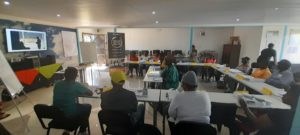
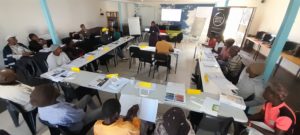
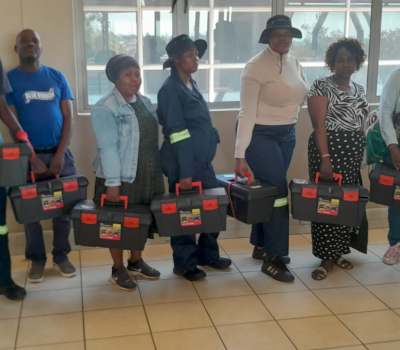
Huhtamaki Waste Entrepreneurial Challenge Fund commenced in the township of Diepsloot on 30 March 2023.
The Challenge fund is designed to support up to 50 informal waste collectors over 2 years to develop their skills and capacity in recycling.
It will involve a tailored 12-week holistic training course which will culminate in an opportunity for candidates to pitch for seed funding to grow their business.
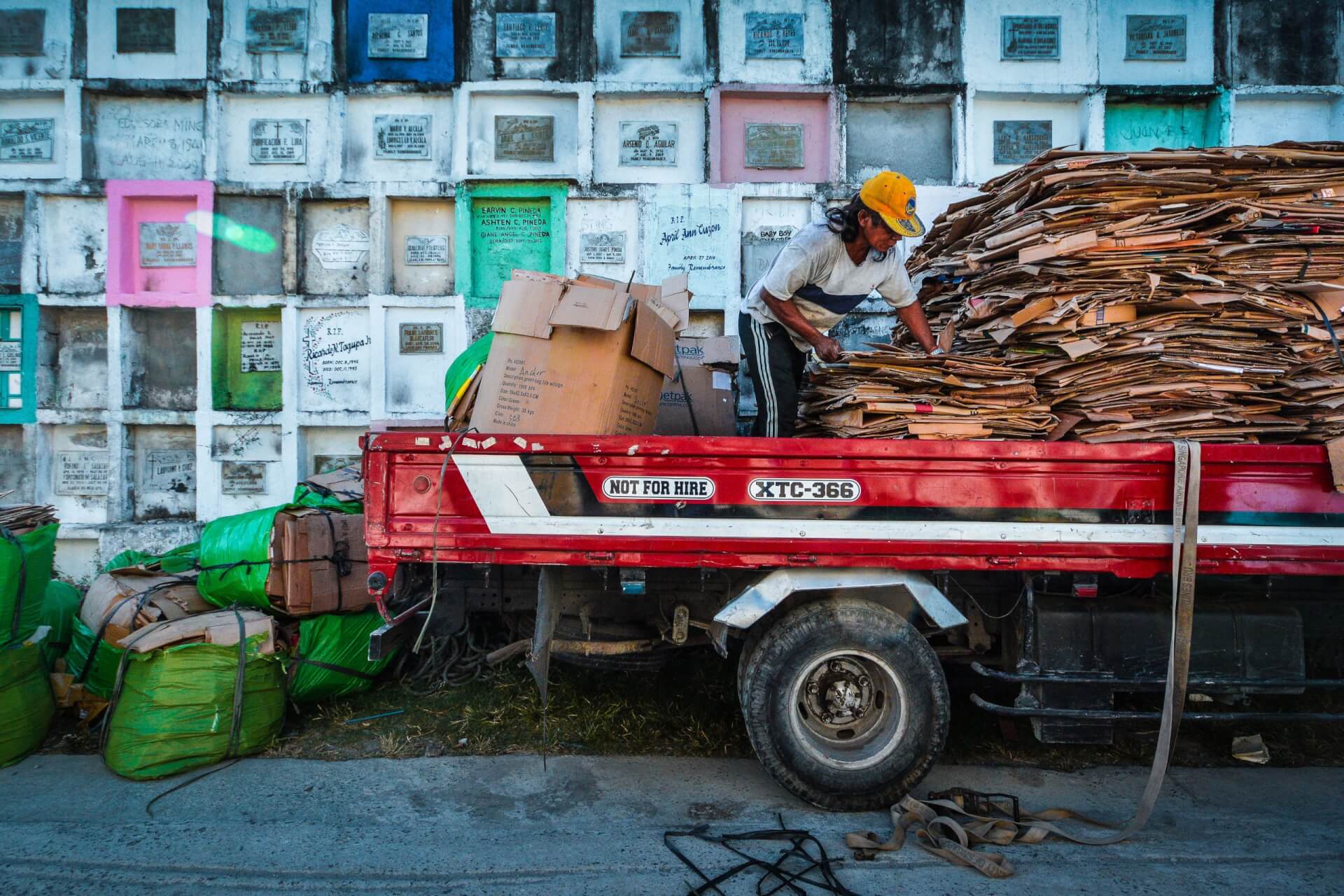
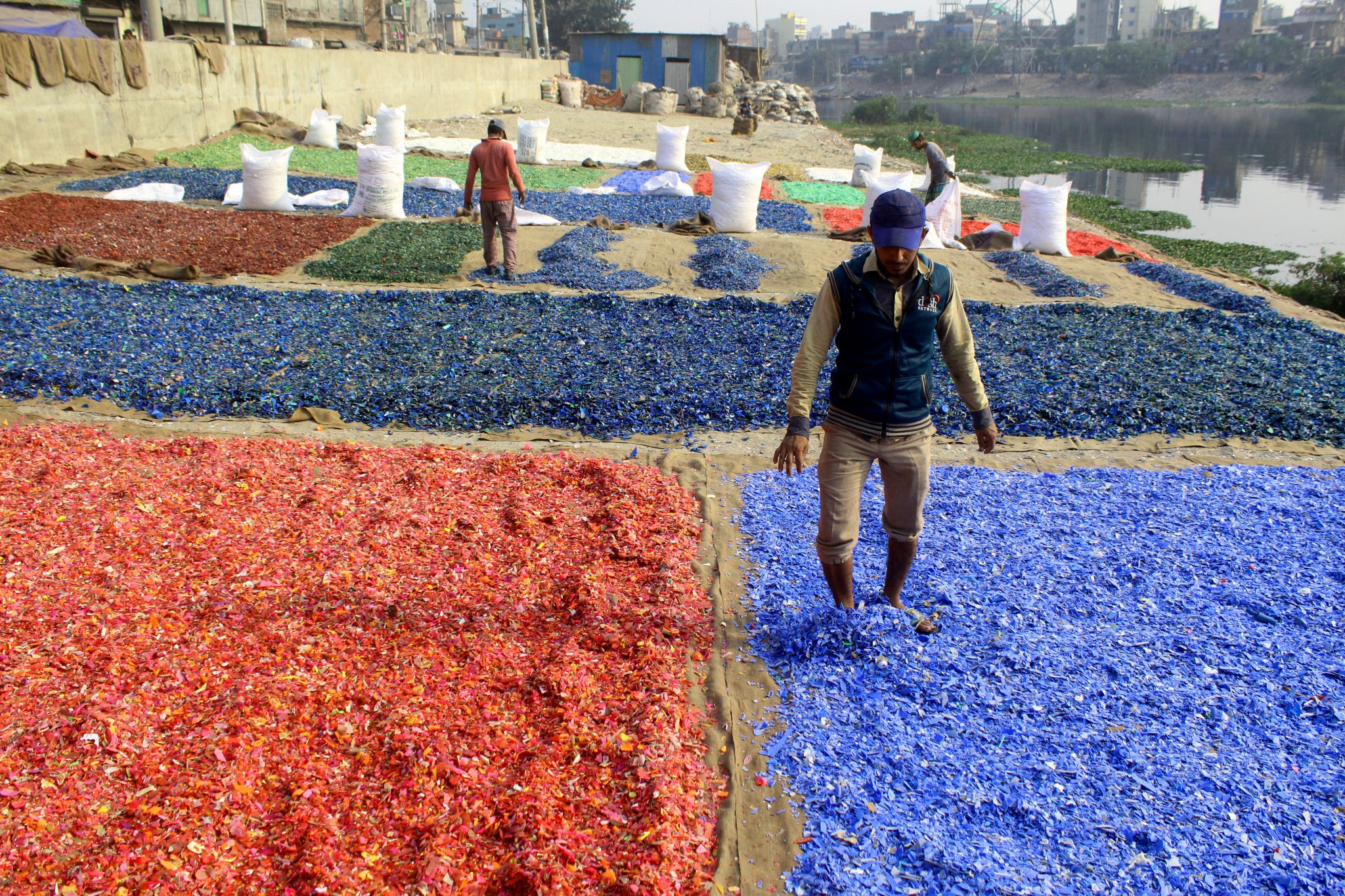
Following on from Huhtamaki’s initial investment in the Circular Economy Network, a leading global sustainable packaging producer is partnering with WasteAid once again to provide investment in South Africa to support young people who are trying to start up in the waste management industry. Over 90% of recycled waste collected in South Africa is carried out by the informal sector. Many of these collectors are low-income earners, living on less than 50 Rand a day (GBP £2.50). WasteAid, a UK based International NGO, has been pioneering approaches in South Africa, Egypt and The Gambia to support young waste collectors to move up the value chain to enable them to increase the income they make from recycling.
The Wastepreneur Challenge is taking place in Diepsloot a township north east of Johannesburg with a population of more than 850,000. After a local advertising campaign and screening process, 39 waste collectors applied and were interviewed and 20 waste collectors have been selected to take part in this first cohort. The candidates come from a wide variety of backgrounds, both female and male, old and young, some have been working in waste for many years but have not received any financial or skills support. All of them are keen to learn more about how to build their businesses.
One of the unique aspects of the training is the amazing team that WasteAid has brought together to deliver the programme. The Wot-If? Trust, led by Gail Styger, has been working with young people in Diepsloot for many years, running a business centre where entrepreneurs can access training and business support as well as IT skills. WasteAid has also brought in core trainers that have a lived experience of working in and building successful businesses within the waste management industry. Harriet Matjila, one of the lead trainers runs an all-female run Buy-Back centre in Johannesburg. Mandlenkosi Nkosi, who is also leading a number of sessions, started out as a waste collector and now runs two thriving plastics recycling businesses in South Africa. Ursula Lebuso will be working alongside Harriet and Mandlenkosi – she is a financial advisor and holds an impressive portfolio of trainings for high performing companies across South Africa. The modules include a range of topics from getting to understand the world of waste and also on personal and business finance.
Michelle Wilson, Director of Programmes at WasteAid says: “We are really excited to continue our partnership with Huhtamaki in South Africa and are proud to be able to support and track the progress of these motivated Wastepreneurs. Through this course we want to show there is pride in working on the waste value chain. Through the course, we see a real opportunity for young and old to build viable livelihoods through recycling.”
“We at Huhtamaki believe that waste is very valuable secondary material. To make this a reality, incentivization, innovation, partnerships and changes in consumer behaviour all play a role. It is very important to support and encourage young Wastepreneurs by showing them the limitless possibilities that the circular economy can offer. In our view, collaboration can make a real difference and that’s why we are delighted with our partnership with WasteAid.” saysShane Van der Nest, General Manager at Huhtamaki South Africa Fibre Foodservice operation.
The training started on 30th March 2023 and will complete on 22nd June 2023, followed by a month of tailored business mentorship. The challenge will culminate in a pitching event where the Wastepreneurs can pitch for seed funding to develop their business idea.
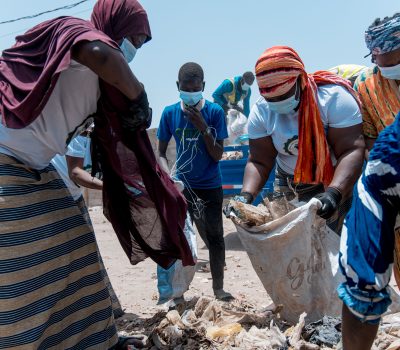
From E-Waste Skills to Sustainable Enterprise: Cosmo City Participants Take the Next Step
What if a broken laptop, television or other electronic appliance wasn’t waste, but an opportunity to repair, reuse and recycle? For participants in WasteAid’s Waste 2...
News
Lufthansa Group and WasteAid Launch Animation Film
WasteAid and Lufthansa Group have launched a new animated training film designed to help cabin crew improve onboard waste segregation, supporting efforts to increase...
News
How one community in The Gambia is changing its relationship with plastic
In Bakoteh, a community in the Greater Banjul Area of The Gambia, plastic waste has long been a serious problem. Home to the largest dumpsite in...
News
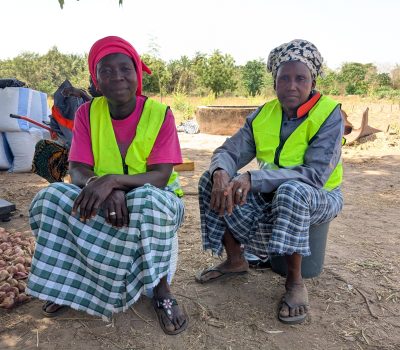
Women farmers in Kalaji turn organic waste into opportunity through the S-ORGANIC project
In Kalaji, a group of women farmers is demonstrating how organic waste can become a productive resource — supporting sustainable agriculture, strengthening livelihoods, and...
News
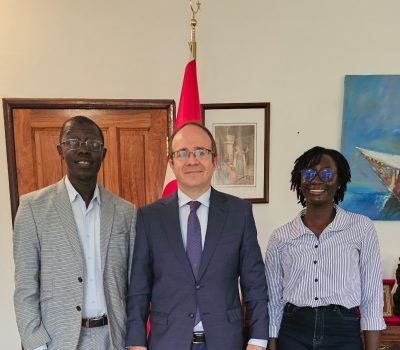
WasteAid and the Turkish Embassy: A New Partnership for Sustainable Change in The Gambia
On 12 May 2026, WasteAid’s Director of Programmes and Project Officer met with Turkish Ambassador F. Turker Oba at the Turkish Embassy in The...
News
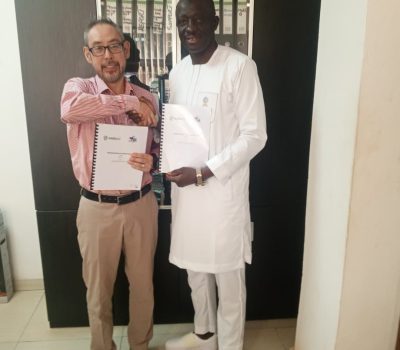
WasteAid and Kanifing Municipal Council sign MoU to strengthen long-standing partnership on sustainable waste management
WasteAid and Kanifing Municipal Council have signed a new Memorandum of Understanding (MoU), marking an important milestone in a partnership that has developed over more than a decade. ...
Sign up to our Newsletter
The circular economy is the most sustainable post-production business model.
The Circular Economy; A User Guide, Walter R Stahel, 2019
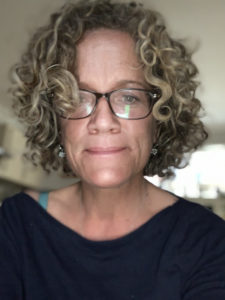
WasteAid’s new Network Director for the Circular Economy Network Project, Michelle Wilson, considers the potential of the circular economy model.
I was really excited to get on board in August to join WasteAid in leading the Circular Economy Network project, funded by global sustainable food packaging leader Huhtamaki. The project focuses on three key hubs, Guwahati in Assam, India, Johannesburg in South Africa and Ho Chi Minh City in Vietnam.
For those who are less familiar with the circular economy, why do we need it, and what exactly is it?
Why do we need it? Walter Stahel, one of the key voices encouraging a transition to a circular economy, describes how it is clear that industrial economies have been hugely successful in creating a society of abundance for some, and has lifted millions out of absolute poverty. However, there is a hidden cost. With the increased wealth, the burden of managing the waste from synthetic materials has increased exponentially and new materials drive waste management costs even higher. Not only financial cost, but the direct impact of this waste on health, environment, and climate outcomes particularly for some of the poorest communities in the world is devastating but viewed as acceptable collateral in the pursuit of economic growth. How do we find the balance between the need for economic growth and environmental and social needs?
Now to the ‘What?’ The circular economy is potentially a solution to achieve this balance, bringing together actors who all have the same end goal in mind. Its adoption recognises the balance needed between economic, environmental and social needs. In the circular economy, economic and ecological considerations go hand in hand because waste prevention is also a prevention of economic and resource losses.
What does it look like in practice? First we need to put new glasses on. The circular economy invites us to step back and relook at the concept of waste. In linear economies, waste from households or from corporates is viewed as firstly having no positive and perhaps more importantly no clear owner. The liability for the product is transferred from the producer to the consumer and the cost to dispose of the waste derived from that product or the product itself is then ultimately handed over to municipalities and states to handle.
The circular economy encourages us to see this ‘fait accompli’ through a new lens, where producers, households, and municipalities rethink it and see that ‘waste’ management process as a ‘resource’ management process. What would happen if ‘waste’ produced by companies and households was not viewed as waste but as a resource: a resource that a company like Huhtamaki can buy back and re-use in their existing processes, or a resource that could be used to replace raw materials in the manufacture of other goods, or a resource that can support the livelihoods of millions of households? In this economy, ownership of waste is no longer assumed to be the complete responsibility of the state.
The circular economy, if adopted, offers new opportunities for innovation and stronger integration along the waste value chain. According to the World Economic Forum, moving toward a circular economy is key, and a “trillion dollar opportunity, with huge opportunities for innovation, job creation, resource conservation and economic growth”.
At WasteAid we see both the challenge but also the opportunity in this project to support the development of a Circular Economy Network in the three key hubs of Guwahati in India, Ho Chi Minh City in Vietnam and Johannesburg, South Africa. This project will seek to support the waste management value chain and to look at ways of ‘closing the loop’ to achieve circularity.
WasteAid has launched this exciting project by recruiting an international team and beginning to identify those stakeholders, enterprises, companies, and state actors who are committed to the circular economy approach, with the aim of strengthening the linkages between them.
By November 2020 we will be launching an online platform where interested parties can find out more about the project, the circular economy, who is active in this space and how to connect with them. The site will also showcase examples of circular economy best practice. WasteAid will work with this network to organise virtual as well as live events to allow these actors to demonstrate best practice in the circular economy. We will then provide training and support on the ground to actors who, with a bit more support, can expand their businesses and increase their positive impact.
As part of the project WasteAid will be running a competition to find two enterprises in each of the three cities that can be supported both financially with small grants and with practical on the ground support to scale up their work. If you are active or want to be active in the circular economy in one of these cities, please get in contact so we can add you to the growing network.
Watch this space for more updates in the coming weeks for updates on the project.
From E-Waste Skills to Sustainable Enterprise: Cosmo City Participants Take the Next Step
What if a broken laptop, television or other electronic appliance wasn’t waste, but an opportunity to repair, reuse and recycle? For participants in WasteAid’s Waste 2...
News
Lufthansa Group and WasteAid Launch Animation Film
WasteAid and Lufthansa Group have launched a new animated training film designed to help cabin crew improve onboard waste segregation, supporting efforts to increase...
News
How one community in The Gambia is changing its relationship with plastic
In Bakoteh, a community in the Greater Banjul Area of The Gambia, plastic waste has long been a serious problem. Home to the largest dumpsite in...
News
Women farmers in Kalaji turn organic waste into opportunity through the S-ORGANIC project
In Kalaji, a group of women farmers is demonstrating how organic waste can become a productive resource — supporting sustainable agriculture, strengthening livelihoods, and...
News
WasteAid and the Turkish Embassy: A New Partnership for Sustainable Change in The Gambia
On 12 May 2026, WasteAid’s Director of Programmes and Project Officer met with Turkish Ambassador F. Turker Oba at the Turkish Embassy in The...
News
WasteAid and Kanifing Municipal Council sign MoU to strengthen long-standing partnership on sustainable waste management
WasteAid and Kanifing Municipal Council have signed a new Memorandum of Understanding (MoU), marking an important milestone in a partnership that has developed over more than a decade. ...