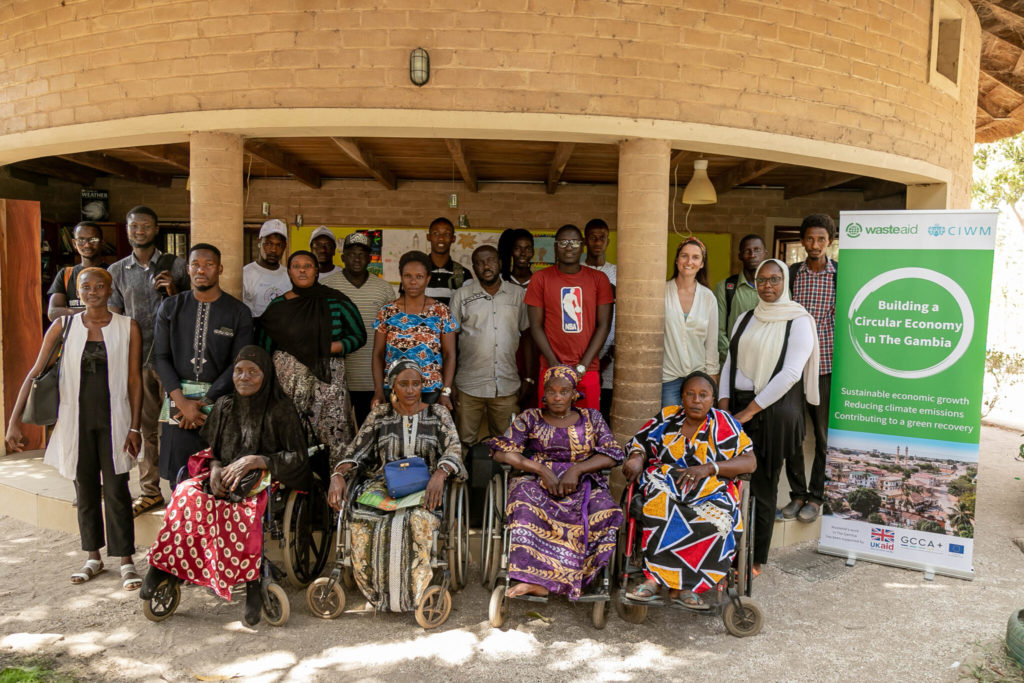
Plastics Recycling Gambia Ltd buys plastic waste from informal waste collectors, established companies, dump sites and individuals. Currently, they have set-up over 21 buying/collection points across the greater Banjul area and Barra. An allocated person is positioned at each collection point to buy plastics from local residents. After collection, the plastic is sorted by colour, type and quality and then stripped of any residual waste. The clean and sorted plastic is ground and packaged into 25 kg bags. The re-grind is used to manufacture local dust bins, tiles, agricultural tools etc., or alternatively sold on the local and regional markets to plastic manufacturing companies (Gambia and Senegal) with demand from Europe as well.
African Swag collection
African Swag collection is a sole proprietary tailoring and design business, owned and managed by a young Gambian woman. The brand offers ready-to-wear and contemporary apparels for men, women and children, and also recycles plastic waste focusing on bubble wrap that’s mostly thrown away, and turns fabric waste into related fashion accessories.
Through 3R methodology (Reuse, Reduce and Recycle), the bubble wrap is turned into sellable products like, shower caps, school bags, safety bags, safety purses, jackets, rain coats, windbreakers, painting mats, servicing aprons for make-up artists, caterers, gardeners, painters and vendors. They also have a production centre where young girls are trained on how to make each of these products and are presented in a showroom for display.
Green Waste Initiative
Green Waste Initiative is a social enterprise that specialises in the production and sale of briquettes. The enterprise produces quality, clean and safe fuel as an alternative to other domestic fuel products such as charcoal and firewood. They also promote educational awareness about the dangers of air pollution from charcoal and firewood, and the contribution of deforestation to global warming. They are currently producing a charcoal briquette called “Rinkoo”, which is a smokeless charcoal briquette that is healthy, safe and durable. The ash produced from the fuel can be utilised as an organic fertiliser for flowers and plants. This product is made purposely to discourage the cutting down of trees for charcoal and firewood production.
“We’re thrilled to welcome these three innovative finalists to the next stage of the Waste to Use competition, it’s fantastic to work with businesses that are reducing waste and expanding their reach by dealing with different waste streams. Our partnership with CIWM has made this project possible in The Gambia through our Circular Economy Network.”
The finalists will now undergo business mentoring and prepare for their final pitch in December 2022, where the top solution will receive an investment of D350,000. This challenge is an opportunity for businesses already pioneering ways to recover, reuse and divert as much waste as possible from landfill in the Greater Banjul Area to develop their businesses, as well as creating much needed livelihoods for people in poverty.
“These three finalists prove that even in a challenging environment, it is possible to have a genuinely circular project that reuses and recycles, moving to a world beyond waste. CIWM is delighted to be involved in the Waste to Use challenge, which will make a genuine difference to the lives of people in the Gambia. We would like to offer our congratulations to the finalists ahead of their pitch, and we look forward to supporting them further through engagement with the CIWM membership base.”
Congratulations to all finalists, and our thanks to all members of the Circular Economy Network for their engagement and contributions to this project.
Please follow the WasteAid on LinkedIn and Twitter for the latest updates.
From E-Waste Skills to Sustainable Enterprise: Cosmo City Participants Take the Next Step
What if a broken laptop, television or other electronic appliance wasn’t waste, but an opportunity to repair, reuse and recycle? For participants in WasteAid’s Waste 2...
News
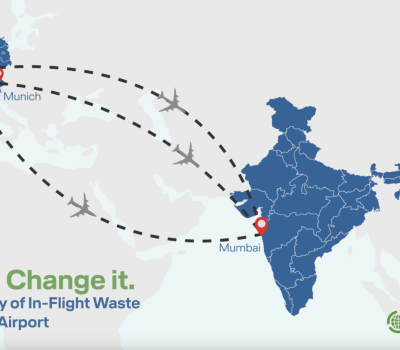
Lufthansa Group and WasteAid Launch Animation Film
WasteAid and Lufthansa Group have launched a new animated training film designed to help cabin crew improve onboard waste segregation, supporting efforts to increase...
News
How one community in The Gambia is changing its relationship with plastic
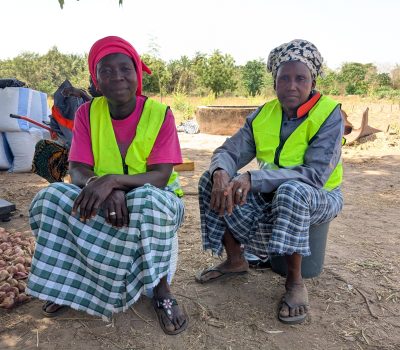
In Bakoteh, a community in the Greater Banjul Area of The Gambia, plastic waste has long been a serious problem. Home to the largest dumpsite in...
News
Women farmers in Kalaji turn organic waste into opportunity through the S-ORGANIC project
In Kalaji, a group of women farmers is demonstrating how organic waste can become a productive resource — supporting sustainable agriculture, strengthening livelihoods, and...
News
WasteAid and the Turkish Embassy: A New Partnership for Sustainable Change in The Gambia
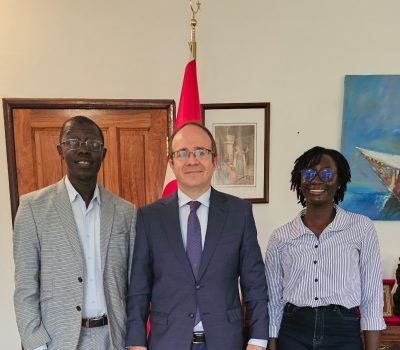
On 12 May 2026, WasteAid’s Director of Programmes and Project Officer met with Turkish Ambassador F. Turker Oba at the Turkish Embassy in The...
News
WasteAid and Kanifing Municipal Council sign MoU to strengthen long-standing partnership on sustainable waste management
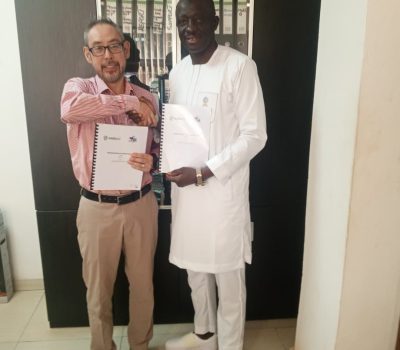
WasteAid and Kanifing Municipal Council have signed a new Memorandum of Understanding (MoU), marking an important milestone in a partnership that has developed over more than a decade. ...
Sign up to our Newsletter
In April 2022 WasteAid was awarded funding through the International Circular Plastic Flagship Projects competition, an initiative led by the Waste Resources Action Programme (WRAP) and UK Research and Innovation (UKRI) to tackle plastic pollution across the globe.
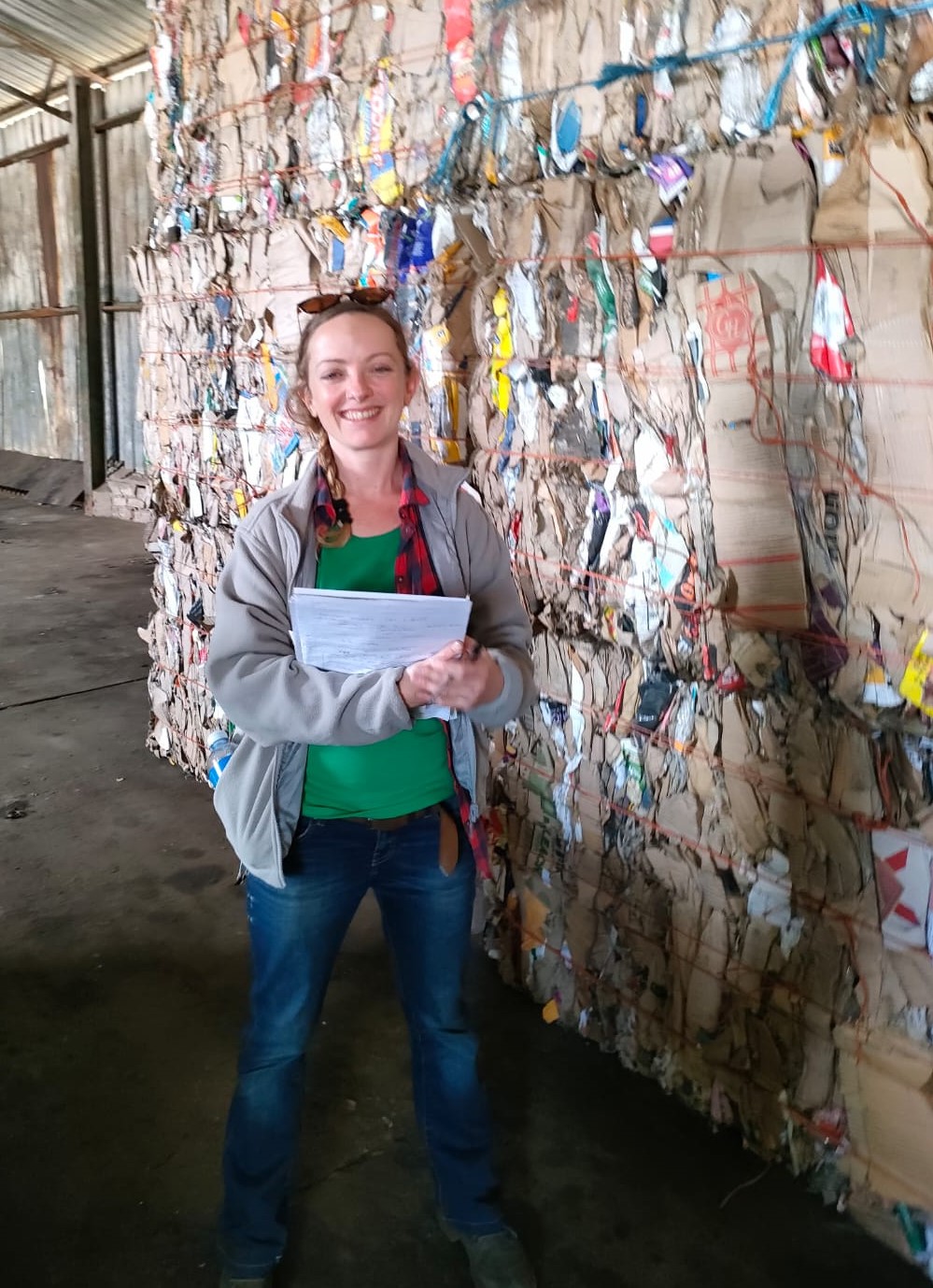
Rebecca Henderson is WasteAid’s newly appointed Project Coordinator in South Africa, and will be overseeing the project. During this interview, we learn about Rebecca’s journey, how she came to work for WasteAid and why this project is so important for sustainable development in South Africa.
Welcome to the WasteAid team, Rebecca! Please could you tell us a bit about your background and how you began working with WasteAid in South Africa?
It’s a brisk winter morning in Johannesburg South Africa and we are planning the next steps of our feasibility study for the WRAP UKRI Circular Plastics Flagship competition. It’s exciting work and often I have to think, “How did I get here?”
Born and bred in Mzanzi “the city of gold”, Johannesburg is defined by stark contrasts between the ‘haves’ and ‘have nots’, degradation and beauty. Acutely aware of this from a young age, my life has been a process of discovering where I can serve the communities and environment that shaped me.
My passion for people and planet led me to volunteer and work with some amazing organisations in different countries over the years, and it was through this journey that I fell into the waste space. I was working as a product developer for a consumer products multinational in London (ironically whilst volunteering for an environmental organisation). A struggle was playing out inside me as I processed piles of overly packaged products destined for a short life in retail where they would be sold, temporarily loved, and then discarded when the next trend was constructed. I made small changes to reduce the waste, but my heart kept bringing me home; where seemingly worthless items are quickly scooped up and held as prized possessions by those who can’t afford trendy new items.
Circling back to my home town, I started working for an organic waste recycling start up where I connected with an amazing community who were all working toward the same goals. Over the years I consulted as a project manager for environmental SMMEs in the waste, research and sustainability fields, while completing a degree in environmental management. It was through these connections that I found WasteAid. I had just completed my degree and was looking for my next project when I got the call that would bring me to where I am now.
What were your first impressions of WasteAid and our work? How do you think WasteAid can help in South Africa?
When I learnt that WasteAid was undertaking a project to deliver waste solutions in rural South Africa, I jumped at the opportunity. People often look at waste as an isolated problem, but WasteAid views waste as a systematic issue that goes to the heart of how we value and utilise resources. Only by looking at the whole value chain and the systems that support it, can we begin to understand the causes and solutions for the issues we create. By connecting with all stakeholders and seeking to understand the core issues at all levels can we create meaningful change. With a wealth of skills, knowledge and an ear to the ground WasteAid is working smart to promote sustainable development.
Please could you give an overview of the amazing work you’re doing on the Masibambisane Circular Economy project, and any engagement you’ve had from local stakeholders so far?
WRAP and UKRI are spearheading a global competition to deliver waste management solutions in developing countries, with a focus on plastics pollution. Through a one-year feasibility study, we will test approaches to drive separation, decontamination, collection, processing and end market development for waste streams including low value plastics.
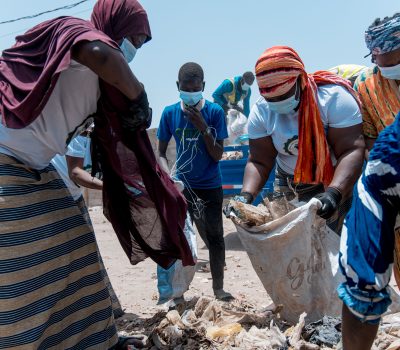
Although recycling of high value materials such as glass is well established in South Africa, low value plastics are often neglected and end up entering our environment; polluting our terrestrial and aquatic systems and impacting on both human and animal health. Due to a lack of waste management, these materials are often dumped and burnt in communities; causing further health and environmental impacts and contributing to climate change.
As a founding member of the Plastics Pact, WRAP seek to ensure that 70% of all plastic packaging is recycled. Through our interventions we will support the goals of the South Africa Plastics Pact by creating and circulating value for waste in rural communities, which often lack the infrastructure and resources that larger cities like Johannesburg have.
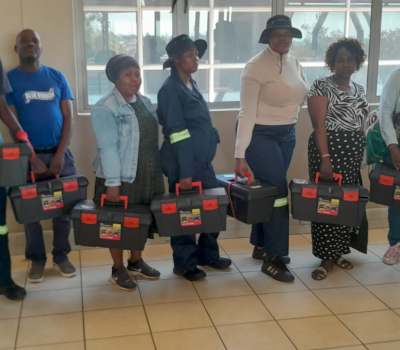
To drive increased source separation and collections at community level, WasteAid is working with local government, community champions, waste collectors and households to undertake a behaviour change campaign in our pilot zone in the Mountain View KwaMhlanga, Mpumalanga. Our partner, the University of Portsmouth, will be supporting the collection phase by implementing creative participatory approaches such as theatre, street art and music to raise awareness, promote participation and support waste collectors. We also have a technical business expert in circular economies who will be supporting local waste players to develop their business capacities, investigate how they can mutually support each other and link them to end markets with the goal of creating more circular systems for the rural economy.
Our amazing collaborative team have been working with local stakeholders to understand the challenges and opportunities in context. We have used participatory approaches to host focus group sessions, conduct community surveys and develop a pilot approach. We have gained the support of the local chief who will assist us in conducting a community meeting at the beginning of September. Here the community will meet the team and help us decide on appropriate interventions to support collections and local waste pickers. We are also developing tailor made business capacity training programmes to support waste collectors and processors that have been working on the ground with the support of DARDLEA, the Mpumalanga Department of Agriculture, Rural Development, Land and Environmental Affairs.
We have been humbled and inspired by the enthusiasm in the community, and are looking forward to working with them to bring the circular economy to life. As a local community member said, “I just want to wake up and be able to breath fresh air.”
What are the current struggles with waste and recycling in South Africa, and what are we hoping to achieve with this project?
By engaging with and learning from various stakeholders we have identified some key struggles that contribute to the current waste management challenges in our communities. It is easy to point to insufficient collections and lack of integration of recycling into a formal waste management system run by government, who have the difficult task of providing services with few resources.
However, education and awareness are equally as important in changing behaviour at community level. Many people understand the value of tins or glass bottles, but more awareness and education are needed on the various types of plastics, their recyclability and value. There is significant work being done on glass, tin and high value plastics like PET because the main driver for informal waste pickers, collectors and buy back centres is cost per kg. Our aim in this project is to see how we can further develop linkages in these markets but also investigate mechanisms to drive more collections and processing of waste that has lower market value, after all: ALL waste has value. By facilitating mutually beneficial linkages between those in the waste sector we hope to improve the collections and processing of recyclables to feed back into local end markets.
Communities are also blamed for the state of their environments, but are often left with no other option but to burn their waste, despite awareness of the health impacts. Additionally, plastic litter is eaten by livestock leading to illness and mortality of livestock, and subsequent poisoning of humans who consume the meat. As WasteAid we hope to tackle these issues by creating awareness, providing mechanisms to join the dots and support actors who are already doing great work in their communities.
Though not in the scope of this project, it is also important to recognise the role that producers play. WasteAid recognises that policy developments such as the Extended Producer Responsibility are key to tackling the early stages of plastics production by rethinking how products are made. We look forward to working with key role players in South Africa for future projects.
From E-Waste Skills to Sustainable Enterprise: Cosmo City Participants Take the Next Step
What if a broken laptop, television or other electronic appliance wasn’t waste, but an opportunity to repair, reuse and recycle? For participants in WasteAid’s Waste 2...
News
Lufthansa Group and WasteAid Launch Animation Film
WasteAid and Lufthansa Group have launched a new animated training film designed to help cabin crew improve onboard waste segregation, supporting efforts to increase...
News
How one community in The Gambia is changing its relationship with plastic
In Bakoteh, a community in the Greater Banjul Area of The Gambia, plastic waste has long been a serious problem. Home to the largest dumpsite in...
News
Women farmers in Kalaji turn organic waste into opportunity through the S-ORGANIC project
In Kalaji, a group of women farmers is demonstrating how organic waste can become a productive resource — supporting sustainable agriculture, strengthening livelihoods, and...
News
WasteAid and the Turkish Embassy: A New Partnership for Sustainable Change in The Gambia
On 12 May 2026, WasteAid’s Director of Programmes and Project Officer met with Turkish Ambassador F. Turker Oba at the Turkish Embassy in The...
News
WasteAid and Kanifing Municipal Council sign MoU to strengthen long-standing partnership on sustainable waste management
WasteAid and Kanifing Municipal Council have signed a new Memorandum of Understanding (MoU), marking an important milestone in a partnership that has developed over more than a decade. ...
Sign up to our Newsletter
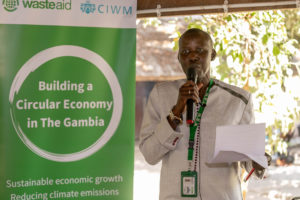
On 19 May 2022, WasteAid brought together local government, municipalities, national-level stakeholders and community-based organisations at MyFarm in Sukuta Nema, to share experiences and ideas on improving solid waste management in The Gambia.
The Gambia is the smallest country in mainland Africa, with a population of 2 million. It is among the least developed countries in the world, ranking 172 out of 189 countries on the Human Development Index. Most waste in The Gambia is disposed of at informal dumpsites, where opportunities to recycle and recover value are not leveraged, and where people put themselves at significant risk by scavenging amongst toxic waste. WasteAid’s Circular Economy Network Project, known locally as the Dennakuwo Project, will bridge gaps between waste management professionals and practices in The Gambia by supporting innovation and collaborative partnerships. It will also address health risks to people and the planet by improving working conditions through training and developing new waste and recycling livelihood initiatives.
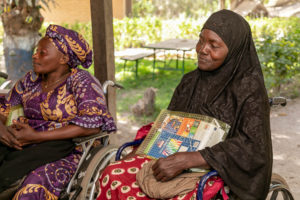
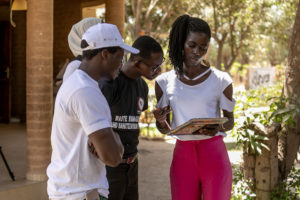
The meeting was moderated by WasteAid’s Project Coordinator in The Gambia, Ingrid Henrys, who informed local stakeholders on project activities and registered interest in joining and operating a circular economy network. Twenty-five stakeholders across the waste management, recycling and environmental protection sectors attended the meeting, taking part in discussions and team building exercises with everyone expressing a keenness to join the network.
During the meeting, Sambou Kinteh, Climate Change Officer from the Ministry of Environment, Climate Change and Natural Resources (MECCNAR) gave an informative presentation including a discussion on government policies and the current institutional framework relating to waste management. This was followed by an innovative presentation and discussion on the policies developed to support a circular economy led by Dr Dawda Badgie, the Deputy Executive Director of the National Environment Agency (NEA).
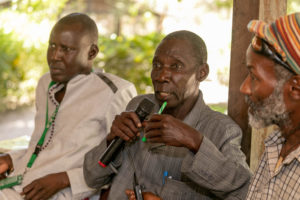
Dr Dawda Badgie and Kanifing Municipality Council’s representative Mr Doudou Jallow, both highlighted the need to add value to waste to ensure collective participation and benefit to individuals and for society. Participants shared their experiences and challenges in reaching their waste management goals.
Dr Badgie stated that the Circular Economy Network “is a very good initiative, where the necessary key stakeholders are present. We are here to share ideas, share different perspectives on how we see waste, and how we can make the best use of this waste”.
The Circular Economy Network Project will be shaped by local stakeholders who are interested in collaborating and joining the network. A significant aim of the project is to ensure that it is sustainable, and that the Circular Economy Network will continue to be operational and effective in delivering improved waste management practices in The Gambia following the end of the project in 2023. During the meeting, the participants went on to propose the conception of a steering committee to include community-based and private sector organisations within the network, to work with the advisory board and identify thematic areas of focus for the Circular Economy Network.
The second networking meeting will take place in June 2022, with members addressing key areas of interest such as waste generated by chemical fertiliser and the production of organic fertiliser, alternative packaging solutions, and local regulations on waste management in line with the circular economy model.
WasteAid along with the project funder and technical supporter, the Chartered Institution of Wastes Management (CIWM) will soon be launching the Waste to Use Challenge. This challenge is an opportunity for businesses already pioneering ways to recover, reuse and ultimately divert as much waste from landfill in the Greater Banjul Area as well as creating much needed livelihoods for people in poverty, to receive seed funding to develop their successful business model. The top three applicants will be given business mentoring and support, and the best solution will receive an investment of D350,000. Any businesses looking to apply will first need to become a member of the Circular Economy Network in The Gambia.
WasteAid welcomes all interested parties to join the Circular Economy Network and to register their interest in the Waste to Use Challenge by contacting WasteAid’s Project Coordinator in The Gambia, via gambiaCEN@wasteaid.org.
From E-Waste Skills to Sustainable Enterprise: Cosmo City Participants Take the Next Step
What if a broken laptop, television or other electronic appliance wasn’t waste, but an opportunity to repair, reuse and recycle? For participants in WasteAid’s Waste 2...
News
Lufthansa Group and WasteAid Launch Animation Film
WasteAid and Lufthansa Group have launched a new animated training film designed to help cabin crew improve onboard waste segregation, supporting efforts to increase...
News
How one community in The Gambia is changing its relationship with plastic
In Bakoteh, a community in the Greater Banjul Area of The Gambia, plastic waste has long been a serious problem. Home to the largest dumpsite in...
News
Women farmers in Kalaji turn organic waste into opportunity through the S-ORGANIC project
In Kalaji, a group of women farmers is demonstrating how organic waste can become a productive resource — supporting sustainable agriculture, strengthening livelihoods, and...
News
WasteAid and the Turkish Embassy: A New Partnership for Sustainable Change in The Gambia
On 12 May 2026, WasteAid’s Director of Programmes and Project Officer met with Turkish Ambassador F. Turker Oba at the Turkish Embassy in The...
News
WasteAid and Kanifing Municipal Council sign MoU to strengthen long-standing partnership on sustainable waste management
WasteAid and Kanifing Municipal Council have signed a new Memorandum of Understanding (MoU), marking an important milestone in a partnership that has developed over more than a decade. ...

 Plastics Recycling Gambia Ltd buys plastic waste from informal waste collectors, established companies, dump sites and individuals. Currently, they have set-up over 21 buying/collection points across the greater Banjul area and Barra. An allocated person is positioned at each collection point to buy plastics from local residents. After collection, the plastic is sorted by colour, type and quality and then stripped of any residual waste. The clean and sorted plastic is ground and packaged into 25 kg bags. The re-grind is used to manufacture local dust bins, tiles, agricultural tools etc., or alternatively sold on the local and regional markets to plastic manufacturing companies (Gambia and Senegal) with demand from Europe as well.
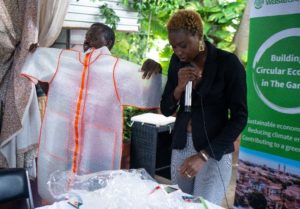 African Swag collection is a sole proprietary tailoring and design business, owned and managed by a young Gambian woman. The brand offers ready-to-wear and contemporary apparels for men, women and children, and also recycles plastic waste focusing on bubble wrap that’s mostly thrown away, and turns fabric waste into related fashion accessories.
 Green Waste Initiative is a social enterprise that specialises in the production and sale of briquettes. The enterprise produces quality, clean and safe fuel as an alternative to other domestic fuel products such as charcoal and firewood. They also promote educational awareness about the dangers of air pollution from charcoal and firewood, and the contribution of deforestation to global warming. They are currently producing a charcoal briquette called “Rinkoo”, which is a smokeless charcoal briquette that is healthy, safe and durable. The ash produced from the fuel can be utilised as an organic fertiliser for flowers and plants. This product is made purposely to discourage the cutting down of trees for charcoal and firewood production.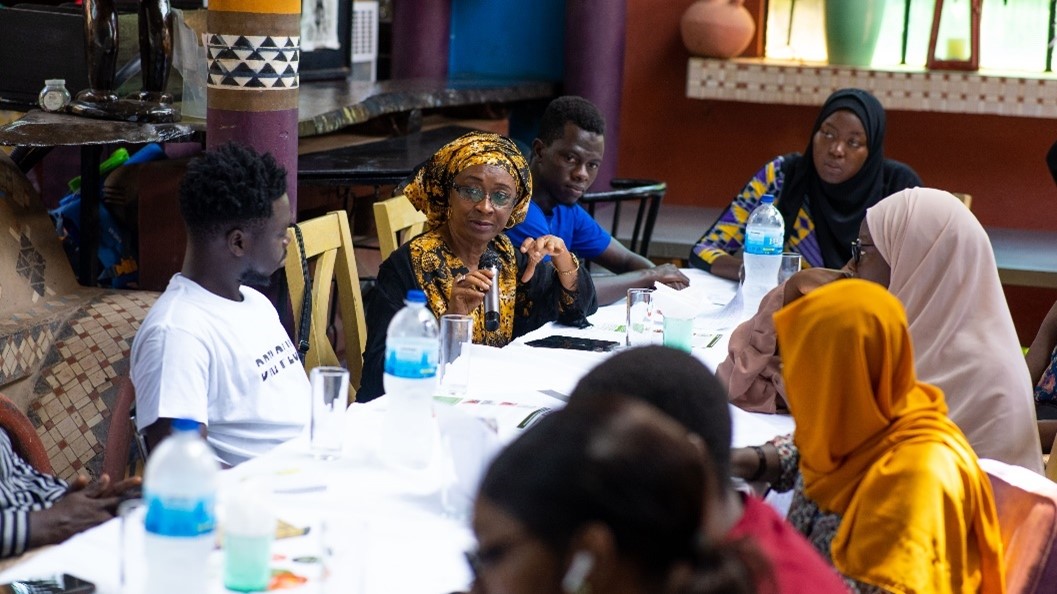

 Welcome to the WasteAid team, Rebecca! Please could you tell us a bit about your background and how you began working with WasteAid in South Africa?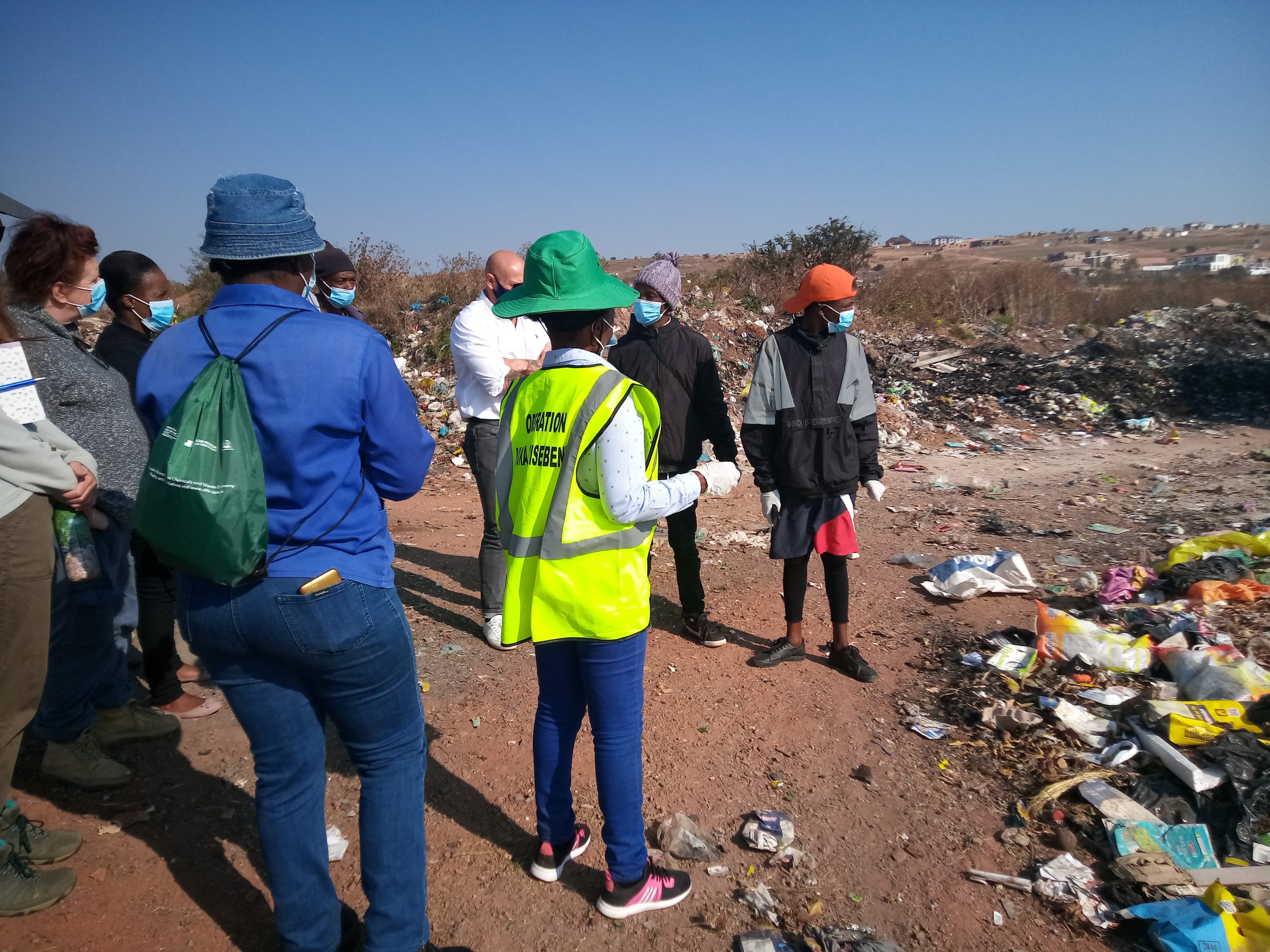
 By engaging with and learning from various stakeholders we have identified some key struggles that contribute to the current waste management challenges in our communities. It is easy to point to insufficient collections and lack of integration of recycling into a formal waste management system run by government, who have the difficult task of providing services with few resources.