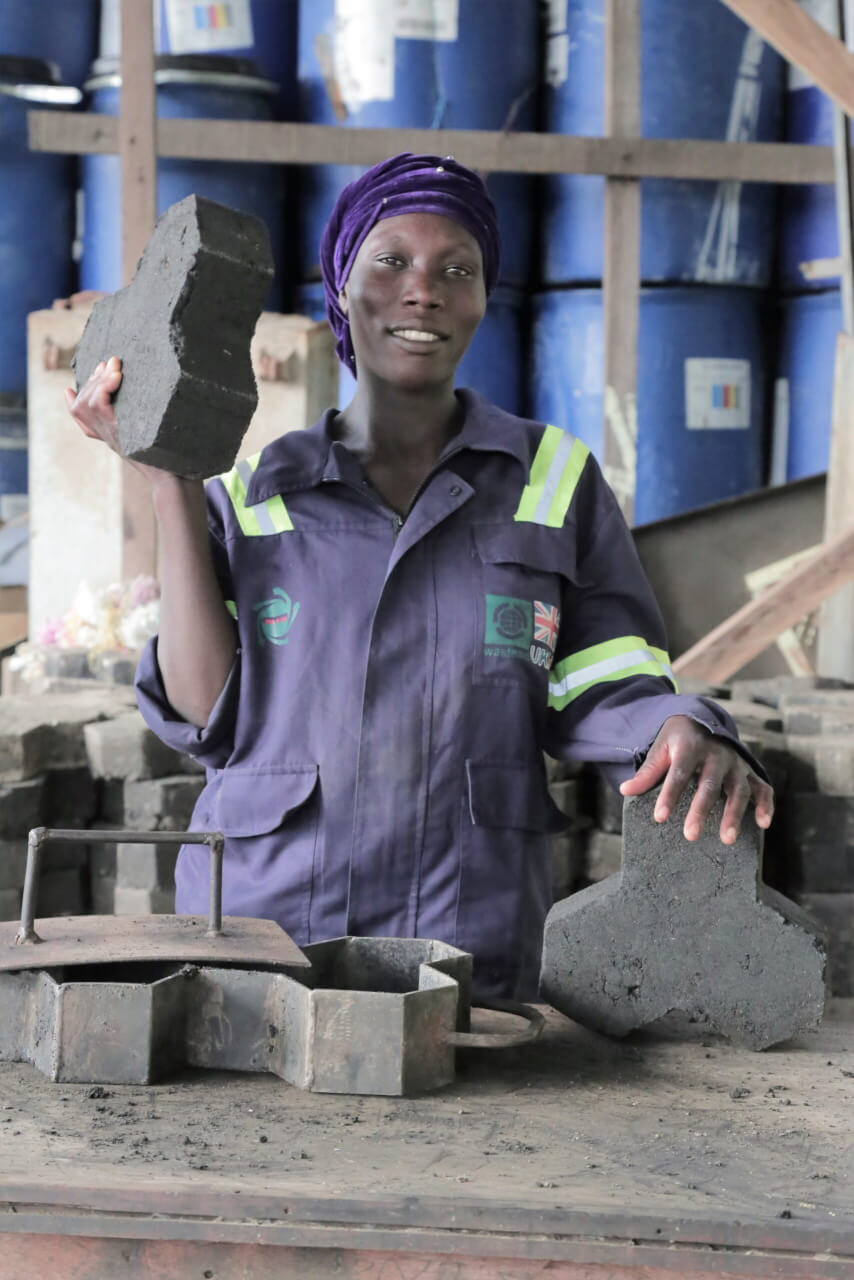
In Ghana, waste segregation is the job of informal waste collectors, as is the case for most lower- to middle-income countries. Founder and Executive Director of Environment360, Cordie Aziz, shares how the Circular Innovation Hub seeks to strengthen the plastics value chain by developing a market for local recycled plastics and improving the livelihoods of local women waste workers.
The need for circular innovation in Ghana
WHO estimates that each year in Ghana, 4.8 million tonnes of waste is generated. Local municipalities note that 20% of this figure is plastic waste. However, the United Nation’s COMTRADE has found that Ghana’s import of plastics and articles was worth a total of $499.85 million during 2019. Meanwhile, the Ghana Environmental Protection Agency has acknowledged that 97% of imported plastic ends up as waste, and a report from the Ghana Plastic Action Partnership notes that plastic recycling rates in the country are only at 5%.
In Ghana, like most developing countries, waste segregation is the job informal waste collectors, also known as waste pickers. WIEGO has noted that in the capital of Ghana, Accra, there are between 3,000-5,000 waste pickers. A recent study published by the World Economic Forum has acknowledged that women make up the majority of community waste pickers. Despite their collection efforts and knowledge, very few have the ability to move up the economic chain; lack of access to technology, transportation and finance are among the top reasons women waste pickers are stuck at the bottom of the value chain.
Launching the Circular Innovation Hub in Ghana
In September 2021, Environment360, with funding from the Australian Direct Aid Programme, launched the Circular Innovation Hub in Dodowa (a town in the Greater Accra Region of Ghana). The Circular Innovation Hub seeks to strengthen the plastic value chain by developing a market for local recycled plastics, while also taking women waste pickers from collectors to small scale recyclers.
To achieve this goal, the Circular Innovation Hub identifies local businesses and works with them to determine products within their value chain that can be made with recycled plastics. Businesses that partner with the hub are committed to creating and prototyping a product that moves directly into their product line, once all tests are successfully conducted.
In addition to partnering with local businesses, the Circular Innovation Hub identifies and trains women waste pickers to manufacture the products created for the local businesses. It does this in three steps. The first step is an “Empower Up n Around” training programme that helps women defy traditional gender roles and teaches them basic design principles. After graduating from this section, women enter a one-year “Tech-Know” training programme, which teaches them how to operate and service a modular recycling technology. Upon successful completion of the “Tech-Know” programme, women are given the opportunity to own their own modular open source recycling technology and create products for the companies that the hub has an existing relationship with.
The Circular Innovation Hub graduated its first seven women from the “Empower Up N Around” training on 16 September, 2021. The class worked with a Kumasi-based company, Bamboo Bikes, to design the grips of handlebars. The chosen handlebar design will move into field testing in October.
Ultimately, the hub seeks to train and move 100 women waste pickers into machine ownership over the next five years. It is projected that more than 60 tonnes of plastic will be recycled into products for local businesses in Ghana and 1,000 jobs created.
This project is an important first step to achieving circularity in the Ghana market and reducing the amount of plastic that is imported into the country, while also increasing recycling rates. The Circular Innovation Hub is also one of the few technology-driven solutions being implemented in Ghana to help address the plastic waste issue. The modular design of the machine makes it easily adaptable in both rural and urban communities, and the ability to create new products for the market is never-ending. It is envisioned that this project will be easily replicated amongst all African countries and can help spur the green economy and make plastic collection more attractive to youth as a viable employment opportunity.
To find out more about the Circular innovation Hub, visit the Environment360 website or email info@environment360gh.org.
About the author
Cordie Aziz founded Environment360 in December of 2014, to support the creation of circular economies that have economic and environmental impact. During the past six years, she has become an expert in supporting informal sector plastic waste collectors, also known as waste pickers. Ms. Aziz was a pivotal force in the creation of the Ghana Recycling Initiative by Private Enterprise (GRIPE). She is one of the original founders of the Plastic Recyclers and Aggregators Association of Ghana (PRAAG); she served as President of the organisation until June 2021. She is passionate about working with all stakeholders along the value chain to create an inclusive waste management system that create jobs for youth and women. In the organisation’s newest venture, the Circular Innovation Hub, Ms. Aziz seeks to move women waste pickers from collectors to innovators using an open source modular recycling technology.
From E-Waste Skills to Sustainable Enterprise: Cosmo City Participants Take the Next Step
What if a broken laptop, television or other electronic appliance wasn’t waste, but an opportunity to repair, reuse and recycle? For participants in WasteAid’s Waste 2...
News
Lufthansa Group and WasteAid Launch Animation Film
WasteAid and Lufthansa Group have launched a new animated training film designed to help cabin crew improve onboard waste segregation, supporting efforts to increase...
News
How one community in The Gambia is changing its relationship with plastic
In Bakoteh, a community in the Greater Banjul Area of The Gambia, plastic waste has long been a serious problem. Home to the largest dumpsite in...
News
Women farmers in Kalaji turn organic waste into opportunity through the S-ORGANIC project
In Kalaji, a group of women farmers is demonstrating how organic waste can become a productive resource — supporting sustainable agriculture, strengthening livelihoods, and...
News
WasteAid and the Turkish Embassy: A New Partnership for Sustainable Change in The Gambia
On 12 May 2026, WasteAid’s Director of Programmes and Project Officer met with Turkish Ambassador F. Turker Oba at the Turkish Embassy in The...
News
WasteAid and Kanifing Municipal Council sign MoU to strengthen long-standing partnership on sustainable waste management
WasteAid and Kanifing Municipal Council have signed a new Memorandum of Understanding (MoU), marking an important milestone in a partnership that has developed over more than a decade. ...
Sign up to our Newsletter
By Steve Oliver, Founder & CEO musicMagpie
With COP-26 fast approaching, much of the attention around the event has been centred on the key themes of ending coal power, phasing out polluting vehicles, making agriculture more sustainable, tackling deforestation and supporting developing countries with finance.
While these issues are of course absolutely critical, we here at musicMagpie would suggest that there are other glaring omissions and for us that is recycling and reuse. And, more specifically, the recycling and reuse of electronics and electronic waste, or “e-waste”.
E-waste refers to discarded electronic products with a battery or plug, such as computers and mobile phones. E-waste which isn’t recycled can end up in landfill and poses all kinds of environmental issues. Over time, the toxic chemicals inside our tech then seep into the earth’s soil and water. The chemicals released when tech is burned pollute the air, while the refrigerants found in temperature exchange equipment are greenhouse gases.
Failing to recycle e-waste also means the precious materials contained in tech products can’t be reused. This means more primary raw materials need to be extracted and refined, which leads to an increase in greenhouse gas emissions.
The UN estimates that 53 million tonnes of e-waste are generated globally every year, based on 2019’s figures. It expects this figure to double by 2050, making it the fastest-growing waste stream in the world.
However, it is an issue that simply doesn’t get the level of attention that it deserves, and consumer awareness is far lower than it should be: currently, in 2019, globally, only 17.4 per cent of electronic waste was officially documented as formally collected and recycled.
So, the scale and the urgency of the challenge here is huge. But the good news is that there are solutions and people need to be educated about the problem, then incentivised to act.
musicMagpie is just one small example of what can be done. Our circular economy model allows people to sell us their unwanted technology products. We then recycle and refurbish the product before selling it or renting it to someone else. 95% of the products we buy from our customers are refurbished and we use the parts from the remaining 5% to refurbish other items. In this way, nearly half a million consumer technology products per year are given a second life, and thousands of tonnes of gadgets are prevented from being disposed of in an environmentally unfriendly manner.
That’s not a bad starting point, but there is so much more to be done. Our research has found that in the UK alone, households are sitting on £16.5 billion of unused gadgets. Or to put it another way, every UK household estimates it has around £550 worth of consumer technology lying around that is rapidly depreciating. Furthermore, four in five people in the UK don’t know what e-waste is and, when given the definition of e-waste, nearly a third didn’t believe it damaged the environment or were unsure, while 45% weren’t even aware it impacted climate change.
As the largest recycler of consumer mobile phones in the UK, we’re proud to be playing our part – and our mantra is to be “smart for the consumer and smart for the planet”. We’re also delighted that our strong environmental credentials have been recognised by the London Stock Exchange, who recently awarded us with their Green Economy Mark – which recognises companies that derive 50 per cent or more of their total annual revenues from products and services that contribute to the global Green Economy.
But we are not complacent, and we are well aware that we are only just scratching the surface – both of the challenge and of the opportunity. Forbes recently estimated that the global re-commerce market is worth $24 billion and will rise to $51 billion by 2023 as consumers become increasingly aware of the impact on the environment and so seek to make more sustainable choices. We are certainly seeing this for ourselves, as the trends towards ethical shopping increase and people are more and more willing to buy refurbished products instead of new ones, whether that be for environmental concerns or simply to save money.
In fact, the circular economy is now a well-established consumer “mega-trend” as demonstrated by a number of retailers that have established specific “green” brands or recycling schemes for clothes and other household items.
But we still believe that the pace of change isn’t fast enough, and that more should be done to highlight the issue to consumers and on the global political stage. That’s why we created ‘Mount Recyclemore’ – a giant Mount Rushmore-style sculpture of the G7 leaders’ heads, made entirely of discarded electronics – and erected it on a beach near to Carbis Bay during the G7 summit earlier this year.
It came about following research from the Global E-waste Monitor which showed that G7 nations alone generated almost 15.9 million tonnes of e-waste a year in 2019, with the US (6.9m), Japan (2.6m), Germany (1.6m) and UK (1.6m) being the worst offenders. The campaign garnered worldwide media attention, and as part of it we were delighted to partner with WasteAid – donating £1 for each piece of consumer tech that was traded in during the month of June. In addition, sellers had the option to donate the value offered by us to the charity. After a brief stint outside our offices in Stockport, the sculpture now stands proudly at the Eden Project in Cornwall where it first met the G7 leaders.
Our hope is that it will turn heads, spark conversations and prompt people to take action. But in truth, meaningful progress will only be made if e-waste is part of the conversation along with the many other urgent topics that currently lead the climate change debate.
About the Author
Steve Oliver is CEO of musicMagpie, a leading re-commerce business in the UK and US specialising in refurbished consumer technology, which he co-founded in 2007 from his garage in Stockport, Greater Manchester.
Today, musicMagpie has an established presence in the UK, with operations in Stockport, Greater Manchester, and in the US in Atlanta, Georgia. Operating through its two trusted brands - musicMagpie in the UK and Decluttr in the US – the business’s core model is simple: to provide consumers with a smart, sustainable and trusted way to buy, rent and sell refurbished consumer technology and physical media products.
musicMagpie floated on London Stock Exchange’s AIM market in April 2021, with a valuation of £208m. On admission, the company received the London Stock Exchange’s Green Economy Mark, which recognises companies that derive over 50 percent of their total annual revenue from products and services that contribute to the global ‘Green Economy’. musicMagpie is the biggest ever global seller on eBay, the largest third-party seller on Amazon Marketplace, and employs approx 700 people.
From E-Waste Skills to Sustainable Enterprise: Cosmo City Participants Take the Next Step
What if a broken laptop, television or other electronic appliance wasn’t waste, but an opportunity to repair, reuse and recycle? For participants in WasteAid’s Waste 2...
News
Lufthansa Group and WasteAid Launch Animation Film
WasteAid and Lufthansa Group have launched a new animated training film designed to help cabin crew improve onboard waste segregation, supporting efforts to increase...
News
How one community in The Gambia is changing its relationship with plastic
In Bakoteh, a community in the Greater Banjul Area of The Gambia, plastic waste has long been a serious problem. Home to the largest dumpsite in...
News
Women farmers in Kalaji turn organic waste into opportunity through the S-ORGANIC project
In Kalaji, a group of women farmers is demonstrating how organic waste can become a productive resource — supporting sustainable agriculture, strengthening livelihoods, and...
News
WasteAid and the Turkish Embassy: A New Partnership for Sustainable Change in The Gambia
On 12 May 2026, WasteAid’s Director of Programmes and Project Officer met with Turkish Ambassador F. Turker Oba at the Turkish Embassy in The...
News
WasteAid and Kanifing Municipal Council sign MoU to strengthen long-standing partnership on sustainable waste management
WasteAid and Kanifing Municipal Council have signed a new Memorandum of Understanding (MoU), marking an important milestone in a partnership that has developed over more than a decade. ...
Sign up to our Newsletter
An overlooked niche in the energy trade is keeping high-tech waste out of the trash — and helping to connect millions of people to reliable electricity. Bloomberg columnist on emerging markets, technology and waste, Adam Minter, explores. This article first appeared in Bloomberg Opinion and is shared with permission from the author.
A few years ago, I visited a dusty warehouse selling secondhand clothes in Cotonou, Benin. In the back, behind bundles of used Canadian T-shirts, were two pallets of unboxed solar panels. I assumed they were destined for the roof. One of the employees told me otherwise. “Our boss sells them to his customers across the border,” she said, referring to Nigeria. “They use them for water pumps on the farms.” A few minutes later, the boss showed up and told me that he expected secondhand solar would soon be a bigger business than the centuries-old, multibillion-dollar used-clothing trade.
Across the developing world, homeowners, farmers, and businesses are turning to cheap, secondhand solar to fill power gaps left by governments and utilities. To meet that demand, businesses ranging from individual sellers on Facebook Marketplace to specialised brokerages are getting into the trade. Earlier this month, Marubeni Corp., one of Japan’s largest trading houses, announced that it’s establishing a blockchain-based market for such panels. Collectively, these businesses will likely play a crucial role in bringing renewable energy to the world’s emerging markets — and keeping high-tech waste out of the trash.
In 2016, the International Renewable Energy Agency estimated that as much as 78 million tons of solar-panel waste will be generated by 2050. That’s almost certainly an undercount. Over the past decade, falling prices and improved efficiency in newer models have offered a strong incentive to replace solar panels earlier than their intended lifespan. By one estimate, those upgrades could lead to 50 times more waste than the agency has predicted within five years.
In developed countries, recycling — not reuse and resale — tends to be the knee-jerk response to managing such waste. But there are two problems with recycling unwanted solar panels. First, doing so is far costlier than simply landfilling them. Second, waste panels often aren’t waste; they’re just degraded by time in the sun or less efficient than newer models. They may not be good enough for San Francisco homeowners and cutting-edge utilities, but they work perfectly well for anyone in a sunny climate in need of stable, off-grid power who doesn’t want to pay full price.
That’s potentially a huge market. Between 2010 and 2019, the number of people living without electricity declined from 1.2 billion to 759 million worldwide. Some of that gap was closed by new power lines and other transmission facilities. But most of it was achieved by installing small solar systems designed to power a village, farm or even a single home. As of last year, 420 million people got their electricity from off-grid solar systems. By 2030, according to the World Bank, that number could nearly double.
Nobody knows how much of this market has been met by secondhand panels and systems. But the volumes already being sold are tantalizingly large. Laid Sahraoui, founder and managing director of Hong Kong-based R3 Tech, a major broker, “pessimistically” guessed that there are 10 million used solar panels on the global market. Melissa Schmid, of EnergyBin, a Minnesota-based exchange for buyers and sellers of used and overstocked solar equipment, told me that the company markets 1.5 million pieces of photovoltaic equipment on its site. “At points, we have five million.”
The deals pulled from this inventory can be massive. Schmid mentioned a recent shipment of 25 megawatts-worth of panels (weighing as much as 2,000 tons) to Afghanistan from the U.S. For Sahraoui, such deals are common. Last year, he traveled to Texas to buy “hundreds of thousands” of hail-damaged solar panels. Customers for those panels range from Pakistani farmers seeking to pump water for irrigation to Lebanese hoteliers seeking an alternative to the unreliable local grid.
About the author
Adam Minter is a columnist with Bloomberg Opinion, where he writes about emerging markets, technology, waste, and other topics. From 2002 to 2014, he was based in Shanghai, where he covered the trans-Pacific trade in recycling. His first book, “Junkyard Planet: Travels in the Billion Dollar Trash Trade,” is an insider’s look at the world of globalised recycling. His most recent book, “Secondhand: Travels in the New Global Garage Sale” is a deep dive into the secondhand economy that thrives around the world.
From E-Waste Skills to Sustainable Enterprise: Cosmo City Participants Take the Next Step
What if a broken laptop, television or other electronic appliance wasn’t waste, but an opportunity to repair, reuse and recycle? For participants in WasteAid’s Waste 2...
News
Lufthansa Group and WasteAid Launch Animation Film
WasteAid and Lufthansa Group have launched a new animated training film designed to help cabin crew improve onboard waste segregation, supporting efforts to increase...
News
How one community in The Gambia is changing its relationship with plastic
In Bakoteh, a community in the Greater Banjul Area of The Gambia, plastic waste has long been a serious problem. Home to the largest dumpsite in...
News
Women farmers in Kalaji turn organic waste into opportunity through the S-ORGANIC project
In Kalaji, a group of women farmers is demonstrating how organic waste can become a productive resource — supporting sustainable agriculture, strengthening livelihoods, and...
News
WasteAid and the Turkish Embassy: A New Partnership for Sustainable Change in The Gambia
On 12 May 2026, WasteAid’s Director of Programmes and Project Officer met with Turkish Ambassador F. Turker Oba at the Turkish Embassy in The...
News
WasteAid and Kanifing Municipal Council sign MoU to strengthen long-standing partnership on sustainable waste management
WasteAid and Kanifing Municipal Council have signed a new Memorandum of Understanding (MoU), marking an important milestone in a partnership that has developed over more than a decade. ...
Sign up to our Newsletter
Zoë Lenkiewicz, Senior Technical Advisor and Head of Communications for WasteAid, shares the organisation’s perspective on waste, climate and finance.
In the “race to net zero”, the global waste management movement has a lot of work on its hands. While the focus on UK emissions is on iterative improvements, the elephant in the room is still the billions of people who lack a waste collection service and burn their waste in their backyards or at dumpsites.
The UK government says, “We cannot afford to wait to act against the threat of climate change. We must work together to protect our planet and people and ensure a greener, more resilient future for us all”. Surely this means an urgent move to deliver waste management services to the 1 in 3 people who have no alternative than dumping or burning.
Estimated to be causing twice the emissions of aviation, the commonplace practice of open burning is a public health travesty as much as a climate one. Mixed waste contains hydrocarbons, heavy metals, and other hazardous compounds that are released into the atmosphere on a regular basis by households across the globe. Children play and walk to school in clouds of fumes and soot known to cause cancers, and reproductive and developmental diseases.
Waste management systems have been proven to be excellent value for money, in terms of protecting public health (waste collection was introduced in the UK under the first Public Health Act in 1875), reducing flood risk from blocked drains, and improved economic opportunity. Thus far however, waste management has failed to attract anything like the amount of climate finance that is invested in decarbonising aviation, and which arguably benefits only a tiny percentage of the global population.
Attracting climate finance to waste management
Under the Paris Agreement of 2015, countries are required to carry out every five years, a process known colloquially as the ‘ratchet mechanism’. Countries must submit Intended Nationally Determined Contributions (NDCs) to reduce greenhouse gas emissions compared to a ‘business as usual’ scenario. Under the framework of the Paris Agreement, each country is expected to submit enhanced NDCs every five years, to ratchet up ambition to mitigate climate change.
Since the Paris Agreement was signed in 2015, the conference of 2020 was set to be the first iteration of the ratchet mechanism.
For countries to properly include waste management in their NDCs, they require a reasonable and internationally agreed approach to estimating current emissions, as well as avoided emissions as a result of improved systems. Determining emissions from backyard burning and dumpsite fires is no simple task, but without it, progress will stall.
WasteAid has been collaborating with partners including the International Solid Waste Association, the Royal Academy of Engineers’ Safer End of Life programme, and the UN’s Climate Change and Clean Air Coalition in an attempt to put waste on the agenda at COP.
Policymakers in lower- and middle-income countries are all too aware of the health impacts of burning waste, and the increased risk of flooding and cholera caused by blocked drains. With COP27 taking place in Africa, it is hoped that waste management will finally feature on the agenda.
How WasteAid is making an impact through its projects
Most of WasteAid’s activities contribute towards the reduction of climate emissions from poorly managed waste. Whether that’s increasing recycling in Cameroon, reducing food waste in The Gambia or supporting circular economy entrepreneurs in India, South Africa and Vietnam with seed funding and business mentoring.
As open burning remains a default approach to waste disposal in lower- and middle-income countries, any activity that diverts waste from disposal can avoid climate change emissions by reducing the amount of “waste” that requires disposal, providing safe alternative routes for resource management, and displacing demand raw material extraction.
Programmes managed by WasteAid also build climate resilience by removing waste from drains where it contributes to flash floods and associated water-borne and mosquito-borne diseases, and regenerating natural systems by returning organic matter to agricultural land.
What WasteAid and partners are advocating for at COP26 and beyond
Short-term goals:
Poor waste management is recognised by global decision makers as a significant source of greenhouse gas emissions and barrier to climate resilience.
Governments in lower- and middle-income countries recognise that waste management is a cost-effective and achievable way to reduce climate emissions.
Global decision makers to agree to an internationally agreed standard for estimating the climate impact of poorly managed waste in lower- and middle-income countries.
A circular economy approach and its positive contribution to preventing climate change is recognised by policy makers and supported through funding decisions.
Mid-term goals:
Lower- and middle-income countries include sustainable waste management in their Nationally Determined Contributions.
Climate finance is directed towards waste management in lower- and middle-income countries.
Long-term goals:
Funding and policy focus leads to improved sustainable waste management in lower- and middle-income countries.
From E-Waste Skills to Sustainable Enterprise: Cosmo City Participants Take the Next Step
What if a broken laptop, television or other electronic appliance wasn’t waste, but an opportunity to repair, reuse and recycle? For participants in WasteAid’s Waste 2...
News
Lufthansa Group and WasteAid Launch Animation Film
WasteAid and Lufthansa Group have launched a new animated training film designed to help cabin crew improve onboard waste segregation, supporting efforts to increase...
News
How one community in The Gambia is changing its relationship with plastic
In Bakoteh, a community in the Greater Banjul Area of The Gambia, plastic waste has long been a serious problem. Home to the largest dumpsite in...
News
Women farmers in Kalaji turn organic waste into opportunity through the S-ORGANIC project
In Kalaji, a group of women farmers is demonstrating how organic waste can become a productive resource — supporting sustainable agriculture, strengthening livelihoods, and...
News
WasteAid and the Turkish Embassy: A New Partnership for Sustainable Change in The Gambia
On 12 May 2026, WasteAid’s Director of Programmes and Project Officer met with Turkish Ambassador F. Turker Oba at the Turkish Embassy in The...
News
WasteAid and Kanifing Municipal Council sign MoU to strengthen long-standing partnership on sustainable waste management
WasteAid and Kanifing Municipal Council have signed a new Memorandum of Understanding (MoU), marking an important milestone in a partnership that has developed over more than a decade. ...
Sign up to our Newsletter
At the same time as reducing climate emissions, waste management services reduce the spread of disease and the burden of poor health on vulnerable populations. Ceris Turner-Bailes, WasteAid’s CEO, shares the organisation’s perspective on how waste, climate and health are linked together.
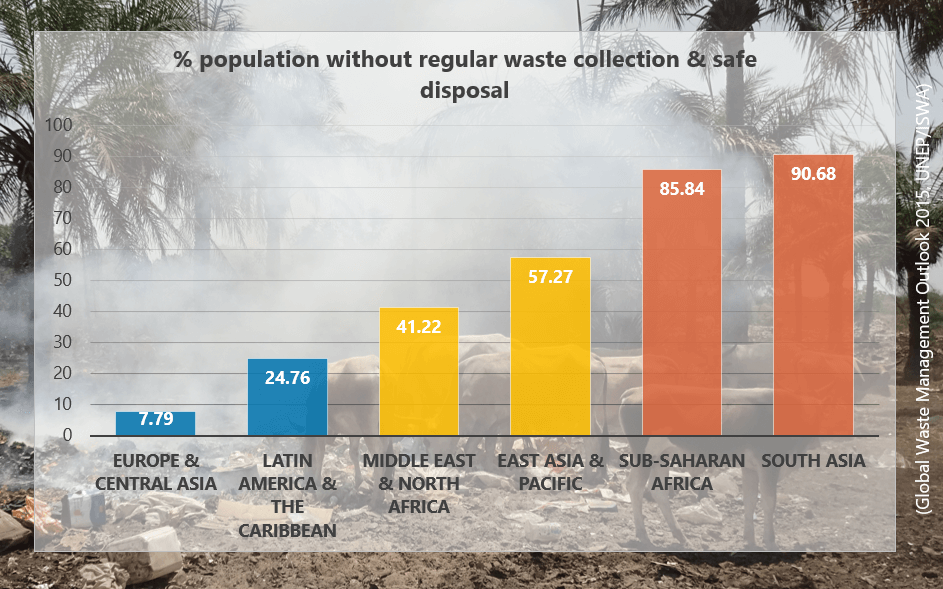
A regular waste collection and safe disposal service is a luxury that many people in the world do not have, with 1 in 3 people globally going without. The Sustainable Development Goals cannot be met without urgent attention to global waste management and its associated impacts on public health.
Where there is no waste management, residents and business owners have to dump or burn their waste. Accumulated waste and blocked drains encourage mosquitoes to breed, resulting in the spread of malaria, dengue fever and yellow fever. Blocked drains also cause severe flooding, leading to a spread of water-borne diseases, and the loss of lives and property.
Each year approximately 9 million people die of diseases linked to mismanagement of waste and pollutants, 20 times more than die from malaria[i].
Open burning of waste
Uncontrolled burning of household waste causes an extra 270,000 premature deaths every year around the world[ii]. Burning waste emits fine particles, dioxins, volatile organic compounds, polycyclic aromatic hydrocarbon, and polychlorinated biphenyls, linked to heart disease, cancer, skin diseases, asthma, and respiratory illnesses[iii].
Eggs from chickens that forage around waste yards and plastic burning sites have been found to contain high levels of persistent organic pollutants (POPs)[iv], which have been linked to cancers, neurological disorders, immune suppression, reproductive disorders and diabetes, and are particularly harmful to infants, children, women, and under-nourished populations[v].
For children, the health risks posed by unmanaged waste and poor sanitation are particularly harmful[vi]. Impacts include nutritional malabsorption[vii], diarrhoea, respiratory illness, stunting and educational underachievement.
Since domestic waste disposal is usually the responsibility of young women in a household, the risks from open burning are multigenerational. Unborn babies and small infants are particularly susceptible to the impacts of localised pollution, compounding barriers to communities improving health outcomes and educational attainment.
Open dumping of waste
Waste in the environment can contaminate water supplies, harming people, livestock and crops. It eventually finds its way into streams, rivers and the sea, causing serious ecological and public health problems. Fish, livestock and other animals that eat waste often become ill, either from disease or from stomachs full of plastic[viii]. Flies, dogs, rats and snakes are attracted to waste heaps, posing further risk to people nearby.
When rainwater washes through waste it can pollute surface and groundwater. Many dumpsites are on the coast or riverbanks, contaminating the global food chain.
Dumpsites put entire populations at significant risk from negative health impacts. It is estimated that 40% of the world’s waste is disposed of at informal dumpsites, most of which are completely unmanaged[ix]. Frequent fires pollute the air with unpleasant black smoke and odour. The smoke can cause breathing difficulties and harm the skin and eyes of those nearby. It can be very challenging to extinguish a fire on an open dumpsite, with limited access to water and the fire reaching far below the surface.
Uncontrolled dumpsites, and in particular the mixing of hazardous and other wastes, can cause disease in neighbouring settlements as well as among waste workers. Dumpsites are a greater health risk for the millions that live near to them than malaria[x].
Scavenging from dumpsites is a very risky business, with constant threats of injury, vermin, disease, and most worryingly, being buried alive in falling mountains of waste. Mixed waste on dumpsites has little value, and sorting mixed waste can be a dirty and dangerous task. Scavenging and contact with waste can lead to increased cases of dysentery, diarrhoea and cholera. Sharp items such as broken glass or needles are harmful underfoot, and open wounds are easily infected.
Legacy issues
Closed dumpsites remain contaminated and hazardous places for a long time, and continue to pollute the local air, land and water. Globally, the release of methane and black carbon (in smoke) from uncontrolled dumpsites is accelerating climate change, which in turn exacerbates drought, famine and the spread of disease.
We need to consider very carefully the legacy we are leaving for future generations. Concerns about the climate are front-of-mind, particularly in the lead up to COP26. The associated burdens of mismanaged waste, which are increasing on a daily basis, need to be recognised fully and addressed with urgency.
WasteAid is working with partners to attract funding, develop guidance, and promote waste management as a public health imperative. If you feel you can contribute towards our mission, please get in touch.
References
[i] UNEP (2015) Pollution is the largest cause of death in the world, SDG fact sheet; World Health Organisation (2017) Global Health Observatory data on malaria mortality.
[ii] Kodros JK et al (2016) Global burden of mortalities due to chronic exposure to ambient PM2.5 from open combustion of domestic waste, Environ. Res. Lett. 11 124022.
[iii] Human Rights Watch (2017) The health risks of burning waste in the Lebanon https://www.hrw.org/report/2017/12/01/if-youre-inhaling-your-death/health-risks-burning-waste-lebanon
[iv] Petrlik, J., Ochieng Ochola, G. and Mng’anya, S. (2020) Plastic Waste Poisons the Food Chain in Kenya and Tanzania (ARNIKA and IPEN)
[v] IPEN (229) POPs at a glance. https://ipen.org/toxic-priorities/what-are-pops
[vi] UNHABITAT (2010) Solid Waste Management in the World’s Cities; UNHABITAT (2012) Recycling and disposal of municipal solid waste in low and middle-income countries; Humphrey, JH (2009) Child undernutrition, tropical enteropathy, toilets, and handwashing, The Lancet, 374(9694):1032-1035; UNICEF and SHARE (2017) The impact of poor sanitation on nutrition; Boadi KO and Kuitunen M (2005) Environmental and health impacts of household solid waste handling and disposal practices in third world cities: the case of the Accra Metropolitan Area, Ghana, Journal of Environ Health, 68(4):32-6.
[vii] Nutritional malabsorption is caused by environmental enteropathy, an intestinal inflammation that prevents the absorption of nutrients from food and oral vaccines. The implication of this is that children growing up around dumped and burning waste end up with malnutrition, even if they are eating regular and decent meals.
[viii] Various sources, including Tiruneh R, Yesuwork H (2010) Occurrence of rumen foreign bodies in sheep and goats slaughtered at the Addis Ababa Municipality Abattoir, Ethiopian Veterinary Journal Vol 14, No 1; and Mushongal et al (2015) Investigations of foreign bodies in the fore-stomach of cattle at Ngoma Slaughterhouse, Rwanda J. S. Afr. Vet. Assoc. Vol 86, No 11 Pretoria.
[ix] ISWA (2016) A Roadmap for Closing Waste Dumpsites, The World’s Most Polluted Places
[x] K. Chatham-Stephens et al (2013) Burden of disease from toxic waste sites in India, Indonesia and the Philippines in 2010, Environmental Health Perspectives.
From E-Waste Skills to Sustainable Enterprise: Cosmo City Participants Take the Next Step
What if a broken laptop, television or other electronic appliance wasn’t waste, but an opportunity to repair, reuse and recycle? For participants in WasteAid’s Waste 2...
News
Lufthansa Group and WasteAid Launch Animation Film
WasteAid and Lufthansa Group have launched a new animated training film designed to help cabin crew improve onboard waste segregation, supporting efforts to increase...
News
How one community in The Gambia is changing its relationship with plastic
In Bakoteh, a community in the Greater Banjul Area of The Gambia, plastic waste has long been a serious problem. Home to the largest dumpsite in...
News
Women farmers in Kalaji turn organic waste into opportunity through the S-ORGANIC project
In Kalaji, a group of women farmers is demonstrating how organic waste can become a productive resource — supporting sustainable agriculture, strengthening livelihoods, and...
News
WasteAid and the Turkish Embassy: A New Partnership for Sustainable Change in The Gambia
On 12 May 2026, WasteAid’s Director of Programmes and Project Officer met with Turkish Ambassador F. Turker Oba at the Turkish Embassy in The...
News
WasteAid and Kanifing Municipal Council sign MoU to strengthen long-standing partnership on sustainable waste management
WasteAid and Kanifing Municipal Council have signed a new Memorandum of Understanding (MoU), marking an important milestone in a partnership that has developed over more than a decade. ...
Sign up to our Newsletter
Luther Hinga and Zoë Lenkiewicz discuss the impact of WasteAid’s programme in Cameroon and the potential to scale activities through cross-sectoral partnerships.
In the coastal city of Douala in Cameroon, WasteAid and partners are beginning to make a lasting impact on how waste is managed. With a population of 3.8 million and growing at 3.6% a year, Douala unsurprisingly also has a growing waste challenge. Rivers carry plastic waste from inland communities, and the city itself is generating significant quantities of plastic on a daily basis – the vast majority of which remains unmanaged.
Over two years, WasteAid will train 164 young unemployed people in the safe and sustainable collection and processing of waste plastics from the Bonaberi district of the city. Each has the opportunity to choose their preferred field of specialism: plastic collection, tile fabrication, waste related community behaviour change, or marketing and sales. On completion of their training, these interns will be offered long-term employment with WasteAid’s local business partner REDPLAST and help to expand plastic waste collections to other parts of the city and country.
While all waste materials cause a problem if left unmanaged, the increasing use of plastic poses a particular challenge. Unlike metals, used plastic packaging has little immediate value to waste pickers and so accumulates in the streets and rivers of the city, eventually reaching the Cameroon estuary and the Atlantic Ocean. The case for introducing plastic waste management here is compelling, not least due to the impacts of plastic waste on the local fisheries that some 40% of the population relies upon for a living.
The current alternative of open burning of waste is understood to be generating 5-10% of global anthropogenic carbon emissions. Addressing the waste challenge is one of the more cost-effective ways of approaching net zero, and offers a range of livelihood opportunities for the growing number of unemployed young people throughout the African continent and elsewhere.
This two-year project in Douala was made possible through the generous donations from WasteAid supporters to our UK Aid Match appeal in summer 2019. No one group or organisation can fix the waste problem alone, and it’s through partnerships that the most sustainable impact can be made.
WasteAid’s relationship with Bunzl plc is an excellent example of different sectors working together to accelerate progress. Following a year-long project in Indonesia, in 2021 Bunzl contributed further to WasteAid’s work in Cameroon with funding for a 12-month project to set up a PET recycling system. Here, WasteAid will work with its Doualan private sector partner REDPLAST to recruit and develop a new team focused on the dedicated collection of PET. This will be flaked and washed and sold into the PET value chain to make new products, closing the loop and further supporting Cameroon’s progress towards a circular economy.
Meanwhile, WasteAid’s Circular Economy Network funded by Huhtamaki and operating in South Africa, India and Vietnam, is highlighting some fantastic examples of grassroots entrepreneurs driving the recovery and valorisation of waste. At WasteAid, we firmly believe that positive action starts on the ground and works best when local people and organisations develop locally appropriate solutions to the growing waste problem. While a truly circular economy might be a long way off, the concept is gaining traction and attracting more partners who recognise the value in supporting waste management and recycling initiatives in major hubs where there is currently significant leakage of waste into the environment.
WasteAid has developed rigorous monitoring and evaluation methodologies and is constantly seeking new and innovative ways to demonstrate our approach and the positive impacts of sustainable resource management. This data will in turn be useful in convincing more politicians and policy makers to facilitate waste collection services in their areas, as well as attracting more institutional and corporate partners who are looking to make a measurable impact towards reducing climate emissions, preventing marine plastic pollution, and supporting sustainable livelihoods in some of the poorest parts of the world.
This story was first published in Circular Online, the magazine of the Chartered Institution of Wastes Management.
From E-Waste Skills to Sustainable Enterprise: Cosmo City Participants Take the Next Step
What if a broken laptop, television or other electronic appliance wasn’t waste, but an opportunity to repair, reuse and recycle? For participants in WasteAid’s Waste 2...
News
Lufthansa Group and WasteAid Launch Animation Film
WasteAid and Lufthansa Group have launched a new animated training film designed to help cabin crew improve onboard waste segregation, supporting efforts to increase...
News
How one community in The Gambia is changing its relationship with plastic
In Bakoteh, a community in the Greater Banjul Area of The Gambia, plastic waste has long been a serious problem. Home to the largest dumpsite in...
News
Women farmers in Kalaji turn organic waste into opportunity through the S-ORGANIC project
In Kalaji, a group of women farmers is demonstrating how organic waste can become a productive resource — supporting sustainable agriculture, strengthening livelihoods, and...
News
WasteAid and the Turkish Embassy: A New Partnership for Sustainable Change in The Gambia
On 12 May 2026, WasteAid’s Director of Programmes and Project Officer met with Turkish Ambassador F. Turker Oba at the Turkish Embassy in The...
News
WasteAid and Kanifing Municipal Council sign MoU to strengthen long-standing partnership on sustainable waste management
WasteAid and Kanifing Municipal Council have signed a new Memorandum of Understanding (MoU), marking an important milestone in a partnership that has developed over more than a decade. ...


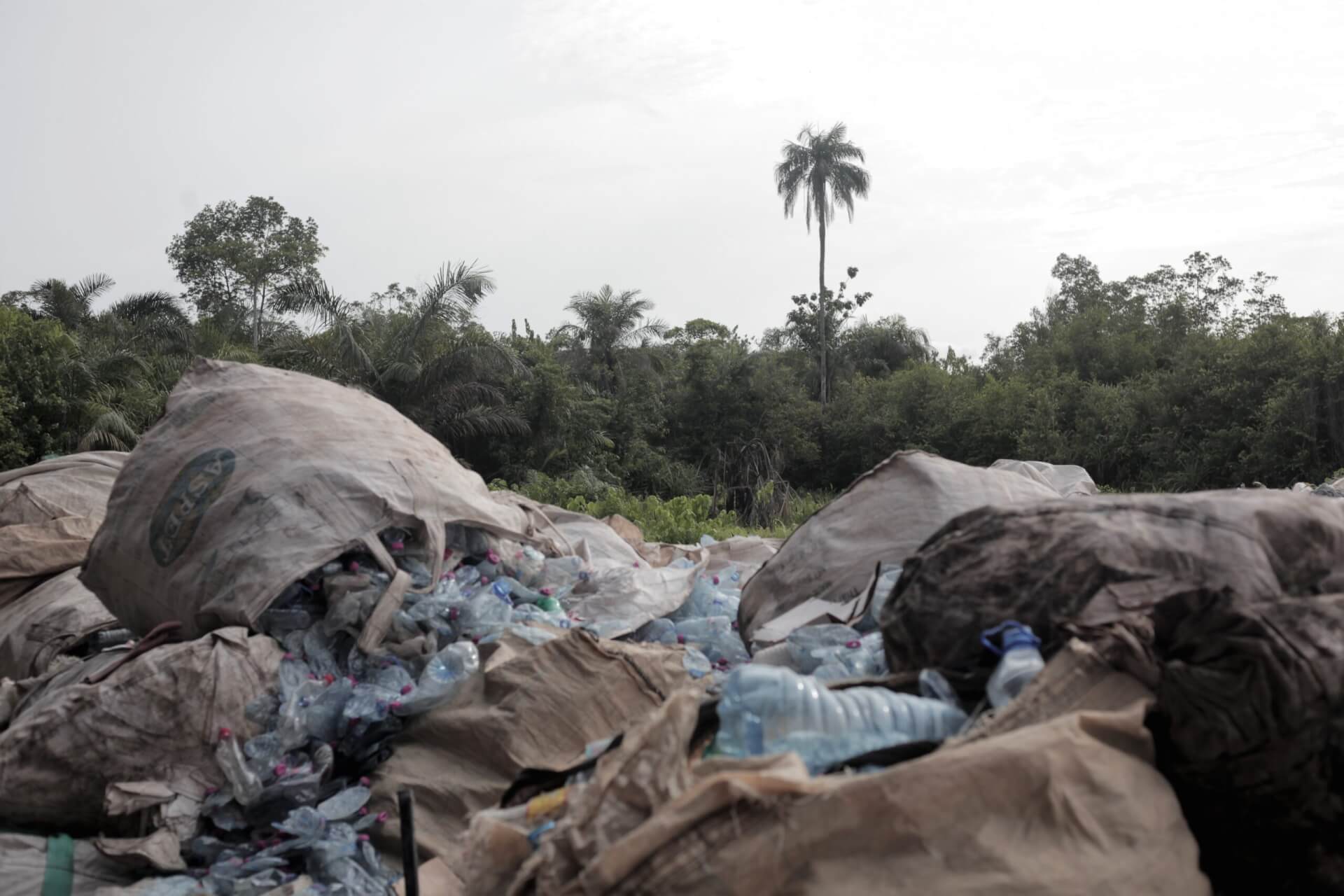
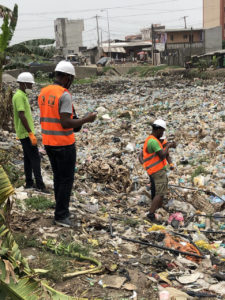 WasteAid’s relationship with Bunzl plc is an excellent example of different sectors working together to accelerate progress. Following a year-long project in Indonesia, in 2021 Bunzl contributed further to WasteAid’s work in Cameroon with funding for a 12-month project to set up a PET recycling system. Here, WasteAid will work with its Doualan private sector partner REDPLAST to recruit and develop a new team focused on the dedicated collection of PET. This will be flaked and washed and sold into the PET value chain to make new products, closing the loop and further supporting Cameroon’s progress towards a circular economy.