As part of the countdown to our 10-year anniversary in 2025, we’ve committed to raising £1 million. We’re on a mission to help people and the planet thrive.


Our fundraising campaign will allow us to support even more people impacted by the daily consequences of the global waste crisis. We need to expand our reach and build our programmes further across plastic, organic, electronic, and textile waste.


WasteAid’s approach is anchored by inclusive circular economy principles. We bring together people at every stage of the waste management chain from waste collectors and village leaders to policy makers and major business leaders. Through mentoring and coaching programmes, access to investments and technical knowledge sharing we work with communities to find lasting solutions to their waste challenge.


Across the globe, one in three people has no waste management service which leads to high levels of pollution, health challenges, and contributes significantly to global warming. Burned and dumped waste releases more CO2 than the aviation industry, while children in communities suffering the worst effects of waste are eight times more likely to suffer health complications.


Our vision is to create a world in which waste causes no harm, and where people in communities impacted by poor waste management are empowered to recover value from dumped materials.


Positively impacting one million people


More than a million people were positively impacted by our projects in Cameroon, Egypt, The Gambia and South Africa between 2022 and 2023. With your support, we want to benefit a million more.


What’s more, our programmes successfully saved 244.20 kilotons of C02 emissions through waste being reused or recycled. Shockingly, this is the equivalent of travelling around the earth’s equator by car 37 times!


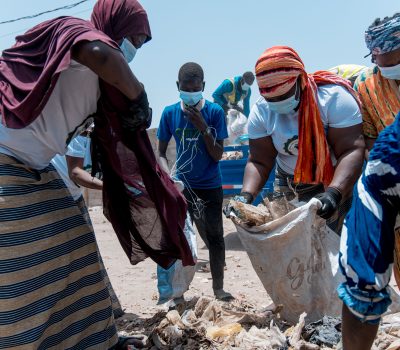
Our programmes include plastic recycling schemes, supporting entrepreneurs and green businesses, e-waste and textile upcycling, food waste reuse and developing circular economy networks.


How will we use £1 million to transform lives?


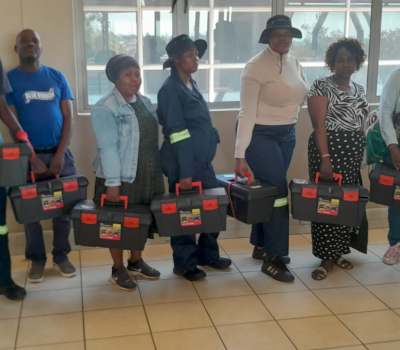
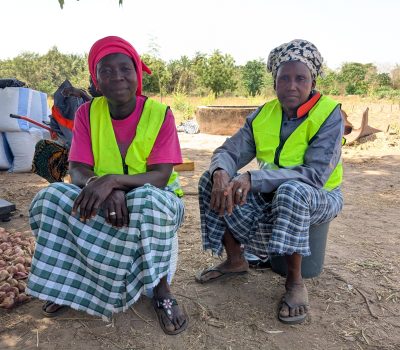
Empowering women and youth waste collectors: Our ‘wastepreneur’ programmes provide waste collectors and green micro-business owners with the skills, knowledge, and investment they need to improve their earning potential from waste.


Mentoring and knowledge sharing: WasteAid brings together people at every stage of the waste value chain from policymakers to waste collectors. Our innovative partnerships share best practice insights, mentoring, and training between our partners in the UK and countries where we’re active.


Circular Economy Network: Inclusive circular economy principles are at the heart of our approach. We’ve seen the transformational power of our circular economy network in The Gambia, Vietnam, South Africa and India and plan to evolve and develop this approach further.


Innovative, lasting solutions: Ultimately, WasteAid works with community leaders, business owners, academics, politicians, and environmentalists to develop tailored solutions that will deliver lasting economic, environmental, and health benefits.


How you can help?


Donations of all sizes will help us achieve our fundraising target.


For businesses, partnering with WasteAid is a great way to support your ESG (Environmental, Social and Governance) goals while bringing teams together to support an important environmental cause. Whether a one-off donation or longer strategic support, we will work with you to create a customised support package that meets your internal and external objectives.


Or why not challenge yourself to a fundraising activity? Bake sales, charity runs or raffles are all fun and effective ways of raising money for a charitable cause that’s close to your heart. If you’re lacking inspiration about how you can support us, we can provide you with a fundraising pack that is full of ideas.


You can donate to our 10th anniversary campaign here.



Human Impact

Latest News

Read more about Meet Whitney the Wasteater: Biffa’s Book supporting WasteAid

News

Meet Whitney the Wasteater: Biffa’s Book supporting WasteAid

Since 2019, WasteAid has been proud to partner with Biffa, one of the UK’s leading waste management companies. What began as an early commitment...

Read more about Protecting the Tanbi Wetlands through Waste Entrepreneurship in The Gambia

News

Protecting the Tanbi Wetlands through Waste Entrepreneurship in The Gambia

Celebrating continued support from Veralto on World Water Day Plastic waste is a growing challenge across The Gambia. Rapid urban growth, limited waste services...

Read more about The Gambia takes a major step towards sustainable farming with new Organic Fertiliser Standard

News

The Gambia takes a major step towards sustainable farming with new Organic Fertiliser Standard

On Monday 16 March, The Gambia marked an important step towards sustainable agriculture with the launch of work to develop a National Organic Fertiliser...

Read more about Global Recycling Day: Empowering Communities to Turn Waste into Opportunity

News

Global Recycling Day: Empowering Communities to Turn Waste into Opportunity

  Every year on Global Recycling Day, organisations around the world highlight the importance of reducing waste and protecting natural resources. For us here...

Read more about WasteAid pays tribute to former Director of Programmes Michelle Wilson

News

WasteAid pays tribute to former Director of Programmes Michelle Wilson

It is with great sadness that WasteAid must inform all of our friends, followers and funders of the passing of Michelle Wilson, WasteAid’s first...

Read more about Visit to The Gambia shines light on plastic progress

News

Visit to The Gambia shines light on plastic progress

WasteAid’s newly-appointed Director of Programmes, Akira Akazawa, recently visited two community plastic collection groups in a coastal area of The Gambia to understand how...

Sign up to our Newsletter

  • By signing up, you consent to your personal data being saved in line with our privacy policy.

This week as part of the pathway to an internationally legally binding instrument on plastic pollution, known as The Plastics Treaty, the Intergovernmental Negotiating Committee will meet in Nairobi to consult on the Zero draft[1].   Given the huge challenge of developing a treaty that that will fit the context of 193 member states once ratified (by the end of 2024) it will contain both binding and voluntary approaches.

The Business Coalition for a Global Plastics Treaty, convened by The Ellen MacArthur Foundation and WWF states that the treaty  is:

“..the single most important opportunity to accelerate progress towards a circular economy in which plastic never becomes waste or pollution, and the value of products and materials is retained in the economy”[2]

WasteAid has been reflecting on the potential impact of The Treaty in countries where we work such as The Gambia, Cameroon, and South Africa.    We agree that the Global Plastics Treaty could be a force for good in forcing countries to prioritise the issue of plastic pollution and to catalyse investment.  The Business Coalition have been pushing three core principles that they believe should be central to the Plastics Treaty:

1. Reducing the production of plastics with high leakage rates and those reliant on fossil fuels

2. keeping materials in the loop at the highest value; and

3. prevention and remediation of macro and micro-plastics leaking into the environment.

Inherent to the application of these principles is the need for a functioning waste management system.

It is estimated that 2 billion people globally do not have access to a waste collection service and as a result open dumping results in over a third of all waste disposal[3].   In a study in The Gambia, the budget allocation for waste collection was sufficient for the collection of only 10% of the waste in the country[4].  Cost recovery for waste services differs drastically across income levels. User fees range from an average of $35 per year in low-income countries to $170 per year in high-income countries, with full or nearly full cost recovery being largely limited to high-income countries[5].

We agreed with Professor David C Wilson’s latest blog released by ISWA  where he states “extending municipal solid waste collection to all and phasing out uncontrolled dumping and open burning would halve plastic leakage into the oceans and cut by more than 90% the open burning of plastic waste[6]”.  It is encouraging to see Waste Management discussed in the Plastics Treaty zero draft:

‘…a portion of the fees collected through EPR schemes to be used to improve infrastructure and improve the livelihoods and opportunities for, and develop the skills of, workers in the waste sector, including waste workers in informal and cooperative settings;’

 However, our concern is the big emphasis placed on EPR as the key source of financial investment to set up basic collection systems up and running in low-income countries.  We agree that  EPR can be a piece of the jigsaw but in countries that have no collection system in place whatsoever, the finance available will not be sufficient to create a fully functioning waste management system.  An EPR system operational in the global north helps to drive the collection of recyclables alongside a functioning waste management system.    In countries like South Africa where we have seen EPR help drive healthy rates of collection levels of PET (estimated to be around 60%) where there are markets/incentives. However, materials that have no market value no value continue to leak into the environment.

After the ratification of the Treaty in 2024 there will be a long process for countries to think through how they will develop and operationalise policies that will assure compliance to the Treaty.    In the meantime, millions of tonnes of low-value plastics and other materials will be entering the environment or will be burnt.   Let’s not let discussions around The Plastics Treaty stop us from taking simple action now to support member states to arrest the mismanagement of waste.   This could be through increasing institutional development funding (where funding on waste is less than 0.3%) or through allocating a greater share of EPR levies to municipalities (rather than going to PROs) to support the informal sector to collect all materials and not just ones where there is a market.

There is a U2 song that includes the line, “the wheels are turning but the car’s upside down”.   There is a lot of talk and activity but we need to act on these issues now if we want to move and see change.

In the meantime, be sure to visit www.wasteaid.org to find out more about our whole-systems approach to tackling the global waste crisis.


[1] ZERODRAFT.pdf (unep.org)

[2] Business coalition for a global plastics treaty (ellenmacarthurfoundation.org)

[3] Wasteland; Oliver Franklin Wallace, pg 7

[4] The state of solid waste management in the gambia by United Purpose – Issuu

[5] Trends in Solid Waste Management (worldbank.org)

[6] Guest Blog: Waste Management needs to be on the main agenda for the ‘plastics treaty’ negotiations | ISWA

Human Impact

Latest News

Read more about Meet Whitney the Wasteater: Biffa’s Book supporting WasteAid

News

Meet Whitney the Wasteater: Biffa’s Book supporting WasteAid

Since 2019, WasteAid has been proud to partner with Biffa, one of the UK’s leading waste management companies. What began as an early commitment...

Read more about Protecting the Tanbi Wetlands through Waste Entrepreneurship in The Gambia

News

Protecting the Tanbi Wetlands through Waste Entrepreneurship in The Gambia

Celebrating continued support from Veralto on World Water Day Plastic waste is a growing challenge across The Gambia. Rapid urban growth, limited waste services...

Read more about The Gambia takes a major step towards sustainable farming with new Organic Fertiliser Standard

News

The Gambia takes a major step towards sustainable farming with new Organic Fertiliser Standard

On Monday 16 March, The Gambia marked an important step towards sustainable agriculture with the launch of work to develop a National Organic Fertiliser...

Read more about Global Recycling Day: Empowering Communities to Turn Waste into Opportunity

News

Global Recycling Day: Empowering Communities to Turn Waste into Opportunity

  Every year on Global Recycling Day, organisations around the world highlight the importance of reducing waste and protecting natural resources. For us here...

Read more about WasteAid pays tribute to former Director of Programmes Michelle Wilson

News

WasteAid pays tribute to former Director of Programmes Michelle Wilson

It is with great sadness that WasteAid must inform all of our friends, followers and funders of the passing of Michelle Wilson, WasteAid’s first...

Read more about Visit to The Gambia shines light on plastic progress

News

Visit to The Gambia shines light on plastic progress

WasteAid’s newly-appointed Director of Programmes, Akira Akazawa, recently visited two community plastic collection groups in a coastal area of The Gambia to understand how...

Sign up to our Newsletter

  • By signing up, you consent to your personal data being saved in line with our privacy policy.