Women farmers in Kalaji turn organic waste into opportunity through the S-ORGANIC project
News
Author: Admin
Published: 27 May 2026
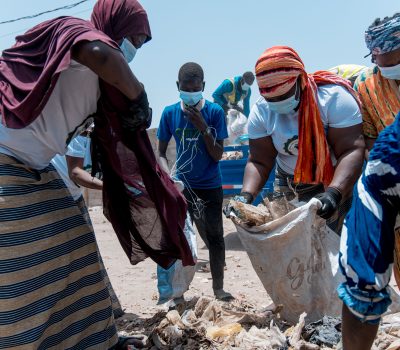
In Kalaji, a group of women farmers is demonstrating how organic waste can become a productive resource — supporting sustainable agriculture, strengthening livelihoods, and contributing to a local circular economy.
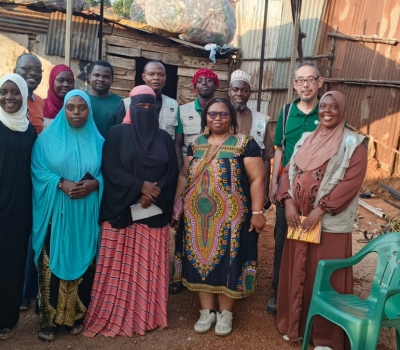
During a recent monitoring visit, WasteAid’s Director of Programmes, Akira Akazawa, joined the WasteAid Gambia team to meet one of the farmer groups supported by the EU-funded S-ORGANIC project — Scaling up Organic Fertilisers in The Gambia: Advancing Nutrition, Innovations and Circular Economy.
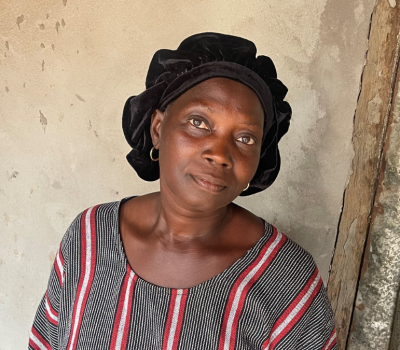
The team met a well-established group of around 75 members, the majority of whom are women. Drawing on training and practical support provided through the project, the group has been producing organic compost and fertiliser using locally available materials — putting new skills and knowledge to work in their own community.
Their efforts directly address one of S-ORGANIC’s core aims: reducing reliance on imported chemical fertilisers by building local capacity to produce and use organic alternatives. The project also works to improve soil fertility, promote more sustainable food production, and support the productive use of organic waste.
During the visit, group members described how they produce compost for use in vegetable and crop cultivation, including rice and maize. They also shared why organic compost is increasingly valued — noting that crops grown with organic inputs can stay fresh for longer, an important quality for both farmers and customers.
The group currently produces an estimated 100 bags of compost per month. But members were clear about what is needed to grow sustainably: more reliable access to raw materials, lower input costs, greater consistency in product quality, and stronger links to markets.
Speaking after the visit, Akira Akazawa said:
“The Kalaji women farmer group is a strong example of what the S-ORGANIC project is working to achieve. Their work connects environmental management, sustainable agriculture, and women’s economic empowerment in a very practical way. The next step is to support them to strengthen quality, improve access to materials, and build reliable markets for their compost.”
The visit reinforced the importance of combining technical training with business and market development support. WasteAid and partners will continue working with the group to strengthen production records, improve compost quality, review raw material supply chains, and identify potential buyers.
The Kalaji site also has real potential to become a learning resource for other communities exploring organic compost production and circular economy approaches.
Through S-ORGANIC, WasteAid is working with partners to advance practical, locally led solutions that turn waste into value, support sustainable agriculture, and contribute to food security across The Gambia.