News
Beyond the Numbers: The Human Impact of WasteAid’s Work
Members of WasteAid’s Gambia team, Lamin Janneh and Jojo Saho, recently investigated what our programmes mean to our individual participants by speaking to members...

Zoë Lenkiewicz, Senior Technical Advisor and Head of Communications for WasteAid, shares the organisation’s perspective on waste, climate and finance.
In the “race to net zero”, the global waste management movement has a lot of work on its hands. While the focus on UK emissions is on iterative improvements, the elephant in the room is still the billions of people who lack a waste collection service and burn their waste in their backyards or at dumpsites.
The UK government says, “We cannot afford to wait to act against the threat of climate change. We must work together to protect our planet and people and ensure a greener, more resilient future for us all”. Surely this means an urgent move to deliver waste management services to the 1 in 3 people who have no alternative than dumping or burning.
Estimated to be causing twice the emissions of aviation, the commonplace practice of open burning is a public health travesty as much as a climate one. Mixed waste contains hydrocarbons, heavy metals, and other hazardous compounds that are released into the atmosphere on a regular basis by households across the globe. Children play and walk to school in clouds of fumes and soot known to cause cancers, and reproductive and developmental diseases.
Waste management systems have been proven to be excellent value for money, in terms of protecting public health (waste collection was introduced in the UK under the first Public Health Act in 1875), reducing flood risk from blocked drains, and improved economic opportunity. Thus far however, waste management has failed to attract anything like the amount of climate finance that is invested in decarbonising aviation, and which arguably benefits only a tiny percentage of the global population.
Attracting climate finance to waste management
Under the Paris Agreement of 2015, countries are required to carry out every five years, a process known colloquially as the ‘ratchet mechanism’. Countries must submit Intended Nationally Determined Contributions (NDCs) to reduce greenhouse gas emissions compared to a ‘business as usual’ scenario. Under the framework of the Paris Agreement, each country is expected to submit enhanced NDCs every five years, to ratchet up ambition to mitigate climate change.
Since the Paris Agreement was signed in 2015, the conference of 2020 was set to be the first iteration of the ratchet mechanism.
For countries to properly include waste management in their NDCs, they require a reasonable and internationally agreed approach to estimating current emissions, as well as avoided emissions as a result of improved systems. Determining emissions from backyard burning and dumpsite fires is no simple task, but without it, progress will stall.
WasteAid has been collaborating with partners including the International Solid Waste Association, the Royal Academy of Engineers’ Safer End of Life programme, and the UN’s Climate Change and Clean Air Coalition in an attempt to put waste on the agenda at COP.
Policymakers in lower- and middle-income countries are all too aware of the health impacts of burning waste, and the increased risk of flooding and cholera caused by blocked drains. With COP27 taking place in Africa, it is hoped that waste management will finally feature on the agenda.
How WasteAid is making an impact through its projects
Most of WasteAid’s activities contribute towards the reduction of climate emissions from poorly managed waste. Whether that’s increasing recycling in Cameroon, reducing food waste in The Gambia or supporting circular economy entrepreneurs in India, South Africa and Vietnam with seed funding and business mentoring.
As open burning remains a default approach to waste disposal in lower- and middle-income countries, any activity that diverts waste from disposal can avoid climate change emissions by reducing the amount of “waste” that requires disposal, providing safe alternative routes for resource management, and displacing demand raw material extraction.
Programmes managed by WasteAid also build climate resilience by removing waste from drains where it contributes to flash floods and associated water-borne and mosquito-borne diseases, and regenerating natural systems by returning organic matter to agricultural land.
What WasteAid and partners are advocating for at COP26 and beyond
Short-term goals:
Mid-term goals:
Long-term goals:

News
Beyond the Numbers: The Human Impact of WasteAid’s Work
Members of WasteAid’s Gambia team, Lamin Janneh and Jojo Saho, recently investigated what our programmes mean to our individual participants by speaking to members...
News
Journey to Uganda: Stories from our projects
Recently, the Programme Management team travelled to Uganda to meet the people at the heart of our waste management programmes, connect with local stakeholders...
News
From E-Waste Skills to Sustainable Enterprise: Cosmo City Participants Take the Next Step
What if a broken laptop, television or other electronic appliance wasn’t waste, but an opportunity to repair, reuse and recycle? For participants in WasteAid’s Waste 2...
News
Lufthansa Group and WasteAid Launch Animation Film
WasteAid and Lufthansa Group have launched a new animated training film designed to help cabin crew improve onboard waste segregation, supporting efforts to increase...
News
How one community in The Gambia is changing its relationship with plastic
In Bakoteh, a community in the Greater Banjul Area of The Gambia, plastic waste has long been a serious problem. Home to the largest dumpsite in...
News
Women farmers in Kalaji turn organic waste into opportunity through the S-ORGANIC project
In Kalaji, a group of women farmers is demonstrating how organic waste can become a productive resource — supporting sustainable agriculture, strengthening livelihoods, and...
The WasteAid team is returning to RWM, the UK’s major resources and waste management exhibition.
RWM is the leading recycling, resource, and waste management event in the UK – showcasing the latest innovations shaping the sustainability sector to the industry’s most influential names and organisations.
Each year, recycling and waste management professionals travel from around the world to collaborate with forward-thinking businesses, public sector bodies, government departments and not-for-profit organisations on building a more resource-efficient future.
Both days are packed with unmissable seminars from resource management thought leaders and figureheads; offering expert advice and invaluable guidance and support. The show will also be home to hundreds of cutting-edge exhibitors, who will display the latest environmentally sound and profitable solutions.
RWM, in partnership with CIWM, is the event that truly connects the resource and waste management industry.
Meet our CEO, Ceris Turner-Bailes
Ceris Turner-Bailes became WasteAid’s CEO in April 2020, and will be speaking at RWM to share her perspective on the shifting landscape of global waste management.
As global demand for secondary materials grows, the face of the global waste management market is changing faster than ever. Ceris will discuss the trends observed through the lens of the UK’s only non-profit dedicated to putting people at the centre of the circular economy.
Key themes include corporate and extended producer responsibility programmes, the emergence of offsetting schemes, and the growing use of technology for waste tracking. WasteAid has a unique perspective on the market’s priorities, goals and future risks.
This session will be tailored for businesses and institutions that are looking to make a positive impact on the global waste management landscape and inclusive, sustainable development.
What a difference… two years make
Since the last RWM in 2019, WasteAid has been working with partners in lower and middle-income countries to deliver inclusive waste collection, recycling and circular economy programmes.
In The Gambia, WasteAid has recently launched a new EU-funded project in partnership with Kanifing Municipal Council and Women’s Initiative The Gambia to recover food waste from markets and use it to make compost and biochar. These products will help improve the soil at the women’s gardens where most crops are grown, by increasing water and nutrient retention. The women gardeners will also be learning how to transform woody waste into charcoal briquettes, a low-smoke cooking fuel that reduces pressure on the fragile Casamance Forest. These activities will reduce the amount of waste requiring disposal at Bakoteh dumpsite, while building climate resilience in the country’s agricultural sector.
In Cameroon, WasteAid’s UK Aid Match project is well-underway, which will see 164 young unemployed people from the coastal city of Douala trained in the collection and recycling of plastic waste. Through a partnership with local enterprise REDPLAST and agreements with local Town Halls, the project will build one of the city’s first inclusive circular economy programmes, paving the way for sustainable waste management and contributing to many of the UN Sustainable Development Goals.
Thanks to funding from Bunzl plc in 2020, WasteAid delivered a 12 month project in Bali, Indonesia, which has seen a village waste collection and recycling programme divert 90% of waste from landfill, and a training curriculum developed for young women to work in some of Bali’s top hotels as Zero Waste Champions. Further funding from Bunzl plc in 2021 has enabled a new project to be delivered in Cameroon, working with another Town Hall in Douala to recruit 30 vulnerable and marginalised people and train them to become plastic collection and recycling champions in local markets.
WasteAid’s growing team of waste management and international development specialists has also been running an international Circular Economy Network in South Africa, India and Vietnam, funded by Huhtamaki. Through a series of online and in-person events, the project is bringing together entrepreneurs, innovators, researchers, policymakers and funders to raise the profile of circular economy activities, culminating in the Zero Waste Cities Challenge. This innovation competition has attracted 100 applicants from across the three focus countries, and the shortlisted applicants are now undergoing business development training to refine their business plans and become pitch-ready. Winners will be awarded €10,000 and free business support to help make their inclusive circular economy enterprise a success.
WasteAid’s growth has benefitted from additional support from Proud Partner Biffa, as well as musicMagpie, Zumo and others businesses, individuals, trusts and foundations. With more plans in the pipeline, now is the time to partner with WasteAid if you’re looking to make a positive impact on global waste management – whether it’s to prevent marine plastic pollution, reduce climate emissions or help vulnerable communities to play a key role in the circular economy.
We look forward to meeting you at RWM, 21-22 September!
Written by Zoë Lenkiewicz
News
Beyond the Numbers: The Human Impact of WasteAid’s Work
Members of WasteAid’s Gambia team, Lamin Janneh and Jojo Saho, recently investigated what our programmes mean to our individual participants by speaking to members...
News
Journey to Uganda: Stories from our projects
Recently, the Programme Management team travelled to Uganda to meet the people at the heart of our waste management programmes, connect with local stakeholders...
News
From E-Waste Skills to Sustainable Enterprise: Cosmo City Participants Take the Next Step
What if a broken laptop, television or other electronic appliance wasn’t waste, but an opportunity to repair, reuse and recycle? For participants in WasteAid’s Waste 2...
News
Lufthansa Group and WasteAid Launch Animation Film
WasteAid and Lufthansa Group have launched a new animated training film designed to help cabin crew improve onboard waste segregation, supporting efforts to increase...
News
How one community in The Gambia is changing its relationship with plastic
In Bakoteh, a community in the Greater Banjul Area of The Gambia, plastic waste has long been a serious problem. Home to the largest dumpsite in...
News
Women farmers in Kalaji turn organic waste into opportunity through the S-ORGANIC project
In Kalaji, a group of women farmers is demonstrating how organic waste can become a productive resource — supporting sustainable agriculture, strengthening livelihoods, and...
In April 2021, WasteAid launched a new EU-funded project to improve climate resilience in The Gambia, which will be overseen by our newly appointed Project Coordinator, Ingrid Henrys.
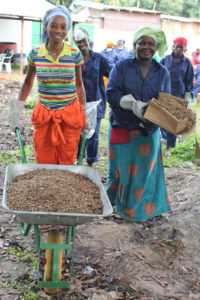
Working in partnership with Kanifing Municipal Council and Women’s Initiative The Gambia, WasteAid will be creating a new food waste collection service at local markets, and training women gardeners to transform it into compost, biochar and charcoal briquettes.
 Welcome to the WasteAid team Ingrid! Please could you tell us, how did your path lead you to working with WasteAid in the Gambia?
Thank you! In coming to The Gambia, I made a strong decision to not do any work that wouldn’t be aligned with my consciousness and the values that are really meaningful for me. When I arrived, I was concerned about how solid waste is managed in Banjul, and the facts that some gardeners I have met outside of the capital don’t make or use compost. They argue that their soil is good enough, as everything grows there. But some of them rely on chemical products for fertilising and for pest management.
Furthermore, I really wanted to work with women. I came across this opening with WasteAid, and I thought that it was exactly the kind of project in which I would want to work and the kind of organisation I would like to be part of.
WasteAid’s EU-funded project has a strong element of working with women gardeners. Can you describe the benefits you think this project will bring to them?
I think that, with this project, the women gardeners will truly feel and see the value of their work. They are the main fresh food producers in the city and providers to the local markets. They rely on chemical fertilisers that can be expensive and still their yields are not improving.
Gardening is about closing a loop, we take nutrients from the soil when we harvest, so we must return good quality nutrients to it if we want it to keep offering good quality products. The women will learn methods that will allow them to improve the quality of their soils without having to buy chemical products.
With time, their products will be of better quality. Also by learning those techniques, they will be able to create new sources of income if they want, by selling compost, briquettes, or biochar.
The United Nations Climate Change Conference (COP26) is taking place later this year. How is climate change impacting on women gardeners in The Gambia and how will this project make a difference?
One of the main impacts of climate change that I could observe in The Gambia, is the modification of the rainy season. The rains come later than before, delaying and shortening the season. Also, I believe that the rains are pouring stronger, causing floods and damaging some crops. As the dry seasons get longer, the women gardeners have more difficulty in guaranteeing their produce as they don’t have big water storage facilities. With this project they will be able to improve the water retention capacity of the soil, especially with the use of biochar; they will also improve the nutrient content of the soil with compost.
Also, sometimes they apply peanut shells directly on the ground. Those shells attract termites and they can also compete with the crops for nitrogen. By converting them into biochar, they can be of a better use. The application of biochar will improve the general quality of the soil for years, enhancing the yield and quality of the crops.
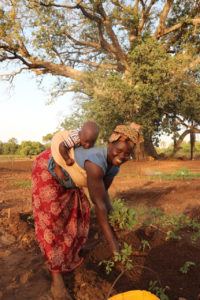
Charcoal briquettes made from woody waste are an effective substitute for forest timber. What are the main barriers to uptake and how could these be overcome?
People can be reticent to the use of a « new » product and can tend to stick to their old habits until they see the benefits of the new product. Also, we need to make sure that the briquettes are sold at an equal or lower price than the charcoal made from forest wood.
It will also be necessary to train people on how to use the briquettes, and to train resellers, so they can make a good advertisements for the product and encourage their customers to buy it.
We will need to do demonstrations of the use of the briquettes and to have public figures advertising the use of them and adopting them for their own use. With this, the general public will be more likely to accept the product. And all this will need to go hand to hand with sensitisation on the impact of deforestation for charcoal production and why briquettes are a good alternative.
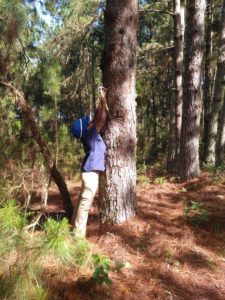
Your background includes conservation and permaculture. What do you see as the main links between these and waste management?
Biodiversity and environmental conservation, and permaculture, all aim at allowing us, human beings, to live in harmony with nature. We want to work with nature and not against it. If we want to really be conscious of our acts, and to make decisions bearing in mind the seven generations to come after us, like indigenous tribes of North America do, we must consider carefully how we manage our waste. And by managing waste, we also think about waste production.
The more waste produced and poorly managed, greater the negative impacts on our environment and the biodiversity surrounding us, that we are a part of. In permaculture, we consider that a pollution is a resource waiting to be used, and when designing we want the elements used to fulfil several functions. We also apply ourselves to mimic nature. In a well-balanced ecosystem such as a forest, there is no waste per se, everything is reused or transformed.
Proper waste management can allow us to do the same.
Written by Zoë Lenkiewicz

This 12 month project will take place within Kanifing Municipality, the most populous region of The Gambia. It is funded by the EU GCCA+ programme.
News
Beyond the Numbers: The Human Impact of WasteAid’s Work
Members of WasteAid’s Gambia team, Lamin Janneh and Jojo Saho, recently investigated what our programmes mean to our individual participants by speaking to members...
News
Journey to Uganda: Stories from our projects
Recently, the Programme Management team travelled to Uganda to meet the people at the heart of our waste management programmes, connect with local stakeholders...
News
From E-Waste Skills to Sustainable Enterprise: Cosmo City Participants Take the Next Step
What if a broken laptop, television or other electronic appliance wasn’t waste, but an opportunity to repair, reuse and recycle? For participants in WasteAid’s Waste 2...
News
Lufthansa Group and WasteAid Launch Animation Film
WasteAid and Lufthansa Group have launched a new animated training film designed to help cabin crew improve onboard waste segregation, supporting efforts to increase...
News
How one community in The Gambia is changing its relationship with plastic
In Bakoteh, a community in the Greater Banjul Area of The Gambia, plastic waste has long been a serious problem. Home to the largest dumpsite in...
News
Women farmers in Kalaji turn organic waste into opportunity through the S-ORGANIC project
In Kalaji, a group of women farmers is demonstrating how organic waste can become a productive resource — supporting sustainable agriculture, strengthening livelihoods, and...
WasteAid partners with recommerce expert musicMagpie ahead of attention-grabbing event at G7 to highlight the growing environmental threat of e-waste.
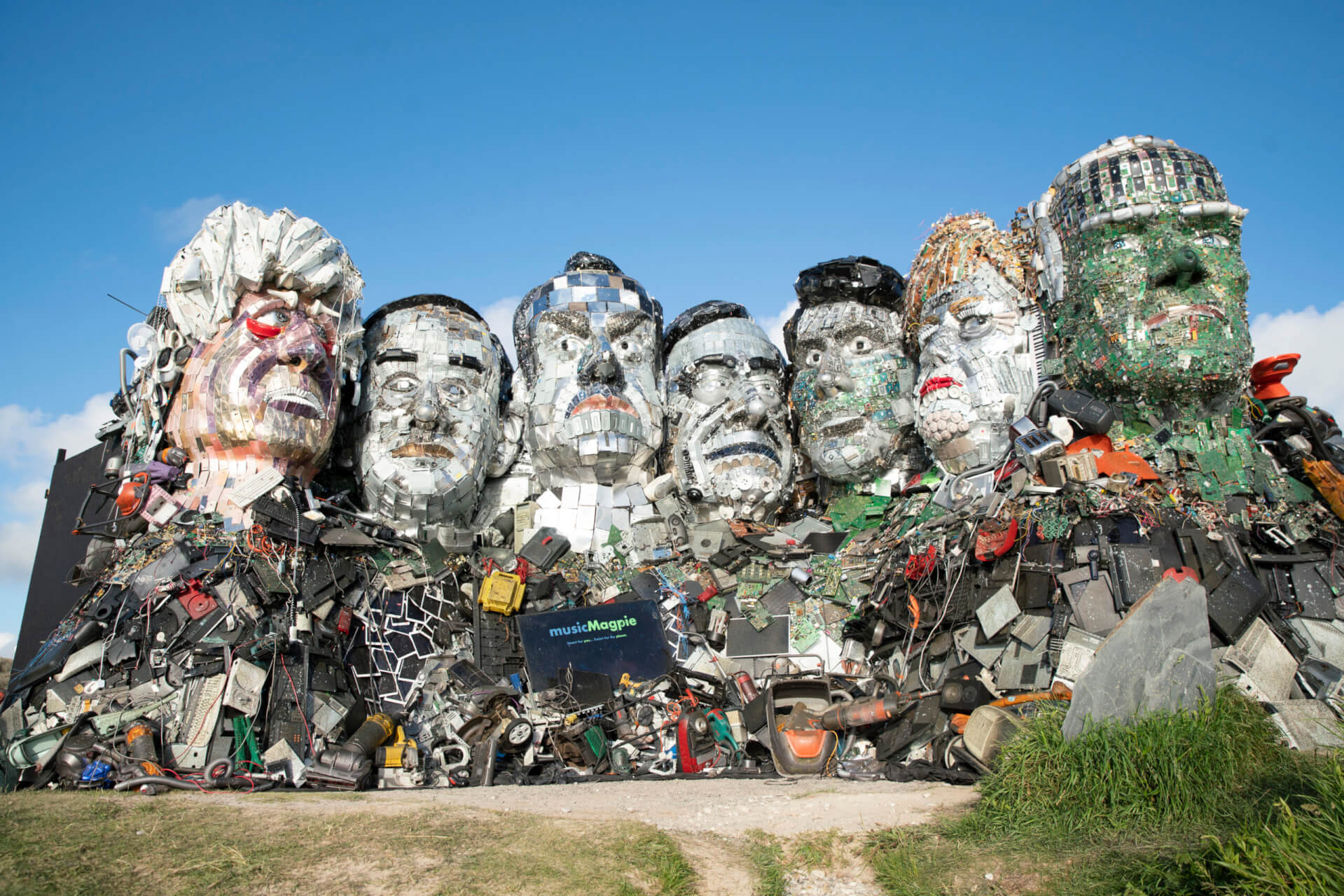
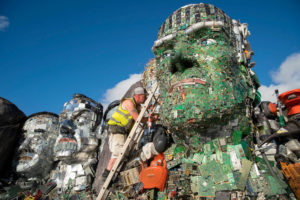
Image: Adam Gasson/PA Wire
WasteAid, the organisation that promotes and delivers waste management, recycling and circular economy innovations globally, has partnered with musicMagpie to highlight the negative effects of unmanaged e-waste. WasteAid was delighted to enter this partnership and to be a key part of musicMagpie’s e-waste campaign which also focuses on the G7 summit.
If we don’t get e-waste recycling sorted, disc drives, circuit boards, solar panels and electric vehicle batteries could all be affected by the lack of availability of rare metals. Calls have been made to make e-waste recycling compulsory, to preserve the resources needed for low-carbon technology and meet climate targets.
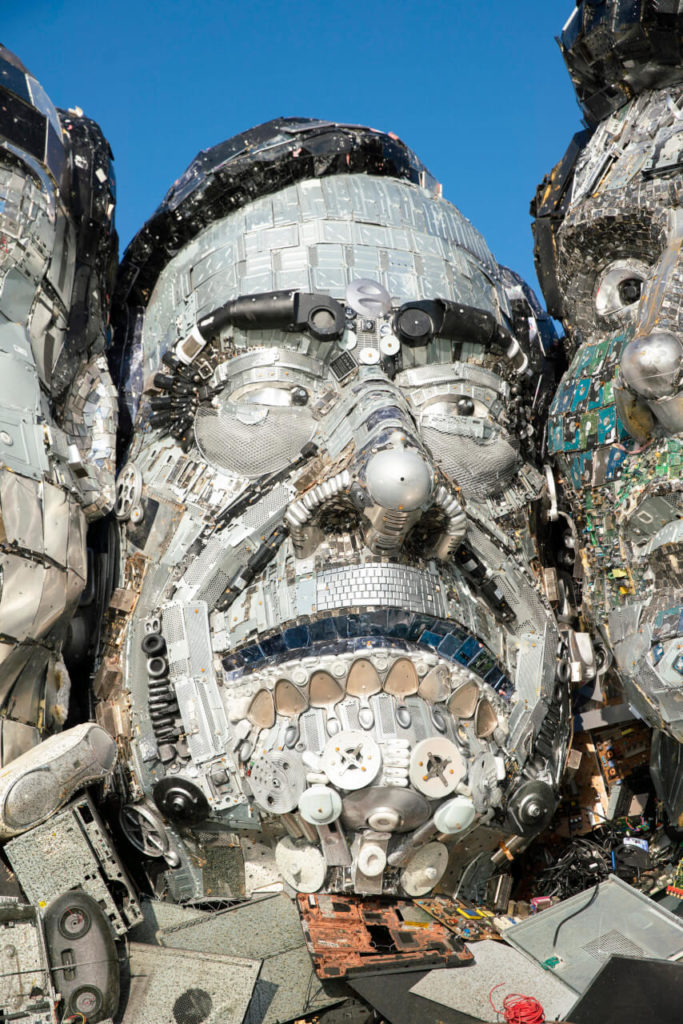
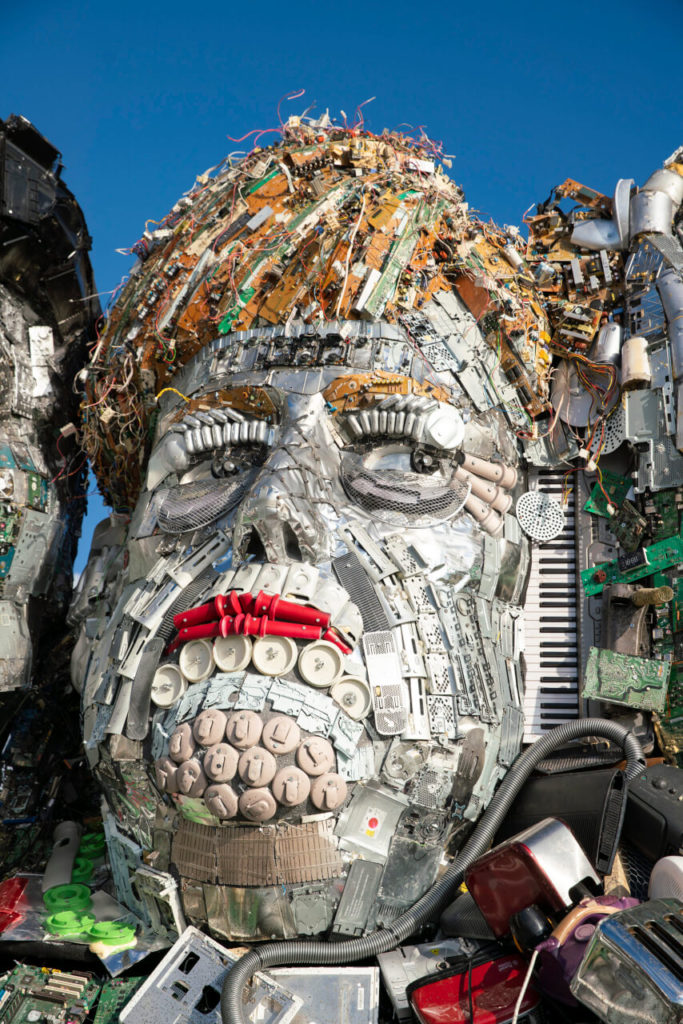
As part of this G7 campaign a giant Mount Rushmore-style sculpture of the G7 leaders’ heads, made entirely of discarded electronics has appeared on a beach near Carbis Bay in Cornwall to highlight the growing danger to the environment of e-waste. Named Mount Recyclemore, the sculpture depicts world leaders including British Prime Minister Boris Johnson, American President Joe Biden and German Chancellor Angela Merkel, as they gather for the G7 Summit to discuss how to tackle the climate crisis and build a greener future.

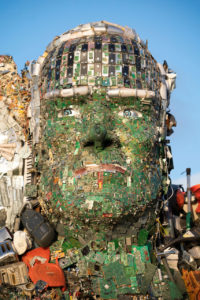
The Mount Recyclemore sculpture was created by musicMagpie, artist and founder of the Mutoid Waste Company, Joe Rush and sculptor Alex Wreckage. This installation with musicMagpie aims to encourage consumers to act more sustainably with electronics and support a circular economy.
WasteAid was delighted to join the G7 ‘Mount Recyclemore’ campaign and to further develop tools and projects to deal with e-waste, something the organisation recognises is a growing problem in the areas where they work. Throughout June, musicMagpie will donate £1 to WasteAid for each piece of consumer tech customers trade in with them. In addition, sellers will have the option to donate the value offered by the recommerce platform to the charity. Donations will be used to fund WasteAid’s sustainable e-waste management education programmes in lower-income countries.
“A green economy relies on the availability of resources to make low-carbon technology,” said Ceris Turner-Bailes, WasteAid CEO. “While low income countries don’t produce anywhere near as much e-waste as we do in the UK, safe recycling facilities are few and far between. Dumped e-waste harms the environment, as well as being a waste of vital and valuable resources. Thanks to musicMagpie, WasteAid will be able to develop e-waste guidance for communities and policymakers to recycle e-waste safely, help create employment opportunities and keep materials in the loop.”
E-waste is the fastest growing waste stream in the world, with the UN estimating the current 53 million tonnes of e-waste generated globally each year to more than double by 2050. musicMagpie’s own research, however, has revealed that four in five Brits don’t know what e-waste is, and some 45% aren’t aware of its climate impacts.
Unless urgent action is taken the issue of e-waste could worsen, as research from musicMagpie revealed that Brits are already sitting on £16.5 Billion worth of technology they no longer use, holding on average 11 unused devices per household*.
Almost half of Brits (47%) currently do not recycle, resell, or donate their old tech to charity, with most opting to hold onto it instead where it ends up at the back of drawers collecting dust. Perhaps most concerning is that almost one in ten openly admit to throwing old tech in the bin at home**.
Steve Oliver, founder and CEO, at musicMagpie, said:
“E-waste is a growing problem worldwide and its impact on the environment is significant. If sent to landfills, e-waste can leak harmful chemicals into the soil and water or if incinerated, fumes release chemicals into the air, contributing to global warming. Not only this, but everything from our phones to our laptops rely heavily on precious materials to operate, which are not only limited resources, but also directly impact climate change when being extracted from the earth.
“We need to better educate and empower people to make changes today. People can support a more sustainable, circular economy, by doing something as simple as trading in or recycling their tech, which will extend the life of those devices and their parts. Thanks to our customers, we are already able to give nearly half a million consumer technology products a second life each year.”
For more information and how to donate head to musicmagpie.co.uk/mountrecyclemore
About WasteAid: WasteAid is a leading international development organisation on a mission to tackle the global waste crisis. 2 billion people do not have their waste collected and 3 billion lack a decent disposal site, leading to the spread of disease and polluting the air, land, rivers and oceans. WasteAid shares waste management knowledge and skills with governments and communities in low-income countries; trains people to become self-employed recycling entrepreneurs; and influences decision-makers and the donor community to increase investment in waste management.
About musicMagpie: musicMagpie is a UK-based tech business at the forefront of the global recommerce revolution and is the smart, sustainable and trusted way to buy, rent and sell tech. It’s ‘Smart for you…Smart for the planet’.
The sculpture: 12 tonnes of e-waste was used to build Mount Recyclemore. The construction of Mount Recyclemore took roughly six weeks to build. The sculpture will be here at Sandy Acres beach until Sunday (13th June). People are more than welcome to visit and photograph the sculpture, however we advise those attending to ensure they socially distance and avoid creating large groups.
The research: The research was commissioned by musicMagpie, through Opinium in a nationally representative survey of 2,000 UK adults in May 2021.
*The research was commissioned by musicMagpie, through One Poll in a nationally representative survey of 2,000 UK adults in May 2020
** 9% of UK adults tend to throw their old tech into their general waste or recycling bins at home. (52,673,000 x 0.09 = 4,746,039)
Written by Zoë Lenkiewicz
News
Beyond the Numbers: The Human Impact of WasteAid’s Work
Members of WasteAid’s Gambia team, Lamin Janneh and Jojo Saho, recently investigated what our programmes mean to our individual participants by speaking to members...
News
Journey to Uganda: Stories from our projects
Recently, the Programme Management team travelled to Uganda to meet the people at the heart of our waste management programmes, connect with local stakeholders...
News
From E-Waste Skills to Sustainable Enterprise: Cosmo City Participants Take the Next Step
What if a broken laptop, television or other electronic appliance wasn’t waste, but an opportunity to repair, reuse and recycle? For participants in WasteAid’s Waste 2...
News
Lufthansa Group and WasteAid Launch Animation Film
WasteAid and Lufthansa Group have launched a new animated training film designed to help cabin crew improve onboard waste segregation, supporting efforts to increase...
News
How one community in The Gambia is changing its relationship with plastic
In Bakoteh, a community in the Greater Banjul Area of The Gambia, plastic waste has long been a serious problem. Home to the largest dumpsite in...
News
Women farmers in Kalaji turn organic waste into opportunity through the S-ORGANIC project
In Kalaji, a group of women farmers is demonstrating how organic waste can become a productive resource — supporting sustainable agriculture, strengthening livelihoods, and...
Ambitions to achieve zero greenhouse gas emissions by 2050 will rely on low carbon technology, which in turn depends upon the availability of rare elements such as cobalt and lithium. But with electrical and electronic goods being casually disposed of in landfills and dumpsites around the world, dwindling supplies of these vital materials may hinder our efforts to bring climate emissions under control.
What is e-waste?
E-waste is comprised of used electrical and electronic equipment that has circuitry or electrical components and a power or battery supply, and falls into six categories:
Each of these categories has a different lifetime (how long the product is expected to last before breaking or becoming technologically obsolete) and has different waste quantities, economic values, and environmental and health impacts if disposed of improperly. Likewise, people have different perceptions and attitudes towards e-waste and variable access to recycling services, meaning far too many of these items – and the vital rare elements they contain – are being thrown away.

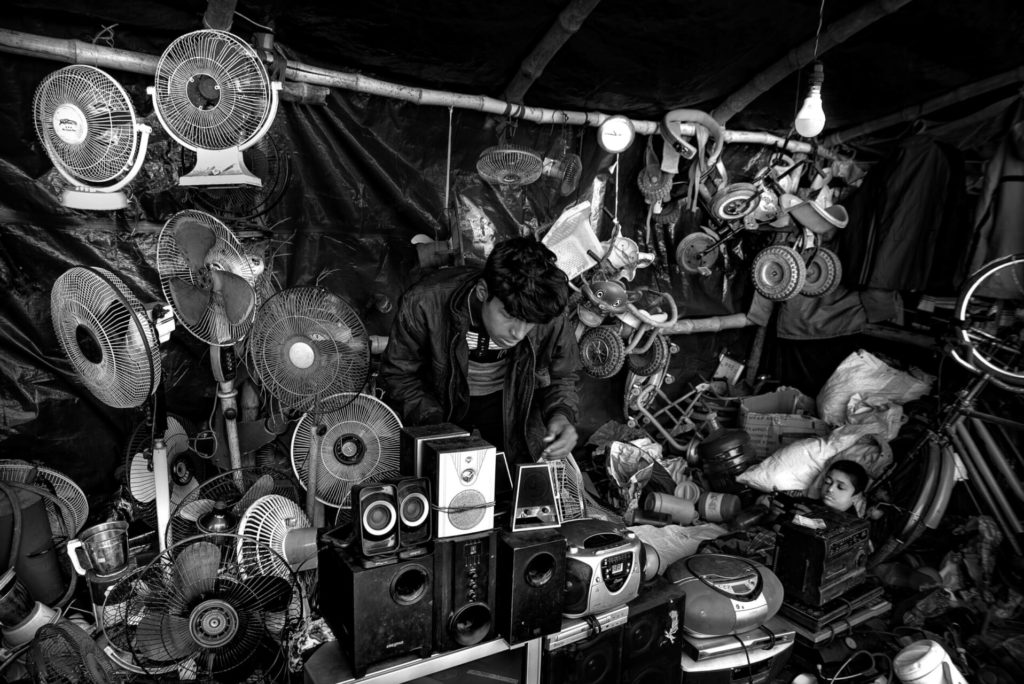
A man sorting parts from old electronic gadgets. This photo was taken in a rural part of West Bengal, India, where a community of 30 people recovers tin, silicon, iron, aluminium, lead, copper, gold and a variety of plastics from e-waste. Photo: WasteAid / Avijit Ghosh.
Environmental and human risks of poor e-waste disposal
If we don’t get e-waste recycling sorted, disc drives, circuit boards, solar panels and electric vehicle batteries could all be affected by the lack of availability of rare metals.
Calls have been made to make e-waste recycling compulsory. The International Energy Agency recently calculated that demand for critical and rare minerals will grow by six times by 2040, with demand for lithium growing to 40 times today’s demand due to its use in batteries. If low-carbon technology becomes unaffordable because of a lack of vital materials, it is unlikely that climate targets will be met.
The continual mining of various metals and other resources required to make electrical and electronic goods not only depletes resources, but mining itself causes lasting environmental issues, habitat displacement for wildlife, and often involves poor and dangerous working conditions.
Furthermore, when disposed of improperly these materials also cause specific threats to the natural world and human health. A study in 2016 found that the backyard recycling of lead-acid car batteries is the number one source of pollution in the world’s poorer nations, leading to millions of years of healthy life being lost and profoundly affecting childhood development.
The impacts of poor e-waste management include:
Air pollution: Separating the valuable components from e-waste is not a simple task, since they are rarely designed for disassembly. For example, copper wires in computer equipment are often recovered by open burning that removes the plastic casing but leads to significant and harmful release of hydrocarbons. Meanwhile, the chemical stripping of gold-plated computer chips releases emissions of brominated dioxins and heavy metals.
Water pollution: Older televisions, video cameras and computer monitors containing cathode ray tubes which have a recycling value. These items are broken apart to recover the cathode ray tube, and the rest of the shell or casing is dumped. The shells contain lead and barium which can leach through the soil into groundwater, endangering wildlife and the communities who depend on the water source for drinking and bathing.
Soil pollution: Dumped e-waste leaches toxic particles of heavy metals into the soil, where they are absorbed by crops and enter the human food chain. Once in the human body, these heavy metals accumulate and have been implicated in a range of harmful diseases including Alzheimer’s, diabetes and several forms of cancer.
Information security: A lot of our personal data is saved on electronic equipment, meaning if the item is improperly disposed of it can pose a threat to personal and business security. Hard drives need to be erased properly to prevent sensitive information being exposed, such as credit card numbers, financial data and bank account records.
Human exploitation: While there are a many legitimate e-waste recycling organisations, the industry is also blighted by modern day slavery. The work to recover precious metals from used electronic and electrical equipment can be dangerous and workers are often underpaid and denied basic rights.
The secondhand electronics market is a vital way to keep resources in the loop. Photo: WasteAid / Surav Das in West Bengal.
Recycle your e-waste with WasteAid
For World Environment Day 2021, WasteAid is teaming up with musicMagpie in the UK, who are donating £1 for each piece of consumer tech customers trade in with them. In addition, sellers will have the option to donate the value offered by the recommerce platform to the charity.
The money raised during this campaign will contribute to WasteAid’s programmes and support the development of educational materials on how to tackle the issue of e-waste, and importantly how to recycle and repair unwanted technology.
If you are in the UK and like many people, have a drawer full of old phones and other small electrical items, now is the time for a spring clean. By recycling your e-waste with musicMagpie through the month of June 2021, you can support communities and policy makers in lower-income countries to help reduce pollution, protect human health and save vital resources for climate-friendly technology.
Written by Zoë Lenkiewicz
News
Beyond the Numbers: The Human Impact of WasteAid’s Work
Members of WasteAid’s Gambia team, Lamin Janneh and Jojo Saho, recently investigated what our programmes mean to our individual participants by speaking to members...
News
Journey to Uganda: Stories from our projects
Recently, the Programme Management team travelled to Uganda to meet the people at the heart of our waste management programmes, connect with local stakeholders...
News
From E-Waste Skills to Sustainable Enterprise: Cosmo City Participants Take the Next Step
What if a broken laptop, television or other electronic appliance wasn’t waste, but an opportunity to repair, reuse and recycle? For participants in WasteAid’s Waste 2...
News
Lufthansa Group and WasteAid Launch Animation Film
WasteAid and Lufthansa Group have launched a new animated training film designed to help cabin crew improve onboard waste segregation, supporting efforts to increase...
News
How one community in The Gambia is changing its relationship with plastic
In Bakoteh, a community in the Greater Banjul Area of The Gambia, plastic waste has long been a serious problem. Home to the largest dumpsite in...
News
Women farmers in Kalaji turn organic waste into opportunity through the S-ORGANIC project
In Kalaji, a group of women farmers is demonstrating how organic waste can become a productive resource — supporting sustainable agriculture, strengthening livelihoods, and...
Luther Hinga and Zoë Lenkiewicz discuss the impact of WasteAid’s programme in Cameroon and the potential to scale activities through cross-sectoral partnerships.
In the coastal city of Douala in Cameroon, WasteAid and partners are beginning to make a lasting impact on how waste is managed. With a population of 3.8 million and growing at 3.6% a year, Douala unsurprisingly also has a growing waste challenge. Rivers carry plastic waste from inland communities, and the city itself is generating significant quantities of plastic on a daily basis – the vast majority of which remains unmanaged.
Over two years, WasteAid will train 164 young unemployed people in the safe and sustainable collection and processing of waste plastics from the Bonaberi district of the city. Each has the opportunity to choose their preferred field of specialism: plastic collection, tile fabrication, waste related community behaviour change, or marketing and sales. On completion of their training, these interns will be offered long-term employment with WasteAid’s local business partner REDPLAST and help to expand plastic waste collections to other parts of the city and country.
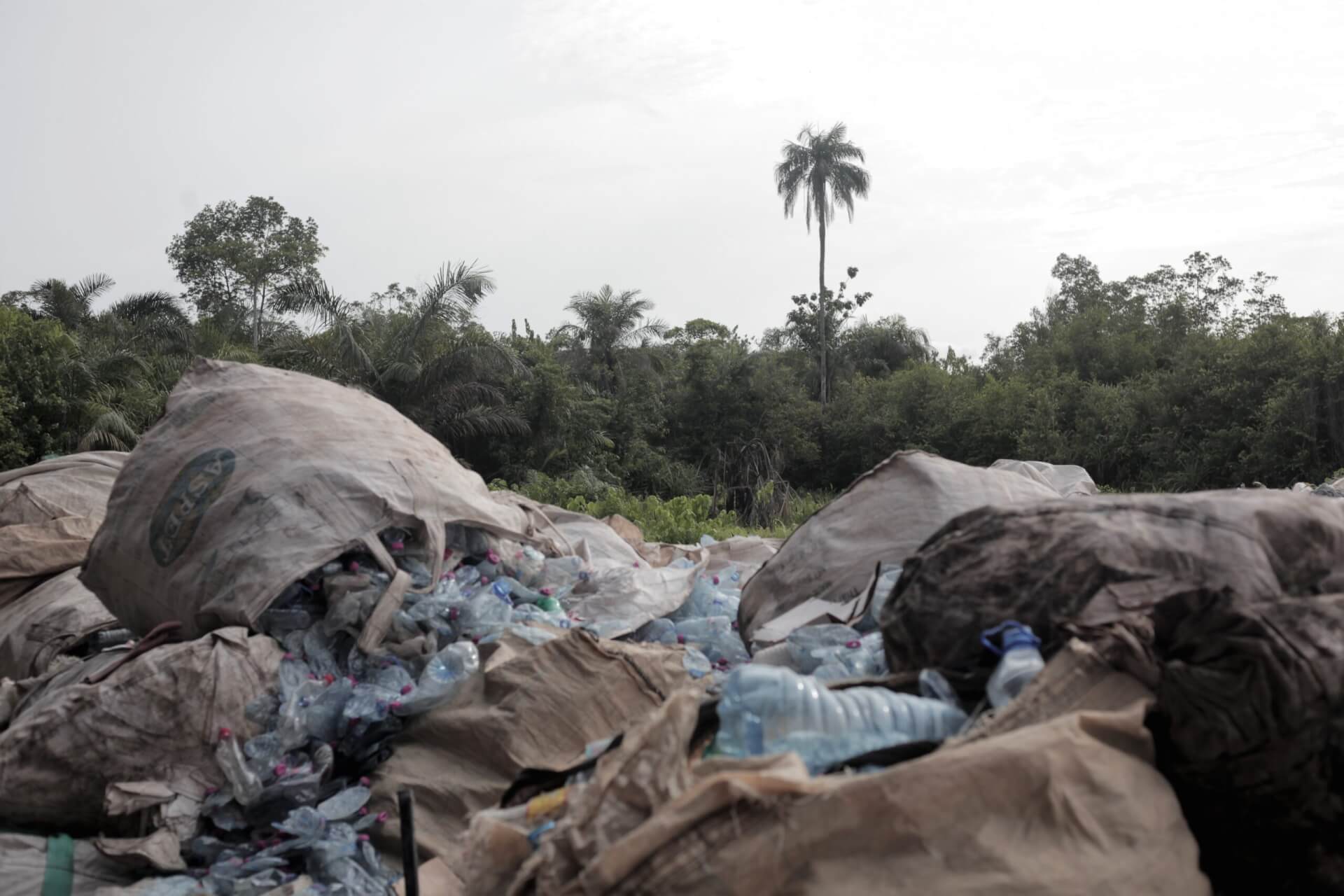
While all waste materials cause a problem if left unmanaged, the increasing use of plastic poses a particular challenge. Unlike metals, used plastic packaging has little immediate value to waste pickers and so accumulates in the streets and rivers of the city, eventually reaching the Cameroon estuary and the Atlantic Ocean. The case for introducing plastic waste management here is compelling, not least due to the impacts of plastic waste on the local fisheries that some 40% of the population relies upon for a living.
The current alternative of open burning of waste is understood to be generating 5-10% of global anthropogenic carbon emissions. Addressing the waste challenge is one of the more cost-effective ways of approaching net zero, and offers a range of livelihood opportunities for the growing number of unemployed young people throughout the African continent and elsewhere.
This two-year project in Douala was made possible through the generous donations from WasteAid supporters to our UK Aid Match appeal in summer 2019. No one group or organisation can fix the waste problem alone, and it’s through partnerships that the most sustainable impact can be made.
 WasteAid’s relationship with Bunzl plc is an excellent example of different sectors working together to accelerate progress. Following a year-long project in Indonesia, in 2021 Bunzl contributed further to WasteAid’s work in Cameroon with funding for a 12-month project to set up a PET recycling system. Here, WasteAid will work with its Doualan private sector partner REDPLAST to recruit and develop a new team focused on the dedicated collection of PET. This will be flaked and washed and sold into the PET value chain to make new products, closing the loop and further supporting Cameroon’s progress towards a circular economy.
Meanwhile, WasteAid’s Circular Economy Network funded by Huhtamaki and operating in South Africa, India and Vietnam, is highlighting some fantastic examples of grassroots entrepreneurs driving the recovery and valorisation of waste. At WasteAid, we firmly believe that positive action starts on the ground and works best when local people and organisations develop locally appropriate solutions to the growing waste problem. While a truly circular economy might be a long way off, the concept is gaining traction and attracting more partners who recognise the value in supporting waste management and recycling initiatives in major hubs where there is currently significant leakage of waste into the environment.
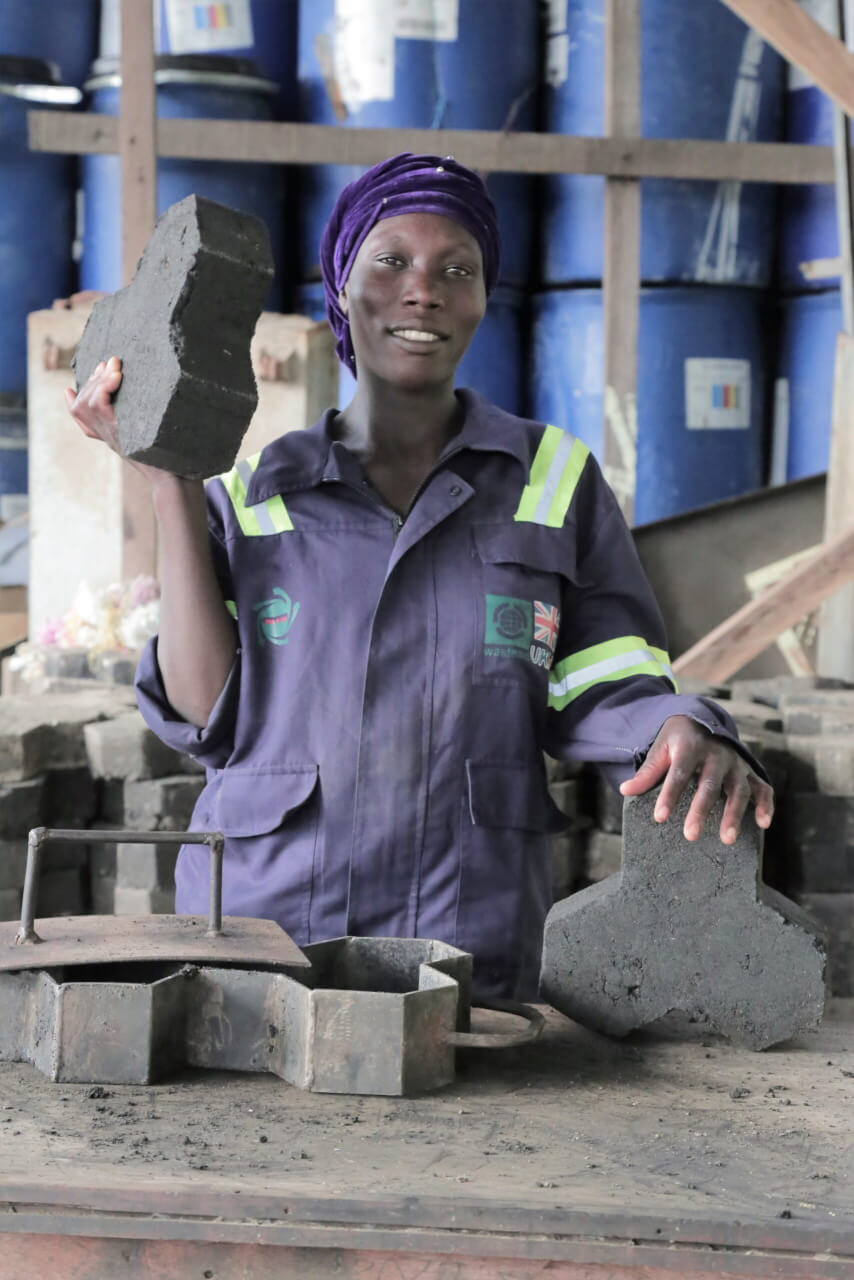 WasteAid has developed rigorous monitoring and evaluation methodologies and is constantly seeking new and innovative ways to demonstrate our approach and the positive impacts of sustainable resource management. This data will in turn be useful in convincing more politicians and policy makers to facilitate waste collection services in their areas, as well as attracting more institutional and corporate partners who are looking to make a measurable impact towards reducing climate emissions, preventing marine plastic pollution, and supporting sustainable livelihoods in some of the poorest parts of the world.
This story was first published in Circular Online, the magazine of the Chartered Institution of Wastes Management.
News
Beyond the Numbers: The Human Impact of WasteAid’s Work
Members of WasteAid’s Gambia team, Lamin Janneh and Jojo Saho, recently investigated what our programmes mean to our individual participants by speaking to members...
News
Journey to Uganda: Stories from our projects
Recently, the Programme Management team travelled to Uganda to meet the people at the heart of our waste management programmes, connect with local stakeholders...
News
From E-Waste Skills to Sustainable Enterprise: Cosmo City Participants Take the Next Step
What if a broken laptop, television or other electronic appliance wasn’t waste, but an opportunity to repair, reuse and recycle? For participants in WasteAid’s Waste 2...
News
Lufthansa Group and WasteAid Launch Animation Film
WasteAid and Lufthansa Group have launched a new animated training film designed to help cabin crew improve onboard waste segregation, supporting efforts to increase...
News
How one community in The Gambia is changing its relationship with plastic
In Bakoteh, a community in the Greater Banjul Area of The Gambia, plastic waste has long been a serious problem. Home to the largest dumpsite in...
News
Women farmers in Kalaji turn organic waste into opportunity through the S-ORGANIC project
In Kalaji, a group of women farmers is demonstrating how organic waste can become a productive resource — supporting sustainable agriculture, strengthening livelihoods, and...