News
Beyond the Numbers: The Human Impact of WasteAid’s Work
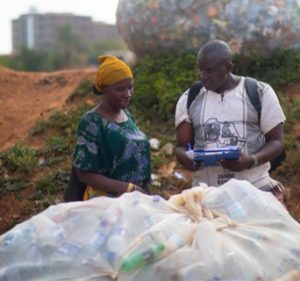
Members of WasteAid’s Gambia team, Lamin Janneh and Jojo Saho, recently investigated what our programmes mean to our individual participants by speaking to members...

On 10th April 2026, WasteAid convened a high-level meeting with the National Environment Agency (NEA), culminating in the successful signing of a Memorandum of Understanding (MoU). The agreement marks a significant step toward strengthening collaboration on sustainable waste management and environmental protection in The Gambia.
Speaking at the signing ceremony, the Executive Director of NEA, Dr. Dawda Badgie, expressed appreciation to all participants for their commitment and patience throughout the engagement process that led to this milestone. He underscored NEA’s satisfaction with WasteAid’s strong alignment with the Agency’s mandate of ensuring a clean and healthy environment. He further highlighted the challenges posed by fragmented waste management efforts in the past, emphasizing the importance of the MoU in fostering coordinated and unified implementation particularly at the community level. The Executive Director reaffirmed NEA’s commitment to working closely with WasteAid, noting the growing global waste challenges and the need for a comprehensive, nationwide strategy.
The Country Director of WasteAid The Gambia, Lamin Sanyang, reiterated the importance of partnerships, emphasizing that no single institution can achieve its objectives in isolation. He announced the commencement of WasteAid’s first country strategy and invited contributions from key stakeholders, including NEA. Referencing the recent National Waste Management Study, he highlighted the absence of a national strategy and described the MoU as both timely and strategic.
Our Director of Programmes Akira Akazawa had this to say about the signing of the MoU:
“No single organisation can solve the global waste crisis alone. This MoU represents a powerful step forward between WasteAid’s mission—where waste causes no harm—and the NEA’s vital mandate and provision of its technical expertise. We are particularly excited to align our country strategy with the NEA’s goals, focusing on capacity building and joint funding to turn environmental challenges into sustainable opportunities for the people of The Gambia.”
Mr. Sanyang also outlined key areas of collaboration, including policy alignment, capacity building, and the development of joint funding proposals. He acknowledged the valuable guidance previously provided by NEA and expressed his anticipation for continued collaboration and strengthened partnership moving forward.

News
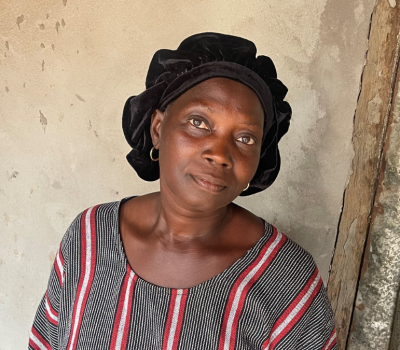
Beyond the Numbers: The Human Impact of WasteAid’s Work
Members of WasteAid’s Gambia team, Lamin Janneh and Jojo Saho, recently investigated what our programmes mean to our individual participants by speaking to members...
News
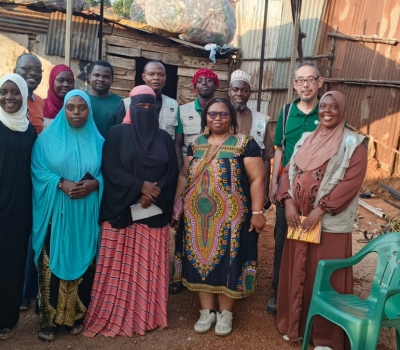
Journey to Uganda: Stories from our projects
Recently, the Programme Management team travelled to Uganda to meet the people at the heart of our waste management programmes, connect with local stakeholders...
News
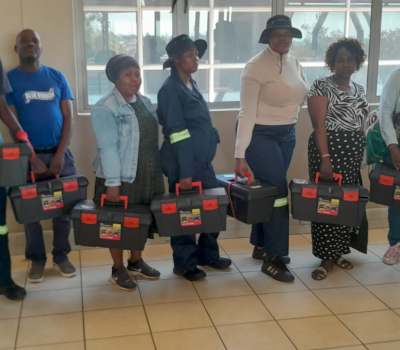
From E-Waste Skills to Sustainable Enterprise: Cosmo City Participants Take the Next Step
What if a broken laptop, television or other electronic appliance wasn’t waste, but an opportunity to repair, reuse and recycle? For participants in WasteAid’s Waste 2...
News
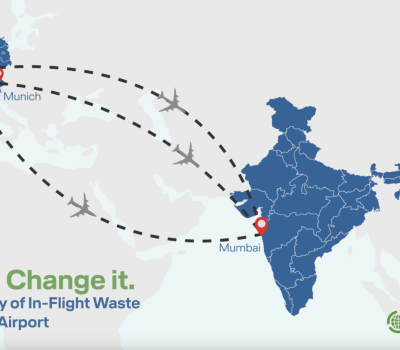
Lufthansa Group and WasteAid Launch Animation Film
WasteAid and Lufthansa Group have launched a new animated training film designed to help cabin crew improve onboard waste segregation, supporting efforts to increase...
News
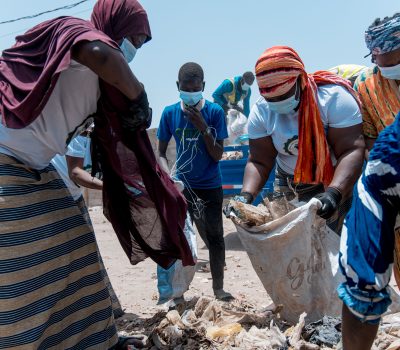
How one community in The Gambia is changing its relationship with plastic
In Bakoteh, a community in the Greater Banjul Area of The Gambia, plastic waste has long been a serious problem. Home to the largest dumpsite in...
News
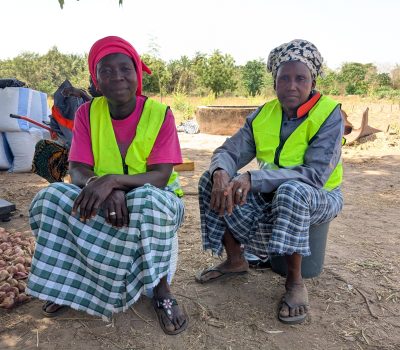
Women farmers in Kalaji turn organic waste into opportunity through the S-ORGANIC project
In Kalaji, a group of women farmers is demonstrating how organic waste can become a productive resource — supporting sustainable agriculture, strengthening livelihoods, and...
Since 2019, WasteAid has been proud to partner with Biffa, one of the UK’s leading waste management companies. What began as an early commitment to a young charity has grown into a long-standing collaboration, helping WasteAid expand its reach, strengthen its organisation, and deliver practical waste solutions in communities around the world.
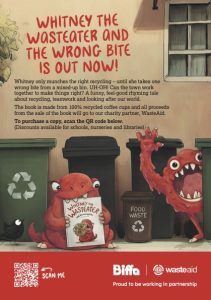
Building on this shared commitment to improving waste practices, Biffa has also launched a creative initiative to inspire the next generation. Working with best-selling author Yasmine Anane, the company has created a story about Whitney the Wasteater, who falls ill after the wrong items are placed in the recycling bin. Uniquely, the book is one of the first in the world to be printed on paper made from recycled coffee cups, with all proceeds supporting WasteAid projects in The Gambia, Uganda and South Africa.
Ceris Turner-Bailes, WasteAid CEO, said: “We’re delighted to see Biffa using the power of storytelling to help children understand waste and its impact on our world. Whitney the Wasteater and the Wrong Bite is a brilliant way to inspire young readers to care for the environment and help them understand that everyone’s challenges are slightly different -all while supporting WasteAid’s work to improve waste management and livelihoods globally.”
If you’d like to purchase a copy of the book, you can do so here: Whitney the Wasteater.
We like to thank Biffa for their incredible support, if you’d like to read more about our partnership visit this page.
News
Beyond the Numbers: The Human Impact of WasteAid’s Work
Members of WasteAid’s Gambia team, Lamin Janneh and Jojo Saho, recently investigated what our programmes mean to our individual participants by speaking to members...
News
Journey to Uganda: Stories from our projects
Recently, the Programme Management team travelled to Uganda to meet the people at the heart of our waste management programmes, connect with local stakeholders...
News
From E-Waste Skills to Sustainable Enterprise: Cosmo City Participants Take the Next Step
What if a broken laptop, television or other electronic appliance wasn’t waste, but an opportunity to repair, reuse and recycle? For participants in WasteAid’s Waste 2...
News
Lufthansa Group and WasteAid Launch Animation Film
WasteAid and Lufthansa Group have launched a new animated training film designed to help cabin crew improve onboard waste segregation, supporting efforts to increase...
News
How one community in The Gambia is changing its relationship with plastic
In Bakoteh, a community in the Greater Banjul Area of The Gambia, plastic waste has long been a serious problem. Home to the largest dumpsite in...
News
Women farmers in Kalaji turn organic waste into opportunity through the S-ORGANIC project
In Kalaji, a group of women farmers is demonstrating how organic waste can become a productive resource — supporting sustainable agriculture, strengthening livelihoods, and...
Celebrating continued support from Veralto on World Water Day
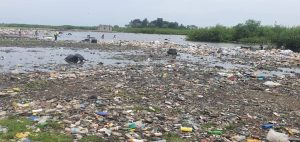
Plastic waste is a growing challenge across The Gambia. Rapid urban growth, limited waste services and increasing consumption have created a situation where large quantities of waste are mismanaged each day. In many communities, households have little choice but to burn waste or dump it in nearby open areas and waterways. Over time, this waste is carried into rivers, wetlands and eventually the ocean.
One of the most vulnerable ecosystems is the Tanbi Wetlands Complex near Banjul. This internationally recognised wetland provides breeding grounds for shrimp and oysters, supports local food systems and protects coastal communities. Yet it is increasingly threatened by pollution from mismanaged waste. Plastics dumped in nearby communities often end up in the wetlands, where they damage mangrove ecosystems and contaminate water sources that local people depend on.
On World Water Day, we’re delighted to announce a continuation of support from Veralto for our work in addressing waste concerns in the area.
WasteAid has been working in The Gambia since 2017 to address the links between waste pollution, poverty and environmental degradation. Through its First Step Resource Management programme, the organisation supports informal waste collectors to build sustainable businesses that recover and recycle valuable materials.
Between 2022 and 2024, WasteAid piloted this approach in three communities in the Greater Banjul Area. Local waste collectors were organised into groups and trained in plastic collection, sorting and recycling techniques.
During the pilot phase, more than 115,000 kilograms of plastic waste were collected and sold for recycling. The project also helped reduce the open dumping and burning of waste, improving conditions for more than 800,000 people living in the wider area.
Building on this success, WasteAid is now expanding its work to further protect the Tanbi Wetlands and strengthen local waste systems. A new project titled Our Tanbi, Our Future will support waste entrepreneurship while reducing the flow of plastics into rivers and wetlands.
The project will establish four new plastic waste collector groups in communities located close to high-risk waterways. Participants will receive training in plastic waste management, health and safety, and small business development. Each group will also be provided with essential equipment such as protective clothing, collection bags and trolleys to improve the efficiency and safety of their work.
Small collection and sorting hubs will be developed in each community, allowing collectors to safely process larger volumes of recyclable plastics. WasteAid will also help groups build relationships with buyers and aggregators so that the plastics they collect can be reliably sold and recycled.
Alongside this work, the project will focus on community engagement and behaviour change. Information campaigns, local radio discussions and community activities will raise awareness about the risks of plastic pollution and the importance of responsible waste disposal.
WasteAid CEO Ceris Turner-Bailes said: “By supporting waste collectors as entrepreneurs and environmental service providers, WasteAid aims to create lasting change. I want to thank Veralto for their continued support – this project will help protect the Tanbi Wetlands, reduce plastic pollution and create new economic opportunities for local communities. With the right support, waste can become a valuable resource rather than a growing threat to people and nature.”
News
Beyond the Numbers: The Human Impact of WasteAid’s Work
Members of WasteAid’s Gambia team, Lamin Janneh and Jojo Saho, recently investigated what our programmes mean to our individual participants by speaking to members...
News
Journey to Uganda: Stories from our projects
Recently, the Programme Management team travelled to Uganda to meet the people at the heart of our waste management programmes, connect with local stakeholders...
News
From E-Waste Skills to Sustainable Enterprise: Cosmo City Participants Take the Next Step
What if a broken laptop, television or other electronic appliance wasn’t waste, but an opportunity to repair, reuse and recycle? For participants in WasteAid’s Waste 2...
News
Lufthansa Group and WasteAid Launch Animation Film
WasteAid and Lufthansa Group have launched a new animated training film designed to help cabin crew improve onboard waste segregation, supporting efforts to increase...
News
How one community in The Gambia is changing its relationship with plastic
In Bakoteh, a community in the Greater Banjul Area of The Gambia, plastic waste has long been a serious problem. Home to the largest dumpsite in...
News
Women farmers in Kalaji turn organic waste into opportunity through the S-ORGANIC project
In Kalaji, a group of women farmers is demonstrating how organic waste can become a productive resource — supporting sustainable agriculture, strengthening livelihoods, and...
On Monday 16 March, The Gambia marked an important step towards sustainable agriculture with the launch of work to develop a National Organic Fertiliser Product Standard. The agreement was signed at the Ministry of Environment, Climate Change and Natural Resources.
The ceremony brought together key partners including the Ambassador of the European Union to The Gambia, Imma Roca i Cortés, alongside other representatives including from WasteAid.
The new standard will define what qualifies as organic fertiliser in The Gambia. It will set clear rules for quality, safety, labelling and performance. These measures will help ensure that organic fertilisers are safe for the environment, suitable for farming and reliable for producers and farmers alike.
By introducing a national product standard, the initiative will strengthen confidence in organic fertilisers and support farmers to access safe and dependable agricultural inputs. The standard will also support the growth of a market for locally produced organic fertilisers made from organic waste.
The work forms part of the Civil Society Green Advocacy for Organic Fertilisers initiative. The programme manages five grants funded by the European Union that support projects focused on improving soil health, promoting sustainable agricultural practices and advancing the circular economy.
Speaking at the ceremony, Ambassador Imma Roca i Cortés said:
“Today’s agreement represents an important milestone. For the first time in The Gambia, a national standard for organic fertilisers is being developed. Standards help ensure that farmers receive products that are safe, reliable and effective. This supports sustainable agricultural practices and improves quality for consumers.”
The standard will be developed by The Gambia Standards Bureau, the national body responsible for creating standards for products, services and systems. The process will involve collaboration with government agencies, research institutions, civil society organisations and private sector stakeholders.
Through this partnership, the organisations aim to establish a strong national standard that aligns with international and regional frameworks. The standard will help improve soil health, strengthen environmental protection and support long-term agricultural productivity in The Gambia.
Lamin Sangyang, WasteAid’s Country Manager in The Gambia, said: “This initiative represents a significant milestone for The Gambia. Agriculture remains the backbone of our economy and a key source of livelihood for many Gambians. At the same time, the country faces growing challenges related to soil fertility, increasing waste generation, and the need for more sustainable farming practices.
“Organic fertiliser offers a practical solution to many of these challenges. By transforming organic waste into valuable agricultural inputs, we can improve soil health, increase crop productivity, and reduce the amount of waste that ends up in dumpsites. However, for this sector to grow and gain the confidence of farmers, consumers, and investors, clear and reliable standards are essential.”
News
Beyond the Numbers: The Human Impact of WasteAid’s Work
Members of WasteAid’s Gambia team, Lamin Janneh and Jojo Saho, recently investigated what our programmes mean to our individual participants by speaking to members...
News
Journey to Uganda: Stories from our projects
Recently, the Programme Management team travelled to Uganda to meet the people at the heart of our waste management programmes, connect with local stakeholders...
News
From E-Waste Skills to Sustainable Enterprise: Cosmo City Participants Take the Next Step
What if a broken laptop, television or other electronic appliance wasn’t waste, but an opportunity to repair, reuse and recycle? For participants in WasteAid’s Waste 2...
News
Lufthansa Group and WasteAid Launch Animation Film
WasteAid and Lufthansa Group have launched a new animated training film designed to help cabin crew improve onboard waste segregation, supporting efforts to increase...
News
How one community in The Gambia is changing its relationship with plastic
In Bakoteh, a community in the Greater Banjul Area of The Gambia, plastic waste has long been a serious problem. Home to the largest dumpsite in...
News
Women farmers in Kalaji turn organic waste into opportunity through the S-ORGANIC project
In Kalaji, a group of women farmers is demonstrating how organic waste can become a productive resource — supporting sustainable agriculture, strengthening livelihoods, and...
Every year on Global Recycling Day, organisations around the world highlight the importance of reducing waste and protecting natural resources. For us here at WasteAid, recycling is about environmental protection and improving livelihoods. Our charity works with communities that often have little or no formal waste services, helping them develop practical ways to manage waste and create income.
Across many parts of the world, large volumes of waste are burned or dumped in the open. This causes pollution, damages ecosystems and creates serious health risks. WasteAid works with local partners in low and middle income countries to address these challenges by sharing practical skills and simple recycling techniques. The aim is to help communities turn waste into a resource rather than a problem.
A key part of WasteAid’s work focuses on supporting local entrepreneurs. Through our Wastepreneur programmes, we provide training, mentoring and small grants to people who want to start recycling or waste collection businesses. In Uganda, for example, WasteAid has supported women and young entrepreneurs in Kampala who are tackling the growing issue of textile waste. Participants are learning how to reuse and recycle discarded clothing so that it can be turned into useful products rather than ending up in landfill.
WasteAid has also helped communities develop recycling systems in West Africa. In The Gambia, the charity has worked with local organisations to establish recycling centres and train residents in new techniques – creating new economic opportunities while reducing pollution.
Partnerships and knowledge-sharing play an important role in this work. In South Africa, WasteAid has collaborated with researchers and local authorities on a community recycling programme that combines education, public awareness and improved collection systems. One pilot project helped divert several tonnes of plastic waste away from the environment in only a few months.
WasteAid’s work shows how practical solutions can create lasting change. This Global Recycling Day, WasteAid’s projects highlight an important message: With the right skills and support, recycling can protect the environment while also strengthening communities and creating new opportunities.
News
Beyond the Numbers: The Human Impact of WasteAid’s Work
Members of WasteAid’s Gambia team, Lamin Janneh and Jojo Saho, recently investigated what our programmes mean to our individual participants by speaking to members...
News
Journey to Uganda: Stories from our projects
Recently, the Programme Management team travelled to Uganda to meet the people at the heart of our waste management programmes, connect with local stakeholders...
News
From E-Waste Skills to Sustainable Enterprise: Cosmo City Participants Take the Next Step
What if a broken laptop, television or other electronic appliance wasn’t waste, but an opportunity to repair, reuse and recycle? For participants in WasteAid’s Waste 2...
News
Lufthansa Group and WasteAid Launch Animation Film
WasteAid and Lufthansa Group have launched a new animated training film designed to help cabin crew improve onboard waste segregation, supporting efforts to increase...
News
How one community in The Gambia is changing its relationship with plastic
In Bakoteh, a community in the Greater Banjul Area of The Gambia, plastic waste has long been a serious problem. Home to the largest dumpsite in...
News
Women farmers in Kalaji turn organic waste into opportunity through the S-ORGANIC project
In Kalaji, a group of women farmers is demonstrating how organic waste can become a productive resource — supporting sustainable agriculture, strengthening livelihoods, and...
It is with great sadness that WasteAid must inform all of our friends, followers and funders of the passing of Michelle Wilson, WasteAid’s first Director of Programmes (2020-2025).
Michelle died peacefully surrounded by friends on Sunday 15th February 2026, following a relatively short but aggressive illness. It was in March 2025 that Michelle formally stepped down from WasteAid for health reasons. The WasteAid team are incredibly saddened at the loss of their former colleague and friend.
Michelle was a key part of WasteAid’s evolution and success. She was totally committed and brought drive, passion and talent to the role.
WasteAid’s CEO, Ceris Turner-Bailes, said: “Whilst this day was not unexpected, I am incredibly sad to receive the news. Michelle and I worked closely over five years to develop WasteAid, the organisation and its programmes. She cared so much about her team, colleagues and of course those benefitting from our work. Michelle is leaving a wonderful legacy, her work has supported so many marginalised people to improve their livelihoods through the circular economy and reduced waste pollution in the communities where we work. She was the main architect of our hugely successful Wastepreneur programme and I am forever grateful that she was a part of our team and cherish the memories of our shared successes and challenges.”
Philip Sentamu, WasteAid’s Project Manager in Uganda, shared: “My interactions with Michelle were marked by guidance, strategic insight, and encouragement. She helped me navigate so many challenges and hurdles. Her counsel strengthened my confidence and sharpened my approach. Much of what I learned from her has directly shaped how I have worked over the past two years. I am grateful to have benefited from Michelle’s wealth of knowledge and experience. She invested in people, and that investment will continue to bear fruit for many years to come.”
WasteAid Project Officer Jojo Sawa was supported by Michelle from her work as a volunteer, through to becoming a member of the WasteAid team in The Gambia. She added: “I joined WasteAid as a volunteer, that’s when I met Michelle and benefitted from her support. I later had the privilege of working with her as a colleague – she was a dear mentor and friend, and will be missed very much.”
Finally, Dr Jonathan Straight, Chair of the Board of Trustees of WasteAid, said: “Michelle made a hugely valuable and unique contribution to the development of our programmes, work which will continue as a fitting legacy for someone whose pioneering work delivered real change to some of the poorest communities in the world. We will all miss her terribly. On behalf of the board, we send our deepest condolences to her family and friends.”
The funeral and celebration of Michelle’s life will be held at St Paul’s Church, 129 Herne Hill, London SE24 9LY at 1pm on Wednesday 11th March, followed by refreshments in the welcome space at the church. All are welcome to attend, there is also planned a live link for those who are unable to attend in person. Please contact Ceris personally or any member of the WasteAid team if you would like further information, to attend the funeral or the live link.
News
Beyond the Numbers: The Human Impact of WasteAid’s Work
Members of WasteAid’s Gambia team, Lamin Janneh and Jojo Saho, recently investigated what our programmes mean to our individual participants by speaking to members...
News
Journey to Uganda: Stories from our projects
Recently, the Programme Management team travelled to Uganda to meet the people at the heart of our waste management programmes, connect with local stakeholders...
News
From E-Waste Skills to Sustainable Enterprise: Cosmo City Participants Take the Next Step
What if a broken laptop, television or other electronic appliance wasn’t waste, but an opportunity to repair, reuse and recycle? For participants in WasteAid’s Waste 2...
News
Lufthansa Group and WasteAid Launch Animation Film
WasteAid and Lufthansa Group have launched a new animated training film designed to help cabin crew improve onboard waste segregation, supporting efforts to increase...
News
How one community in The Gambia is changing its relationship with plastic
In Bakoteh, a community in the Greater Banjul Area of The Gambia, plastic waste has long been a serious problem. Home to the largest dumpsite in...
News
Women farmers in Kalaji turn organic waste into opportunity through the S-ORGANIC project
In Kalaji, a group of women farmers is demonstrating how organic waste can become a productive resource — supporting sustainable agriculture, strengthening livelihoods, and...