News
Beyond the Numbers: The Human Impact of WasteAid’s Work
Members of WasteAid’s Gambia team, Lamin Janneh and Jojo Saho, recently investigated what our programmes mean to our individual participants by speaking to members...

WasteAid’s newly-appointed Director of Programmes, Akira Akazawa, recently visited two community plastic collection groups in a coastal area of The Gambia to understand how training, equipment, and community support are translating into real change on the ground.
The visit focused on Senya Waste Collectors Kafoo and the Sanyang Waste Collector Group, known locally as Hawba. While the groups are at different stages of development, both show how grassroots waste collection can improve livelihoods, protect the environment, and strengthen communities when the right support is in place.
A mature group building momentum in Senya
Senya Waste Collectors Kafoo have been operating for around three years and is now a familiar presence in the community. The group is made up of ten members, most of them women, who work together several days a week alongside other income-generating activities such as food vending.
With support from WasteAid, the group has moved from labour-intensive and risky manual cutting to safer, more efficient processing. An electric cutting machine has reduced injuries and fatigue, while a motor tricycle has transformed how plastics are collected and transported. These changes have allowed the group to increase volumes, work more safely, and earn more consistently.
Community attitudes have shifted too. What once carried stigma is now widely accepted. Door-to-door collection has helped raise awareness about plastic waste, and the group’s visibility has built trust. Income earned from plastic sales supports household needs such as school costs, food, and important cultural celebrations.
Despite this progress, key barriers remain. The group operates from borrowed land with no permanent security and, crucially, no access to water. This limits their ability to wash plastics, even though washed materials sell for significantly higher prices. At present, unwashed plastics fetch between 8 and 9 Dalasi per kilogram, while washed plastics can earn up to 15 Dalasi per kilogram. Transport also eats into profits, with a monthly truck hire costing around 3,000 Dalasi to reach buyers.
As Amie, one of the group members, explained, the difference that equipment and training have made is already clear. Moving away from carrying heavy loads by hand and cutting plastics manually has improved safety and dignity at work. Refresher training on financial management has also helped the group plan better and protect their earnings.
Hawba in Sanyang: early-stage, high motivation
The Hawba group in Sanyang is newer, having completed WasteAid training between October and December 2025. The group meets weekly and is led by a committed team of women and men who are proud of the role they play in keeping their community clean.
For many members, plastic collection is closely linked to their main livelihood. Oyster harvesting provides income for only part of the year, and plastic pollution directly threatens marine ecosystems and food safety. For Hawba, collecting plastic is not just about income, but about protecting the environment that sustains them.
Motivation is strong, but practical challenges are holding the group back. Hawba does not yet have a designated space to collect or process plastics, making it difficult to operate efficiently. Community understanding is also still developing. Some residents do not yet recognise the value of the work, which means members often have to explain and justify their activities.
This context also creates an opportunity. The link between plastic pollution and oyster livelihoods is clear and locally relevant, making targeted community awareness both urgent and powerful.
What this means for WasteAid’s work
Across both groups, one message came through clearly. Training and motivation are not the limiting factors. Infrastructure is. Access to space, water, and basic washing facilities is the difference between low-margin survival and sustainable income.
After seeing the challenges for himself, Akira said: “In the short term, WasteAid will work with partners and community leaders to help both groups secure suitable spaces, explore simple and safe washing setups, and better understand the economics of transport and sales. For Hawba, community engagement will be a priority, linking plastic pollution directly to the health of oyster livelihoods.
“Over the coming months, there is strong potential to strengthen operations through shared learning, clearer processes, and closer engagement with buyers. Pairing early-stage groups with more established ones can accelerate progress and confidence.
“These visits underline something WasteAid sees again and again. When communities are given the right tools, practical support, and respect for their local knowledge, plastic waste can become a source of income, pride, and environmental protection.”

News
Beyond the Numbers: The Human Impact of WasteAid’s Work
Members of WasteAid’s Gambia team, Lamin Janneh and Jojo Saho, recently investigated what our programmes mean to our individual participants by speaking to members...
News
Journey to Uganda: Stories from our projects
Recently, the Programme Management team travelled to Uganda to meet the people at the heart of our waste management programmes, connect with local stakeholders...
News
From E-Waste Skills to Sustainable Enterprise: Cosmo City Participants Take the Next Step
What if a broken laptop, television or other electronic appliance wasn’t waste, but an opportunity to repair, reuse and recycle? For participants in WasteAid’s Waste 2...
News
Lufthansa Group and WasteAid Launch Animation Film
WasteAid and Lufthansa Group have launched a new animated training film designed to help cabin crew improve onboard waste segregation, supporting efforts to increase...
News
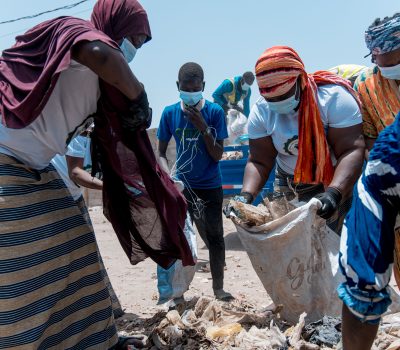
How one community in The Gambia is changing its relationship with plastic
In Bakoteh, a community in the Greater Banjul Area of The Gambia, plastic waste has long been a serious problem. Home to the largest dumpsite in...
News
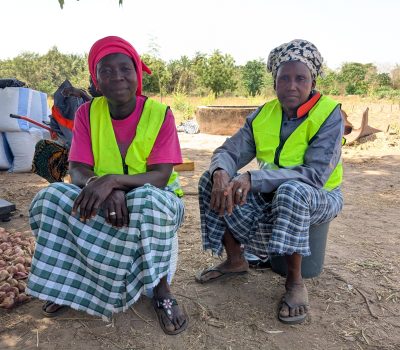
Women farmers in Kalaji turn organic waste into opportunity through the S-ORGANIC project
In Kalaji, a group of women farmers is demonstrating how organic waste can become a productive resource — supporting sustainable agriculture, strengthening livelihoods, and...
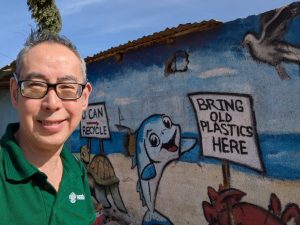
WasteAid is delighted to announce the appointment of Akira Akazawa as our new Director of Programmes. Akira brings with him a wealth of experience across international development, including work within the UN system, NGOs, and in close partnership with communities around the world.
Akira’s appointment marks an exciting new chapter for WasteAid as we continue to strengthen our programme delivery and expand the impact of our work. His background aligns strongly with our mission and values, particularly our commitment to practical, community-led approaches that address waste challenges while creating social, environmental, and economic opportunities.
Speaking about his new role, Akira said: “After many years working across international development, joining WasteAid feels like a natural and meaningful step. I’m really looking forward to working with a passionate team, learning from local partners, and contributing my experience to help scale solutions that are grounded, inclusive, and impactful.”
WasteAid CEO Ceris Turner-Bailes added: “Akira’s leadership will be critical to WasteAid’s success as we continue to develop and scale programmes that are locally-driven, inclusive, and sustainable. I’m delighted that he joins the team after a very competitive recruitment process and I am excited to work with him and the rest of the team to scale and grow our programmes. Akira’s passion for our mission and combination of technical approach, programmatic experience and funder management skills made him an outstanding candidate and he will be a real asset to the organisation.
“I would like to extend our heartfelt thanks to Rachel Beckett, Interim Director of Programmes throughout 2025. Rachel provided resilient leadership during a transitional period. Her dedication, professionalism, and commitment to WasteAid’s mission has also supported Akira’s own transition into this pivotal role and we are all deeply grateful for her energy and expertise.”
Getting to know Akira
We asked Akira a few quick-fire questions to get to know him a little better…
Tell us a little about your background and experience
I’ve spent almost 30 years working across international development and the private sector. My career spans NGOs, the UN system and intergovernmental organisations, with a focus on programme strategy and delivery, partnerships, and impact. I’m particularly interested in how circular economy approaches can turn waste challenges into practical opportunities for communities. Most recently, I led programme and impact work at Habitat for Humanity Great Britain, supporting teams and partners to scale community-led solutions.
What drew you to WasteAid?
WasteAid’s clear focus on practical, locally led solutions really resonated with me. The organisation’s ability to combine technical expertise with community ownership and real-world impact is both compelling and inspiring. I’ve seen myself the damage that waste can cause around the world, and the power that circular economy solutions can have in protecting the environment.
How excited are you by work of WasteAid’s programmes team?
Very much! I’ve been impressed by the team’s commitment, creativity and depth of expertise, and I’m excited to learn from them and work together to build on the strong foundations already in place.
Which part of our mission resonates most strongly with you?
WasteAid’s focus on empowering communities to turn waste into opportunity resonates strongly with me – especially the combination of environmental outcomes with circular economy thinking, skills and livelihoods.
What’s one thing people might be surprised to learn about you?
I’m a Guinness World Record holder! In 2006, I was one of 979 scuba divers who dived simultaneously at the same site in the Maldives to set a world record.
News
Beyond the Numbers: The Human Impact of WasteAid’s Work
Members of WasteAid’s Gambia team, Lamin Janneh and Jojo Saho, recently investigated what our programmes mean to our individual participants by speaking to members...
News
Journey to Uganda: Stories from our projects
Recently, the Programme Management team travelled to Uganda to meet the people at the heart of our waste management programmes, connect with local stakeholders...
News
From E-Waste Skills to Sustainable Enterprise: Cosmo City Participants Take the Next Step
What if a broken laptop, television or other electronic appliance wasn’t waste, but an opportunity to repair, reuse and recycle? For participants in WasteAid’s Waste 2...
News
Lufthansa Group and WasteAid Launch Animation Film
WasteAid and Lufthansa Group have launched a new animated training film designed to help cabin crew improve onboard waste segregation, supporting efforts to increase...
News
How one community in The Gambia is changing its relationship with plastic
In Bakoteh, a community in the Greater Banjul Area of The Gambia, plastic waste has long been a serious problem. Home to the largest dumpsite in...
News
Women farmers in Kalaji turn organic waste into opportunity through the S-ORGANIC project
In Kalaji, a group of women farmers is demonstrating how organic waste can become a productive resource — supporting sustainable agriculture, strengthening livelihoods, and...
In the heart of South Sudan, where communities continue to recover from conflict and flooding, a new initiative is turning one of the region’s greatest challenges into a source of hope. WasteAid, in partnership with the International Organization for Migration (IOM), has launched a pioneering waste-to-use pilot project, funded by the Kingdom of the Netherlands, that will transform waste into livelihoods in Bentiu and Rubkona.
The project builds on a comprehensive waste assessment carried out by WasteAid and IOM in late 2024 across Bentiu and Malakal. That assessment – WasteAid’s first in a humanitarian context – revealed both the scale of waste generation and the potential for circular solutions to drive economic opportunity.
Each month, over 1,800 cubic metres of waste are collected across IOM-supported camps and the Humanitarian Hub which houses UN bodies and INGOs working in the area. Much of this is either biodegradable or recyclable. Without intervention, this waste contributes to pollution and health risks – but with innovation and collaboration, it can become a valuable local resource.
“Across our programmes, we’ve seen how waste can be a catalyst for change,” said Ceris Turner-Bailes, WasteAid CEO. “This pilot is about proving that even in fragile, hard-to-reach environments, circular economy solutions can empower people, protect the environment, and create lasting impact.”
Through the new waste-to-use pilot, WasteAid and IOM will train around 30 participants in waste value techniques, enterprise development and circular business models. The training will prioritise inclusion, ensuring women, young people and those with disabilities play a leading role.
The pilot builds on concepts explored in the earlier research, including the potential to divert organic waste into fuel through IOM’s Sludge2Briquettes initiative and to repurpose plastics into building materials via the Plastic4Bricks project. Participants will gain hands-on experience in these and other locally relevant recycling and reuse activities, testing practical business models that improve sanitation while generating income.
“Managing waste effectively is essential in South Sudan,” said Vijaya Souri, IOM South Sudan Chief of Mission. “This pilot shows how locally adapted approaches can reduce health and environmental risks, support community recovery, and provide meaningful opportunities for displaced and host populations.”
For WasteAid, the collaboration marks a significant step forward, building on its global Wastepreneur® Programme and adapting it to a humanitarian setting for the first time. The pilot will provide essential evidence on how circular economy approaches can be introduced in fragile contexts, offering a model for replication in other displacement settings across South Sudan and beyond.
As WasteAid and IOM move from research to implementation, the partnership is setting an important precedent: that waste can be transformed into opportunity, even in the most complex environments. By linking environmental recovery with skills development and enterprise, this initiative is paving the way for cleaner, more resilient communities and a more circular future for South Sudan.
News
Beyond the Numbers: The Human Impact of WasteAid’s Work
Members of WasteAid’s Gambia team, Lamin Janneh and Jojo Saho, recently investigated what our programmes mean to our individual participants by speaking to members...
News
Journey to Uganda: Stories from our projects
Recently, the Programme Management team travelled to Uganda to meet the people at the heart of our waste management programmes, connect with local stakeholders...
News
From E-Waste Skills to Sustainable Enterprise: Cosmo City Participants Take the Next Step
What if a broken laptop, television or other electronic appliance wasn’t waste, but an opportunity to repair, reuse and recycle? For participants in WasteAid’s Waste 2...
News
Lufthansa Group and WasteAid Launch Animation Film
WasteAid and Lufthansa Group have launched a new animated training film designed to help cabin crew improve onboard waste segregation, supporting efforts to increase...
News
How one community in The Gambia is changing its relationship with plastic
In Bakoteh, a community in the Greater Banjul Area of The Gambia, plastic waste has long been a serious problem. Home to the largest dumpsite in...
News
Women farmers in Kalaji turn organic waste into opportunity through the S-ORGANIC project
In Kalaji, a group of women farmers is demonstrating how organic waste can become a productive resource — supporting sustainable agriculture, strengthening livelihoods, and...

WasteAid, with support from the Chartered Institution of Wastes Management (CIWM), has today released the Dennakuwo Impact Report 2025, celebrating three years of successful partnership driving circular economy innovation and community-led waste management in The Gambia.
Since 2022, the Dennakuwo Circular Economy Network — meaning “Together We Can” — has grown to more than 300 members, including entrepreneurs, women farmers, youth leaders and local authorities, all working to turn waste challenges into economic opportunity.
Through CIWM’s funding and technical support, the network has delivered over 10,000 hours of training, supported nine fledgling green enterprises, and awarded £15,000 in seed funding through its Waste-to-Use Challenge. Over 81% of members say the network has been transformational for their business.
“Dennakuwo means ‘Together We Can’, and that truly captures the spirit of this network,” said Ceris Turner-Bailes, Chief Executive of WasteAid. “It’s about communities taking ownership, creating livelihoods, and reducing pollution through practical, inclusive circular economy solutions.”
Sarah Poulter, Chief Executive of CIWM, added: “This initiative shows what can be achieved when international collaboration meets local innovation. It’s a powerful example of how the circular economy can drive inclusive development and move the world beyond waste and I’m proud that CIWM’s involvement has been key to bringing this to life.”
The Dennakuwo Network has become a national platform for innovation — from women gardeners in Marakissa and Bakau producing compost and eco-briquettes, to young entrepreneurs transforming tyres, textiles, and plastics into marketable products.
With the creation of a dedicated volunteer Secretariat, Dennakuwo is now positioned to continue supporting members and scaling its impact across The Gambia.
Read the full Dennakuwo Impact Report 2025 here:

News
Beyond the Numbers: The Human Impact of WasteAid’s Work
Members of WasteAid’s Gambia team, Lamin Janneh and Jojo Saho, recently investigated what our programmes mean to our individual participants by speaking to members...
News
Journey to Uganda: Stories from our projects
Recently, the Programme Management team travelled to Uganda to meet the people at the heart of our waste management programmes, connect with local stakeholders...
News
From E-Waste Skills to Sustainable Enterprise: Cosmo City Participants Take the Next Step
What if a broken laptop, television or other electronic appliance wasn’t waste, but an opportunity to repair, reuse and recycle? For participants in WasteAid’s Waste 2...
News
Lufthansa Group and WasteAid Launch Animation Film
WasteAid and Lufthansa Group have launched a new animated training film designed to help cabin crew improve onboard waste segregation, supporting efforts to increase...
News
How one community in The Gambia is changing its relationship with plastic
In Bakoteh, a community in the Greater Banjul Area of The Gambia, plastic waste has long been a serious problem. Home to the largest dumpsite in...
News
Women farmers in Kalaji turn organic waste into opportunity through the S-ORGANIC project
In Kalaji, a group of women farmers is demonstrating how organic waste can become a productive resource — supporting sustainable agriculture, strengthening livelihoods, and...

This December, WasteAid is delighted to once again take part in The Big Give Christmas Challenge – the UK’s biggest annual match-funding campaign. This is a powerful opportunity for you to double the impact of your donation and help us scale up our work tackling the global waste crisis.
Why this matters
Worldwide, around 1 in 3 people are forced to dump or burn their waste – a harmful practice that spreads disease, pollutes the oceans, and accelerates climate change.
At WasteAid, our mission is to turn that around: we work with local partners to build inclusive, community-led waste management, recycling and circular-economy solutions – protecting the environment while creating sustainable livelihoods in vulnerable communities.
This Christmas, your support has the potential to go twice as far.
How the match-funding works
The Big Give Christmas Challenge uses a “pledge-match” model: participating charities secure a portion of match-funding from their own supporters (pledgers) and from Big Give’s “Champion” funders.
Once the match fund is secured, public donations made through Big Give’s platform during the campaign week are matched pound-for-pound – so every £1 you give becomes £2 for WasteAid.
For example, a £30 gift could become £60 – enough to fund a variety of impactful interventions in communities that need it most.
What your doubled gift can achieve
With your doubled donation, WasteAid can:
Every gift – whether large or small – can help transform lives and protect our planet.
How to take part
Visit our WasteAid page on The Big Give when the Christmas Challenge opens (from midday on 2 December to midday on 9 December 2025).
Choose the amount you’d like to give – and watch your donation immediately double, thanks to match-funding.
Consider sharing the campaign with friends and family – the more people give, the bigger the impact we can make together.
And don’t forget: if you’re a UK taxpayer, tick the Gift Aid box so WasteAid can reclaim an extra 25p for every £1 you give – at no extra cost to you.
Help us reach our mission — together
At WasteAid, we believe in the power of community, collective action, and sustainability. The global waste crisis is vast – but with your support, we can transform waste into value, protect vulnerable communities, and build a circular economy that works for people and planet.
This Christmas, you can help make a world of difference. Give once – create impact twice.
Thank you for being part of the solution.

News
Beyond the Numbers: The Human Impact of WasteAid’s Work
Members of WasteAid’s Gambia team, Lamin Janneh and Jojo Saho, recently investigated what our programmes mean to our individual participants by speaking to members...
News
Journey to Uganda: Stories from our projects
Recently, the Programme Management team travelled to Uganda to meet the people at the heart of our waste management programmes, connect with local stakeholders...
News
From E-Waste Skills to Sustainable Enterprise: Cosmo City Participants Take the Next Step
What if a broken laptop, television or other electronic appliance wasn’t waste, but an opportunity to repair, reuse and recycle? For participants in WasteAid’s Waste 2...
News
Lufthansa Group and WasteAid Launch Animation Film
WasteAid and Lufthansa Group have launched a new animated training film designed to help cabin crew improve onboard waste segregation, supporting efforts to increase...
News
How one community in The Gambia is changing its relationship with plastic
In Bakoteh, a community in the Greater Banjul Area of The Gambia, plastic waste has long been a serious problem. Home to the largest dumpsite in...
News
Women farmers in Kalaji turn organic waste into opportunity through the S-ORGANIC project
In Kalaji, a group of women farmers is demonstrating how organic waste can become a productive resource — supporting sustainable agriculture, strengthening livelihoods, and...
A group of First-Step Resource Management participants from Mpumalanga Province recently experienced a powerful day of learning and inspiration, moving beyond the classroom to witness the real-world potential of the waste sector. As part of WasteAid’s intensive training and mentorship program, 30 participants visited the successful Makhabisi Recycling Center in Boksburg, South Africa.
The Power of a Tangible Example
The aim of the field visit was to provide a tangible example of a Buy-Back Centre that started from humble beginnings as waste collectors and scaled into a thriving enterprise. Participants were given a comprehensive overview of the facility’s operations, connecting the theory they learned in training directly to practice.
Cleo Ngulube, Programme Manager for WasteAid, highlighted the significance of the experience:
“The field visit is a powerful part of the WasteAid Wastepreneurs training. It is where theory meets reality. Seeing a Buy-Back Centre run by a WasteAid alumnus was not only inspiring for our participants, but it was also a tangible reminder of what’s possible in the waste sector. For our participants, who are from smaller towns with limited market exposure, I believe this experience opened their eyes to new possibilities and gave them the confidence to dream bigger, while also learning what it takes to turn those dreams into reality.”
From Micro-Scale to Medium Enterprise
The WasteAid program is designed to build the business skills of participants, facilitating community engagement to help them grow viable waste business enterprises. Currently operating at a micro-scale as informal waste collectors, the goal is for the participants to transition into larger, medium-to-large-scale business entities.
The Makhabisi Recycling Center operates as a Buy-Back Centre, a model where community members bring their recyclables to be weighed and are paid for their efforts. This mechanism underscores the value of waste as an economic commodity.
During the visit, one of the hosts emphasised the vital role of waste collectors, whose work is often undervalued by society: “It’s an economic activity that we really don’t see as important, but it is very valuable and it’s very important… the more that they grow, the more that they do such things as the ones that they’ve observed today, then with the society will realise their value.”
Key Takeaways and Future Dreams
The participants were clearly impacted by the visit, gaining both technical knowledge and entrepreneurial inspiration. One participant shared, “I’ve learned how a waste picker should separate at source… If it’s a can, you must separate those cans. If it’s green and brown, you must separate according to their colours.”
Another participant spoke to the power of growth, inspired by Makhabisi’s founders: “The biggest lesson is that you can turn a small thing into a bigger thing… I’ve noted from the founders… that at first they started like collecting waste from their home, going around collecting in schools and in local, but look now like they are owning a well-established entity.”
This inspiration immediately translated into big goals, with a participant stating, “What I’m taking away today definitely has to be: I also like to own a buyback centre in Witbank because there’s a lot of waste in Witbank.” They noted that opening a local centre could help educate the community on the importance of recycling, contributing to a more sustainable and beautiful place to live.
This field visit successfully demonstrated that the waste sector is not just about environmental necessity, but a pathway to sustainable enterprise, job creation, and community upliftment.
News
Beyond the Numbers: The Human Impact of WasteAid’s Work
Members of WasteAid’s Gambia team, Lamin Janneh and Jojo Saho, recently investigated what our programmes mean to our individual participants by speaking to members...
News
Journey to Uganda: Stories from our projects
Recently, the Programme Management team travelled to Uganda to meet the people at the heart of our waste management programmes, connect with local stakeholders...
News
From E-Waste Skills to Sustainable Enterprise: Cosmo City Participants Take the Next Step
What if a broken laptop, television or other electronic appliance wasn’t waste, but an opportunity to repair, reuse and recycle? For participants in WasteAid’s Waste 2...
News
Lufthansa Group and WasteAid Launch Animation Film
WasteAid and Lufthansa Group have launched a new animated training film designed to help cabin crew improve onboard waste segregation, supporting efforts to increase...
News
How one community in The Gambia is changing its relationship with plastic
In Bakoteh, a community in the Greater Banjul Area of The Gambia, plastic waste has long been a serious problem. Home to the largest dumpsite in...
News
Women farmers in Kalaji turn organic waste into opportunity through the S-ORGANIC project
In Kalaji, a group of women farmers is demonstrating how organic waste can become a productive resource — supporting sustainable agriculture, strengthening livelihoods, and...