News
Beyond the Numbers: The Human Impact of WasteAid’s Work
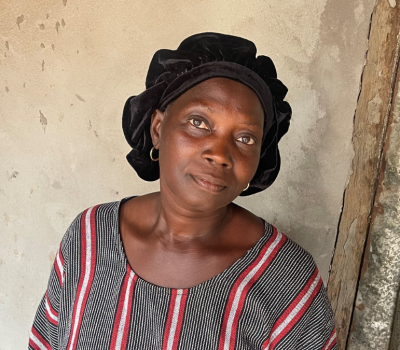
Members of WasteAid’s Gambia team, Lamin Janneh and Jojo Saho, recently investigated what our programmes mean to our individual participants by speaking to members...

In Kawempe, Kampala, a once-neglected wall has become a bold symbol of pride and possibility. Between October and November 2025, WasteAid — under the Bunzl WastePreneur Challenge – Uganda — joined hands with local leaders, youth, and waste entrepreneurs to turn waste education into public art.
The Community Waste Education Mural Initiative used creativity to inspire cleaner habits, recycling, and collective action. What began as a clean-up became a movement — transforming rubbish into colour and community pride.
Art, Awareness, and Action
Led by muralist Ssessanga Alex (Alexx Page), the project started with neighbourhood consultations, where residents shaped the mural’s theme and colours — green for renewal, blue for cleanliness, and yellow for optimism.
Before any paint hit the wall, over 140 volunteers cleared waste from the area.
“We cleaned before the painting began because change must start from the ground up.”
— Arthur, Community Member
Through painting sessions and waste education talks, residents, youth, and wastepreneurs worked side by side, turning the space into a shared classroom and canvas.
“WasteAid and Bunzl came at the right time. Their approach of using art to educate is both creative and impactful.”
— Ashraf Semogerere, LC Official
Colouring a Cleaner Future
Under Alexx Page’s mentorship, four young volunteers learned mural techniques and environmental messaging, leaving behind not only a wall of art but a legacy of learning.
“Every brushstroke came from a story told by residents. We didn’t just paint a mural — we painted a movement.”
— Alexx Page, Artist
The mural — now a local landmark in Kawempe Kuttano — features a weeping globe, recycling arrows, and images of green growth, reminding everyone that waste has value.
“Every time I ride past the mural, I’m reminded that keeping Kampala clean starts with me.”
— Imran Atukunda, Boda Boda Rider
Impact and Inspiration
The mural’s message — “Reduce. Reuse. Recycle. Repeat.” — now echoes through daily life in Kawempe, inspiring residents to keep their neighbourhoods clean and thriving.
A Lasting Legacy
The Kawempe mural stands as more than just colour on concrete — it’s a story of transformation told by the community itself. Through art, WasteAid and Bunzl have helped residents see that waste can be wealth, and that lasting change begins with collective action.

News
Beyond the Numbers: The Human Impact of WasteAid’s Work
Members of WasteAid’s Gambia team, Lamin Janneh and Jojo Saho, recently investigated what our programmes mean to our individual participants by speaking to members...
News
Journey to Uganda: Stories from our projects
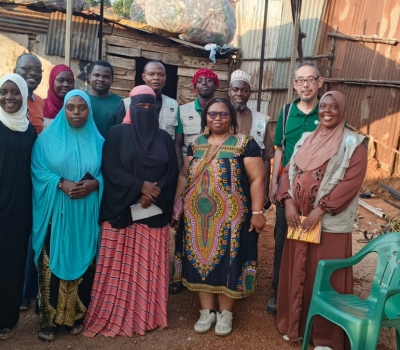
Recently, the Programme Management team travelled to Uganda to meet the people at the heart of our waste management programmes, connect with local stakeholders...
News
From E-Waste Skills to Sustainable Enterprise: Cosmo City Participants Take the Next Step
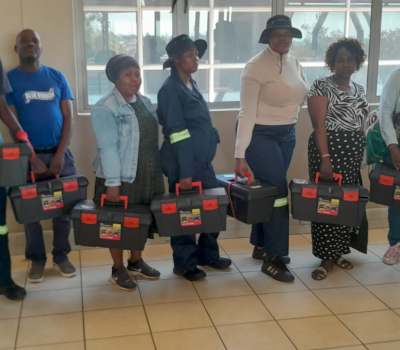
What if a broken laptop, television or other electronic appliance wasn’t waste, but an opportunity to repair, reuse and recycle? For participants in WasteAid’s Waste 2...
News
Lufthansa Group and WasteAid Launch Animation Film
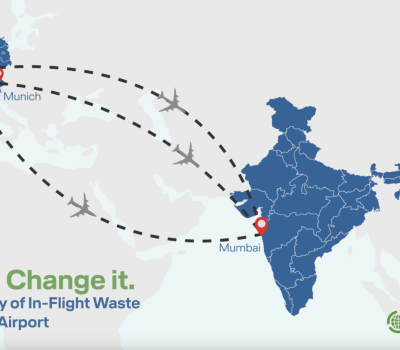
WasteAid and Lufthansa Group have launched a new animated training film designed to help cabin crew improve onboard waste segregation, supporting efforts to increase...
News
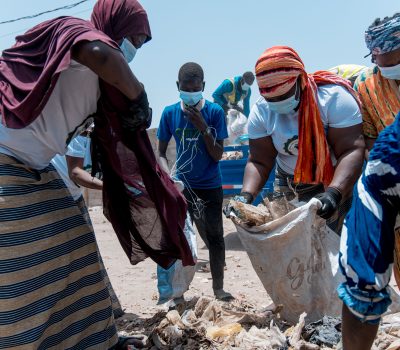
How one community in The Gambia is changing its relationship with plastic
In Bakoteh, a community in the Greater Banjul Area of The Gambia, plastic waste has long been a serious problem. Home to the largest dumpsite in...
News
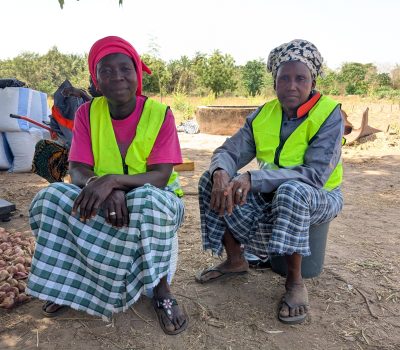
Women farmers in Kalaji turn organic waste into opportunity through the S-ORGANIC project
In Kalaji, a group of women farmers is demonstrating how organic waste can become a productive resource — supporting sustainable agriculture, strengthening livelihoods, and...
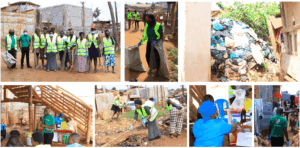
WasteAid’s work linking harmful waste to public health is having real life impacts in Uganda’s capital of Kampala.
In the heart of Katoogo Zone, nestled within the vibrant community of Kinawataka, Mbuya, local residents, ‘Wastepreneurs’, health professionals, and community mobilisers recently came together not just to clean, but to heal.
A joint clean-up and medical outreach event, spearheaded by Reach Out Mbuya, in partnership with Kiswa Health Centre III and supported by WasteAid, proved that when health and environmental champions join forces, the results go far beyond simply clearing waste.
The event brought together five dedicated WasteAid-trained Wastepreneurs – Khainza Annet, Akello Dilith, Tumusiime Winnie, Nakiyingi Fatuma, and Nakiwala Amina – who are tackling pollution whilst redefining what it means to earn a living in a circular economy.
Funded by worldwide distribution specialists Bunzl, each of these Wastepreneurs collected between 18–25 kg of recyclable materials, helping remove more than 20 piles of rubbish from the area.
The Wastepreneurs shared their personal journeys, offered sorting demonstrations, and inspired others to view waste as a valuable resource and an opportunity.
“Every bag of sorted waste we collect is one step closer to dignity and income,” said Akello, a proud Wastepreneur. “But it starts with community trust, and today, we built that together.”
Alongside the clean-up, over 100 residents received free screenings for HIV, malaria, and tuberculosis, thanks to a committed medical team from Reach Out Mbuya and Kiswa Health Centre III.
“Waste is not just an eyesore, it’s a public health risk,” said Olanya Samuel, a cough monitor with Reach Out Mbuya. “Today we offered free testing, but the real success is in shifting mindsets about prevention through proper waste practices.”
Residents began drawing the connection between poor sanitation and health issues, many for the first time, laying the groundwork for future behaviour change.
Counsellor Namubiru Grace Anne added: “Many of the illnesses we treat daily have roots in unsanitary conditions. This partnership with WasteAid is helping bridge the gap between health and environmental awareness.”
A Hidden Hero: Martha Acam
Perhaps the most heart-warming moment of the event came unexpectedly.
During the clean-up, the team was led to the home of Martha Acam, a 65-year-old retired nurse, who had quietly turned her rented rooms into a makeshift plastic bag collection centre. Driven by concern for her neighbourhood, she’s been collecting, washing, and storing plastic bags for years.
That day, her personal mission became part of something bigger: she was linked to a Wastepreneur trained under the WasteAid Challenge Project who can help her bring this “accidental warehouse” into the circular economy.
A beautiful full-circle moment – literally turning trash into treasure.
Powerful partnership
Ceris Turner-Bailes, WasteAid CEO, said “Events like the Kinawataka clean-up demonstrate the power of integrated community action – where health, dignity and environmental care come together. WasteAid is deeply grateful to Bunzl for their continued support, which enables us to empower local Wastepreneurs, transform waste into opportunity and deliver lasting change in communities.”
The event’s success in Kinawataka proves that when public health meets community waste innovation, the impact is deep, lasting, and transformational. Households are now expressing interest in waste sorting. Trust has been built and momentum is growing.
News
Beyond the Numbers: The Human Impact of WasteAid’s Work
Members of WasteAid’s Gambia team, Lamin Janneh and Jojo Saho, recently investigated what our programmes mean to our individual participants by speaking to members...
News
Journey to Uganda: Stories from our projects
Recently, the Programme Management team travelled to Uganda to meet the people at the heart of our waste management programmes, connect with local stakeholders...
News
From E-Waste Skills to Sustainable Enterprise: Cosmo City Participants Take the Next Step
What if a broken laptop, television or other electronic appliance wasn’t waste, but an opportunity to repair, reuse and recycle? For participants in WasteAid’s Waste 2...
News
Lufthansa Group and WasteAid Launch Animation Film
WasteAid and Lufthansa Group have launched a new animated training film designed to help cabin crew improve onboard waste segregation, supporting efforts to increase...
News
How one community in The Gambia is changing its relationship with plastic
In Bakoteh, a community in the Greater Banjul Area of The Gambia, plastic waste has long been a serious problem. Home to the largest dumpsite in...
News
Women farmers in Kalaji turn organic waste into opportunity through the S-ORGANIC project
In Kalaji, a group of women farmers is demonstrating how organic waste can become a productive resource — supporting sustainable agriculture, strengthening livelihoods, and...
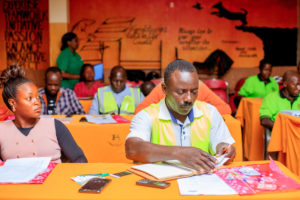
At a recent workshop in Uganda’s capital city of Kampala, something significant has begun to spark in community approach to waste.
WasteAid, in partnership with Kampala Capital City Authority (KCCA), brought together Parish Council Leaders, Division Officials, and local Wastepreneurs for a powerful half-day workshop aimed at transforming how communities handle their waste.
The goal was clear: equip local leaders with the knowledge and sense of urgency required to promote source-level sorting and disposal. But this workshop was more than information-sharing—it was a call to action.
“As leaders, we didn’t gather to tick a box—we gathered to take responsibility and drive action,” declared Samula Matovu John, a sentiment echoed throughout the day.
Participants tackled the root causes of poor waste management in breakout groups, developing community-led solutions to persistent issues. These included illegal dumping, high collection charges, lack of segregation, limited equipment, and poor enforcement of by-laws.
Among the standout concerns was the absence of sorting infrastructure in densely populated areas. The solution? KCCA and local leaders committed to mapping and allocating communal sorting hubs, combining this with grassroots awareness campaigns which will be spearheaded by leaders and Wastepreneurs working hand-in-hand.
Another major roadblock was the community’s resistance to paying for waste services. Leaders acknowledged the need to change the narrative by embedding education into everyday engagement. “Change starts when leaders stop pointing fingers and start holding brooms,” said Phiona Nabalayo, capturing the spirit of collective responsibility that filled the room.
A notable highlight was the testimonies shared by local Wastepreneurs who collect PET, paper, and soft plastics.
Their challenges—such as lack of balers and limited recycling markets—were not just heard, but integrated into follow-up plans. These plans include reaching out with corporates like Coca-Cola and Pepsi to explore support for essential baling equipment.
“If the community is the problem, then the community is also the solution,” added Nsumba Davis. It’s a mantra that will shape the upcoming parish dialogues and sensitisation campaigns launching this month.
Looking ahead, the action plan includes tailored IEC materials for urban slums, strengthened contractor oversight, and school curriculum inserts to foster early education on waste.
“We shall not recycle just plastics—we must also recycle our mindsets,” concluded Namara Jossy Rugasira.
The workshop didn’t just end with a report—it launched a movement. With local leaders at the helm, a cleaner Kampala isn’t just possible—it’s already underway.
News
Beyond the Numbers: The Human Impact of WasteAid’s Work
Members of WasteAid’s Gambia team, Lamin Janneh and Jojo Saho, recently investigated what our programmes mean to our individual participants by speaking to members...
News
Journey to Uganda: Stories from our projects
Recently, the Programme Management team travelled to Uganda to meet the people at the heart of our waste management programmes, connect with local stakeholders...
News
From E-Waste Skills to Sustainable Enterprise: Cosmo City Participants Take the Next Step
What if a broken laptop, television or other electronic appliance wasn’t waste, but an opportunity to repair, reuse and recycle? For participants in WasteAid’s Waste 2...
News
Lufthansa Group and WasteAid Launch Animation Film
WasteAid and Lufthansa Group have launched a new animated training film designed to help cabin crew improve onboard waste segregation, supporting efforts to increase...
News
How one community in The Gambia is changing its relationship with plastic
In Bakoteh, a community in the Greater Banjul Area of The Gambia, plastic waste has long been a serious problem. Home to the largest dumpsite in...
News
Women farmers in Kalaji turn organic waste into opportunity through the S-ORGANIC project
In Kalaji, a group of women farmers is demonstrating how organic waste can become a productive resource — supporting sustainable agriculture, strengthening livelihoods, and...
Plastic Free July has become a global movement, rallying communities to reduce single‑use plastics. At WasteAid, we are at the frontline of this mission working with some of the world’s most affected communities to create real, lasting solutions.
Far too often, low- and middle-income countries face grave plastic pollution due to limited waste infrastructure. Plastic clogs waterways, contaminates soil, or is burned openly—threatening health, livelihoods, and the environment.
WasteAid addresses this by:
Take, for example, the story of Amie – one of hundreds of waste collectors who have benefited from WasteAid’s programmes. She works hard every day collecting plastic waste from the beach and river in her fishing village, a short drive from Gambia’s capital city, Banjul.
Through her work with WasteAid’s Wastepreneur programme, Amie not only earns enough money to care for her family of 15, but she’s also making a difference in her community as part of a co-operative of waste collectors and inspiring people to responsibly dispose of their waste.
Plastic Free July inspires people to rethink their plastic habits—it’s an ideal moment to spotlight the global ripple effects of our actions. This month, rethink plastic and consider how you – either as an individual or a business – can support our work to turn plastic pollution into opportunity through teamwork, dignity, and long-term community power.
Together, we’re not just reducing plastic—we’re empowering communities to build healthier, more resilient futures.
News
Beyond the Numbers: The Human Impact of WasteAid’s Work
Members of WasteAid’s Gambia team, Lamin Janneh and Jojo Saho, recently investigated what our programmes mean to our individual participants by speaking to members...
News
Journey to Uganda: Stories from our projects
Recently, the Programme Management team travelled to Uganda to meet the people at the heart of our waste management programmes, connect with local stakeholders...
News
From E-Waste Skills to Sustainable Enterprise: Cosmo City Participants Take the Next Step
What if a broken laptop, television or other electronic appliance wasn’t waste, but an opportunity to repair, reuse and recycle? For participants in WasteAid’s Waste 2...
News
Lufthansa Group and WasteAid Launch Animation Film
WasteAid and Lufthansa Group have launched a new animated training film designed to help cabin crew improve onboard waste segregation, supporting efforts to increase...
News
How one community in The Gambia is changing its relationship with plastic
In Bakoteh, a community in the Greater Banjul Area of The Gambia, plastic waste has long been a serious problem. Home to the largest dumpsite in...
News
Women farmers in Kalaji turn organic waste into opportunity through the S-ORGANIC project
In Kalaji, a group of women farmers is demonstrating how organic waste can become a productive resource — supporting sustainable agriculture, strengthening livelihoods, and...
“Operation Sanity is about more than waste – it’s about dignity, health and opportunity”
A team of waste management experts from the Chartered Institution of Wastes Management (CIWM) have travelled to The Gambia with international development charity WasteAid to support Operation Sanity – a collaborative waste management and circular economy initiative with Kanifing Municipal Council (KMC).
The Operation Sanity initiative is designed to stop littering and the improper disposal of harmful waste, improving public sanitation by educating residents about the importance of clean environments and encouraging them to abide by local bylaws.
The technical support visit is designed to include site assessments, workshops with frontline waste management teams, and strategic planning sessions with the Dennakuwo Circular Economy Network. The visit aims to strengthen local capacity, share practical expertise, and co-develop solutions to some of the region’s most pressing sanitation challenges.
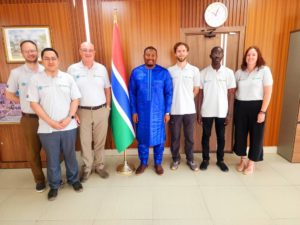
Ceris Turner-Bailes, Chief Executive of WasteAid, said: “This visit marks a significant milestone in our ongoing partnership with CIWM. Operation Sanity is about more than waste – it’s about dignity, health and opportunity. By bringing together technical expertise and local knowledge, we are building a cleaner, safer future for the people of the Greater Banjul Area.”
CIWM’s Chief Executive, Sarah Poulter, added: “At CIWM, we believe in sharing knowledge to create a world beyond waste. Our members are proud to stand alongside WasteAid and KMC, supporting community-led efforts to strengthen sustainable waste systems in The Gambia. This visit demonstrates the power of international collaboration in turning ambition into action.”
Follow WasteAid’s social media channels for updates from the ground throughout the week during this exciting collaborative climate-positive visit.
In 2024 alone, WasteAid’s programmes reached nearly 1.3 million people, diverted over 300,000 kilograms of waste from the environment and delivered more than 7,800 hours of training. WasteAid’s work positively engages communities to improve public health through better waste management.
WasteAid and CIWM aim to scale these successes and contribute to a replicable model for circular economy development in low-resource settings.
News
Beyond the Numbers: The Human Impact of WasteAid’s Work
Members of WasteAid’s Gambia team, Lamin Janneh and Jojo Saho, recently investigated what our programmes mean to our individual participants by speaking to members...
News
Journey to Uganda: Stories from our projects
Recently, the Programme Management team travelled to Uganda to meet the people at the heart of our waste management programmes, connect with local stakeholders...
News
From E-Waste Skills to Sustainable Enterprise: Cosmo City Participants Take the Next Step
What if a broken laptop, television or other electronic appliance wasn’t waste, but an opportunity to repair, reuse and recycle? For participants in WasteAid’s Waste 2...
News
Lufthansa Group and WasteAid Launch Animation Film
WasteAid and Lufthansa Group have launched a new animated training film designed to help cabin crew improve onboard waste segregation, supporting efforts to increase...
News
How one community in The Gambia is changing its relationship with plastic
In Bakoteh, a community in the Greater Banjul Area of The Gambia, plastic waste has long been a serious problem. Home to the largest dumpsite in...
News
Women farmers in Kalaji turn organic waste into opportunity through the S-ORGANIC project
In Kalaji, a group of women farmers is demonstrating how organic waste can become a productive resource — supporting sustainable agriculture, strengthening livelihoods, and...
This World Environment Day, WasteAid teamed up with the Mpumalanga Department of Agriculture, Rural Development, Land and Environmental Affairs (DARDLEA) and Thembisile Hani District Municipality to celebrate environmental action in South Africa.
Under the global theme #BeatPlasticPollution, the event called on communities to rethink plastic use and take action to refuse, reduce, reuse, and recycle. The day kicked off with a community clean-up in Delmas and a lively environmental awareness session that brought together waste reclaimers, government officials, traditional leaders, NGOs, and local residents.
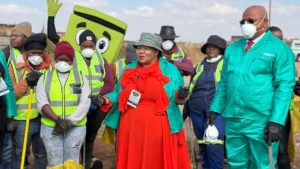
Among the distinguished guests were DARDLEA MEC Ms. Nompumelelo Hlophe, the Acting Executive Mayor of Nkangala District, and the Executive Mayor of Victor Khanye Local Municipality.
Speaking to the crowd, MEC Hlophe gave a powerful call to action:
“No one will do it for us. We must do it ourselves. Let’s declare war on this enemy called plastic pollution.”
She reminded the community that tackling plastic waste starts at home — in our living spaces, schools, clinics, and public areas. She also praised the tireless efforts of Community-Based Organisations, NGOs, informal waste pickers, and the often-unsung heroes of the Zonda Insila Programme (ZIP).
WasteAid and local collectors were proud to receive certificates of appreciation for our partnership with government stakeholders and our commitment to improving waste management in Mpumalanga. We’re honoured by DARDLEA’s recognition and support.
As part of the day, WasteAid ran a hands-on plastics awareness demo — showing which plastics can be recycled and how community members can help reduce dumping and burning. By supporting informal sector waste workers, we can all help keep the environment clean and support local livelihoods.
Together, we can turn the tide on plastic pollution — one piece of waste at a time.
News
Beyond the Numbers: The Human Impact of WasteAid’s Work
Members of WasteAid’s Gambia team, Lamin Janneh and Jojo Saho, recently investigated what our programmes mean to our individual participants by speaking to members...
News
Journey to Uganda: Stories from our projects
Recently, the Programme Management team travelled to Uganda to meet the people at the heart of our waste management programmes, connect with local stakeholders...
News
From E-Waste Skills to Sustainable Enterprise: Cosmo City Participants Take the Next Step
What if a broken laptop, television or other electronic appliance wasn’t waste, but an opportunity to repair, reuse and recycle? For participants in WasteAid’s Waste 2...
News
Lufthansa Group and WasteAid Launch Animation Film
WasteAid and Lufthansa Group have launched a new animated training film designed to help cabin crew improve onboard waste segregation, supporting efforts to increase...
News
How one community in The Gambia is changing its relationship with plastic
In Bakoteh, a community in the Greater Banjul Area of The Gambia, plastic waste has long been a serious problem. Home to the largest dumpsite in...
News
Women farmers in Kalaji turn organic waste into opportunity through the S-ORGANIC project
In Kalaji, a group of women farmers is demonstrating how organic waste can become a productive resource — supporting sustainable agriculture, strengthening livelihoods, and...