News
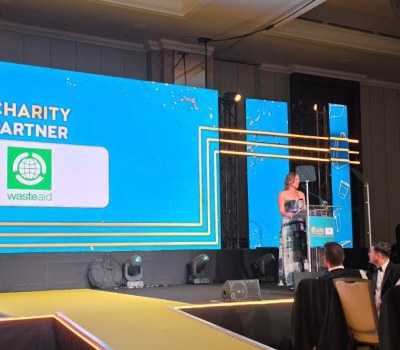
WasteAid joins the Packaging Awards as charity partner of Packaging News
WasteAid is proud to be the charity partner of Packaging News and was delighted to attend the Packaging Awards last Wednesday. The event celebrated...

Written by Ceris Turner-Bailes, Chief Executive WasteAid.
In November, I had the privilege of travelling to Douala, Cameroon to follow up on WasteAid’s projects there. I was delighted to travel with our new Circular Economy and Waste Management Lead, Rebecca Colley Jones – this was Rebecca’s first visit in support of our projects. As many will know, WasteAid has had links to Cameroon for a number of years and started formally delivering programmes in January 2020 funded initially through the UKAID Match programme. Biffa staff were instrumental in WasteAid achieving the level of funding required so that this amount could be ‘matched’ by the UK government. They contributed a total of £36,000. This was a fantastic effort and Biffa’s fundraising skills resulted in a huge step forward for community collection and recycling activities in Douala. Despite the pandemic resulting in this project being suspended for almost a year, the initiative was finalised in August 2022 with some fabulous results. Over the almost 24 months of active programming, 47.8 metric tonnes of mixed plastics were collected for recycling and transformed into 2537 square metres of paving tiles. At the same time 165 programme participants were trained on life skills and recycling techniques, with over half of those now in employment. This is something of which all of us at WasteAid and Biffa can be proud.
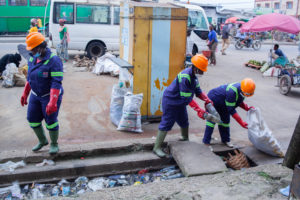
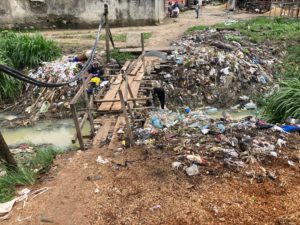
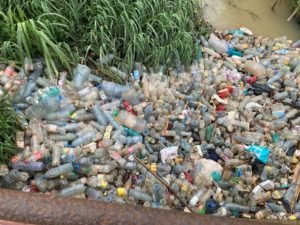
The city of Douala still faces significant challenges in managing its waste, with plastics and organics waste streams dominating. The situation depicted in images of drains and rivers filled with plastic that many of you know well has not entirely changed and the waters of the Douala Estuary still remain highly polluted. However, it was heartening to meet with many of the stakeholders within Douala’s circular economy and to understand that real efforts are being made there to tackle the waste problem. WasteAid’s presence in Cameroon and its initiatives have been welcomed. To ensure sustainability, we want to work within the existing value chain, finding ways of further supporting those working within it. To that end part of the visit was also to follow up on our initiative to build and support a Plastics Recovery Facility (PRF) in Douala III. Crucially, we have been allocated land by the local authority on which to build and both the Mayor and his staff have been extremely keen to support our work.

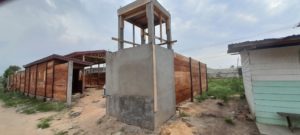
Following the hugely successful gala event held by Biffa in May 2022, a proportion of the funds raised went towards supporting this PRF project, particularly contributing £15,000 to the construction of the centre itself. I was delighted to be able see great progress during my visit. The centre is now about 70% completed with walls and a roof and our focus is now the purchase of equipment and recruiting the collectors who will use this facility. We need to ensure that both the infrastructure and the system we use are fit for purpose. I am delighted that some of those likely to work in the PRF are actually graduates of WasteAid’s UKAID Match programme who now have small waste collection businesses and networks of collectors. We will be catching up with some of these people and sharing their stories in the coming weeks.
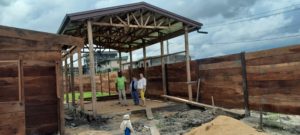
There is still a lot of work to do to ensure that the infrastructure we provide is right and Rebecca is now working with our Cameroon project team to source the right equipment. By washing and baling plastic bottles, the collectors can almost double the price when selling to off takers and this has the potential to make a huge difference to their livelihoods. The PRF will also allow the collectors to process more plastic, at the moment most collectors are simply working by hand at the side of the street. WasteAid will support the Douala plastics value chain and 45 collectors through this sustainable PRF that has simple washing and baling facilities. Whilst this may seem very simple, the increase in income will help the waste collectors significantly improve their livelihoods and will further prevent plastic pollution in the communities of Douala.

News
WasteAid joins the Packaging Awards as charity partner of Packaging News
WasteAid is proud to be the charity partner of Packaging News and was delighted to attend the Packaging Awards last Wednesday. The event celebrated...
News
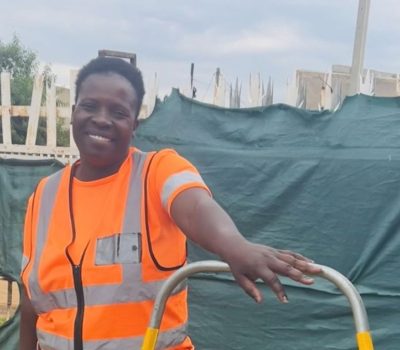
Confidence Machete: From waste to triumph
Confidence was an informal waste picker, working in dangerous conditions without protective equipment or recognition. Through the Wastepreneur Programme, a partnership between WasteAid and...
News
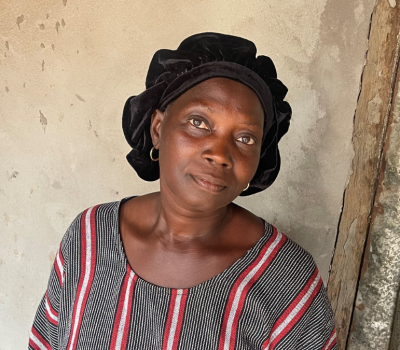
Beyond the Numbers: The Human Impact of WasteAid’s Work
Members of WasteAid’s Gambia team, Lamin Janneh and Jojo Saho, recently investigated what our programmes mean to our individual participants by speaking to members...
News
Journey to Uganda: Stories from our projects
Recently, the Programme Management team travelled to Uganda to meet the people at the heart of our waste management programmes, connect with local stakeholders...
News
From E-Waste Skills to Sustainable Enterprise: Cosmo City Participants Take the Next Step
What if a broken laptop, television or other electronic appliance wasn’t waste, but an opportunity to repair, reuse and recycle? For participants in WasteAid’s Waste 2...
News
Lufthansa Group and WasteAid Launch Animation Film
WasteAid and Lufthansa Group have launched a new animated training film designed to help cabin crew improve onboard waste segregation, supporting efforts to increase...
In June 2020, WasteAid embarked upon an innovative and expansive programme to support circular economy solutions to the waste crisis in three locations; Ho Chi Minh in Vietnam, Guwahati in India and Johannesburg, South Africa. Supported by Huhtamaki, this programme finally drew to a close in autumn 2022.
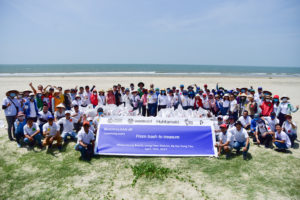
In just over 2 years there were some fantastic results achieved – WasteAid’s Circular Economy Networks had been developed in 3 locations. The networks attracted over 1,000 members with more than that number attending the online webinars and trainings that were developed (even the pandemic didn’t stop the progress). The partnership supported 36 entrepreneurs through tailored business training and mentoring and 6 entrepreneurs were awarded with 10,000 Euros each of seed funding. Those supported included a plastics recycling enterprise in India, an organics and composting enterprise in South Africa and an app developer in Vietnam aiming to make waste collection more accessible and efficient.
The partnership between Huhtamaki and WasteAid has clearly moved the needle in terms of both local perceptions of waste and direct action to reduce waste pollution. By orienting the programme towards supporting and strengthening existing systems and local innovators, the partnership has ensured a sustainable legacy. A relatively young international non-profit focused on tackling the global waste crisis through support to and promotion of solid waste management systems and circular economy innovations, the financial investment from Huhtamaki was a game changer for WasteAid. The organisation cut its teeth delivering community-based interventions in Sub Saharan Africa rooted in the premise that livelihoods and environments can be improved through training and skills in waste related activities. However, with Huhtamaki’s ambition and vision for the partnership, WasteAid was able to expand its horizons in terms of scale and depth of intervention.
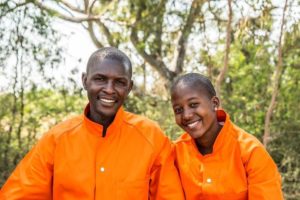
Image: BoombaDotMobi – A winner of the Zero Cities Waste Challenge in South Africa.
The purpose of the partnership was to bring together diverse stakeholders in 3 localities to build and share knowledge in waste and recycling activities, to facilitate discussions and collaboration between those at different points in the waste value chain and to practically support and finance local entrepreneurs and innovators, ‘wastepreneurs’. The partnership recognized that where there is a lack of municipal waste systems, the private sector and even more the informal sector fill that gap. The networks were rooted in community responses. The innovators and entrepreneurs that were supported also had a social value element, for example offering employment potential to those in a lower socio-economic bracket or providing finance to young innovators from deprived areas who would not be able to access traditional finance.
Above all the networks attracted significant diversity, of course there were those directly linked to the waste value chain in some way from local government, enterprise or trade organisations, but equally there were leading academics, multinational corporations, local businesses, Chambers of Commerce and international governments who became stakeholders in the networks, not to mention nearly 200 Huhtamaki employees who engaged in activities to support the partnership in the different locations.
A key element to the programme was flexibility, ideas conceived in London or Helsinki had the space to be tried locally to ensure they were relevant, needed and impactful. Some elements of the programme plan were deliberately light on detail at the outset to ensure that the local membership could themselves identify their greatest needs and the network could grow organically. This meant that the partnership could focus on tackling important local issues identified by those closest to them, for example how to maximise benefit from End Producer Responsibility legislation in South Africa or strategies to grow domestic recyclables in Vietnam given the high quantity that are imported.
And yet perhaps the biggest impact of all has been what has happened outside of the confines of that initial programme. The approach taken by Huhtamaki and WasteAid has captured the imagination of other funders keen to implement a meaningful sustainability strategy and the initial circular economy network model has been adapted and exported by WasteAid to two further countries, Gambia and Egypt and extended further in South Africa. The success of this approach and the common thread running through these networks is that they are rooted in the local context, that whilst funded by Huhtamaki and facilitated by WasteAid, they are owned by their members. The second critical element is that there are seriously bright ideas borne out of local challenges and that home grown solutions to the waste crisis are often the most sustainable and should be supported. As access to finance remains a significant challenge to many working with waste in lower and middle income countries, the approach developed by the partnership fills a critical role in supporting youth entrepreneurship, skills and training.
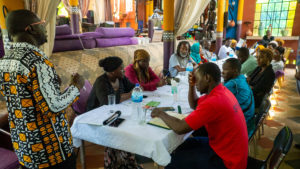 Image: Circular Economy Network meeting in The Gambia.
The original programme focused very much on the community level and how the grassroots could drive the circular economy, but this is not entirely the case in all countries. In Gambia, for example, it was recognized that it was at local authority, government agency and Ministerial level where the most traction would be had and so the approach to networking was adapted. Additionally, with other funders signing up to this approach, WasteAid has added a further mentoring element to the programme joining experts from a chartered institution in the UK to work with Gambian counterparts to find solutions to waste related issues.
Although the initial partnership funded some tremendously exciting initiatives, another question arose as to how those who were not yet at that relatively advanced level could be helped. The WasteAid team were keen to focus on the lower rungs of the waste value chain where holistic life skills training, business skills training and smaller injections of finance would have a massive impact. Huhtamaki has accompanied WasteAid on this journey and is now financing an entrepreneur’s fund focused on those on the first rung of the waste value chain. This approach is proving incredibly successful in Johannesburg. In Egypt a more geographically targeted approach was taken and the network was launched in Aswan, working again with local structures and the existing value chain. The Egyptian model mirrors the initial programme, however, has a focus on flexible plastics only as opposed to multiple waste streams.
Overall, the core elements of the Circular Economy Network approach have proven a particularly impactful mix and WasteAid continues to evolve its programme design as we learn more. However, the multiplier effect is clear to see, that initial ambitious vision developed by Huhtamaki and WasteAid continues to be developed and delivered throughout Africa, impacting thousands of individuals, hundreds of communities and dozens of circular economy enterprises.
Written by Ceris Turner-Bailes, CEO of WasteAid.
News
WasteAid joins the Packaging Awards as charity partner of Packaging News
WasteAid is proud to be the charity partner of Packaging News and was delighted to attend the Packaging Awards last Wednesday. The event celebrated...
News
Confidence Machete: From waste to triumph
Confidence was an informal waste picker, working in dangerous conditions without protective equipment or recognition. Through the Wastepreneur Programme, a partnership between WasteAid and...
News
Beyond the Numbers: The Human Impact of WasteAid’s Work
Members of WasteAid’s Gambia team, Lamin Janneh and Jojo Saho, recently investigated what our programmes mean to our individual participants by speaking to members...
News
Journey to Uganda: Stories from our projects
Recently, the Programme Management team travelled to Uganda to meet the people at the heart of our waste management programmes, connect with local stakeholders...
News
From E-Waste Skills to Sustainable Enterprise: Cosmo City Participants Take the Next Step
What if a broken laptop, television or other electronic appliance wasn’t waste, but an opportunity to repair, reuse and recycle? For participants in WasteAid’s Waste 2...
News
Lufthansa Group and WasteAid Launch Animation Film
WasteAid and Lufthansa Group have launched a new animated training film designed to help cabin crew improve onboard waste segregation, supporting efforts to increase...
Hello Friends
 Yet again, it has been a remarkably busy period for WasteAid over the last few months.
We started 2022 with our biggest ever portfolio of programmes starting work in a country entirely new to us, Egypt. Supported by Dow Packaging, WasteAid is facilitating local solutions to dealing with flexible plastic waste in the Aswan area of the country, as well as bringing key stakeholders together in a network approach to tackle the general issue of solid waste management in the country. We have been warmly welcomed into Egypt and are now collaborating with committed and engaged stakeholders from government, private enterprise, community-based organisations and the informal sector. In Spring 2022, we commenced a partnership with Waste and Resources Action Programme (WRAP) and UK Research and Innovation (UKRI) in South Africa – we were fortunate to be one of only a handful of organisations that received funding through WRAP’s International Circular Plastic Flagship Projects Competition. This project has been quite a gear shift for us in South Africa and we have welcomed new team members and again new partners in the project. We are proud to be working with both the University of Portsmouth and with the local authority in Mpumalanga State on a feasibility study which will review WasteAid’s whole systems approach to waste management in a rural area. The results of this study will help to inform our work moving forward and this is an exciting step. We are now seeking partnerships that will help us scale this approach in rural South Africa and to build on our findings from this project which comes to an end in March 2023. At the same time, January 2022 saw us commencing our partnership with CIWM in Gambia, continuing our partnership with Bunzl in Cameroon and then moving into South Africa where we launched the Bunzl Entrepreneurial Challenge Fund aimed at supporting young people on the frontline of waste management in townships in Johannesburg. The progress of these projects has been fabulous to see and the dedication of our global team delivering this work is inspiring.
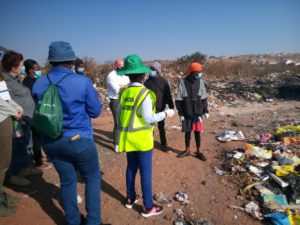
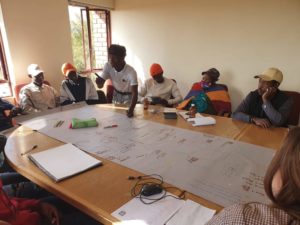
Apart from a much-expanded project portfolio, in May we were honoured to attend Biffa’s Annual Gala that was held for the benefit of WasteAid. This was a fantastic evening and the funds raised will further support WasteAid’s work. In one evening, an astonishing figure of £104,000 was raised. We cannot thank the Biffa team enough for such a fantastic event and an amazing contribution to WasteAid’s funds. It is these types of funds that are critical to WasteAid’s continued success – allowing us to develop new interventions, develop new partnerships and critically implement our projects. We are always ambitious to do as much as we can to deliver circular economy and waste management solutions in the countries where we work and having such a generous general donation allows us to prioritise where we need to spend this money across our principal countries of Cameroon, Gambia and South Africa.
So, it has yet again been a busy year for the team at WasteAid, we are right now preparing to attend the RWM / Let’s Recycle Exhibition at Birmingham NEC. We will have a stand there in Hall 19 Stand R-N183 and would encourage any and all of you who are attending to stop by to say Hello. The team look forward to telling you more of our work and answering any questions that you may have.
Looking forward to the last few months of 2022, WasteAid will be organising a small event to coincide with COP27 in November (more details soon) and the team has a busy schedule of travel ahead of them for the rest of 2022, supporting our international team and projects.
I would like to take this opportunity to thank you for your continued support to WasteAid and our work.
News
WasteAid joins the Packaging Awards as charity partner of Packaging News
WasteAid is proud to be the charity partner of Packaging News and was delighted to attend the Packaging Awards last Wednesday. The event celebrated...
News
Confidence Machete: From waste to triumph
Confidence was an informal waste picker, working in dangerous conditions without protective equipment or recognition. Through the Wastepreneur Programme, a partnership between WasteAid and...
News
Beyond the Numbers: The Human Impact of WasteAid’s Work
Members of WasteAid’s Gambia team, Lamin Janneh and Jojo Saho, recently investigated what our programmes mean to our individual participants by speaking to members...
News
Journey to Uganda: Stories from our projects
Recently, the Programme Management team travelled to Uganda to meet the people at the heart of our waste management programmes, connect with local stakeholders...
News
From E-Waste Skills to Sustainable Enterprise: Cosmo City Participants Take the Next Step
What if a broken laptop, television or other electronic appliance wasn’t waste, but an opportunity to repair, reuse and recycle? For participants in WasteAid’s Waste 2...
News
Lufthansa Group and WasteAid Launch Animation Film
WasteAid and Lufthansa Group have launched a new animated training film designed to help cabin crew improve onboard waste segregation, supporting efforts to increase...
 I think it is a great indicator of WasteAid’s current workload that January has already passed in a blur of project launch ceremonies, project planning, impact reports and monitoring visits to our current programmes. The start of 2022 has been so busy for WasteAid that it is only now half way through February that I am sitting down to write my first CEO’s Update of 2022.
WasteAid starts 2022 as a much-changed organisation. In terms of size and scale, we have never been larger and our impact has never been greater. In the first quarter of 2022, we are launching three new programmes: our CIWM-funded Circular Economy Network in The Gambia; our intervention to tackle plastic waste in Aswan, Egypt, generously supported by Dow Packaging; and a programme to reduce waste and offer increased livelihood opportunities to the most vulnerable in both Cameroon and in South Africa funded by Bunzl Plc.
In addition to these projects, the staff of our Proud Partner, Biffa Plc, have pledged to raise funds to construct a Materials Recovery Facility in Douala to allow WasteAid to support even more waste collectors and collections.
We are faced with a global waste crisis which shows no sign of relenting and therefore neither will our response – despite many of our growing team being engaged on current projects, we still found time to explore new partnerships and continue to develop new projects that we believe will tackle some of the worst effects of the waste crisis and showcase the opportunities that can arise from waste.
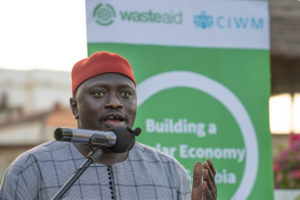
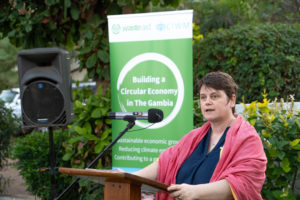
For myself, the biggest highlight of 2022 so far has to be my visit to The Gambia to launch our Circular Economy Network, funded by the Chartered Institution of Wastes Management, and also to follow up on the progress of our EU-funded climate change initiative in partnership with Kanifing Municipal Council. It was fantastic to finally pay a visit to The Gambia, which has been at the heart of WasteAid’s programmes since the beginning. The scale of the waste crisis is sobering and there are very real issues that urgently need tackling, starting with some of the most basic elements of a waste management system.
However, it was inspiring to meet key individuals and organisations that are really committed to solving the waste crisis in The Gambia. I was delighted to meet with the Minister of Environment once again, His Excellency Mr Lamin Dibba, and to hear his thoughts on how WasteAid’s work could support The Gambia. I was also honoured to meet with the members of the National Environment Agency, Kanifing Municipal Council, and Banjul City Council who are very much aligned on the need for WasteAid’s work and who are key collaborators in our latest project. Finally, I was hugely grateful for the support of the British High Commission. High Commissioner David Belgrove and his team could not have been more supportive of our work and we are so grateful to him for lending us his beautiful residence garden to launch the Gambian Circular Economy Network.
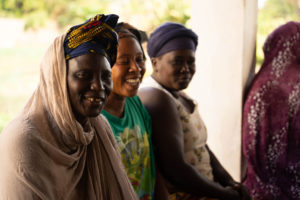
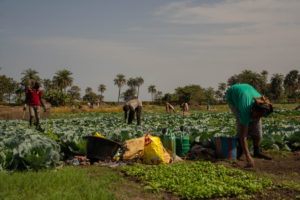
It was equally encouraging to meet those who will directly benefit from WasteAid’s programmes. I had the pleasure of spending a morning with women gardeners from Bakau Women’s Garden who will be benefitting from WasteAid’s composting project, sponsored by the EU’s Global Climate Change Alliance+ initiative. The project is truly circular in that WasteAid (in partnership with Kanifing Municipal Council) will be taking organic waste from markets and training women to turn this into compost, which will in turn be used to increase crop yield. It was important for me to hear first hand the benefits that this project could bring them – allowing small scale farmers greater financial security and income generation, as well as reducing waste and reducing reliance on potentially damaging and expensive chemical fertilisers. The gardens were absolutely beautiful and painstakingly tended to by the women. The WasteAid team in The Gambia is doing a fabulous job and we have such an opportunity to deliver real impact.
Finally, I would like to welcome Jessica Stickland, who has joined WasteAid in the new role of Head of Development. Jessica is focusing on helping the team grow our impact in partnership with other organisations and businesses.
The next few months will see exciting developments taking place in Cameroon and The Gambia, and our plastic recycling initiative start to take shape in Egypt. WasteAid has a lot of potential and we’re excited about what the future holds.
News
WasteAid joins the Packaging Awards as charity partner of Packaging News
WasteAid is proud to be the charity partner of Packaging News and was delighted to attend the Packaging Awards last Wednesday. The event celebrated...
News
Confidence Machete: From waste to triumph
Confidence was an informal waste picker, working in dangerous conditions without protective equipment or recognition. Through the Wastepreneur Programme, a partnership between WasteAid and...
News
Beyond the Numbers: The Human Impact of WasteAid’s Work
Members of WasteAid’s Gambia team, Lamin Janneh and Jojo Saho, recently investigated what our programmes mean to our individual participants by speaking to members...
News
Journey to Uganda: Stories from our projects
Recently, the Programme Management team travelled to Uganda to meet the people at the heart of our waste management programmes, connect with local stakeholders...
News
From E-Waste Skills to Sustainable Enterprise: Cosmo City Participants Take the Next Step
What if a broken laptop, television or other electronic appliance wasn’t waste, but an opportunity to repair, reuse and recycle? For participants in WasteAid’s Waste 2...
News
Lufthansa Group and WasteAid Launch Animation Film
WasteAid and Lufthansa Group have launched a new animated training film designed to help cabin crew improve onboard waste segregation, supporting efforts to increase...
I am delighted to say that we are ending 2021 in a celebratory mood, having announced a number of exciting successes in the final quarter of this year.
 Our Zero Waste Cities Challenge has awarded six outstanding entrepreneurs with seed funding and business support to deliver their circular economy innovations. In Johannesburg, the focus was on food waste, and how to collect, compost and return organic material safely to the soil. Boombadotmobi and Bokashi Bran are working with a variety of communities to provide a valuable route for food waste, diverting it from landfill where it can cause climate change emissions.
In contrast, the winners in Ho Chi Minh were the University of Economics, which has ambitions to become the country’s first zero waste campus, and Veca, an app that connects waste collectors with recyclers, ensuring that often marginalised people get a fair price for their contribution to a cleaner city.
Finally, in Guwahati, the judges selected Shree Guru Plastics, a local business that provides a decent wage for waste pickers and turns low-value plastics into construction materials, and Inside Out, a start-up transforming the invasive weed water hyacinth into paper and fibreboard packaging.
These six innovations demonstrate the breadth of creativity that can deliver zero waste cities and an equitable, circular economy. They are now receiving intensive business support to make the most of the investment provided by our funder, Huhtamaki.
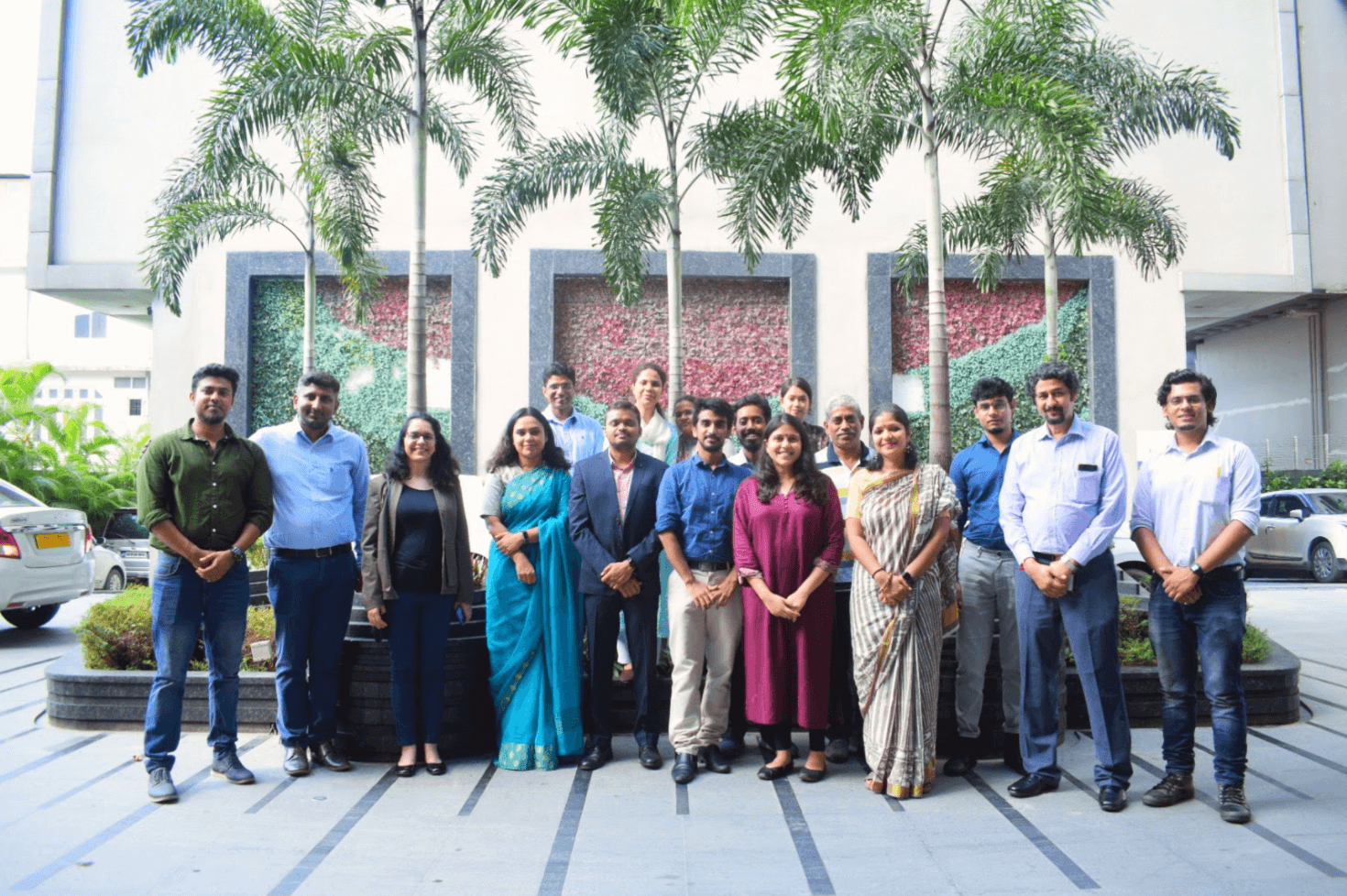
Dinesh Bandela, WasteAid’s Circular Economy Network Project Manager in India, with the semi-finalists of the Zero Waste Cities Challenge
In the last few weeks we have announced two very exciting new partnerships. The first is with the UK’s Chartered Institution of Wastes Management, which will see WasteAid set up a circular economy network in The Gambia, helping to professionalise the waste management sector and facilitate greater cooperation between public, private and community-based organisations. WasteAid has been running small-scale recycling initiatives in the Gambia since 2015 and this new project will really help raise the profile of waste management as a tool for sustainable development.
We have also just announced our first ever partnership with Dow Packaging, to run a plastics collection and recycling initiative in Aswan, Egypt. Again, we will adopt the circular economy network model to connect interested parties, and run an innovation competition to support grassroots businesses and organisations in keeping plastics out of the environment and in the loop.
It is reassuring to see how many different parts of society are now demonstrating a commitment to improved waste management, globally. In preparation for COP26 we launched our campaign, Poorly Managed Waste is a Climate Issue, drawing support from a wide range of interested parties. At COP26, WasteAid and partners delivered a panel event, “A Wasted Opportunity: Open Burning of Waste Causes a Climate and Health Calamity”. This was the only waste-related event to make it onto the official agenda in Glasgow and we were grateful to have the opportunity to deliver our message that waste management is climate action.
At COP26 WasteAid also hosted its own panel discussion, “The Burning Issue? Waste, Climate, Health and Development” in which we were honoured to be joined by the Minister for the Environment, Climate Change and Natural Resources of the Gambia, HE Lamin Dibba, the Chief Executive of Huhtamaki Charles Heaulme, MSP Maurice Golden, Dr Cressida Bowyer of the University of Portsmouth and Dr Suzanne Bartington of University of Birmingham. The debate showed the importance of ending open burning of waste to prevent significant climate emissions, and importantly to protect people’s health.
I am looking forward to exploring more ways that we can work together – across borders, sectors and supply chains, to bring the benefits of an inclusive circular economy to the billions who still have no alternative to dumping or burning their waste.
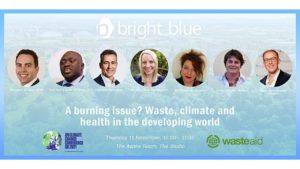
WasteAid’s panel event on the health and climate impacts of open burning of waste at COP26, Glasgow (watch the event here)
Finally, I’m delighted to share some updates from within the WasteAid team. We welcomed Jerome Combes into the role of Head of Programmes and Impact, bringing with him many years of experience running impactful development projects in Africa. Jerome has picked up the reigns to our projects with huge positivity and we are excited to have him on board. We also welcomed Lucien Yoppa as our new Project Manager in Douala. Lucien has a wealth of experience in waste management in Cameroon and is already proving to be a fantastic addition to our projects funded by UK Aid and Bunzl plc, preventing ocean plastic pollution. We have also said good bye to two Trustees, Rachel Wildblood and Ray Georgeson, and thank them for their years of service in WasteAid’s early years. Our Board has recruited three new members, Claudio Deola, Enzo Martinelli and Deborah Sacks, and we are delighted to have their diverse expertise to help steer us through our next phase of growth.
We are hopeful that 2022 will see our team members be able to travel much more than recent years have allowed, as we embark on an exciting and very full programme of work. The global waste crisis is certainly attracting more attention than ever and we appreciate the support of every single one of you as we scale our impact where it’s most needed.
Wishing you all a healthy and happy new year!
News
WasteAid joins the Packaging Awards as charity partner of Packaging News
WasteAid is proud to be the charity partner of Packaging News and was delighted to attend the Packaging Awards last Wednesday. The event celebrated...
News
Confidence Machete: From waste to triumph
Confidence was an informal waste picker, working in dangerous conditions without protective equipment or recognition. Through the Wastepreneur Programme, a partnership between WasteAid and...
News
Beyond the Numbers: The Human Impact of WasteAid’s Work
Members of WasteAid’s Gambia team, Lamin Janneh and Jojo Saho, recently investigated what our programmes mean to our individual participants by speaking to members...
News
Journey to Uganda: Stories from our projects
Recently, the Programme Management team travelled to Uganda to meet the people at the heart of our waste management programmes, connect with local stakeholders...
News
From E-Waste Skills to Sustainable Enterprise: Cosmo City Participants Take the Next Step
What if a broken laptop, television or other electronic appliance wasn’t waste, but an opportunity to repair, reuse and recycle? For participants in WasteAid’s Waste 2...
News
Lufthansa Group and WasteAid Launch Animation Film
WasteAid and Lufthansa Group have launched a new animated training film designed to help cabin crew improve onboard waste segregation, supporting efforts to increase...
At the same time as reducing climate emissions, waste management services reduce the spread of disease and the burden of poor health on vulnerable populations. Ceris Turner-Bailes, WasteAid’s CEO, shares the organisation’s perspective on how waste, climate and health are linked together.
A regular waste collection and safe disposal service is a luxury that many people in the world do not have, with 1 in 3 people globally going without. The Sustainable Development Goals cannot be met without urgent attention to global waste management and its associated impacts on public health.
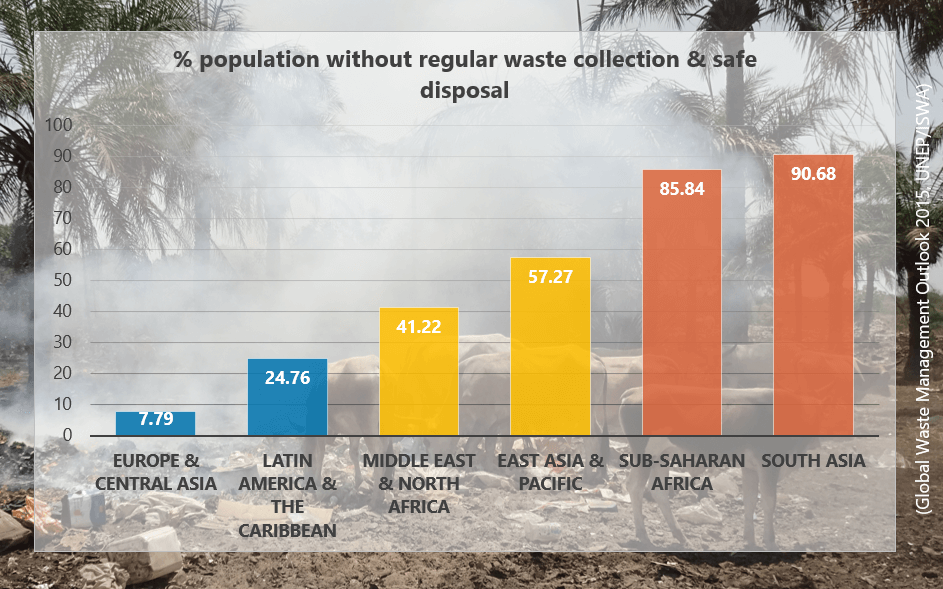
Where there is no waste management, residents and business owners have to dump or burn their waste. Accumulated waste and blocked drains encourage mosquitoes to breed, resulting in the spread of malaria, dengue fever and yellow fever. Blocked drains also cause severe flooding, leading to a spread of water-borne diseases, and the loss of lives and property.
Each year approximately 9 million people die of diseases linked to mismanagement of waste and pollutants, 20 times more than die from malaria[i].
Open burning of waste
Uncontrolled burning of household waste causes an extra 270,000 premature deaths every year around the world[ii]. Burning waste emits fine particles, dioxins, volatile organic compounds, polycyclic aromatic hydrocarbon, and polychlorinated biphenyls, linked to heart disease, cancer, skin diseases, asthma, and respiratory illnesses[iii].
Eggs from chickens that forage around waste yards and plastic burning sites have been found to contain high levels of persistent organic pollutants (POPs)[iv], which have been linked to cancers, neurological disorders, immune suppression, reproductive disorders and diabetes, and are particularly harmful to infants, children, women, and under-nourished populations[v].
For children, the health risks posed by unmanaged waste and poor sanitation are particularly harmful[vi]. Impacts include nutritional malabsorption[vii], diarrhoea, respiratory illness, stunting and educational underachievement.
Since domestic waste disposal is usually the responsibility of young women in a household, the risks from open burning are multigenerational. Unborn babies and small infants are particularly susceptible to the impacts of localised pollution, compounding barriers to communities improving health outcomes and educational attainment.
Open dumping of waste
Waste in the environment can contaminate water supplies, harming people, livestock and crops. It eventually finds its way into streams, rivers and the sea, causing serious ecological and public health problems. Fish, livestock and other animals that eat waste often become ill, either from disease or from stomachs full of plastic[viii]. Flies, dogs, rats and snakes are attracted to waste heaps, posing further risk to people nearby.
When rainwater washes through waste it can pollute surface and groundwater. Many dumpsites are on the coast or riverbanks, contaminating the global food chain.
Dumpsites put entire populations at significant risk from negative health impacts. It is estimated that 40% of the world’s waste is disposed of at informal dumpsites, most of which are completely unmanaged[ix]. Frequent fires pollute the air with unpleasant black smoke and odour. The smoke can cause breathing difficulties and harm the skin and eyes of those nearby. It can be very challenging to extinguish a fire on an open dumpsite, with limited access to water and the fire reaching far below the surface.
Uncontrolled dumpsites, and in particular the mixing of hazardous and other wastes, can cause disease in neighbouring settlements as well as among waste workers. Dumpsites are a greater health risk for the millions that live near to them than malaria[x].
Scavenging from dumpsites is a very risky business, with constant threats of injury, vermin, disease, and most worryingly, being buried alive in falling mountains of waste. Mixed waste on dumpsites has little value, and sorting mixed waste can be a dirty and dangerous task. Scavenging and contact with waste can lead to increased cases of dysentery, diarrhoea and cholera. Sharp items such as broken glass or needles are harmful underfoot, and open wounds are easily infected.
Legacy issues
Closed dumpsites remain contaminated and hazardous places for a long time, and continue to pollute the local air, land and water. Globally, the release of methane and black carbon (in smoke) from uncontrolled dumpsites is accelerating climate change, which in turn exacerbates drought, famine and the spread of disease.
We need to consider very carefully the legacy we are leaving for future generations. Concerns about the climate are front-of-mind, particularly in the lead up to COP26. The associated burdens of mismanaged waste, which are increasing on a daily basis, need to be recognised fully and addressed with urgency.
WasteAid is working with partners to attract funding, develop guidance, and promote waste management as a public health imperative. If you feel you can contribute towards our mission, please get in touch.
References
[i] UNEP (2015) Pollution is the largest cause of death in the world, SDG fact sheet; World Health Organisation (2017) Global Health Observatory data on malaria mortality.
[ii] Kodros JK et al (2016) Global burden of mortalities due to chronic exposure to ambient PM2.5 from open combustion of domestic waste, Environ. Res. Lett. 11 124022.
[iii] Human Rights Watch (2017) The health risks of burning waste in the Lebanon https://www.hrw.org/report/2017/12/01/if-youre-inhaling-your-death/health-risks-burning-waste-lebanon
[iv] Petrlik, J., Ochieng Ochola, G. and Mng’anya, S. (2020) Plastic Waste Poisons the Food Chain in Kenya and Tanzania (ARNIKA and IPEN)
[v] IPEN (229) POPs at a glance. https://ipen.org/toxic-priorities/what-are-pops
[vi] UNHABITAT (2010) Solid Waste Management in the World’s Cities; UNHABITAT (2012) Recycling and disposal of municipal solid waste in low and middle-income countries; Humphrey, JH (2009) Child undernutrition, tropical enteropathy, toilets, and handwashing, The Lancet, 374(9694):1032-1035; UNICEF and SHARE (2017) The impact of poor sanitation on nutrition; Boadi KO and Kuitunen M (2005) Environmental and health impacts of household solid waste handling and disposal practices in third world cities: the case of the Accra Metropolitan Area, Ghana, Journal of Environ Health, 68(4):32-6.
[vii] Nutritional malabsorption is caused by environmental enteropathy, an intestinal inflammation that prevents the absorption of nutrients from food and oral vaccines. The implication of this is that children growing up around dumped and burning waste end up with malnutrition, even if they are eating regular and decent meals.
[viii] Various sources, including Tiruneh R, Yesuwork H (2010) Occurrence of rumen foreign bodies in sheep and goats slaughtered at the Addis Ababa Municipality Abattoir, Ethiopian Veterinary Journal Vol 14, No 1; and Mushongal et al (2015) Investigations of foreign bodies in the fore-stomach of cattle at Ngoma Slaughterhouse, Rwanda J. S. Afr. Vet. Assoc. Vol 86, No 11 Pretoria.
[ix] ISWA (2016) A Roadmap for Closing Waste Dumpsites, The World’s Most Polluted Places
[x] K. Chatham-Stephens et al (2013) Burden of disease from toxic waste sites in India, Indonesia and the Philippines in 2010, Environmental Health Perspectives.
News
WasteAid joins the Packaging Awards as charity partner of Packaging News
WasteAid is proud to be the charity partner of Packaging News and was delighted to attend the Packaging Awards last Wednesday. The event celebrated...
News
Confidence Machete: From waste to triumph
Confidence was an informal waste picker, working in dangerous conditions without protective equipment or recognition. Through the Wastepreneur Programme, a partnership between WasteAid and...
News
Beyond the Numbers: The Human Impact of WasteAid’s Work
Members of WasteAid’s Gambia team, Lamin Janneh and Jojo Saho, recently investigated what our programmes mean to our individual participants by speaking to members...
News
Journey to Uganda: Stories from our projects
Recently, the Programme Management team travelled to Uganda to meet the people at the heart of our waste management programmes, connect with local stakeholders...
News
From E-Waste Skills to Sustainable Enterprise: Cosmo City Participants Take the Next Step
What if a broken laptop, television or other electronic appliance wasn’t waste, but an opportunity to repair, reuse and recycle? For participants in WasteAid’s Waste 2...
News
Lufthansa Group and WasteAid Launch Animation Film
WasteAid and Lufthansa Group have launched a new animated training film designed to help cabin crew improve onboard waste segregation, supporting efforts to increase...