News
Beyond the Numbers: The Human Impact of WasteAid’s Work
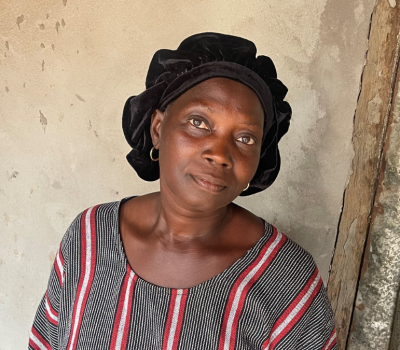
Members of WasteAid’s Gambia team, Lamin Janneh and Jojo Saho, recently investigated what our programmes mean to our individual participants by speaking to members...

 At WasteAid, we believe that hands-on training can help build a thriving circular economy. Through the Dennakuwo Circular Economy Network (CEN) and in collaboration with the Chartered Institution of Wastes Management (CIWM), we are empowering entrepreneurs and small businesses to turn waste into opportunity.
Our commitment to skills development and knowledge-sharing was recently showcased in two dynamic training sessions—one focused on Agribusiness & Food Processing and the other on Sustainable Fashion & Creativity. These hands-on training events, led by experienced members of the Dennakuwo Network, have provided participants with the practical skills necessary to reduce waste, create sustainable products, and grow their businesses. In the Annual Members’ Survey 86% of members reported that they had attended at least one training event, with 50% attending 2 or more, demonstrating the value of training as part of the network’s offers.
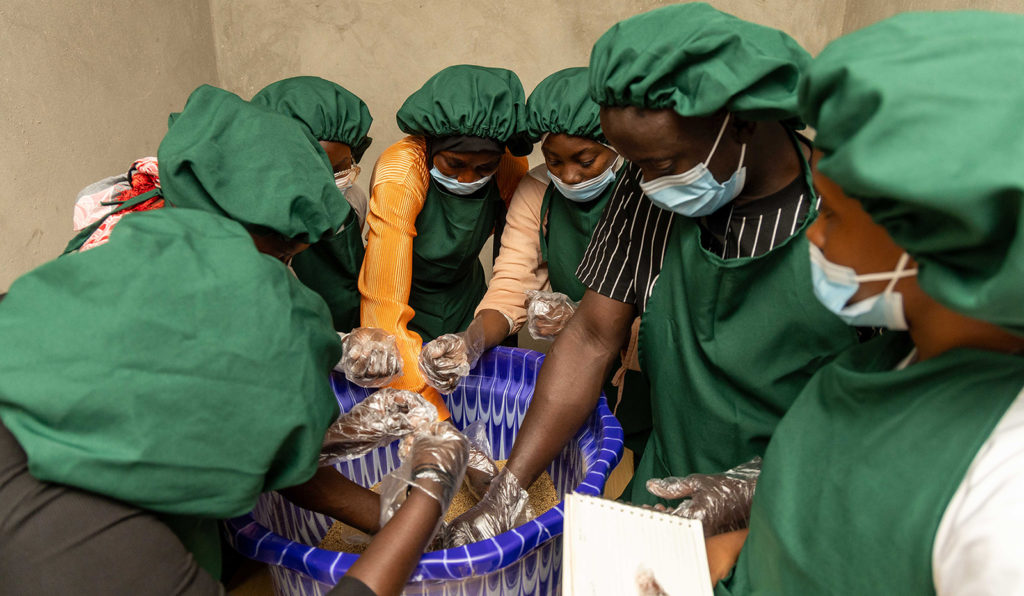
In The Gambia, agriculture and food production are vital, yet many local businesses struggle with food waste. To address these challenges, Nature’s Gift, a respected, female-led business, delivered a training session tailored to food entrepreneurs. During this session, 28 business owners, food processors, and aspiring entrepreneurs came together to learn through practical demonstrations that ranged from herbal tea preparation to wheat-based recipes.
Participants explored sustainable techniques aimed at extending the shelf life of local ingredients, reducing spoilage, and unlocking new value chains. They discovered how smart processing methods—such as improved drying and packaging—could not only curb waste but also enhance profitability. As one participant remarked, “This training opened my eyes to new ways of using local ingredients efficiently while reducing waste. I’m now inspired to expand my product line and introduce innovative packaging solutions.” Such feedback underscores the transformative impact of equipping local businesses with the right technical knowledge.
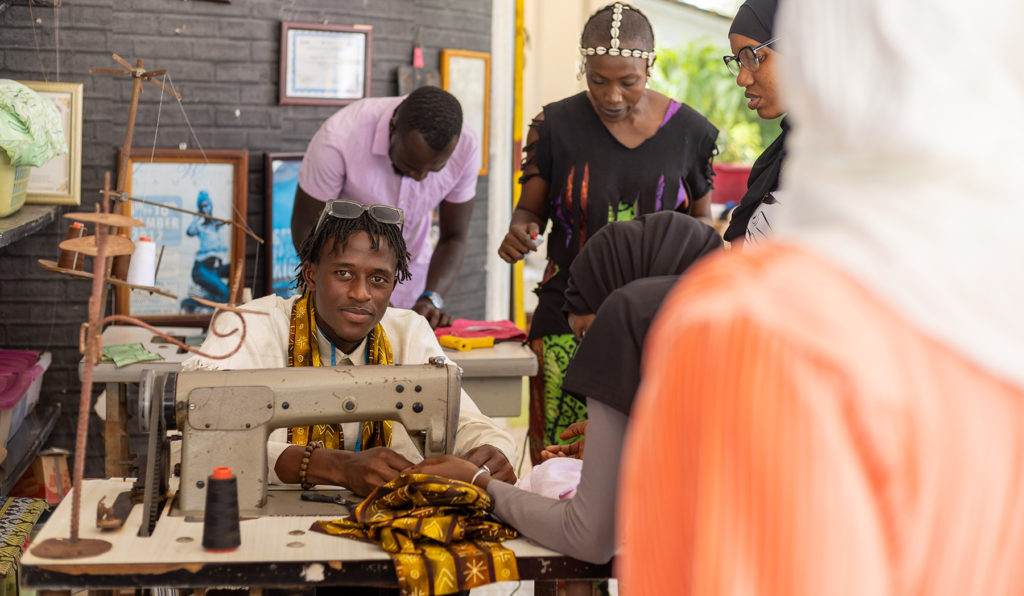
The small but growing fashion industry in The Gambia, like elsewhere, faces the twin challenges of waste and resource inefficiency. By supporting home-grown fashion in The Gambia, WasteAid are helping to end the reliance on imported textiles and secondhand clothes that often end up in landfill.
Yaws Creation, a leading local fashion house, ran a Sustainable Fashion & Creativity Workshop. Over 20 local tailors, designers, and artisans participated in sessions that went beyond traditional lectures. Instead, they engaged in practical upcycling activities, learning to convert fabric scraps and second-hand clothing into stylish apparel and home décor.
Industry experts brought circular economy principles into the creative process, showing how discarded materials could be reborn as unique, market-ready products. Lawal Ronke from Button Up Creations summed up the experience: “This is something completely different and highly welcomed because it involves practical sessions and demonstrations. As someone in the fashion industry, it’s great to attend such an educational and inspiring session.” The workshop not only nurtured innovative design techniques but also highlighted the economic potential of sustainable fashion.
Both training sessions embody our core belief that sustainability and economic growth can go hand in hand. By providing practical, hands-on experiences, we have enabled entrepreneurs to immediately apply new skills in their businesses. The trainings are a clear demonstration of how circular economy practices can reduce waste while building a foundation for long-term economic resilience. They serve as a catalyst for innovation, empowering participants to see waste as a resource and to implement solutions that are both environmentally and financially sustainable.
The momentum behind the Dennakuwo Circular Economy Network is growing, and we invite partners to help us expand its impact. Your support can help build a future where waste is no longer a problem—but a valuable resource.

News
Beyond the Numbers: The Human Impact of WasteAid’s Work
Members of WasteAid’s Gambia team, Lamin Janneh and Jojo Saho, recently investigated what our programmes mean to our individual participants by speaking to members...
News
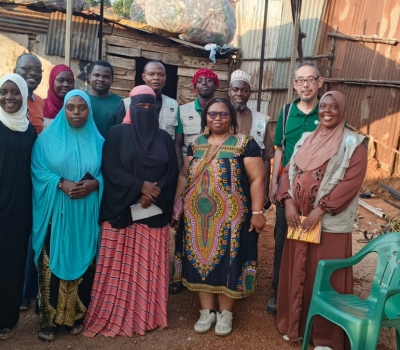
Journey to Uganda: Stories from our projects
Recently, the Programme Management team travelled to Uganda to meet the people at the heart of our waste management programmes, connect with local stakeholders...
News
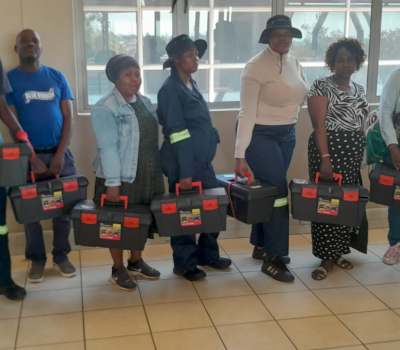
From E-Waste Skills to Sustainable Enterprise: Cosmo City Participants Take the Next Step
What if a broken laptop, television or other electronic appliance wasn’t waste, but an opportunity to repair, reuse and recycle? For participants in WasteAid’s Waste 2...
News
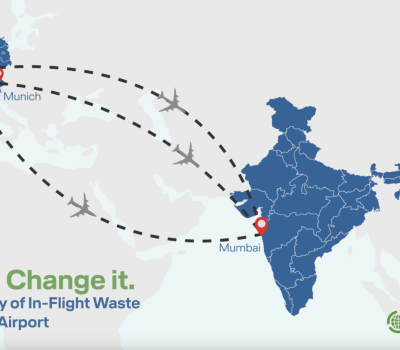
Lufthansa Group and WasteAid Launch Animation Film
WasteAid and Lufthansa Group have launched a new animated training film designed to help cabin crew improve onboard waste segregation, supporting efforts to increase...
News
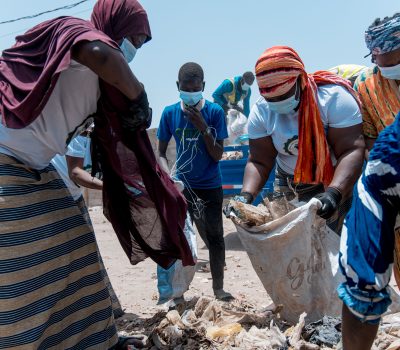
How one community in The Gambia is changing its relationship with plastic
In Bakoteh, a community in the Greater Banjul Area of The Gambia, plastic waste has long been a serious problem. Home to the largest dumpsite in...
News
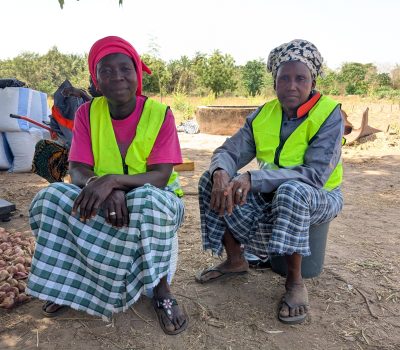
Women farmers in Kalaji turn organic waste into opportunity through the S-ORGANIC project
In Kalaji, a group of women farmers is demonstrating how organic waste can become a productive resource — supporting sustainable agriculture, strengthening livelihoods, and...
Imagine a place where waste isn’t just rubbish, but a lifeline. In South Sudan’s bustling camps of Bentiu and Malakal, over 218,000 people displaced by conflict and floods face daily challenges, and waste management is critical. But what if that waste could be turned into opportunity?

Earlier this year, WasteAid joined forces with the International Organisation for Migration (IOM) to make that vision a reality. Together, we completed an assessment that looks at how we can transform waste from a problem into a valuable resource that can improve health, support livelihoods and build a brighter, cleaner future.
The waste landscape in Bentiu and Malakal
Every month, more than 1,800 cubic metres of waste is collected across IOM-supported camps in Bentiu and Malakal. This waste includes kitchen scraps, garden clippings, plastics, textiles and metals. Managed by IOM through regular collection and transportation to the dumpsite, the waste is currently piling up. Located just north of the camps, this dumpsite is prone to open burning, which releases harmful gases and poses serious health risks for nearby communities. Occasional levelling of waste by UN machinery can only go so far – what’s needed is a way to actively reduce and reuse waste before it becomes a burden. It is for this reason IOM reached out to WasteAid.to assess what could be done.

Analysing waste to uncover potential
WasteAid joined forces with IOM to conduct a detailed waste analysis and composition study. What we found was both promising and challenging: a large proportion of the waste generated is biodegradable, such as food and garden waste, while the rest includes plastics, textiles and metals. Although some local youth pick through waste to salvage what they can, there’s no organised recycling happening yet. With waste volumes expected to reach over 42,000 tonnes in Bentiu alone by 2024, this is an opportunity waiting to be tapped.
Exploring recycling potential
Turning waste into something valuable requires more than just a desire to recycle – it needs infrastructure, market access and demand for recycled products. In Bentiu and Malakal, the isolation, limited electricity and transport challenges make it tough to reach broader markets. But there are options to be explored. Biodegradable waste, plastics, textiles and metals could all play a role in small-scale recycling efforts that bring big benefits to these displaced communities. Going into 2025, we will be looking further at how this can be progressed.
Designing local solutions: Our pilot projects
Based on our experiences in The Gambia, South Africa and Uganda, we know we can support livelihoods and create sustainable local businesses in other contexts, but this is the first time we have assessed whether this can be done in such an environment. Together with IOM, we’ll continue exploring with local collector groups to divert biodegradable waste to IOM’s Sludge2Briquettes project, turning waste into fuel, and we’ll be exploring ways to feed plastic waste into the Plastic4Bricks project, potentially transforming plastic into building materials for local use.
Our approach includes everything from setting up infrastructure and identifying collectors to training people in both technical and business skills, waste segregation and monitoring. By creating sustainable livelihoods and grass roots businesses amongst displaced communities, we’re tackling the waste crisis, promoting climate resilience and creating economic opportunity in locations where this is often scarce.
Looking forward
Our collaboration with IOM in South Sudan is paving the way for sustainable, circular economy solutions in Bentiu and Malakal and perhaps building a replicable model that can be implemented in other displaced camps. By transforming waste from a burden into an opportunity, we’re working to improve local health, create green jobs and show that sustainable waste solutions are possible even in the most challenging settings. This is more than waste management – it’s about helping displaced communities who are facing incredible hardship create brighter, greener futures.
News
Beyond the Numbers: The Human Impact of WasteAid’s Work
Members of WasteAid’s Gambia team, Lamin Janneh and Jojo Saho, recently investigated what our programmes mean to our individual participants by speaking to members...
News
Journey to Uganda: Stories from our projects
Recently, the Programme Management team travelled to Uganda to meet the people at the heart of our waste management programmes, connect with local stakeholders...
News
From E-Waste Skills to Sustainable Enterprise: Cosmo City Participants Take the Next Step
What if a broken laptop, television or other electronic appliance wasn’t waste, but an opportunity to repair, reuse and recycle? For participants in WasteAid’s Waste 2...
News
Lufthansa Group and WasteAid Launch Animation Film
WasteAid and Lufthansa Group have launched a new animated training film designed to help cabin crew improve onboard waste segregation, supporting efforts to increase...
News
How one community in The Gambia is changing its relationship with plastic
In Bakoteh, a community in the Greater Banjul Area of The Gambia, plastic waste has long been a serious problem. Home to the largest dumpsite in...
News
Women farmers in Kalaji turn organic waste into opportunity through the S-ORGANIC project
In Kalaji, a group of women farmers is demonstrating how organic waste can become a productive resource — supporting sustainable agriculture, strengthening livelihoods, and...
WasteAid, the UK-based environmental and development charity, has announced an innovative collaboration with Lufthansa Group to identify ways to reduce the amount of waste from its flights that end up in landfill.
The initiative will focus on flights arriving at Mumbai airport in India and aims to find ways to increase circularity as well as recycling rates of onboard materials coming into Mumbai Airport. The project’s initial stage includes a scoping study to map and showcase the current waste management practices at the Lufthansa’s outstation in Mumbai airport and learn what Lufthansa can do to improve circularity of the materials on their flights. The project also aims to pilot approaches to return in-flight items to the circular economy and keep finite resources within a closed loop for as long as possible in order to reduce their consumption.
WasteAid will work closely with Lufthansa Group and it’s airlines (Lufthansa and SWISS), Mumbai airport, and suppliers such as catering companies and local recycling businesses.
Manuel Henle, Sustainability Onboard and Lounges at Lufthansa Group, said: “Our ambition is to only have items onboard that can be reused, recycled, or composted after flights. We have already implemented several initiatives to replace single-use plastics and aluminium on our flights, but recognise that there is more to do. Recycling is a major step towards not wasting finite resources.”
According to Manuel, “Projects such as our partnership with WasteAid in Mumbai are a crucial step on our flight path to making our ambition a reality. We’re looking forward to working with the WasteAid team and our stakeholders to identify steps that we can take to increase waste recycling while also creating opportunities to support the local green economy.”
More than 80 Lufthansa Group flights arrive at Mumbai airport every month carrying more than 20 000 passengers. This equates to approximately 15,000 kilograms of potential recyclables every year. While the company has made strides in reducing the waste generated in Europe, they are keen to identify further steps they can take at their multiple outstations.
Ceris Turner-Bailes, Chief Executive Officer at WasteAid, said: “The global airline industry is one of the largest emitters of greenhouse gas emissions on the planet, so we’re really pleased to see Lufthansa Group taking these positive steps to reduce its environmental impact while also creating economic opportunities for local communities.
“By adopting Circular Economy practices, airlines can enhance sustainability, reduce costs, improve efficiency, and authentically improve their green credentials while positively contributing to the environment and local communities.”.
More than two-thirds of the world’s population has no access to formal waste management infrastructure leaving them with little alternative but to dump or burn their waste. This releases more CO2 and other harmful toxins into the atmosphere than the global aviation industry and increases the risk of health issues, particularly among children.
WasteAid works with communities around the world who are facing some of the greatest challenges caused by the global waste crisis. Our flagship programmes provide training, mentoring, investment, and collaboration opportunities to deliver sustainable waste management solutions that improve the environment while empowering local communities to leverage the value of waste to their benefit.
News
Beyond the Numbers: The Human Impact of WasteAid’s Work
Members of WasteAid’s Gambia team, Lamin Janneh and Jojo Saho, recently investigated what our programmes mean to our individual participants by speaking to members...
News
Journey to Uganda: Stories from our projects
Recently, the Programme Management team travelled to Uganda to meet the people at the heart of our waste management programmes, connect with local stakeholders...
News
From E-Waste Skills to Sustainable Enterprise: Cosmo City Participants Take the Next Step
What if a broken laptop, television or other electronic appliance wasn’t waste, but an opportunity to repair, reuse and recycle? For participants in WasteAid’s Waste 2...
News
Lufthansa Group and WasteAid Launch Animation Film
WasteAid and Lufthansa Group have launched a new animated training film designed to help cabin crew improve onboard waste segregation, supporting efforts to increase...
News
How one community in The Gambia is changing its relationship with plastic
In Bakoteh, a community in the Greater Banjul Area of The Gambia, plastic waste has long been a serious problem. Home to the largest dumpsite in...
News
Women farmers in Kalaji turn organic waste into opportunity through the S-ORGANIC project
In Kalaji, a group of women farmers is demonstrating how organic waste can become a productive resource — supporting sustainable agriculture, strengthening livelihoods, and...