News
How one community in The Gambia is changing its relationship with plastic
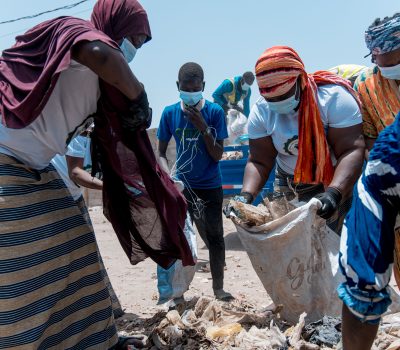
In Bakoteh, a community in the Greater Banjul Area of The Gambia, plastic waste has long been a serious problem. Home to the largest dumpsite in...

PRESS RELEASE
16 December 2022
WasteAid’s recent work in Cameroon has led to people in need of support securing employment and improving their livelihoods whilst keeping plastic out of the ocean. WasteAid’s Widening the Net UK Aid Match appeal launched in May 2019 and was supported through donations made by the British public and match funding from the UK government.
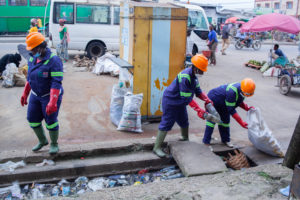
Despite Covid-19 posing great difficulties to the project’s delivery, WasteAid worked with local partner RED-PLAST to train 165 unemployed local youths, women and men in waste recovery solutions and problems posed by plastic waste, including consequences to environmental and public health, so as to help them enter the waste management workforce and scale up capacity to recover recyclable plastic waste. WasteAid has also developed a productive relationship with the local council, whose staff supported the project, particularly its campaign to raise awareness among business owners and market stall holders to enable collection of their plastic waste for recycling.
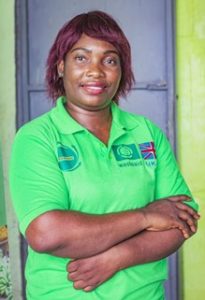 Project participant Damaris said: “I was unemployed and have a disability, so in a difficult financial situation. I want to be useful to society. This training on paving tiles production will help me gain knowledge to keep the environment clean and to make products from plastic waste.”
Ceris Turner-Bailes, CEO of WasteAid, says: “We’re very grateful to those who supported our fundraising appeal in 2019 that enabled our work in Douala. We’re proud to have delivered an impactful programme that has improved the lives of many within the communities where we work through training and economic opportunity, whilst at the same time reducing plastic pollution within the Douala estuary.”
As a result of implementing a more efficient and effective plastics collection and recycling system in the borough Douala III, over 17 tonnes of plastic were prevented from entering and polluting the ocean, which is the equivalent of more than 850,000 bottles. Trainees went on to collect nearly another 30 tonnes of plastic from local businesses, preventing further pollution to local rivers and drains. Employment was also secured for those in need of support, thanks to generosity of British public and UK government. Project participants expressed having greater confidence and transferable skills to access long-term job opportunities in and outside of the waste sector, with 74% of participants now employed as a result of the training and work experience. Some are employed by our partner RED-PLAST, some elsewhere and some have set up their own enterprise to collect recyclables.
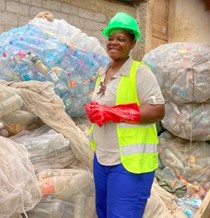 Julienne, a waste collector in Douala, shared her experiences following the training. She said: “I am collecting plastic bottles to clean the environment, to avoid clogging waterways and causing flooding, and to save the health of the community. This activity also helps me and my team to take care of ourselves and our families.”
WasteAid would like to thank the UK government and the UK public who supported their Widening the Net campaign. With this help and through this project, WasteAid’s vision of a world in which waste causes no harm, and where people in poverty are empowered to recover its value, has been supported.
ENDS
Notes to editors:
About WasteAid
About UK Aid Match
For further information visit www.ukaidmatch.org
Contact:
Rose Bradbury
Senior Fundraising & Communications Officer
WasteAid

News
How one community in The Gambia is changing its relationship with plastic
In Bakoteh, a community in the Greater Banjul Area of The Gambia, plastic waste has long been a serious problem. Home to the largest dumpsite in...
News
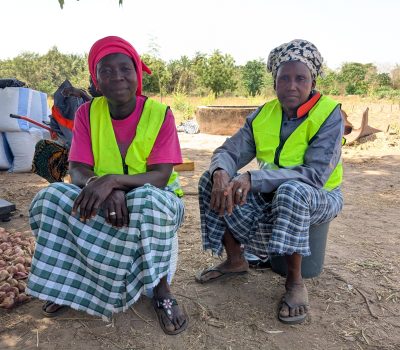
Women farmers in Kalaji turn organic waste into opportunity through the S-ORGANIC project
In Kalaji, a group of women farmers is demonstrating how organic waste can become a productive resource — supporting sustainable agriculture, strengthening livelihoods, and...
News
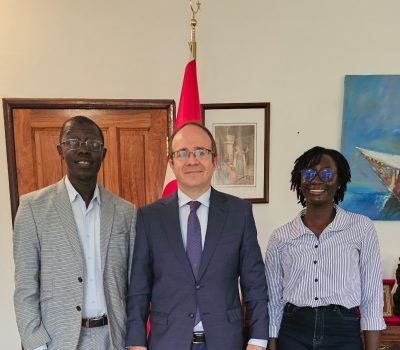
WasteAid and the Turkish Embassy: A New Partnership for Sustainable Change in The Gambia
On 12 May 2026, WasteAid’s Director of Programmes and Project Officer met with Turkish Ambassador F. Turker Oba at the Turkish Embassy in The...
News
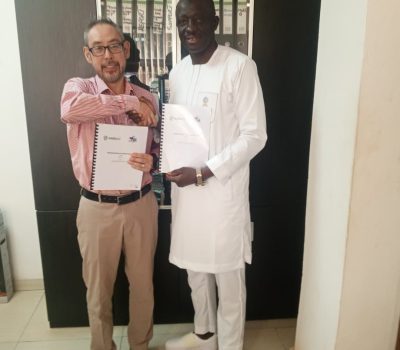
WasteAid and Kanifing Municipal Council sign MoU to strengthen long-standing partnership on sustainable waste management
WasteAid and Kanifing Municipal Council have signed a new Memorandum of Understanding (MoU), marking an important milestone in a partnership that has developed over more than a decade. ...
News
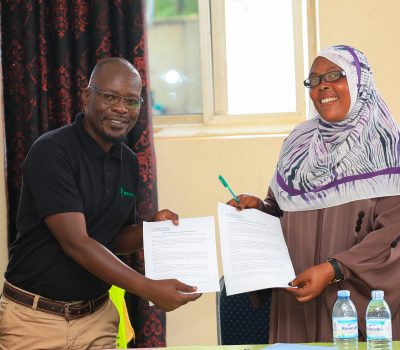
Responding to Community Needs: The Commencement of HUBLINK with Halal Waste Group in Uganda
We have a wealth of evidence demonstrating the positive impact of our Wastepreneur programme. A key driver of this success is our proactive approach—identifying and resolving challenges as soon...
News
Strengthening The Gambia’s Circular Economy: Insights from WasteAid’s Stakeholder Engagement
We have huge plans to further strengthen and scale our programmes in the countries we work in, evidenced by our recent expansion of our...
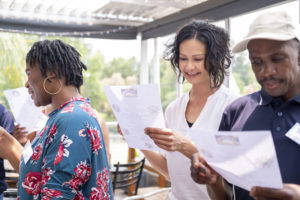
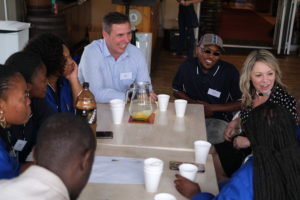
On 18th October 2022, WasteAid hosted a pitching event for their “Bunzl Waste Entrepreneurial Challenge” in Randburg, South Africa. As their funding partner, Bunzl Plc has played a significant role in enabling the tailored training of 20 Wastepreneurs working in the informal sector over a 12-week period. The training has been delivered by local professionals in the waste space who have equipped the Wastepreneurs with skills and knowledge to help them move up the waste value chain in South Africa. The pitching event signified the end of the training and was an opportunity for the Wastepreneurs to pitch their business ideas to a panel of judges and receive a portion of seed funding.
The WasteAid team in South Africa was joined by members of the Bunzl team including James Pitcher, their Head of Sustainability and Melanie Harris, a Key Account Manager from Bunzl in Western Australia. We were able to catch up with Melanie on her experiences whilst visiting the project.
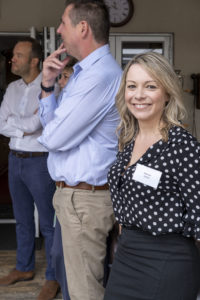 Thank you for joining WasteAid in South Africa Melanie! Please could you tell us a bit about your background and how you came to visit WasteAid at the pitching event in Randburg?
I am a Key Account Manager for Bunzl in Western Australia, managing Fortescue Metals Group. FMG are a mining company employing over 10,000 people. We supply their workwear and PPE. I was fortunate enough to win the Bunzl Global “We Believe Sustainability” award, chosen out of 21,000 employees and 70 nominations from our various business units around the world. This award was presented to someone whose role isn’t technically in sustainability, but has demonstrated a commitment and passion in this space. This was for the work I had done with my FMG in helping them achieve their ambitious sustainability objectives through multiple initiatives (which are ongoing). The prize was to join our Global Head of Sustainability for the Waste Aid/Bunzl Waste Entrepreneurial Challenge.
What were your first impressions of WasteAid and our work?
I was blown away by the passion and commitment of the WasteAid members I met in person (Jessica, Angela and Rebecca) and virtually (Michelle), who are all such lovely people and so passionate about their business. The work that WasteAid is doing in marginalized communities is beyond inspiring.
Did your expectations of the visit match with the realities?
In reality, I didn’t know what to expect… but there is no way I could have envisioned such an amazing experience. Without slipping into hyperbole, the visit was a life changing experience; to see the realities of life in South Africa and what these young people face was both confronting and inspiring. South Africa: Equal parts terrifying and inspiring! On day one, we were meant to visit Diepsloot where 800,000 people live in a 12km2 area; in abject poverty. Crime is high, sexual assault is high, living conditions are atrocious. 25,000 people (out of the 800,000) share 640 public toilets, which equates to 39 families sharing 1 toilet.
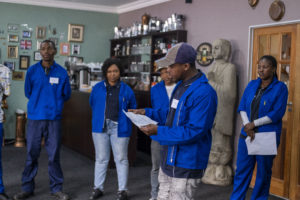 The informal sector is responsible for 90% of waste collection, and the result is that waste is literally everywhere; leading to obvious sanitation issues…and burning of waste contributes to 10% of ozone emissions. As a result, the informal sector is the solution, and individuals act as waste pickers; they pick up rubbish and return to “buy back” centres to make a living. The buy-back centres then sell back to bigger manufacturers who shred the plastic and sell to the big recyclers (a big one here is Petco) or big companies such as Coca Cola (who have recyclable targets to meet), or export to China. The waste pickers can walk 40km a day and get about $30 AUD per week. We saw the pricing at a buyback centre; for PET material a waste picker will receive 5 RAND per kg (50c in AUD). On the Pitch Day to see them strive to make a better life for themselves and their families; and to see such joy and pride shine through…it will stay with me forever.
What was the main take away you had from the visit?
So many, it’s hard to narrow it down to one. My first impression is how good we have it in Australia compared to the environment these people are living in. But also, how a program like this can actually change people’s lives. It’s also a reminder that Sustainability is something different to everyone; in very real terms for the people we met, it means making a living.
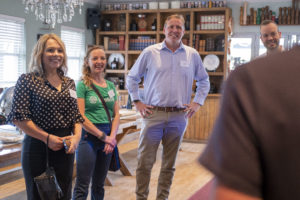
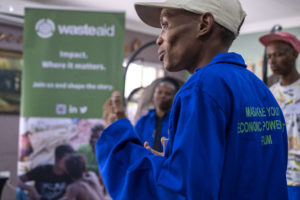
Do you think a partnership like the one between WasteAid and Bunzl is important, and if so, why?
Absolutely! The partnership is impacting people’s lives; we saw this first-hand. I have never been prouder of the company and cant stress enough how crucial it is that we continue to support charities in this manner. I plan to continue grow awareness in Australia and would ultimately strive to work on (assist with) programs here or even abroad. Sustainability is my passion, whilst not technically my role at Bunzl.
News
How one community in The Gambia is changing its relationship with plastic
In Bakoteh, a community in the Greater Banjul Area of The Gambia, plastic waste has long been a serious problem. Home to the largest dumpsite in...
News
Women farmers in Kalaji turn organic waste into opportunity through the S-ORGANIC project
In Kalaji, a group of women farmers is demonstrating how organic waste can become a productive resource — supporting sustainable agriculture, strengthening livelihoods, and...
News
WasteAid and the Turkish Embassy: A New Partnership for Sustainable Change in The Gambia
On 12 May 2026, WasteAid’s Director of Programmes and Project Officer met with Turkish Ambassador F. Turker Oba at the Turkish Embassy in The...
News
WasteAid and Kanifing Municipal Council sign MoU to strengthen long-standing partnership on sustainable waste management
WasteAid and Kanifing Municipal Council have signed a new Memorandum of Understanding (MoU), marking an important milestone in a partnership that has developed over more than a decade. ...
News
Responding to Community Needs: The Commencement of HUBLINK with Halal Waste Group in Uganda
We have a wealth of evidence demonstrating the positive impact of our Wastepreneur programme. A key driver of this success is our proactive approach—identifying and resolving challenges as soon...
News
Strengthening The Gambia’s Circular Economy: Insights from WasteAid’s Stakeholder Engagement
We have huge plans to further strengthen and scale our programmes in the countries we work in, evidenced by our recent expansion of our...
In June 2020, WasteAid embarked upon an innovative and expansive programme to support circular economy solutions to the waste crisis in three locations; Ho Chi Minh in Vietnam, Guwahati in India and Johannesburg, South Africa. Supported by Huhtamaki, this programme finally drew to a close in autumn 2022.
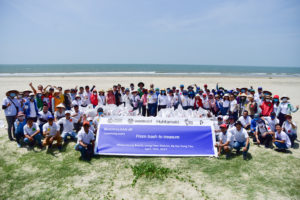
In just over 2 years there were some fantastic results achieved – WasteAid’s Circular Economy Networks had been developed in 3 locations. The networks attracted over 1,000 members with more than that number attending the online webinars and trainings that were developed (even the pandemic didn’t stop the progress). The partnership supported 36 entrepreneurs through tailored business training and mentoring and 6 entrepreneurs were awarded with 10,000 Euros each of seed funding. Those supported included a plastics recycling enterprise in India, an organics and composting enterprise in South Africa and an app developer in Vietnam aiming to make waste collection more accessible and efficient.
The partnership between Huhtamaki and WasteAid has clearly moved the needle in terms of both local perceptions of waste and direct action to reduce waste pollution. By orienting the programme towards supporting and strengthening existing systems and local innovators, the partnership has ensured a sustainable legacy. A relatively young international non-profit focused on tackling the global waste crisis through support to and promotion of solid waste management systems and circular economy innovations, the financial investment from Huhtamaki was a game changer for WasteAid. The organisation cut its teeth delivering community-based interventions in Sub Saharan Africa rooted in the premise that livelihoods and environments can be improved through training and skills in waste related activities. However, with Huhtamaki’s ambition and vision for the partnership, WasteAid was able to expand its horizons in terms of scale and depth of intervention.
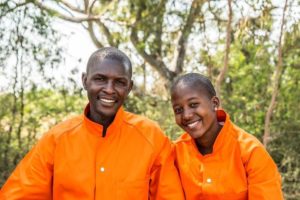
Image: BoombaDotMobi – A winner of the Zero Cities Waste Challenge in South Africa.
The purpose of the partnership was to bring together diverse stakeholders in 3 localities to build and share knowledge in waste and recycling activities, to facilitate discussions and collaboration between those at different points in the waste value chain and to practically support and finance local entrepreneurs and innovators, ‘wastepreneurs’. The partnership recognized that where there is a lack of municipal waste systems, the private sector and even more the informal sector fill that gap. The networks were rooted in community responses. The innovators and entrepreneurs that were supported also had a social value element, for example offering employment potential to those in a lower socio-economic bracket or providing finance to young innovators from deprived areas who would not be able to access traditional finance.
Above all the networks attracted significant diversity, of course there were those directly linked to the waste value chain in some way from local government, enterprise or trade organisations, but equally there were leading academics, multinational corporations, local businesses, Chambers of Commerce and international governments who became stakeholders in the networks, not to mention nearly 200 Huhtamaki employees who engaged in activities to support the partnership in the different locations.
A key element to the programme was flexibility, ideas conceived in London or Helsinki had the space to be tried locally to ensure they were relevant, needed and impactful. Some elements of the programme plan were deliberately light on detail at the outset to ensure that the local membership could themselves identify their greatest needs and the network could grow organically. This meant that the partnership could focus on tackling important local issues identified by those closest to them, for example how to maximise benefit from End Producer Responsibility legislation in South Africa or strategies to grow domestic recyclables in Vietnam given the high quantity that are imported.
And yet perhaps the biggest impact of all has been what has happened outside of the confines of that initial programme. The approach taken by Huhtamaki and WasteAid has captured the imagination of other funders keen to implement a meaningful sustainability strategy and the initial circular economy network model has been adapted and exported by WasteAid to two further countries, Gambia and Egypt and extended further in South Africa. The success of this approach and the common thread running through these networks is that they are rooted in the local context, that whilst funded by Huhtamaki and facilitated by WasteAid, they are owned by their members. The second critical element is that there are seriously bright ideas borne out of local challenges and that home grown solutions to the waste crisis are often the most sustainable and should be supported. As access to finance remains a significant challenge to many working with waste in lower and middle income countries, the approach developed by the partnership fills a critical role in supporting youth entrepreneurship, skills and training.
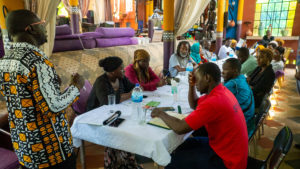 Image: Circular Economy Network meeting in The Gambia.
The original programme focused very much on the community level and how the grassroots could drive the circular economy, but this is not entirely the case in all countries. In Gambia, for example, it was recognized that it was at local authority, government agency and Ministerial level where the most traction would be had and so the approach to networking was adapted. Additionally, with other funders signing up to this approach, WasteAid has added a further mentoring element to the programme joining experts from a chartered institution in the UK to work with Gambian counterparts to find solutions to waste related issues.
Although the initial partnership funded some tremendously exciting initiatives, another question arose as to how those who were not yet at that relatively advanced level could be helped. The WasteAid team were keen to focus on the lower rungs of the waste value chain where holistic life skills training, business skills training and smaller injections of finance would have a massive impact. Huhtamaki has accompanied WasteAid on this journey and is now financing an entrepreneur’s fund focused on those on the first rung of the waste value chain. This approach is proving incredibly successful in Johannesburg. In Egypt a more geographically targeted approach was taken and the network was launched in Aswan, working again with local structures and the existing value chain. The Egyptian model mirrors the initial programme, however, has a focus on flexible plastics only as opposed to multiple waste streams.
Overall, the core elements of the Circular Economy Network approach have proven a particularly impactful mix and WasteAid continues to evolve its programme design as we learn more. However, the multiplier effect is clear to see, that initial ambitious vision developed by Huhtamaki and WasteAid continues to be developed and delivered throughout Africa, impacting thousands of individuals, hundreds of communities and dozens of circular economy enterprises.
Written by Ceris Turner-Bailes, CEO of WasteAid.
News
How one community in The Gambia is changing its relationship with plastic
In Bakoteh, a community in the Greater Banjul Area of The Gambia, plastic waste has long been a serious problem. Home to the largest dumpsite in...
News
Women farmers in Kalaji turn organic waste into opportunity through the S-ORGANIC project
In Kalaji, a group of women farmers is demonstrating how organic waste can become a productive resource — supporting sustainable agriculture, strengthening livelihoods, and...
News
WasteAid and the Turkish Embassy: A New Partnership for Sustainable Change in The Gambia
On 12 May 2026, WasteAid’s Director of Programmes and Project Officer met with Turkish Ambassador F. Turker Oba at the Turkish Embassy in The...
News
WasteAid and Kanifing Municipal Council sign MoU to strengthen long-standing partnership on sustainable waste management
WasteAid and Kanifing Municipal Council have signed a new Memorandum of Understanding (MoU), marking an important milestone in a partnership that has developed over more than a decade. ...
News
Responding to Community Needs: The Commencement of HUBLINK with Halal Waste Group in Uganda
We have a wealth of evidence demonstrating the positive impact of our Wastepreneur programme. A key driver of this success is our proactive approach—identifying and resolving challenges as soon...
News
Strengthening The Gambia’s Circular Economy: Insights from WasteAid’s Stakeholder Engagement
We have huge plans to further strengthen and scale our programmes in the countries we work in, evidenced by our recent expansion of our...
As we come to the end of COP27, this thought piece will examine how WasteAid’s work is helping to address the climate crisis through green entrepreneurship and reinventing waste solutions, two topics that are being covered on Solutions Day at COP27.
It is encouraging to see a focus on these topics at COP27. At WasteAid we believe that support to green entrepreneurship is critical when transitioning to a circular economy and helps to recapture valuable materials to use in new products providing environmental, economic and social benefits.
 WasteAid invests in green entrepreneurs in the waste space for two main reasons, firstly we believe that some of the best ideas to solve the waste crisis are emerging locally. In countries like South Africa, India and Vietnam formal employment options are limited and we are seeing many ‘green entrepreneurs’ emerging out of necessity. Companies like VECA in Ho Chi Minh in Vietnam are an example of a typical green entrepreneur working in this space. They have developed a mobile app linking waste collectors to households, effectively an Uber for waste. Through funding from their partner Huhtamaki, a key global provider of sustainable packaging solutions, WasteAid has supplied business and capex funding to these local innovators, who have been able to extend their coverage into new districts, increase the number of households they collect from and waste collectors that can access the system. More opportunities for green entrepreneurs to expand their businesses has meant increased employment for local communities, and with more employment comes greater levels of independence. Finally we believe that green entrepreneurship will also help to keep materials closer to its source. In Vietnam for example, while 1.4 million tonnes of recycled plastic waste was imported in 2018, only 15-20% of current plastics in Vietnam are recovered and recycled. If green entrepreneurs can be supported to thrive in their locality, then we see the potential for reliable local supply chains to emerge and contribute to their local economies for manufacturing and use of recyclables.
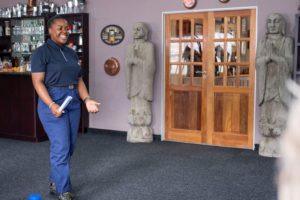 We are not alone in recognising that green entrepreneurs have ideas and solutions to solving the waste crisis. Over the last few years, we have seen initiatives funded by Hitachi, Circular Initiative, IKEA, and the UK Department of Trade and Industry to find and fund innovators and entrepreneurs who can develop solutions to help ‘close the loop’ on waste as a means of tackling the waste crisis, and in turn, the climate crisis. WasteAid celebrates these initiatives and also saw an opportunity to make initiatives even more inclusive, more local and more targeted.
WasteAid believes that there are two key ways to support green entrepreneurs. Firstly, through tailored support to the entrepreneur. So many courses, curricula and business incubation approaches could be better tailored to the waste industry. Through funding from Bunzl PLC, we have been working in South Africa with the Wot-If? Trust to develop a bespoke course to ‘waste-preneurs’ who are working in townships in Johannesburg. These young women and men are individuals who are already working in the world of waste but living very much day to day. Through a holistic and practical curriculum delivered by trainers with lived experience of making a living out of waste, and culminating in a pitch to access funds for a business idea, we are giving these waste-preneurs an opportunity to grow their income earning potential. See a clip below of some of our waste-preneurs in action.
Similarly in The Gambia, WasteAid has a ‘challenge fund’ element to a project supported by the Chartered Institution of Wastes Management (CIWM). It is inspirational to see young entrepreneurs fired up about resource recovery and creating jobs at the same time. Currently three semi-finalists are going through a tailored business support programme and will compete in December for access to capex funding. African Swag is a female-led Gambian-based company making clothing out of bubble wrap, from aprons to shower caps. Green Youth Collective are a group of entrepreneurs making briquets from organic waste, and Plastics Recycling Gambia is led by a Gambian entrepreneur who is working to help set up the first network of aggregators and recyclers across The Gambia. Here the focus is helping those on the first rung of the ladder move up the value chain through tailored business support. See a link to our finalists below.
Finally, as well as bespoke training, access to capex and ongoing venture capital is key. Many green entrepreneurs have the solutions but given the low-risk appetite of investors it is difficult for them to go to scale. In Egypt, as part of Dow’s project REFLEX, WasteAid is working with Alfanar, an Egyptian-based company that specialises in venture philanthropy methodology, to design a challenge competition focused on green entrepreneurship. Three semi-finalists will access £10k of seed capital and business training with a final winner having access to long-term investment capital. The challenge is focused on social enterprises that have market-based solutions to the recovery and reuse of flexible plastics in Aswan and beyond. The challenge is still open for applications until 30th November 2022, to apply click here.
WasteAid believes that by fast-tracking local solutions to the circular economy we will get to net zero faster, but perhaps more importantly we will also ensure that the benefits of the circular economy are shared with the poorest communities we serve.
Written by Michelle Wilson and Rebecca Colley-Jones.
News
How one community in The Gambia is changing its relationship with plastic
In Bakoteh, a community in the Greater Banjul Area of The Gambia, plastic waste has long been a serious problem. Home to the largest dumpsite in...
News
Women farmers in Kalaji turn organic waste into opportunity through the S-ORGANIC project
In Kalaji, a group of women farmers is demonstrating how organic waste can become a productive resource — supporting sustainable agriculture, strengthening livelihoods, and...
News
WasteAid and the Turkish Embassy: A New Partnership for Sustainable Change in The Gambia
On 12 May 2026, WasteAid’s Director of Programmes and Project Officer met with Turkish Ambassador F. Turker Oba at the Turkish Embassy in The...
News
WasteAid and Kanifing Municipal Council sign MoU to strengthen long-standing partnership on sustainable waste management
WasteAid and Kanifing Municipal Council have signed a new Memorandum of Understanding (MoU), marking an important milestone in a partnership that has developed over more than a decade. ...
News
Responding to Community Needs: The Commencement of HUBLINK with Halal Waste Group in Uganda
We have a wealth of evidence demonstrating the positive impact of our Wastepreneur programme. A key driver of this success is our proactive approach—identifying and resolving challenges as soon...
News
Strengthening The Gambia’s Circular Economy: Insights from WasteAid’s Stakeholder Engagement
We have huge plans to further strengthen and scale our programmes in the countries we work in, evidenced by our recent expansion of our...
Yesterday’s themes at COP27 were Science and Youth and Future Generations. Two of the elements discussed during the day were around improving Africa’s resilience to climate change and the role of research, development and innovation in addressing climate change.
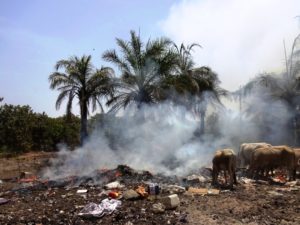 Economic development and population growth has seen the global demand for materials grow from 27 billion tonnes in 1970 to 89 billion tonnes in 2017 and this is forecast to double by 2060 to 167 billion tonnes (OECD 2019). According to the Circularity Gap Report 2022 70% of all global greenhouse gas emissions are related to material handling and use. Growing consumption of materials has consequently resulted in increasing waste generation, in 2020 only 8.6% of the materials we consume were circular i.e., recaptured and used again. To meet the internationally agreed targets to limit the rise in global temperature to below 1.5°C above pre-industrial levels, globally we need to adopt a more circular economy approach. Low- and middle-income countries are global producers of materials and consumption is increasing in these countries. Embedding restorative, regenerative circular principals can help meet the needs of this growing demand. This will require a systemic change replacing primary resources with secondary materials recovered from waste streams building resilience into the economy. Getting there will require collaboration across the value chain from all stakeholders including household, government, informal and formal sector. Proactive engagement is needed, through working together and understanding each other, and knowledge exchange is critical to achieving this. As well as understanding each other, we need fresh thinking and ideas to solve the growing ‘waste’ crisis and succeed in getting materials back into the system. Innovation does not happen in isolation; innovation is the outcome of a lot of smart people rowing in the same direction and will require proactive engagement.
WasteAid agrees knowledge exchange is critical. One area we are experimenting with is bringing experts together from the global north and south to solve common waste issues. In The Gambia, WasteAid, funded by the Chartered Institutions of Wastes Management (CIWM), has set up The Circular Economy Network Project, known locally as ‘Dennakuwo’ to fast-track local solutions to the circular economy. A key part of this project is to bring together members of CIWM in the UK, many of whom come from municipal councils as well as the private sector with their counter parts in The Gambia. In November we held our first virtual engagement meeting bringing together the head of Kanifing Municipal Council and 15 members of CIWM on a virtual platform to exchange information and challenges around the implementation of anti-littering law. It is clear that the challenges faced in the UK are not that dissimilar to those faced in the The Gambia. Our hope is to see these fora to enable knowledge to be shared and innovative solutions to emerge.
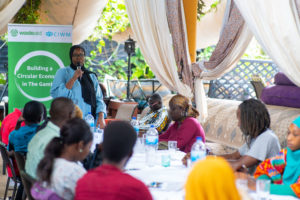
Enabling knowledge exchange across the value chain is also critical. In Egypt WasteAid is working with Dow on its REFLEX project, to identify new and emerging ways of valorising flexible plastic. The aim is to support the development of the flexible plastics value chain in Aswan. In September we brought together representatives from the informal sector, the governate, environmental affairs, NGOs and producers in Aswan. The different groups were able to bring their knowledge on the challenges and opportunities on the PE value chain, each bringing a unique perspective. Through these interactions, connections have been formed and a more formal stakeholder group has emerged to help plan and move forward together to ensure increased recovery or secondary materials.
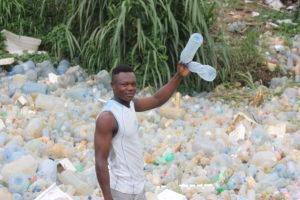 WasteAid has also been grateful to work with donors who bring individual expertise. In Cameroon, WasteAid is working with Douala Municipal Council to develop a Plastics Recovery Facility (PRF) that will be owned and run by the local community. One of our key partners Biffa plc were instrumental in supporting the design of the PRF, working with the team in Cameroon to tailor UK designs to something that would work in the context of Cameroon.
Circular economy provides great economic opportunities to preserve the value of materials and develop critical skills. The examples above demonstrate how we think knowledge exchange is central to solving issues caused by climate emissions that come from materials.
Written by Rebecca Colley-Jones and Michelle Wilson.
News
How one community in The Gambia is changing its relationship with plastic
In Bakoteh, a community in the Greater Banjul Area of The Gambia, plastic waste has long been a serious problem. Home to the largest dumpsite in...
News
Women farmers in Kalaji turn organic waste into opportunity through the S-ORGANIC project
In Kalaji, a group of women farmers is demonstrating how organic waste can become a productive resource — supporting sustainable agriculture, strengthening livelihoods, and...
News
WasteAid and the Turkish Embassy: A New Partnership for Sustainable Change in The Gambia
On 12 May 2026, WasteAid’s Director of Programmes and Project Officer met with Turkish Ambassador F. Turker Oba at the Turkish Embassy in The...
News
WasteAid and Kanifing Municipal Council sign MoU to strengthen long-standing partnership on sustainable waste management
WasteAid and Kanifing Municipal Council have signed a new Memorandum of Understanding (MoU), marking an important milestone in a partnership that has developed over more than a decade. ...
News
Responding to Community Needs: The Commencement of HUBLINK with Halal Waste Group in Uganda
We have a wealth of evidence demonstrating the positive impact of our Wastepreneur programme. A key driver of this success is our proactive approach—identifying and resolving challenges as soon...
News
Strengthening The Gambia’s Circular Economy: Insights from WasteAid’s Stakeholder Engagement
We have huge plans to further strengthen and scale our programmes in the countries we work in, evidenced by our recent expansion of our...
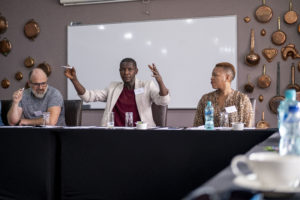
On 18th October 2022, international NGO WasteAid hosted a Dragons Den style pitch event at the HTA School of Culinary Art in Randburg, where eighteen ‘wastepreneurs’ presented their business ideas to a panel of four independent judges as part of the “Bunzl Waste Entrepreneurial Challenge” pitch fund.
The pitch event was the culmination of a twelve-week tailored training programme designed and developed by the Wot-if? Trust for WasteAid, to support waste collectors in improving their income potential. The training curriculum included business and finance basics as well as understanding waste streams. The training combined both personal and practical skills to inspire the wastepreneurs to think of how they could grow their earning potential. The training also included coaching support to help them map out their ideas and to prepare for the final ‘pitch’ event. The pot allocation of seed funding for the wastepreneurs was £10k and is funded by WasteAid’s partner Bunzl Plc.
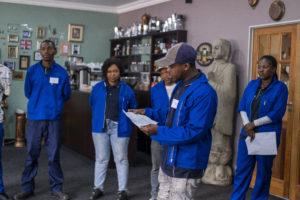
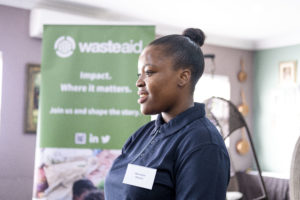
Bunzl Plc’s Head of Sustainability in the UK, James Pitcher, attended the event as well as Bunzl representatives from Australia. Four independent judges were also selected to sit on the panel, including local waste management and sustainability professionals Conny Sethaelo, Public Affairs and Stakeholder Engagement Manager for Nestle South Africa; Debbie Du Preez, Regional Manager of Pikitup; Sbusiso Shongwe of BoombaDotMobi, WasteAid’s Circular Economy Network member and winner of the Zero Waste Cities Challenge; and Claudio Buffa Pace of Community Bin Project.
Sbusiso Shongwe of BoombaDotMobi expressed that: “Wastepreneurship is thriving in this country, and South African wastepreneurs are changing the perceptions in this sector. If there was any time to invest in the waste space, now is the right time.”
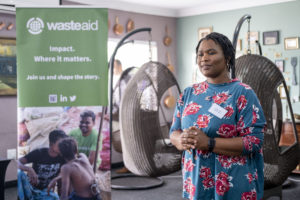
After deliberation the judging team consulted on the appropriate allocation of funds for each wastepreneur. The business ideas presented by the wastepreneurs ranged from education resources made from recyclable materials to the creation of a community food garden to incentivise separation at source and recycling by households in the community. At one training hub, four individuals formed an association to create a Buy-Back and Collection Centre in their community. At another hub, a cooperative of ten youths strengthened their aggregation potential in Freedom Park in Soweto, by focusing on the development office infrastructure on their collection site. One of the candidates, a young man living with a disability, was granted the design and development of a specific waste trolley and safety shoes.
CEO of WasteAid, Ceris Turner-Bailes, said: “We are extremely grateful for Bunzl’s ongoing partnership and support. The Bunzl Waste Entrepreneurial Challenge has enabled WasteAid to support the economic empowerment of some of the poorest members of the waste value chain in South Africa. Through collaborative local partnerships, circular economy initiatives and a tailored curriculum on the World of Waste, this programme is helping to improve the lives and livelihoods of wastepreneurs and their communities within South Africa’s informal sector.”
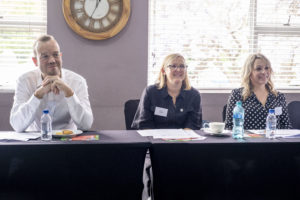 James Pitcher, Head of Sustainability at Bunzl Plc, said:
“The informal waste economy in countries like South Africa is such a big part of these communities. What I hope moving forward is that we’ll continue to be able to provide micro-grants to more communities of people, to help grow the informal waste economy and provide them with jobs that they can be proud of.”
WasteAid will continue to mentor the wastepreneurs through the implementation phase and looks forward to training more wastepreneurs in the months to come.
ENDS
NOTES TO EDITORS
About WasteAid
About Bunzl Plc
About the Wot-if? Trust
News
How one community in The Gambia is changing its relationship with plastic
In Bakoteh, a community in the Greater Banjul Area of The Gambia, plastic waste has long been a serious problem. Home to the largest dumpsite in...
News
Women farmers in Kalaji turn organic waste into opportunity through the S-ORGANIC project
In Kalaji, a group of women farmers is demonstrating how organic waste can become a productive resource — supporting sustainable agriculture, strengthening livelihoods, and...
News
WasteAid and the Turkish Embassy: A New Partnership for Sustainable Change in The Gambia
On 12 May 2026, WasteAid’s Director of Programmes and Project Officer met with Turkish Ambassador F. Turker Oba at the Turkish Embassy in The...
News
WasteAid and Kanifing Municipal Council sign MoU to strengthen long-standing partnership on sustainable waste management
WasteAid and Kanifing Municipal Council have signed a new Memorandum of Understanding (MoU), marking an important milestone in a partnership that has developed over more than a decade. ...
News
Responding to Community Needs: The Commencement of HUBLINK with Halal Waste Group in Uganda
We have a wealth of evidence demonstrating the positive impact of our Wastepreneur programme. A key driver of this success is our proactive approach—identifying and resolving challenges as soon...
News
Strengthening The Gambia’s Circular Economy: Insights from WasteAid’s Stakeholder Engagement
We have huge plans to further strengthen and scale our programmes in the countries we work in, evidenced by our recent expansion of our...