News
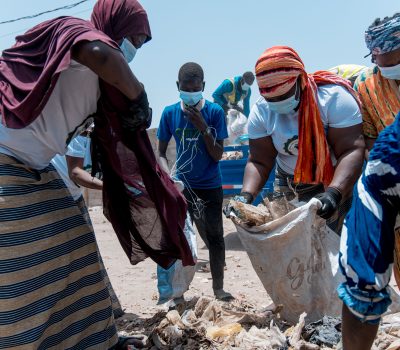
How one community in The Gambia is changing its relationship with plastic
In Bakoteh, a community in the Greater Banjul Area of The Gambia, plastic waste has long been a serious problem. Home to the largest dumpsite in...

Help more people benefit from green recycling jobs in some of the world’s poorest places.
Empower them to keep plastic out of the ocean and create a healthier future for everyone.
On 1 May we launched our UK Aid Match appeal, Widening the Net.
We also celebrated the official launch of our three year partnership with UK waste management company Biffa, who are providing financial support and professional expertise to help WasteAid grow.
WasteAid and Biffa on Sky News
Zoë Lenkiewicz, Head of Programmes and Engagement at WasteAid and Mick Davis, Chief Operating Officer at Biffa, interviewed by Sarah-Jane Mee on Sky Sunrise about the launch of our Proud Partnership and WasteAid’s UK Aid Match campaign, Widening the Net.
WasteAid in the media
The Times (pictured) and the Brighton Argus also covered the launch event, and Zoë Lenkiewicz and Mick Davis were interviewed by Radio Reverb, helping our campaign achieve national reach.
Give before 31 July, and all public donations to our Widening the Net appeal will be doubled by the UK government, up to £2 million.
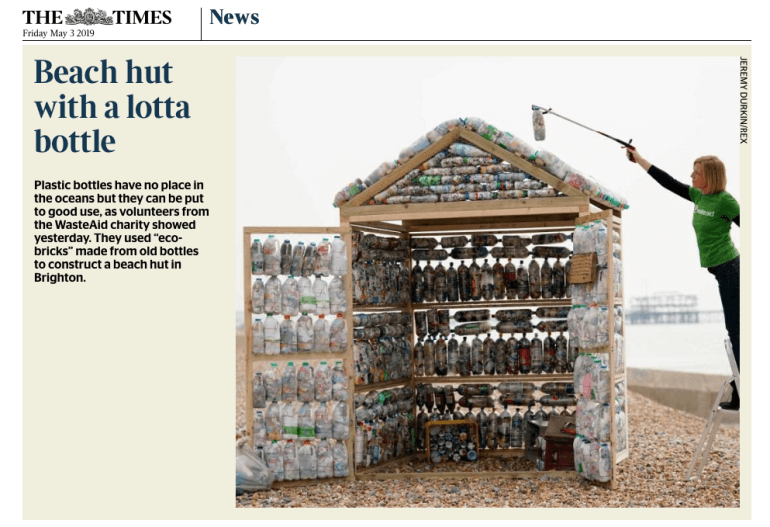
School children from St Andrew’s in Hove joined us on the promenade for some ocean-themed entertainment provided by the Invisible Circus, alongside a beach hut made of ecobricks made by children at St Mary’s Clayton Le Moors school.
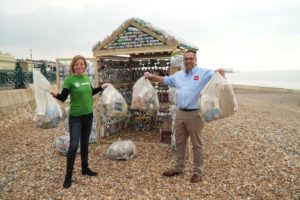

WasteAid’s Widening the Net appeal has attracted UK Aid match funding, which means that all public donations received by 31 July will be doubled by UK government.
Help us make an impact by empowering people in poor parts of the world to capture ocean-bound plastic waste and turn it into useful products! Visit the Widening the Net appeal to find out more.




News
How one community in The Gambia is changing its relationship with plastic
In Bakoteh, a community in the Greater Banjul Area of The Gambia, plastic waste has long been a serious problem. Home to the largest dumpsite in...
News
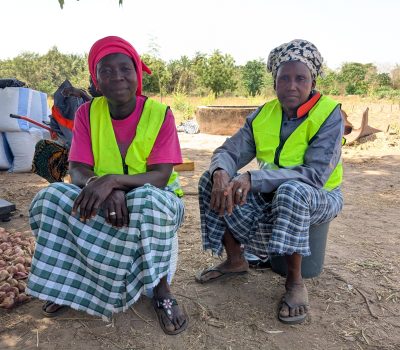
Women farmers in Kalaji turn organic waste into opportunity through the S-ORGANIC project
In Kalaji, a group of women farmers is demonstrating how organic waste can become a productive resource — supporting sustainable agriculture, strengthening livelihoods, and...
News
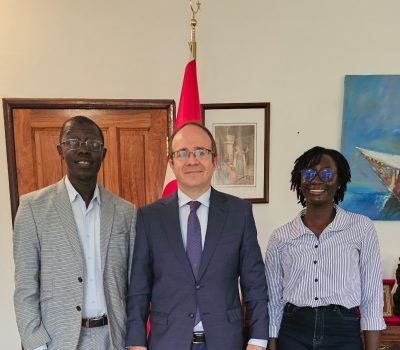
WasteAid and the Turkish Embassy: A New Partnership for Sustainable Change in The Gambia
On 12 May 2026, WasteAid’s Director of Programmes and Project Officer met with Turkish Ambassador F. Turker Oba at the Turkish Embassy in The...
News
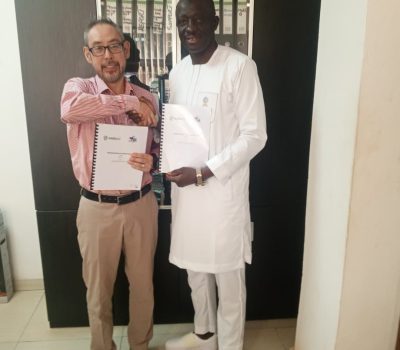
WasteAid and Kanifing Municipal Council sign MoU to strengthen long-standing partnership on sustainable waste management
WasteAid and Kanifing Municipal Council have signed a new Memorandum of Understanding (MoU), marking an important milestone in a partnership that has developed over more than a decade. ...
News
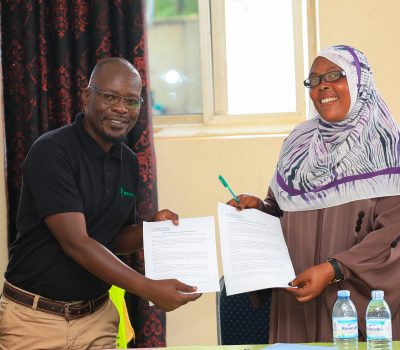
Responding to Community Needs: The Commencement of HUBLINK with Halal Waste Group in Uganda
We have a wealth of evidence demonstrating the positive impact of our Wastepreneur programme. A key driver of this success is our proactive approach—identifying and resolving challenges as soon...
News
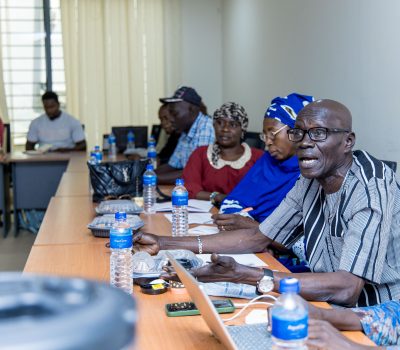
Strengthening The Gambia’s Circular Economy: Insights from WasteAid’s Stakeholder Engagement
We have huge plans to further strengthen and scale our programmes in the countries we work in, evidenced by our recent expansion of our...
Now is the time to recognise waste management is vital for global sustainable development
There are more than 7 billion of us, and we’re producing waste every day. A staggering half of that waste isn’t collected, treated or safely disposed of, and it’s causing a global waste crisis.
The Sustainable Development Goals (SDGs) cannot be met unless waste management is addressed as a priority. Failing economic models treat resources as if they were infinite (SDG 12) and consumption patterns favour the disposable. How can we continue with a growing and increasingly urbanised global population without getting waste sorted?
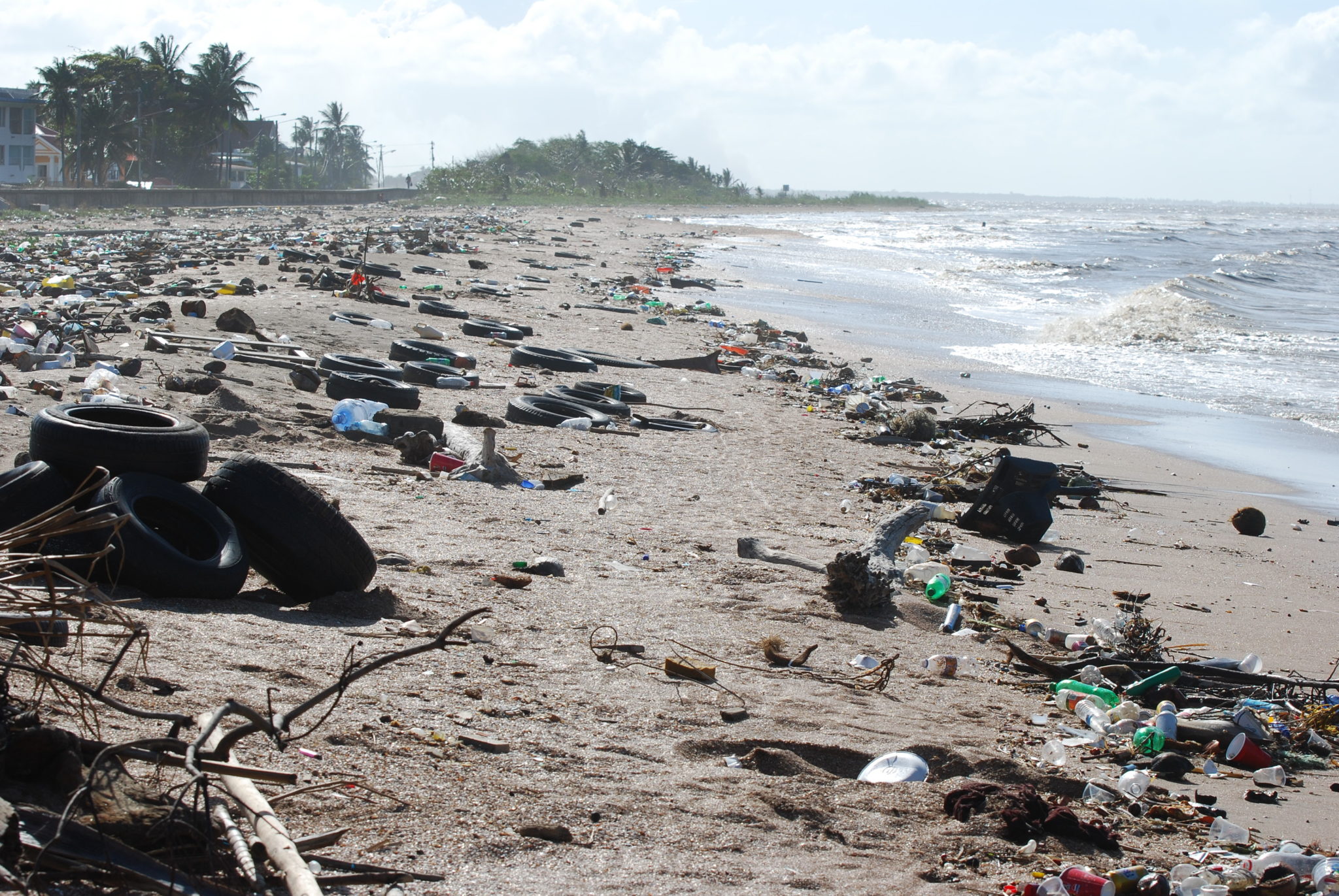 The litter problem on the coast of Guyana, 2010 (Creative Commons 3.0)
The proliferation of plastics has been devastating for the planet and its passengers, both current and future. Three-quarters of the vastest open dumps in the world are on the coast, leaching hazardous materials into our oceans. It’s unlikely that there is a single beach in the world that doesn’t carry the residues of plastic fishing nets, cigarette butts and plastic straws (SDG 14). Large marine mammals are washing up on shore dead, their bellies so full of plastic that they have starved.
Just two generations ago, before the dawn of disposable plastic, people could throw their waste on the ground and it would rot. Not so today, with plastic now clogging up drains and being ingested by livestock. Chemicals seep from immense quantities of dumped waste, poisoning groundwater, streams and rivers. Life on land (SDG 15) can only be healthy when waste is properly managed.
Waste is polluting the air we breathe as well. When people have no waste management services, they can only dump waste in the open – or burn it. Open burning of waste is sadly commonplace. In days gone by, it wasn’t such an issue. But now, with plastics everywhere, the health impacts of open burning are catastrophic (SDG 3). Added to this is the climate change impact of methane and CO2 from poorly managed waste: within ten years dumpsites could be responsible for up to a tenth of manmade greenhouse gases (SDG 13).
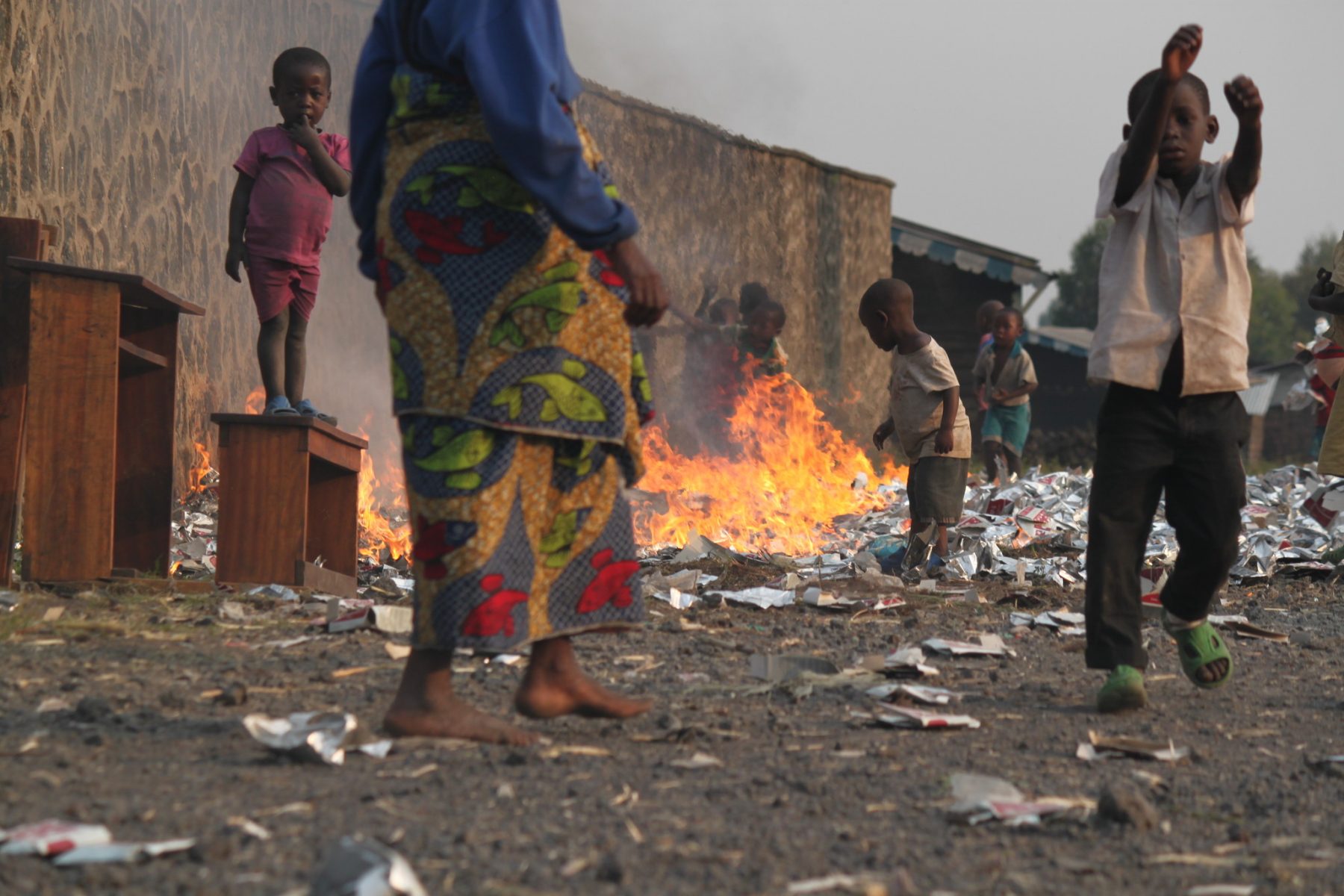 The local community burn their waste in a corner of Kibati camp. School desks have been taken out of the nearby school to make room for people now seeking shelter there. (Eddy Mbuyi/Oxfam, Creative Commons 2.0)
If we want clean water and sanitation (SDG 6), we need to be looking at waste. It’s a key vector of disease, and provides abundant breeding grounds for mosquitoes. Women in particular can benefit hugely from improved waste management, through independent earning opportunities (SDG 5) and protecting their families from sickness caused by open dumping and burning.
Food waste, from farm to fork and post-consumer, needs to be cut dramatically. Redistribution of edible food (SDG 2) from supermarkets, restaurants and homes is an obvious first step and one that is thankfully gaining traction. Waste from the manufacture of food products can be fed to animals, and inedible remains converted into biogas and clean renewable energy (SDG 7).
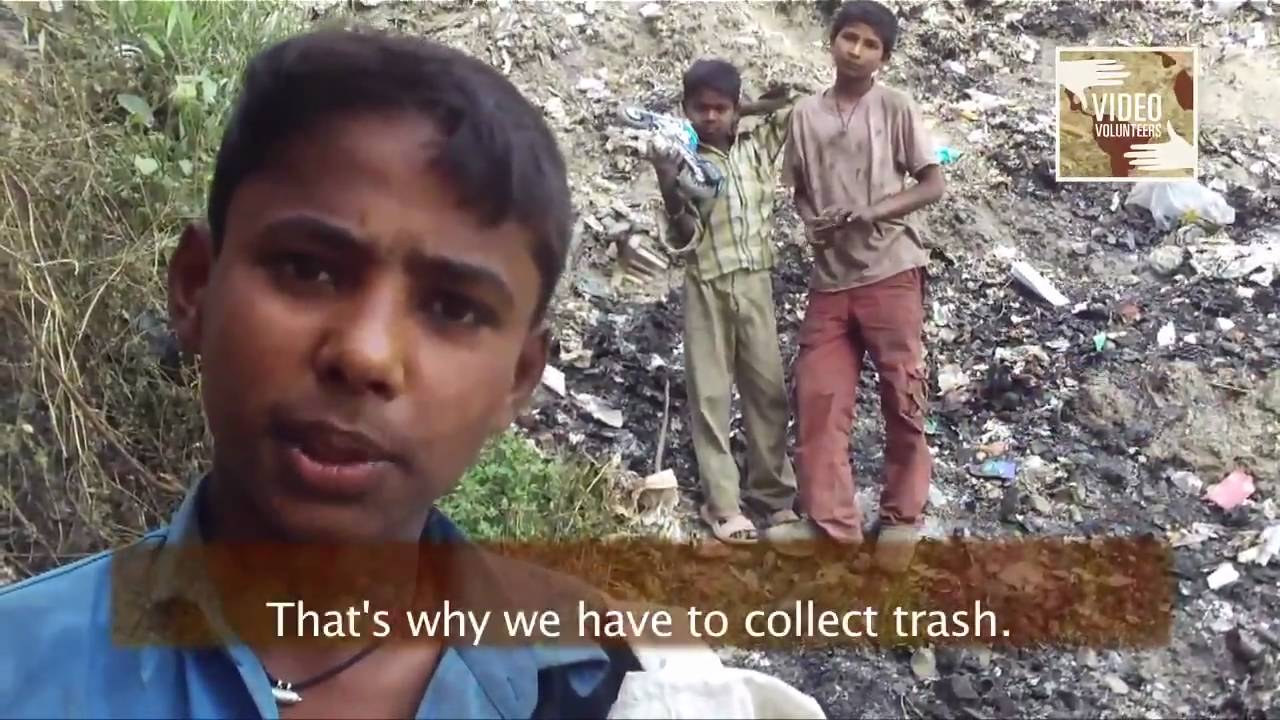 Many children pick recyclable waste from dump sites instead of attending school. Watch the video: India Unheard, Children carry trash not books
SDG 1 aims for No Poverty. 1% of the global urban population make their living from recovering recyclable materials from waste (SDG 8). These informal waste champions provide a valuable and often no-cost service, and it is important that we recognise their role in urban sanitation and resource efficiency (SDG 10). Fair wages and basic employment rights for all waste workers are fundamental to equal, inclusive and sustainable communities.
The rewards of waste management far outweigh the cost. For our communities to prosper as healthy and resilient places to live, governments must urgently invest. Even the poor choose to pay for waste management (or participate in it) when they see its benefits. Producer Responsibility schemes and crucially – fiscal transparency – can help ensure everyone pays their fair share to keep the planet clean (SDG 16).
The formal waste management sector, employing another 20 million globally, is a current hotbed of inspiration and innovation (SDG 9). Attracting millennials, entrepreneurs and industry heavyweights, waste management provides excellent opportunities in science, technology and engineering, humanities, business studies and IT (SDG 4), and is a powerful catalyst for economic growth (SDG 8). The feedstock for an industry based on waste is plentiful.
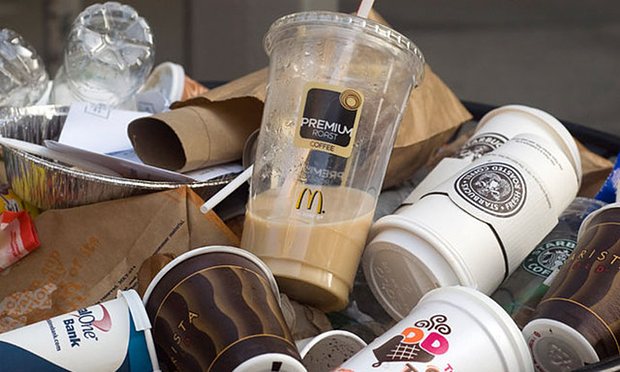 An estimated 3bn coffee paper cups are thrown away in the UK every year, but it was revealed that fewer than one in 400 is recycled. Photograph: Guardian/Alamy
Sustainable waste management provides ideal opportunities to collaborate and work in partnership (SDG 17) – the wealthy and the poor, the formal and informal, communities, business, governments and the international donor community. Indeed, it is only when we work together that the most logical and valuable answers arise. As we have seen, waste crosses so many other aspects of society. Positive outcomes rely on us joining these dots.
In summary, we can achieve the Global Goals – and we’ll do it much more effectively once we recognise waste management as a powerful driver of sustainable development.
How waste management can help achieve the Global Goals
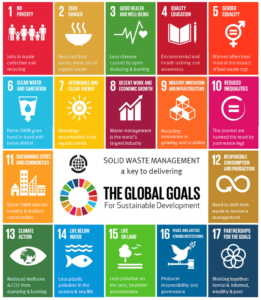
Written by Zoë Lenkiewicz
Further recommended reading:
• Global Waste Management Outlook UNEP/ISWA 2015
• WasteAid Toolkit for waste management in lower- and middle-income countries 2017
News
How one community in The Gambia is changing its relationship with plastic
In Bakoteh, a community in the Greater Banjul Area of The Gambia, plastic waste has long been a serious problem. Home to the largest dumpsite in...
News
Women farmers in Kalaji turn organic waste into opportunity through the S-ORGANIC project
In Kalaji, a group of women farmers is demonstrating how organic waste can become a productive resource — supporting sustainable agriculture, strengthening livelihoods, and...
News
WasteAid and the Turkish Embassy: A New Partnership for Sustainable Change in The Gambia
On 12 May 2026, WasteAid’s Director of Programmes and Project Officer met with Turkish Ambassador F. Turker Oba at the Turkish Embassy in The...
News
WasteAid and Kanifing Municipal Council sign MoU to strengthen long-standing partnership on sustainable waste management
WasteAid and Kanifing Municipal Council have signed a new Memorandum of Understanding (MoU), marking an important milestone in a partnership that has developed over more than a decade. ...
News
Responding to Community Needs: The Commencement of HUBLINK with Halal Waste Group in Uganda
We have a wealth of evidence demonstrating the positive impact of our Wastepreneur programme. A key driver of this success is our proactive approach—identifying and resolving challenges as soon...
News
Strengthening The Gambia’s Circular Economy: Insights from WasteAid’s Stakeholder Engagement
We have huge plans to further strengthen and scale our programmes in the countries we work in, evidenced by our recent expansion of our...