News
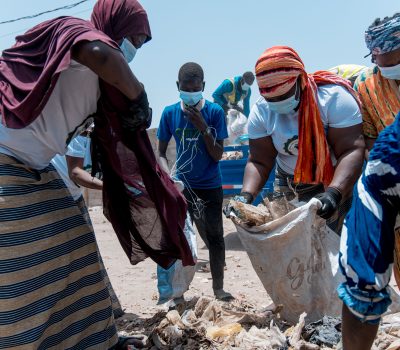
How one community in The Gambia is changing its relationship with plastic
In Bakoteh, a community in the Greater Banjul Area of The Gambia, plastic waste has long been a serious problem. Home to the largest dumpsite in...

Plastic Free July has become a global movement, rallying communities to reduce single‑use plastics. At WasteAid, we are at the frontline of this mission working with some of the world’s most affected communities to create real, lasting solutions.
Far too often, low- and middle-income countries face grave plastic pollution due to limited waste infrastructure. Plastic clogs waterways, contaminates soil, or is burned openly—threatening health, livelihoods, and the environment.
WasteAid addresses this by:
Take, for example, the story of Amie – one of hundreds of waste collectors who have benefited from WasteAid’s programmes. She works hard every day collecting plastic waste from the beach and river in her fishing village, a short drive from Gambia’s capital city, Banjul.
Through her work with WasteAid’s Wastepreneur programme, Amie not only earns enough money to care for her family of 15, but she’s also making a difference in her community as part of a co-operative of waste collectors and inspiring people to responsibly dispose of their waste.
Plastic Free July inspires people to rethink their plastic habits—it’s an ideal moment to spotlight the global ripple effects of our actions. This month, rethink plastic and consider how you – either as an individual or a business – can support our work to turn plastic pollution into opportunity through teamwork, dignity, and long-term community power.
Together, we’re not just reducing plastic—we’re empowering communities to build healthier, more resilient futures.

News
How one community in The Gambia is changing its relationship with plastic
In Bakoteh, a community in the Greater Banjul Area of The Gambia, plastic waste has long been a serious problem. Home to the largest dumpsite in...
News
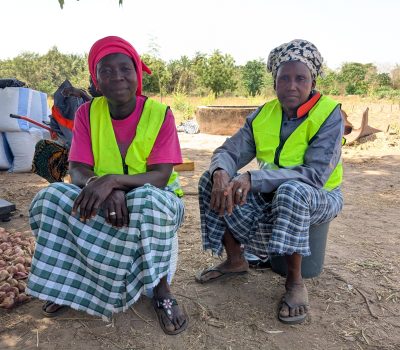
Women farmers in Kalaji turn organic waste into opportunity through the S-ORGANIC project
In Kalaji, a group of women farmers is demonstrating how organic waste can become a productive resource — supporting sustainable agriculture, strengthening livelihoods, and...
News
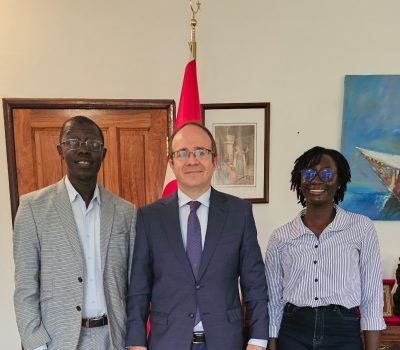
WasteAid and the Turkish Embassy: A New Partnership for Sustainable Change in The Gambia
On 12 May 2026, WasteAid’s Director of Programmes and Project Officer met with Turkish Ambassador F. Turker Oba at the Turkish Embassy in The...
News
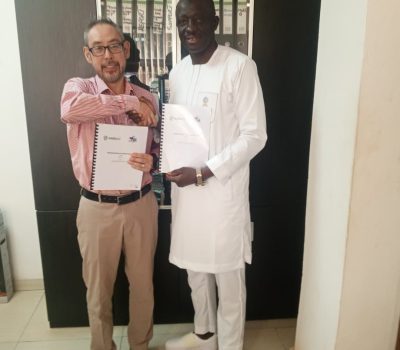
WasteAid and Kanifing Municipal Council sign MoU to strengthen long-standing partnership on sustainable waste management
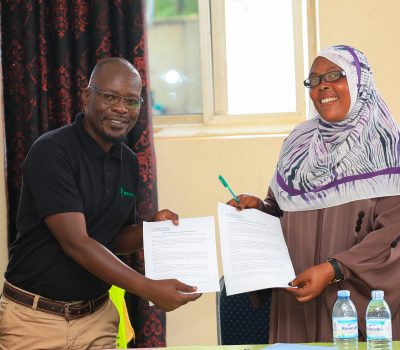
WasteAid and Kanifing Municipal Council have signed a new Memorandum of Understanding (MoU), marking an important milestone in a partnership that has developed over more than a decade. ...
News
Responding to Community Needs: The Commencement of HUBLINK with Halal Waste Group in Uganda
We have a wealth of evidence demonstrating the positive impact of our Wastepreneur programme. A key driver of this success is our proactive approach—identifying and resolving challenges as soon...
News
Strengthening The Gambia’s Circular Economy: Insights from WasteAid’s Stakeholder Engagement
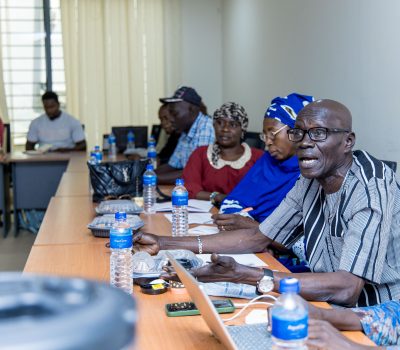
We have huge plans to further strengthen and scale our programmes in the countries we work in, evidenced by our recent expansion of our...
In my personal life, I often find it’s very easy to take waste management for granted. In places with limited infrastructure and funds, delivering waste management services comes with an added layer of complexity, to say the least. I was fortunate enough to spend some time in Banjul, The Gambia last week seeing this dilemma in action.
Last week, from the 9-13th of June, WasteAid tapped into the expertise of the Chartered Institute of Wastes Management (CIWM) to facilitate a technical visit in support of Kanifing Municipal Council’s (KMC) waste management and behaviour change campaign Operation Sanity in Banjul.
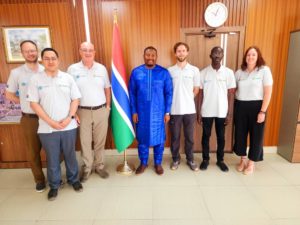
I travelled out to Banjul with Bonni Jee, Sarah Burns, Neil Thompson and John Patterson – four members of CIWM who are incredibly passionate about sharing their knowledge and experience to create a world without waste. In a jam-packed week of site visits, presentations, workshops and networking events, it was inspiring to see the passion that these four delegates showed, and the willingness to “roll up their sleeves” and get the work done.
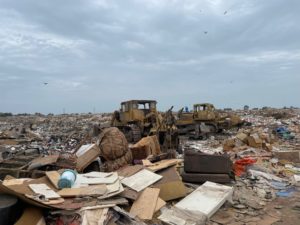
The week started with a site visit to Bakoteh dumpsite, the largest dumpsite in the greater Banjul area. The team from KMC took us for a walking tour of the site, explaining the system(s) in use at the site and some of the challenges they face. To say this visit was humbling would be an understatement. This site receives an estimated 500 tonnes of solid waste per day, brought to the facility by 40 trucks and approximately 400 donkey pulled carts. This is then sorted by several hundred informal waste collectors, often working in very hot, difficult and dangerous conditions.
Seeing the challenge(s) in managing this site was humbling for us all, but also a testament to the resilience and determination of Kanifing Municipal Council and the people of Banjul.
On Tuesday and Wednesday the delegation was hosted by Kanifing Municipal Council for a series of discussions and workshops. The Mayor of Kanifing Municipal Council – Talib Ahmed Bensouda, kindly welcomed the delegation and spoke passionately about the partnership between WasteAid and KMC, as well as expressing his thanks to the members of CIWM for their time.
During these workshops, the team from CIWM presented on behavior change campaigns, standard operating procedures, community engagement, stakeholder mapping and much, much more. It was an exciting two-way exchange of knowledge that both sides gained a lot from. We ran exercises on engaging with communities, mapping out stakeholders and community influencers and using creative communications campaigns to get people thinking, all of which closely related to KMC’s operation sanity.
We also reviewed the operating procedures of KMC’s Environment and Sanitation Unit, suggesting areas for improvement or deeper discussion. We loved bringing together parts of local government that perhaps didn’t get to come together to brainstorm like this very often, and the discussion reflected the desire to collaborate more.
For me, a key takeaway from these sessions was that waste management challenges truly are global challenges, and that we are all on the same journey. Granted some countries may be further along this journey than others, but that’s exactly why creating space for these conversations to take place is so crucial.
On Thursday, we brought together members of the Dennakuwo Circular Economy Network, Kanifing Municipal Council and the CIWM delegates. This event showcased the work of the network, which is supported by funding from CIWM. The energy in the room was electric, and members of the network spoke with passion about their work and the opportunities for collaboration that the network had provided to them. One quote stands out to me in particular – “Your network is your net worth” and I couldn’t agree more. The strong people-to-people connections that we facilitated during this visit helped create the space for some amazing conversations on waste management, innovation, and the sharing of best practice.
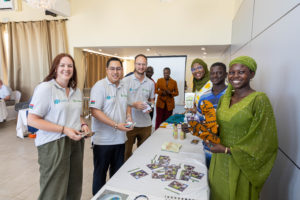
On the last day of the week, we came back together with the team from KMC to review parts of their Zero-Waste Strategy, breaking it down into timelines and actions and fostering discussions on these. This session stuck with me as it highlighted the vision that KMC has for their future – a future where waste is a resource, not a burden. This is what we as WasteAid are passionately trying to do as we support some of the world’s most vulnerable communities to turn waste into an economic ladder out of poverty.
As the week drew to a close, both the visiting delegation and KMC’s staff were left with a lot to think about and a burning desire to do even more. This week wouldn’t have been possible without the support of CIWM, KMC and the amazing individuals involved – so thank you all, and I’m looking forward to seeing the collaboration that’s still to come. To me, this is the start of a journey, not the end.
Watch – updates from The Gambia:
News
How one community in The Gambia is changing its relationship with plastic
In Bakoteh, a community in the Greater Banjul Area of The Gambia, plastic waste has long been a serious problem. Home to the largest dumpsite in...
News
Women farmers in Kalaji turn organic waste into opportunity through the S-ORGANIC project
In Kalaji, a group of women farmers is demonstrating how organic waste can become a productive resource — supporting sustainable agriculture, strengthening livelihoods, and...
News
WasteAid and the Turkish Embassy: A New Partnership for Sustainable Change in The Gambia
On 12 May 2026, WasteAid’s Director of Programmes and Project Officer met with Turkish Ambassador F. Turker Oba at the Turkish Embassy in The...
News
WasteAid and Kanifing Municipal Council sign MoU to strengthen long-standing partnership on sustainable waste management
WasteAid and Kanifing Municipal Council have signed a new Memorandum of Understanding (MoU), marking an important milestone in a partnership that has developed over more than a decade. ...
News
Responding to Community Needs: The Commencement of HUBLINK with Halal Waste Group in Uganda
We have a wealth of evidence demonstrating the positive impact of our Wastepreneur programme. A key driver of this success is our proactive approach—identifying and resolving challenges as soon...
News
Strengthening The Gambia’s Circular Economy: Insights from WasteAid’s Stakeholder Engagement
We have huge plans to further strengthen and scale our programmes in the countries we work in, evidenced by our recent expansion of our...
“Operation Sanity is about more than waste – it’s about dignity, health and opportunity”
A team of waste management experts from the Chartered Institution of Wastes Management (CIWM) have travelled to The Gambia with international development charity WasteAid to support Operation Sanity – a collaborative waste management and circular economy initiative with Kanifing Municipal Council (KMC).
The Operation Sanity initiative is designed to stop littering and the improper disposal of harmful waste, improving public sanitation by educating residents about the importance of clean environments and encouraging them to abide by local bylaws.
The technical support visit is designed to include site assessments, workshops with frontline waste management teams, and strategic planning sessions with the Dennakuwo Circular Economy Network. The visit aims to strengthen local capacity, share practical expertise, and co-develop solutions to some of the region’s most pressing sanitation challenges.
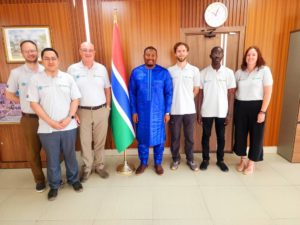
Ceris Turner-Bailes, Chief Executive of WasteAid, said: “This visit marks a significant milestone in our ongoing partnership with CIWM. Operation Sanity is about more than waste – it’s about dignity, health and opportunity. By bringing together technical expertise and local knowledge, we are building a cleaner, safer future for the people of the Greater Banjul Area.”
CIWM’s Chief Executive, Sarah Poulter, added: “At CIWM, we believe in sharing knowledge to create a world beyond waste. Our members are proud to stand alongside WasteAid and KMC, supporting community-led efforts to strengthen sustainable waste systems in The Gambia. This visit demonstrates the power of international collaboration in turning ambition into action.”
Follow WasteAid’s social media channels for updates from the ground throughout the week during this exciting collaborative climate-positive visit.
In 2024 alone, WasteAid’s programmes reached nearly 1.3 million people, diverted over 300,000 kilograms of waste from the environment and delivered more than 7,800 hours of training. WasteAid’s work positively engages communities to improve public health through better waste management.
WasteAid and CIWM aim to scale these successes and contribute to a replicable model for circular economy development in low-resource settings.
News
How one community in The Gambia is changing its relationship with plastic
In Bakoteh, a community in the Greater Banjul Area of The Gambia, plastic waste has long been a serious problem. Home to the largest dumpsite in...
News
Women farmers in Kalaji turn organic waste into opportunity through the S-ORGANIC project
In Kalaji, a group of women farmers is demonstrating how organic waste can become a productive resource — supporting sustainable agriculture, strengthening livelihoods, and...
News
WasteAid and the Turkish Embassy: A New Partnership for Sustainable Change in The Gambia
On 12 May 2026, WasteAid’s Director of Programmes and Project Officer met with Turkish Ambassador F. Turker Oba at the Turkish Embassy in The...
News
WasteAid and Kanifing Municipal Council sign MoU to strengthen long-standing partnership on sustainable waste management
WasteAid and Kanifing Municipal Council have signed a new Memorandum of Understanding (MoU), marking an important milestone in a partnership that has developed over more than a decade. ...
News
Responding to Community Needs: The Commencement of HUBLINK with Halal Waste Group in Uganda
We have a wealth of evidence demonstrating the positive impact of our Wastepreneur programme. A key driver of this success is our proactive approach—identifying and resolving challenges as soon...
News
Strengthening The Gambia’s Circular Economy: Insights from WasteAid’s Stakeholder Engagement
We have huge plans to further strengthen and scale our programmes in the countries we work in, evidenced by our recent expansion of our...
This World Environment Day, WasteAid teamed up with the Mpumalanga Department of Agriculture, Rural Development, Land and Environmental Affairs (DARDLEA) and Thembisile Hani District Municipality to celebrate environmental action in South Africa.
Under the global theme #BeatPlasticPollution, the event called on communities to rethink plastic use and take action to refuse, reduce, reuse, and recycle. The day kicked off with a community clean-up in Delmas and a lively environmental awareness session that brought together waste reclaimers, government officials, traditional leaders, NGOs, and local residents.
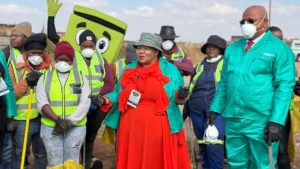
Among the distinguished guests were DARDLEA MEC Ms. Nompumelelo Hlophe, the Acting Executive Mayor of Nkangala District, and the Executive Mayor of Victor Khanye Local Municipality.
Speaking to the crowd, MEC Hlophe gave a powerful call to action:
“No one will do it for us. We must do it ourselves. Let’s declare war on this enemy called plastic pollution.”
She reminded the community that tackling plastic waste starts at home — in our living spaces, schools, clinics, and public areas. She also praised the tireless efforts of Community-Based Organisations, NGOs, informal waste pickers, and the often-unsung heroes of the Zonda Insila Programme (ZIP).
WasteAid and local collectors were proud to receive certificates of appreciation for our partnership with government stakeholders and our commitment to improving waste management in Mpumalanga. We’re honoured by DARDLEA’s recognition and support.
As part of the day, WasteAid ran a hands-on plastics awareness demo — showing which plastics can be recycled and how community members can help reduce dumping and burning. By supporting informal sector waste workers, we can all help keep the environment clean and support local livelihoods.
Together, we can turn the tide on plastic pollution — one piece of waste at a time.
News
How one community in The Gambia is changing its relationship with plastic
In Bakoteh, a community in the Greater Banjul Area of The Gambia, plastic waste has long been a serious problem. Home to the largest dumpsite in...
News
Women farmers in Kalaji turn organic waste into opportunity through the S-ORGANIC project
In Kalaji, a group of women farmers is demonstrating how organic waste can become a productive resource — supporting sustainable agriculture, strengthening livelihoods, and...
News
WasteAid and the Turkish Embassy: A New Partnership for Sustainable Change in The Gambia
On 12 May 2026, WasteAid’s Director of Programmes and Project Officer met with Turkish Ambassador F. Turker Oba at the Turkish Embassy in The...
News
WasteAid and Kanifing Municipal Council sign MoU to strengthen long-standing partnership on sustainable waste management
WasteAid and Kanifing Municipal Council have signed a new Memorandum of Understanding (MoU), marking an important milestone in a partnership that has developed over more than a decade. ...
News
Responding to Community Needs: The Commencement of HUBLINK with Halal Waste Group in Uganda
We have a wealth of evidence demonstrating the positive impact of our Wastepreneur programme. A key driver of this success is our proactive approach—identifying and resolving challenges as soon...
News
Strengthening The Gambia’s Circular Economy: Insights from WasteAid’s Stakeholder Engagement
We have huge plans to further strengthen and scale our programmes in the countries we work in, evidenced by our recent expansion of our...
 At WasteAid, we believe that hands-on training can help build a thriving circular economy. Through the Dennakuwo Circular Economy Network (CEN) and in collaboration with the Chartered Institution of Wastes Management (CIWM), we are empowering entrepreneurs and small businesses to turn waste into opportunity.
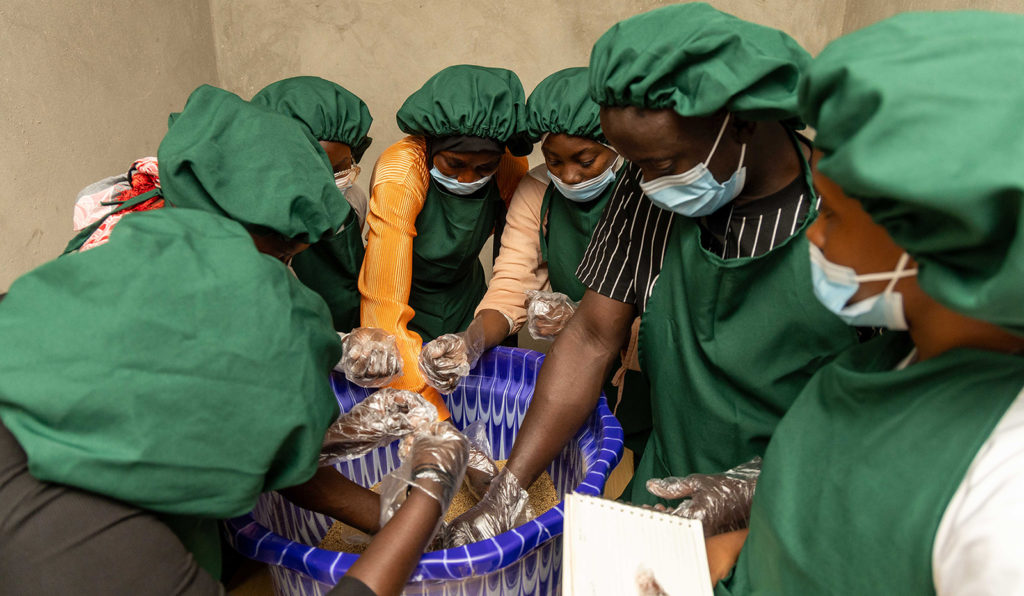
Our commitment to skills development and knowledge-sharing was recently showcased in two dynamic training sessions—one focused on Agribusiness & Food Processing and the other on Sustainable Fashion & Creativity. These hands-on training events, led by experienced members of the Dennakuwo Network, have provided participants with the practical skills necessary to reduce waste, create sustainable products, and grow their businesses. In the Annual Members’ Survey 86% of members reported that they had attended at least one training event, with 50% attending 2 or more, demonstrating the value of training as part of the network’s offers.
In The Gambia, agriculture and food production are vital, yet many local businesses struggle with food waste. To address these challenges, Nature’s Gift, a respected, female-led business, delivered a training session tailored to food entrepreneurs. During this session, 28 business owners, food processors, and aspiring entrepreneurs came together to learn through practical demonstrations that ranged from herbal tea preparation to wheat-based recipes.
Participants explored sustainable techniques aimed at extending the shelf life of local ingredients, reducing spoilage, and unlocking new value chains. They discovered how smart processing methods—such as improved drying and packaging—could not only curb waste but also enhance profitability. As one participant remarked, “This training opened my eyes to new ways of using local ingredients efficiently while reducing waste. I’m now inspired to expand my product line and introduce innovative packaging solutions.” Such feedback underscores the transformative impact of equipping local businesses with the right technical knowledge.
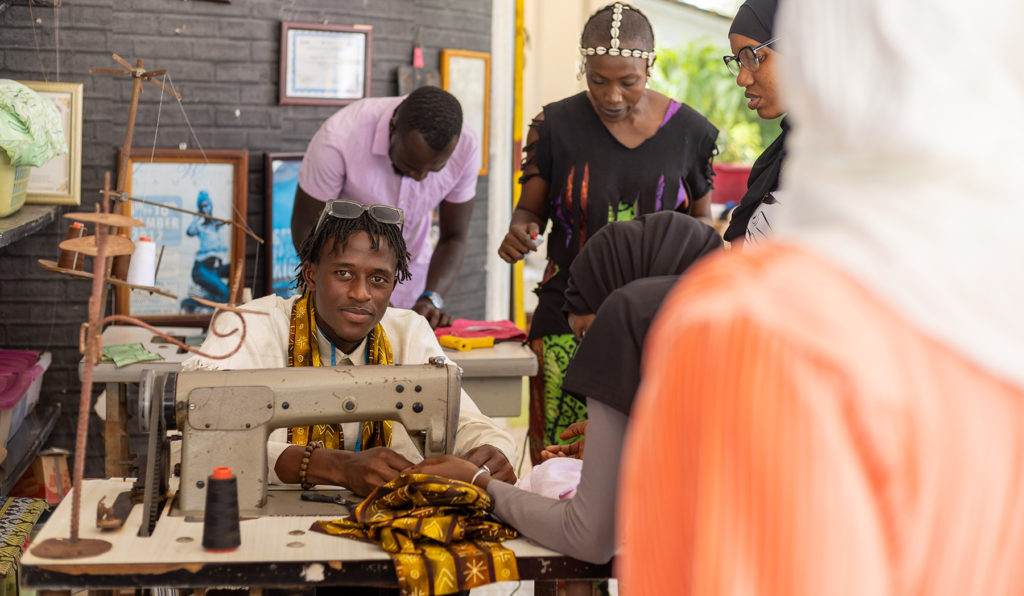
The small but growing fashion industry in The Gambia, like elsewhere, faces the twin challenges of waste and resource inefficiency. By supporting home-grown fashion in The Gambia, WasteAid are helping to end the reliance on imported textiles and secondhand clothes that often end up in landfill.
Yaws Creation, a leading local fashion house, ran a Sustainable Fashion & Creativity Workshop. Over 20 local tailors, designers, and artisans participated in sessions that went beyond traditional lectures. Instead, they engaged in practical upcycling activities, learning to convert fabric scraps and second-hand clothing into stylish apparel and home décor.
Industry experts brought circular economy principles into the creative process, showing how discarded materials could be reborn as unique, market-ready products. Lawal Ronke from Button Up Creations summed up the experience: “This is something completely different and highly welcomed because it involves practical sessions and demonstrations. As someone in the fashion industry, it’s great to attend such an educational and inspiring session.” The workshop not only nurtured innovative design techniques but also highlighted the economic potential of sustainable fashion.
Both training sessions embody our core belief that sustainability and economic growth can go hand in hand. By providing practical, hands-on experiences, we have enabled entrepreneurs to immediately apply new skills in their businesses. The trainings are a clear demonstration of how circular economy practices can reduce waste while building a foundation for long-term economic resilience. They serve as a catalyst for innovation, empowering participants to see waste as a resource and to implement solutions that are both environmentally and financially sustainable.
The momentum behind the Dennakuwo Circular Economy Network is growing, and we invite partners to help us expand its impact. Your support can help build a future where waste is no longer a problem—but a valuable resource.
News
How one community in The Gambia is changing its relationship with plastic
In Bakoteh, a community in the Greater Banjul Area of The Gambia, plastic waste has long been a serious problem. Home to the largest dumpsite in...
News
Women farmers in Kalaji turn organic waste into opportunity through the S-ORGANIC project
In Kalaji, a group of women farmers is demonstrating how organic waste can become a productive resource — supporting sustainable agriculture, strengthening livelihoods, and...
News
WasteAid and the Turkish Embassy: A New Partnership for Sustainable Change in The Gambia
On 12 May 2026, WasteAid’s Director of Programmes and Project Officer met with Turkish Ambassador F. Turker Oba at the Turkish Embassy in The...
News
WasteAid and Kanifing Municipal Council sign MoU to strengthen long-standing partnership on sustainable waste management
WasteAid and Kanifing Municipal Council have signed a new Memorandum of Understanding (MoU), marking an important milestone in a partnership that has developed over more than a decade. ...
News
Responding to Community Needs: The Commencement of HUBLINK with Halal Waste Group in Uganda
We have a wealth of evidence demonstrating the positive impact of our Wastepreneur programme. A key driver of this success is our proactive approach—identifying and resolving challenges as soon...
News
Strengthening The Gambia’s Circular Economy: Insights from WasteAid’s Stakeholder Engagement
We have huge plans to further strengthen and scale our programmes in the countries we work in, evidenced by our recent expansion of our...
WasteAid is proud to announce a new strategic partnership with Veralto, a global leader in essential technology solutions. This collaboration marks a significant milestone in our mission to tackle the global waste crisis and promote circular economy innovation.
Veralto, whose core purpose is Safeguarding the World’s Most Vital Resources™, has generously confirmed a contribution of $300,000 (£237,000) towards the delivery of our First Step Resource Management Programme in 2025 – the funding will predominantly support WasteAid’s work in The Gambia, with some funds also directed to programmes in South Africa.
The partnership will focus on expanding an effective resource management programme in the Greater Banjul Area, The Gambia. The initiative aims to:
A dedicated portion of Veralto’s contribution will also fuel the First Step Resource Management Programme in South Africa, extending the impact of our collaborative efforts in areas where waste management challenges are acute.
“Our partnership with Veralto represents more than just financial support, it embodies a shared commitment to create sustainable, positive change for communities on the front line of the waste crisis,” said Ceris Turner-Bailes, WasteAid CEO. “Together, we will empower local communities to reclaim value from waste, reduce environmental degradation, and improve public health outcomes. This collaboration not only aligns with Veralto’s strategic objectives of advancing environmental solutions and fostering sustainability but also amplifies WasteAid’s longstanding mission to drive circular economy innovation.”
“Every day, the nearly 17,000 associates at Veralto develop technologies and solutions to ensure billions of people around the world have access to clean water, safe food and trusted essential goods,” said Surekha Trivedi, Senior Vice President of Strategy and Sustainability at Veralto. “Our partnership with WasteAid – through the good they do in addressing the global waste crisis and promoting circularity – is a natural extension of our commitment to global sustainability.”
As WasteAid continues to work with governments, municipalities, businesses, and community-based organisations, this partnership comes at a pivotal time. With the launch of the First Step Resource Management Programme in 2025, we will:
This partnership is set to deliver transformative change for the informal waste sector in The Gambia and South Africa, setting the stage for a cleaner, healthier, and more sustainable future.
Together, WasteAid and Veralto are delivering hope and opportunity where it is needed most, empowering communities to transform waste into wealth and championing a cleaner, healthier planet for future generations.
News
How one community in The Gambia is changing its relationship with plastic
In Bakoteh, a community in the Greater Banjul Area of The Gambia, plastic waste has long been a serious problem. Home to the largest dumpsite in...
News
Women farmers in Kalaji turn organic waste into opportunity through the S-ORGANIC project
In Kalaji, a group of women farmers is demonstrating how organic waste can become a productive resource — supporting sustainable agriculture, strengthening livelihoods, and...
News
WasteAid and the Turkish Embassy: A New Partnership for Sustainable Change in The Gambia
On 12 May 2026, WasteAid’s Director of Programmes and Project Officer met with Turkish Ambassador F. Turker Oba at the Turkish Embassy in The...
News
WasteAid and Kanifing Municipal Council sign MoU to strengthen long-standing partnership on sustainable waste management
WasteAid and Kanifing Municipal Council have signed a new Memorandum of Understanding (MoU), marking an important milestone in a partnership that has developed over more than a decade. ...
News
Responding to Community Needs: The Commencement of HUBLINK with Halal Waste Group in Uganda
We have a wealth of evidence demonstrating the positive impact of our Wastepreneur programme. A key driver of this success is our proactive approach—identifying and resolving challenges as soon...
News
Strengthening The Gambia’s Circular Economy: Insights from WasteAid’s Stakeholder Engagement
We have huge plans to further strengthen and scale our programmes in the countries we work in, evidenced by our recent expansion of our...