News
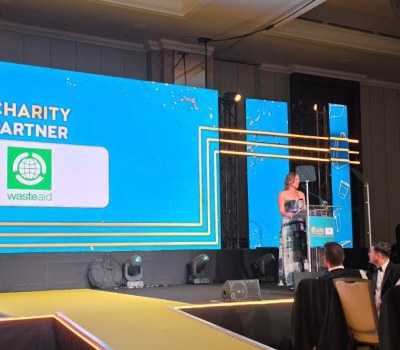
WasteAid joins the Packaging Awards as charity partner of Packaging News
WasteAid is proud to be the charity partner of Packaging News and was delighted to attend the Packaging Awards last Wednesday. The event celebrated...

In South Africa, disadvantaged rural communities face many challenges caused by poverty and a lack of education, skills, and employment opportunities. The country has the second highest youth unemployment rate in the world at 51.5%, while in the Thembisile Hani municipality of Mpumalanga 49.4% of youth are unemployed, with only 11.7% completing secondary school.
Often, collecting and selling waste is the only way people can make a living. However, picking through toxic waste that clogs the streets, waterways and informal dump sites has a multitude of risks, while the lack of business skills and opportunities limits income generation potential.
A new WasteAid initiative backed by the John Lewis Partnership Foundation will see 100 waste collectors and artisans in rural Mpumalanga given the skills and resources they need to improve their income potential.
WasteAid, a UK-based environmental and development charity has been active in South Africa since 2020 and in 2022 undertook a feasibility study to identify opportunities to reduce plastic waste; launching an education and infrastructure programme to improve livelihoods through waste management.
The new project will expand and replicate WasteAid’s approach in two new rural locations in Mpumalanga, supporting predominantly youth waste pickers and artisans through a bespoke training programme that will equip them with business, waste management, personal development, and upcycling skills and provide basic resources needed to increase their livelihood opportunities.
As well as empowering the waste collectors, artisans, and their families, it is anticipated the programme will positively impact around 21,000 members of the community by reducing the amount of dumped and burned waste, which in turn will improve environmental and health outcomes.
WasteAid will also be working with communities and government institutions including The Department of Agriculture, Rural Development, Land And Environmental Affairs (DARDLEA) and The Thembisile Hani District Municipality to provide educational awareness, establish recycling collection and storage points, and identify markets to sell recyclables and upcycled products; providing an enabling environment for waste pickers.
Ceris Turner-Bailes, CEO of WasteAid, said: “Our project aims to help create dignified and safe livelihoods for young people who lack formal employment opportunities and work as informal waste pickers. Through our interventions, waste pickers will have an opportunity to upskill themselves, generate incomes and benefit both their communities and environments by providing alternative options to harmful dumping and burning practices.”
In informal settlements and underserviced rural communities where waste management is limited or non-existent, approximately 84% of people are forced to dump and burn their waste, while the majority of first-step waste recovery is undertaken by the informal sector. An estimated 90,000+ people live a hand-to-mouth existence as waste-pickers in South Africa. However, waste pickers often live and work in dire conditions and do not receive recognition or support for the valuable work they do.
According to WasteAid’s data, waste reclaimers earn an average of only £55 per month with 70% of those living under the lower-bound poverty line. They experience harsh living conditions including homelessness, food insecurity, lack of formal housing and access to basic services (electricity and water). They operate in dangerous conditions such as mismanaged dumpsites; exposing them to toxic chemicals from burning waste and decomposing organic matter, putting their health and lives at risk. They also lack access to finance, resources, and support to help them elevate their position in life.
By investing in education and support for young people we aim to empower and create meaningful livelihood opportunities that contribute to the economic and social development of disadvantaged communities, whilst addressing the global waste crisis.
The project ultimately contributes to the John Lewis Partnership Foundation’s vision of working in partnership for happier people, happier business, and a happier world.
Nicola Waller, John Lewis Partnership Foundation Chair of Trustees, said: “At the John Lewis Partnership Foundation, we’re excited to be supporting WasteAid to empower vulnerable young people employed in the informal waste picking sector in Mpumalanga, South Africa. By providing waste pickers with technical training and entrepreneurial skills, young people will be able to access improved livelihoods, bringing to life our mission of creating a happier world.”

News
WasteAid joins the Packaging Awards as charity partner of Packaging News
WasteAid is proud to be the charity partner of Packaging News and was delighted to attend the Packaging Awards last Wednesday. The event celebrated...
News
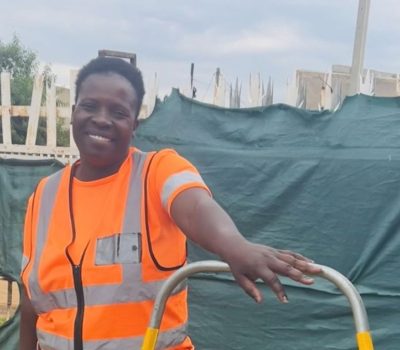
Confidence Machete: From waste to triumph
Confidence was an informal waste picker, working in dangerous conditions without protective equipment or recognition. Through the Wastepreneur Programme, a partnership between WasteAid and...
News
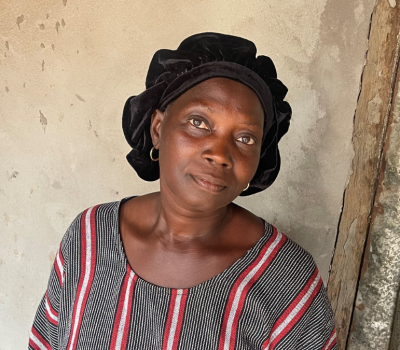
Beyond the Numbers: The Human Impact of WasteAid’s Work
Members of WasteAid’s Gambia team, Lamin Janneh and Jojo Saho, recently investigated what our programmes mean to our individual participants by speaking to members...
News
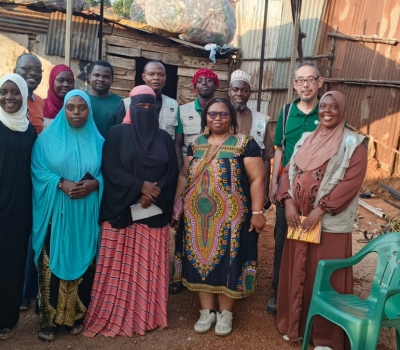
Journey to Uganda: Stories from our projects
Recently, the Programme Management team travelled to Uganda to meet the people at the heart of our waste management programmes, connect with local stakeholders...
News
From E-Waste Skills to Sustainable Enterprise: Cosmo City Participants Take the Next Step
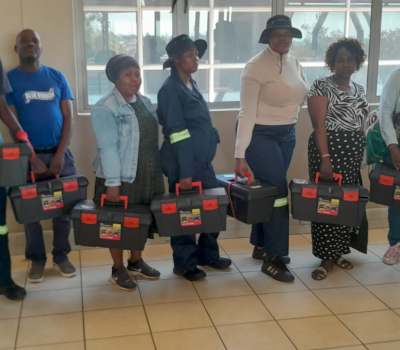
What if a broken laptop, television or other electronic appliance wasn’t waste, but an opportunity to repair, reuse and recycle? For participants in WasteAid’s Waste 2...
News
Lufthansa Group and WasteAid Launch Animation Film
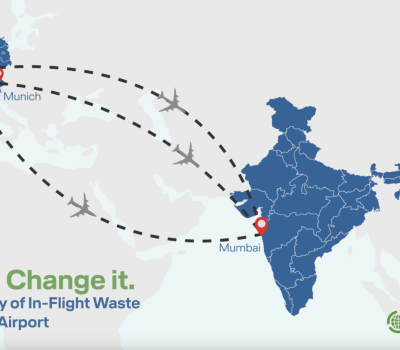
WasteAid and Lufthansa Group have launched a new animated training film designed to help cabin crew improve onboard waste segregation, supporting efforts to increase...
A second initiative to support the development of a formalised approach to waste management in The Gambia has been announced by WasteAid, a UK-based international non-governmental organisation, and the Chartered Institution of Wastes Management (CIWM).
The project, involving senior policymakers and local authority leaders as well as leading entrepreneurs, academics, and community leaders, will see WasteAid and CIWM members share best practices and technical skills. The approach will provide mentoring, technical training, and support to private enterprises and local councils.
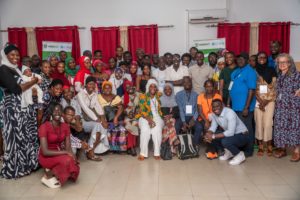
Named by the Gambian project participants as Dennakuwo (which translates as ‘together we can’), it builds on the recently completed and highly successful first phase which established a Circular Economy Network in Greater Banjul. This network was the first of its kind in The Gambia and has brought the issues of circular economy and the need to support local solutions into the spotlight. The second phase of the project will continue to develop the network and deepen ties with CIWM members through knowledge transfer and exchanges on technical issues. This will include support to local authorities through a soon to be established Local Authorities Working Group which will be co-chaired by CIWM and Gambian representatives.
The Circular Economy Network, which now boasts 165 active members, aims to bring together those who can make the circular economy a reality in Banjul. It provides a collaborative forum to explore innovative solutions to local circular economy issues. By providing training and mentoring to members and supporting fledgling green businesses, WasteAid aims to identify and implement practical, circular economy solutions for communities.
Ceris Turner-Bailes, Chief Executive at WasteAid, said: “Our activity in The Gambia is a flagship example of what WasteAid is all about – convening diverse actors to support the transition from linear to circular economies and we are hugely grateful to CIWM for its continued financial and advisory support.
“The first phase of our work in the country enabled us to launch the Circular Economy Network which is already helping to deliver transformative waste initiatives in Greater Banjul. Our partnership with CIWM is helping members of the Circular Economy Network to learn from best practices in the UK and identify steps that they can take to reduce pollution in The Gambia and turn waste into economic opportunities.
“By working together, we are taking a huge step towards a cleaner and healthier future for all in The Gambia. Providing people at all levels of the waste management value chain with training, coaching, and access to targeted funding to deliver innovative and impactful waste management solutions to the people who need help the most.”
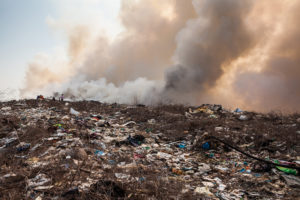
The Gambia is Africa’s smallest mainland country and has very limited waste management capacity often resulting in open dumping and burning of waste. This leads to poor health, economic losses and climate emissions. The challenges have been recognised at both local and national levels as a priority for sustainable development. The Gambia is one of the few countries committed to meeting the Paris Agreement to keep global warming below 1.5C. Alongside reducing climate emissions, the Ministry of Environment is also focused on protecting the country’s natural resources and building resilience to climate shocks such as drought and floods.
CIWM represents and supports over 6,500 individuals and 250 organisations in the resource and waste management sector. It has supported WasteAid’s activity in The Gambia since 2021.
Sarah Poulter, CEO of CIWM, said: “We are proud to have supported WasteAid’s activity in The Gambia since 2021 and are delighted to have the opportunity to expand on the project’s successes so far through this important second phase. There are currently no similar initiatives in the country which makes it even more crucial that we work with people at every level of the waste value chain to help them identify long-term solutions to their waste management challenges.
Resource efficiency is a global social responsibility, and inspiring and enabling action worldwide is a key aspect of CIWM’s strategy. Our purpose is to move the world beyond waste, and the collaboration and innovation facilitated by international initiatives such as the Circular Economy Network in Greater Banjul are vital to achieving this.”
While this project firmly connects key players from within the waste value chain to create an enabling environment so that the circular economy can flourish, WasteAid remains committed to reaching out to some of the poorest and most marginalised to offering training, mentoring, and a small amount of investment to help them improve their income potential. The project with CIWM will offer 25 vulnerable women guidance on turning food waste into compost, creating agri-products and deriving income from these activities.
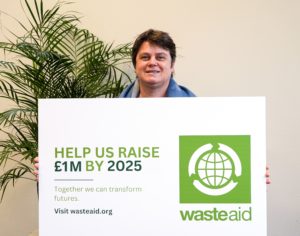
News of the partnership follows the launch of a major fundraising campaign by WasteAid to raise £1 million before its 10th anniversary in 2025. The money raised will be used toward continuing existing projects and expanding the charity’s support to more communities around the globe.
The charity helps communities around the globe who are negatively affected by the global waste crisis to reduce waste pollution. Through its collaborative approach with local authorities, businesses, and community leaders, WasteAid delivers targeted, impactful programmes that support a local circular economy, and provide livelihood opportunities, training and skills for its programme participants, while also investing in locally appropriate infrastructure.
It is committed to supporting the informal sector – which is often among the most marginalised – and showcasing how a circular economy benefits everybody. Its response is always practical, locally appropriate, and focused on delivering lasting sustainable change. WasteAid’s whole-systems approach combines community behaviour change programmes, household collection infrastructure, and supporting collector groups, right through to identifying end-market solutions for waste.
News
WasteAid joins the Packaging Awards as charity partner of Packaging News
WasteAid is proud to be the charity partner of Packaging News and was delighted to attend the Packaging Awards last Wednesday. The event celebrated...
News
Confidence Machete: From waste to triumph
Confidence was an informal waste picker, working in dangerous conditions without protective equipment or recognition. Through the Wastepreneur Programme, a partnership between WasteAid and...
News
Beyond the Numbers: The Human Impact of WasteAid’s Work
Members of WasteAid’s Gambia team, Lamin Janneh and Jojo Saho, recently investigated what our programmes mean to our individual participants by speaking to members...
News
Journey to Uganda: Stories from our projects
Recently, the Programme Management team travelled to Uganda to meet the people at the heart of our waste management programmes, connect with local stakeholders...
News
From E-Waste Skills to Sustainable Enterprise: Cosmo City Participants Take the Next Step
What if a broken laptop, television or other electronic appliance wasn’t waste, but an opportunity to repair, reuse and recycle? For participants in WasteAid’s Waste 2...
News
Lufthansa Group and WasteAid Launch Animation Film
WasteAid and Lufthansa Group have launched a new animated training film designed to help cabin crew improve onboard waste segregation, supporting efforts to increase...
WasteAid, the UK-based environmental and development charity, is aiming to celebrate its 10th anniversary by raising £1 million over the next two years.
The non-profit organisation will mark a decade of reducing the environmental impact of dumped and burned organic, plastic, electronic, and textile waste around the globe in 2025. The campaign will allow it to continue existing programmes and expand its support to even more communities in need.
WasteAid’s work supports communities around the world that are facing some of the greatest challenges caused by the global waste crisis. The charity connects key decision-makers at every level of the waste value chain, from governmental representatives to waste collectors, to find lasting solutions to waste management. By providing technical expertise, training, mentoring, investment, and creating circular economy networks it not only aims to reduce the environmental impact of dumped waste but to also alleviate poverty and reduce the health impact caused by toxins leaking into the water and air.
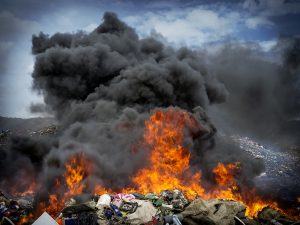 Ceris Turner-Bailes, Chief Executive at WasteAid, said: “There has never been a more urgent need to empower communities around the world to find lasting solutions to the global waste crisis. This isn’t someone else’s problem. It’s something that impacts all of us – dumped and burned plastic, organic and textile waste, as well as electronic items account for more CO2 released into the atmosphere than the aviation industry. That’s why at WasteAid we think globally but work at a local level to deliver lasting solutions.
“As we look towards celebrating a decade of making a difference in 2025, we want to launch an ambitious campaign that will allow us to continue to make positive changes to communities and the environment. This is our largest campaign to date, and we hope that with the help of our supporters, it will be a huge success and allow us to make an even greater difference in the future.”
WasteAid helps some of the most vulnerable communities around the globe to reduce waste pollution. Through its collaborative approach with local authorities, businesses, and community leaders, WasteAid delivers targeted, impactful programmes that support a local circular economy, and provide livelihood opportunities, training and skills for its programme participants, while also investing in locally appropriate infrastructure.
The charity is committed to supporting the informal sector – which is often among the most marginalised – and showcasing how a circular economy benefits everybody. Its response is always practical, locally appropriate, and focused on delivering lasting sustainable change. WasteAid’s whole-systems approach combines community behaviour change programmes, household collection infrastructure, and supporting collector groups, right through to identifying end-market solutions for waste.
Since 2020, more than 1.3 million people have been positively impacted by WasteAid’s work. In the last year alone 228 entrepreneurs have completed their green business incubation training and almost 1,600 people have taken part in circular economy network events, webinars, and campaigns while WasteAid has invested more than £113,800 in waste entrepreneurs’ business initiatives.
The charity has most recently implemented programmes in Cameroon, Egypt, South Africa and The Gambia. Its fundraising efforts will focus on expanding its partnerships with organisations in the UK and internationally to expand its programmes. It already enjoys successful collaborations with organisations including Biffa, Bunzl Plc, Chartered Institution of Wastes Management (CIWM), Norwegian Retailers Environment Fund (NREF), Partners Group and Huhtamaki. WasteAid’s programmes have equally been supported by UK Government and European Union grants. It will also be appealing to individual donors through its participation in the Big Give charity appeal later this month and another high-profile broadcast appeal in the new year.
WasteAid’s circular economy networks deliver long-term solutions to the waste crisis by bringing together key local stakeholders from government, commerce, academia, and the community. They provide a forum to develop a tailored response to local waste and recycling challenges. They also help to develop an integrated approach to a circular economy by providing access to training and support for people at every level of the waste management value chain.
Within these networks, there are opportunities for mentoring of green businesses, support for ‘wastepreneurs’ and fast-tracking local solutions through piloting innovations. These networks are key to ensuring that an inclusive circular economy is on the policy agenda and WasteAid’s programmes provide strong evidence of the positive impact of this approach on people and the planet.
Find out how you can support WasteAid’s campaign here.
News
WasteAid joins the Packaging Awards as charity partner of Packaging News
WasteAid is proud to be the charity partner of Packaging News and was delighted to attend the Packaging Awards last Wednesday. The event celebrated...
News
Confidence Machete: From waste to triumph
Confidence was an informal waste picker, working in dangerous conditions without protective equipment or recognition. Through the Wastepreneur Programme, a partnership between WasteAid and...
News
Beyond the Numbers: The Human Impact of WasteAid’s Work
Members of WasteAid’s Gambia team, Lamin Janneh and Jojo Saho, recently investigated what our programmes mean to our individual participants by speaking to members...
News
Journey to Uganda: Stories from our projects
Recently, the Programme Management team travelled to Uganda to meet the people at the heart of our waste management programmes, connect with local stakeholders...
News
From E-Waste Skills to Sustainable Enterprise: Cosmo City Participants Take the Next Step
What if a broken laptop, television or other electronic appliance wasn’t waste, but an opportunity to repair, reuse and recycle? For participants in WasteAid’s Waste 2...
News
Lufthansa Group and WasteAid Launch Animation Film
WasteAid and Lufthansa Group have launched a new animated training film designed to help cabin crew improve onboard waste segregation, supporting efforts to increase...