News
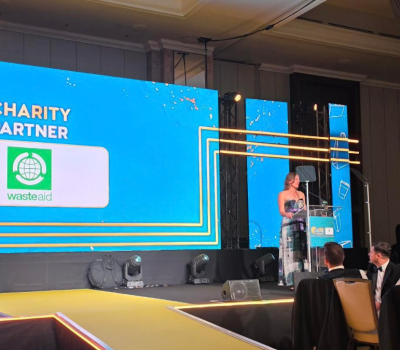
WasteAid joins the Packaging Awards as charity partner of Packaging News
WasteAid is proud to be the charity partner of Packaging News and was delighted to attend the Packaging Awards last Wednesday. The event celebrated...

What if a broken laptop, television or other electronic appliance wasn’t waste, but an opportunity to repair, reuse and recycle?
For participants in WasteAid’s Waste 2 Wealth, Cosmo City E-Wastepreneur programme in Uganda, practical training is helping turn that idea into a potential livelihood.
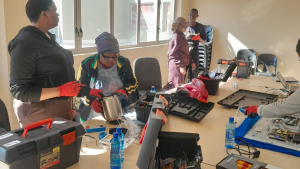
Over recent months, participants have moved from classroom learning into hands-on training in e-waste repair, diagnostics and enterprise development. They have learned how to safely use professional tools, identify faults and assess whether discarded electrical items can be repaired, refurbished or recovered.
For participants, the impact goes beyond learning how to fix appliances. They are developing the technical skills, confidence and problem-solving abilities needed to create sustainable livelihoods within the circular economy. Moreover, it also benefits the communities and environment as it reduces disposal of electronic appliances and enables further use of them.
“Before this training I thought a broken kettle was simply useless, but now I know how to test it and find where the real problem is.” – Boitumelo Khoetha, E-Wastepreneur Participant
Understanding the e-waste sector beyond repairing
In July, 10 participants visited Reclite SA, gaining first-hand experience of how a formal e-waste business operates.
The study tour gave participants a broader understanding of the e-waste value chain, from collection and repair through to recycling and material recovery, as well as the importance of health and safety and effective business management.
Crucially, they were also able to identify potential markets and buyers for recovered materials, helping them see how their own enterprises could connect to the wider circular economy.
“Seeing the systematic processes, safety measures, and how every material has value has completely changed my perspective. I now understand how I can improve my own business.” – Tumo Shivambo, E-Wastepreneur Participant
From training to enterprise
At the end of July, participants completed their practical assessments, marking an important milestone in their training.
But this is not the end of the programme.
Each participant will now receive four individual mentorship sessions, combining technical and business support to help turn their newly developed skills into viable enterprise ideas.
The programme will culminate in a Business Pitching Event in September, where participants will present their ideas and showcase how they plan to turn e-waste into opportunity. Participants will also get the opportunity to access resources, tools and equipment to enable their business growth and application of learned principles.
Through Waste 2 Wealth, WasteAid is helping people move from seeing e-waste as a problem to recognising its potential, while building the skills, knowledge and confidence needed to create livelihoods while keeping valuable materials in use.
From discarded electronics to sustainable enterprise, the next chapter is just beginning.

News
WasteAid joins the Packaging Awards as charity partner of Packaging News
WasteAid is proud to be the charity partner of Packaging News and was delighted to attend the Packaging Awards last Wednesday. The event celebrated...
News
Confidence Machete: From waste to triumph
Confidence was an informal waste picker, working in dangerous conditions without protective equipment or recognition. Through the Wastepreneur Programme, a partnership between WasteAid and...
News
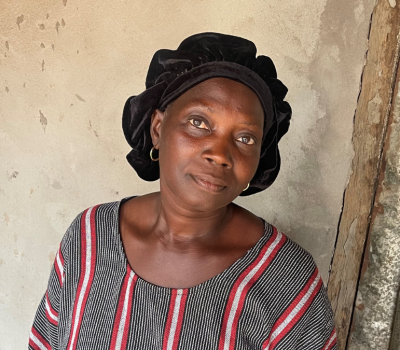
Beyond the Numbers: The Human Impact of WasteAid’s Work
Members of WasteAid’s Gambia team, Lamin Janneh and Jojo Saho, recently investigated what our programmes mean to our individual participants by speaking to members...
News
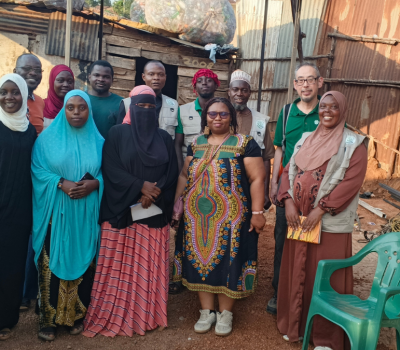
Journey to Uganda: Stories from our projects
Recently, the Programme Management team travelled to Uganda to meet the people at the heart of our waste management programmes, connect with local stakeholders...
News
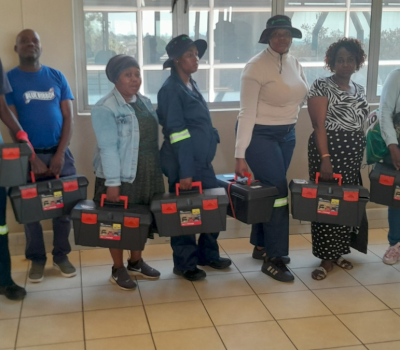
From E-Waste Skills to Sustainable Enterprise: Cosmo City Participants Take the Next Step
What if a broken laptop, television or other electronic appliance wasn’t waste, but an opportunity to repair, reuse and recycle? For participants in WasteAid’s Waste 2...
News
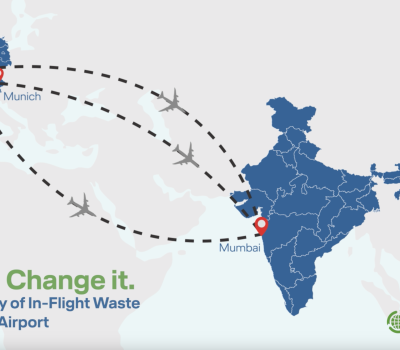
Lufthansa Group and WasteAid Launch Animation Film
WasteAid and Lufthansa Group have launched a new animated training film designed to help cabin crew improve onboard waste segregation, supporting efforts to increase...
In Kawempe, Kampala, a once-neglected wall has become a bold symbol of pride and possibility. Between October and November 2025, WasteAid — under the Bunzl WastePreneur Challenge – Uganda — joined hands with local leaders, youth, and waste entrepreneurs to turn waste education into public art.
The Community Waste Education Mural Initiative used creativity to inspire cleaner habits, recycling, and collective action. What began as a clean-up became a movement — transforming rubbish into colour and community pride.
Art, Awareness, and Action
Led by muralist Ssessanga Alex (Alexx Page), the project started with neighbourhood consultations, where residents shaped the mural’s theme and colours — green for renewal, blue for cleanliness, and yellow for optimism.
Before any paint hit the wall, over 140 volunteers cleared waste from the area.
“We cleaned before the painting began because change must start from the ground up.”
— Arthur, Community Member
Through painting sessions and waste education talks, residents, youth, and wastepreneurs worked side by side, turning the space into a shared classroom and canvas.
“WasteAid and Bunzl came at the right time. Their approach of using art to educate is both creative and impactful.”
— Ashraf Semogerere, LC Official
Colouring a Cleaner Future
Under Alexx Page’s mentorship, four young volunteers learned mural techniques and environmental messaging, leaving behind not only a wall of art but a legacy of learning.
“Every brushstroke came from a story told by residents. We didn’t just paint a mural — we painted a movement.”
— Alexx Page, Artist
The mural — now a local landmark in Kawempe Kuttano — features a weeping globe, recycling arrows, and images of green growth, reminding everyone that waste has value.
“Every time I ride past the mural, I’m reminded that keeping Kampala clean starts with me.”
— Imran Atukunda, Boda Boda Rider
Impact and Inspiration
The mural’s message — “Reduce. Reuse. Recycle. Repeat.” — now echoes through daily life in Kawempe, inspiring residents to keep their neighbourhoods clean and thriving.
A Lasting Legacy
The Kawempe mural stands as more than just colour on concrete — it’s a story of transformation told by the community itself. Through art, WasteAid and Bunzl have helped residents see that waste can be wealth, and that lasting change begins with collective action.
News
WasteAid joins the Packaging Awards as charity partner of Packaging News
WasteAid is proud to be the charity partner of Packaging News and was delighted to attend the Packaging Awards last Wednesday. The event celebrated...
News
Confidence Machete: From waste to triumph
Confidence was an informal waste picker, working in dangerous conditions without protective equipment or recognition. Through the Wastepreneur Programme, a partnership between WasteAid and...
News
Beyond the Numbers: The Human Impact of WasteAid’s Work
Members of WasteAid’s Gambia team, Lamin Janneh and Jojo Saho, recently investigated what our programmes mean to our individual participants by speaking to members...
News
Journey to Uganda: Stories from our projects
Recently, the Programme Management team travelled to Uganda to meet the people at the heart of our waste management programmes, connect with local stakeholders...
News
From E-Waste Skills to Sustainable Enterprise: Cosmo City Participants Take the Next Step
What if a broken laptop, television or other electronic appliance wasn’t waste, but an opportunity to repair, reuse and recycle? For participants in WasteAid’s Waste 2...
News
Lufthansa Group and WasteAid Launch Animation Film
WasteAid and Lufthansa Group have launched a new animated training film designed to help cabin crew improve onboard waste segregation, supporting efforts to increase...