News
Beyond the Numbers: The Human Impact of WasteAid’s Work
Members of WasteAid’s Gambia team, Lamin Janneh and Jojo Saho, recently investigated what our programmes mean to our individual participants by speaking to members...

WasteAid, the UK-based international NGO that shares waste management and recycling skills around the world, has been awarded €100,000 by the Global Climate Change Alliance Plus Initiative (GCCA+), funded by the European Union, to deliver a climate resilient coastal and marine zone project for The Gambia.
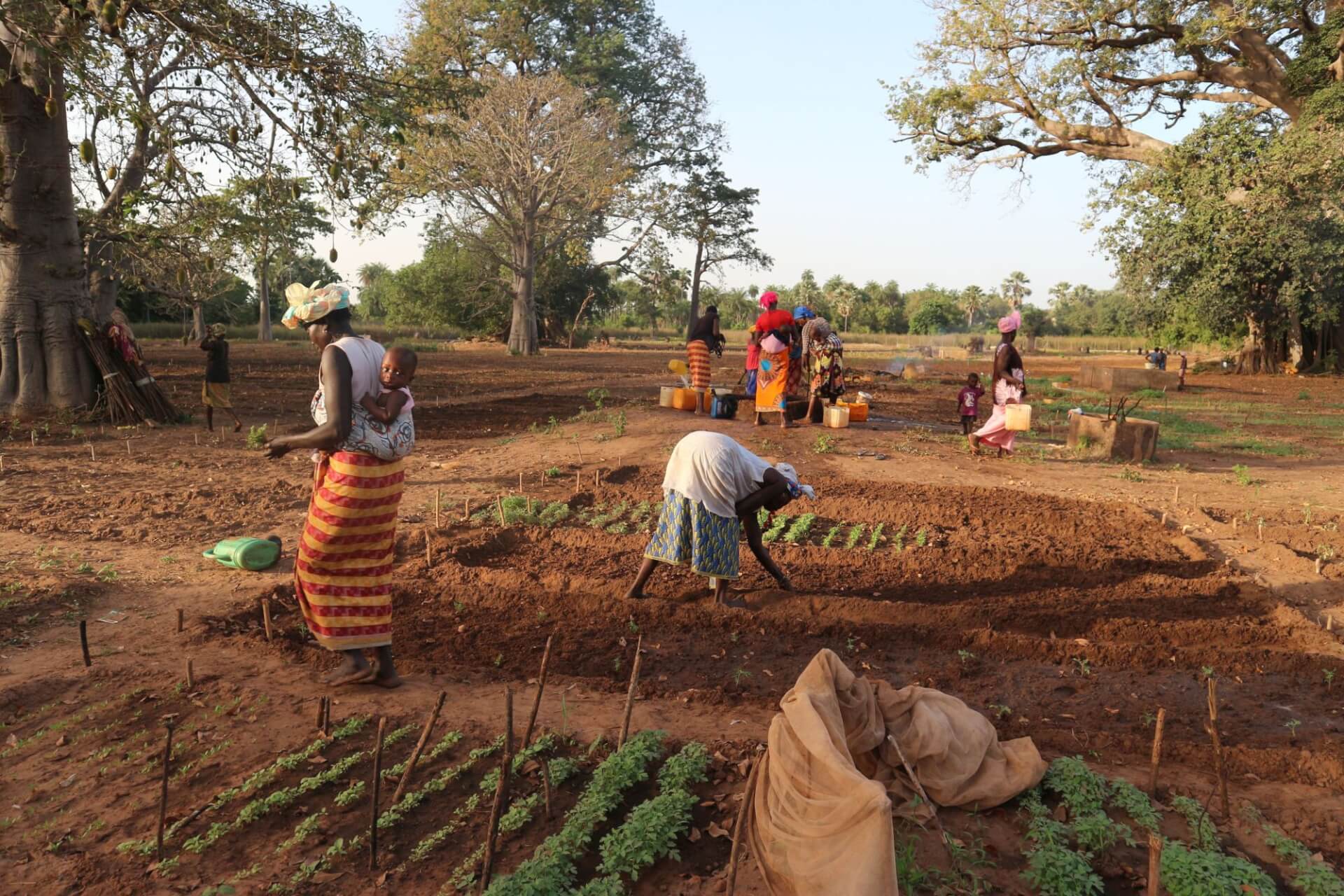
The 12-month project will see WasteAid work in partnership with Kanifing Municipal Council to set up food waste collection from markets and transport the material to women’s gardens. Here, WasteAid’s long-term local partner Women’s Initiative The Gambia, will train the women gardeners to make compost, biochar and charcoal briquettes.
Mayor Bensouda of Kanifing Municipal Council commented: “Creating new pathways for sustainable resource management will accelerate progress towards the UN Sustainable Development Goals. By diverting biodegradable waste from Bakoteh dumpsite and using it to enhance agricultural practices, this project will contribute to a green economy and provide inclusive opportunities, particularly for women.”
Ceris Turner-Bailes, WasteAid CEO, said: “We are delighted to have the opportunity to partner with Kanifing Municipal Council to help recover organic waste and transform it into useful products. This project will contribute to a circular bioeconomy and support livelihoods for women micro-entrepreneurs the greater Banjul area. This exciting project builds on WasteAid’s previous work in The Gambia and will contribute to the country’s green recovery.”
Waste management has become a concern to communities living within the coastal zone. This is compounded by the increasing socio-economic and demographic pressure on the coastal area of the Gambia. As a result, improper waste disposal practices have become a threat to public and environmental health.
Improving waste management is a priority for Kanifing Municipal Council, and in 2019 it rolled out the country’s first household waste collection service. WasteAid undertook the first waste composition analysis in The Gambia in 2015 and since then has delivered projects funded by UK Aid and corporate donors, creating livelihood opportunities in vulnerable communities by recovering the value in waste.
This new project, led by WasteAid with funding from the European Union, will reduce pressure on the main city’s dumpsite by collecting food waste from markets and transferring it to women’s gardens, where community-based organisation and long-time partner of WasteAid, Women’s Initiative The Gambia, will train the gardeners to make compost, biochar and charcoal briquettes.
Angela McDermott, WasteAid Head of Programmes and Impact, added: “This project will raise awareness and understanding among market vendors, residents and women gardeners of the value in biodegradable waste. By making soil amendments and a sustainable cooking fuel, the women gardeners will benefit from improved livelihoods, while protecting climate-vulnerable soils, and reducing pressure on local forests for firewood.”
Composting food waste will return nutrients to the soil and improve water retention, and the production of biochar is an emerging as an impactful approach to carbon sequestration. Charcoal briquettes, made from woody waste including groundnut (peanut) and coconut shells, offer a low-smoke sustainable cooking fuel alternative to timber and charcoal sourced from the fragile Casamance forest.
The project will accelerate progress towards the United Nations Sustainable Development Goals, by creating jobs in the green economy, preserving natural resources, recycling waste and enhancing public health.
Written by Zoë Lenkiewicz
ENDS
 WasteAid is a leading international development organisation on a mission to tackle the global waste crisis. 2 billion people do not have their waste collected and 3 billion lack a decent disposal site, leading to the spread of disease and polluting the air, land, rivers and oceans.
WasteAid works with communities in low-income countries to address the root causes of climate change and marine plastic pollution.
WasteAid shares waste management knowledge and skills with governments and communities in low-income countries; trains people to become self-employed recycling entrepreneurs; and influences decision-makers and the donor community to increase investment in waste management.
Contact:
Rose Bradbury
Senior Fundraising & Communications Officer
WasteAid

News
Beyond the Numbers: The Human Impact of WasteAid’s Work
Members of WasteAid’s Gambia team, Lamin Janneh and Jojo Saho, recently investigated what our programmes mean to our individual participants by speaking to members...
News
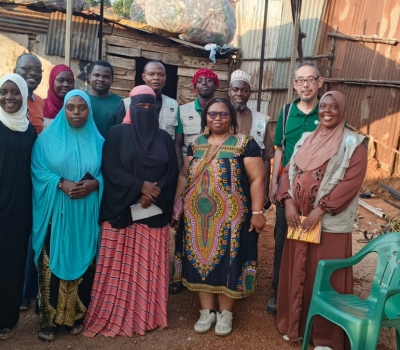
Journey to Uganda: Stories from our projects
Recently, the Programme Management team travelled to Uganda to meet the people at the heart of our waste management programmes, connect with local stakeholders...
News
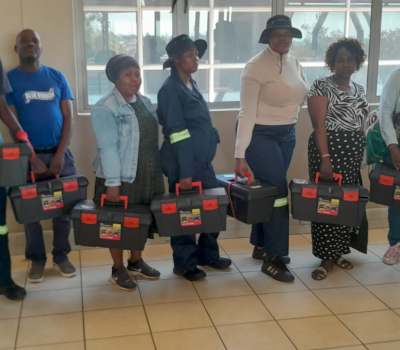
From E-Waste Skills to Sustainable Enterprise: Cosmo City Participants Take the Next Step
What if a broken laptop, television or other electronic appliance wasn’t waste, but an opportunity to repair, reuse and recycle? For participants in WasteAid’s Waste 2...
News
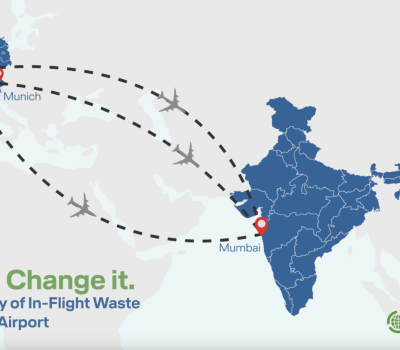
Lufthansa Group and WasteAid Launch Animation Film
WasteAid and Lufthansa Group have launched a new animated training film designed to help cabin crew improve onboard waste segregation, supporting efforts to increase...
News
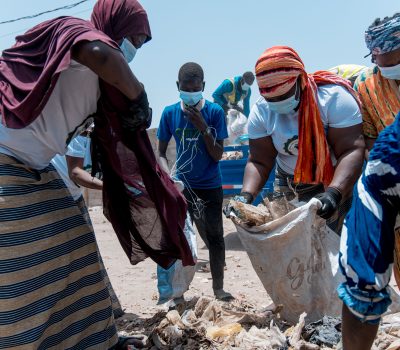
How one community in The Gambia is changing its relationship with plastic
In Bakoteh, a community in the Greater Banjul Area of The Gambia, plastic waste has long been a serious problem. Home to the largest dumpsite in...
News
Women farmers in Kalaji turn organic waste into opportunity through the S-ORGANIC project
In Kalaji, a group of women farmers is demonstrating how organic waste can become a productive resource — supporting sustainable agriculture, strengthening livelihoods, and...
PRESS RELEASE
The specialist international distribution and services group, Bunzl plc is partnering with international NGO WasteAid to create jobs in the collection and recycling of plastic waste in Cameroon.
With Bunzl’s support, WasteAid’s partners will recruit and train 30 young entrepreneurs in the coastal city of Douala to recover value from plastic waste and create long-term employment opportunities in the green economy.
James Pitcher, Head of Sustainability at Bunzl plc said: “The lack of waste collection in Douala is a major cause of environmental concern, with plastic waste blocking drains and filling riverbeds close to the Atlantic coast. WasteAid has been working in Douala to engage young unemployed people in the collection and recycling of plastic waste since 2019, and we are delighted to be building on their positive impact through this 12-month partnership.”
Solid waste management has been identified as one of the major environmental concerns of the city of Douala, and about one third of economically active youth are unemployed. WasteAid will work with existing partner RED-PLAST and new trainees to collect and sort plastic waste from market areas and divert it from waterways and the ocean.
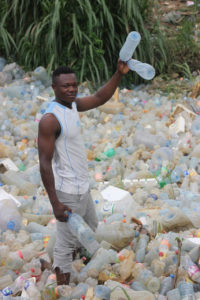
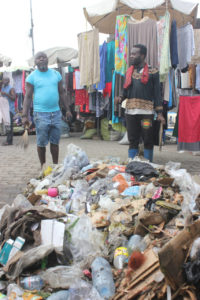
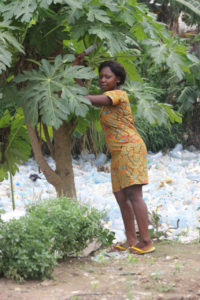
Angela McDermott, WasteAid’s Head of Programmes and Impact said: “The nascent recycling industry in Cameroon can provide dignified jobs and generate much-needed income, while cleaning the environment and preventing pollution. With Bunzl’s support, we are able to develop targeted interventions that provide long-term opportunities for vulnerable young people.”
Plastic waste will be collected from four markets in Douala: Sandaga (Douala I), Congo (Douala II), Maképé and Bépanda (both Douala V). Through partnership working with the local municipality, market managers, stallholders and surrounding businesses, the trainees will collect eight tonnes of plastics including PET, PP, PE and PVC by the end of 2021 and sell the plastics to a network of existing local re-processors, keeping it in the loop.
This initiative will provide a legacy of waste recycling knowledge, skills and employment as well as waste reduction and environmental gains.
The partnership between Bunzl plc and WasteAid builds on their recent joint initiative in Indonesia, helping marginalised communities to increase waste recycling from 10% to 90%.
WasteAid’s Chief Executive, Ceris Turner-Bailes said: “We are grateful to Bunzl plc for supporting another intervention that demonstrates the long-term benefits of sustainable waste management, particularly for communities that suffer from a poor environment and high levels of unemployment. Collecting and preparing plastic waste for recycling creates green jobs and reduces dependence on open dumping and burning, providing important health and economic benefits where they are most needed.”
The 12-month partnership will help deliver a number of the Sustainable Development Goals, including: Decent work and economic growth (SDG 8), Industry, innovation and infrastructure (SDG 9), Sustainable cities and communities (SDG 11), Responsible consumption and production (SDG 12), Climate action (SDG 13), Life below water (SDG 14) and Partnerships for the goals (SDG 17).
If you would like to support WasteAid trainees in combatting plastic pollution before it reaches the sea, please consider a one-off or regular donation.
Written by Zoë Lenkiewicz
ENDS
About WasteAid
About Bunzl plc
Contact:
Rose Bradbury, Senior Fundraising & Communications Officer, WasteAid
News
Beyond the Numbers: The Human Impact of WasteAid’s Work
Members of WasteAid’s Gambia team, Lamin Janneh and Jojo Saho, recently investigated what our programmes mean to our individual participants by speaking to members...
News
Journey to Uganda: Stories from our projects
Recently, the Programme Management team travelled to Uganda to meet the people at the heart of our waste management programmes, connect with local stakeholders...
News
From E-Waste Skills to Sustainable Enterprise: Cosmo City Participants Take the Next Step
What if a broken laptop, television or other electronic appliance wasn’t waste, but an opportunity to repair, reuse and recycle? For participants in WasteAid’s Waste 2...
News
Lufthansa Group and WasteAid Launch Animation Film
WasteAid and Lufthansa Group have launched a new animated training film designed to help cabin crew improve onboard waste segregation, supporting efforts to increase...
News
How one community in The Gambia is changing its relationship with plastic
In Bakoteh, a community in the Greater Banjul Area of The Gambia, plastic waste has long been a serious problem. Home to the largest dumpsite in...
News
Women farmers in Kalaji turn organic waste into opportunity through the S-ORGANIC project
In Kalaji, a group of women farmers is demonstrating how organic waste can become a productive resource — supporting sustainable agriculture, strengthening livelihoods, and...
WasteAid‘s senior technical advisor and head of communications, Zoë Lenkiewicz, says waste and resource management (‘WaRM’) has an important role in building climate resilience in Africa, and with COP26 on the horizon WasteAid is aiming to put it on the agenda.
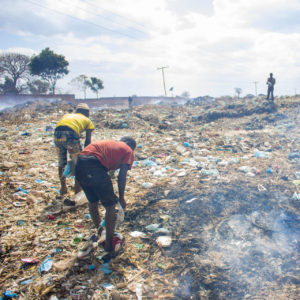 Most climate conversations focus on the trilogy of energy, transport and food. When waste is mentioned, it is usually referencing methane emissions from landfill sites and waste miles. However, the waste intersects with climate change and the key themes of COP26 in some crucial ways.
Waste is a complex challenge with poor data, but you don’t have to look far to see its obvious impacts. In lower-income countries across Africa (and elsewhere), a waste collection service is rare. Recycling industries exist but are often poorly connected and so fail to gain market penetration, and there are many competing priorities on the public purse.
People are generally unaware of the impacts of mismanaged solid waste, and so it remains low on people’s priorities compared to health, food security, clean water and education. It also means that when people burn waste they do so without understanding the risks. In particular, waste collectors dispose of waste without any protection – and are usually among the most vulnerable in society with underlying health risks.
Due to this informal nature of waste management, emissions are impossible to measure accurately. We can make informed guesses on the release of methane, black carbon and other greenhouse gases, but the varying compositions of waste and the various disposal conditions make the true impacts difficult to determine with accuracy (for example, the Global Waste Management Outlook (UNEP/ISWA, 2015) estimates that around 10-15% of global greenhouse gas emissions could be reduced through improved waste management).
Making changes further up the supply chain can bring significant additional climate benefits, through waste avoidance, eco-design, design for disassembly, repair and extended product lifetimes. When avoided emissions from the use of raw materials and waste recovery for other sectors are included, the contribution of waste management to total greenhouse gas mitigation could increase to 15-20% (UNEP/ISWA, 2015).
Africa is not a significant source of climate change emissions. According to the World Resources Institute, Africa’s per capita emissions of CO2 in the year 2000 were 0.8 tonnes compared to the global average of 3.9 tonnes per person.
However, urbanisation and waste generation continue to grow and economic development in countries such as Nigeria, South Africa and Egypt mean projected waste arisings are more akin to European levels.
Whether a country generates a little or a lot, African governments can implement waste and resource management policies to reduce urban pollution and its significant health costs, while creating jobs and reducing climate emissions.
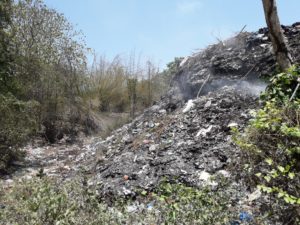
Cleaning up for climate resilience
Africa is already experiencing temperature increases of 0.7% (and rising), and is the continent most vulnerable to the impacts of climate change. Droughts and floods are affecting food production, spreading water-borne diseases and malaria, and causing drastic biodiversity loss.
Many farmers across Africa rely solely on chemical fertilisers that degrade the soil and increase their vulnerability to a changing climate. Recycling of food waste through the production of compost and biochar helps preserve soils, improving water retention and soil microbiology. WasteAid’s recent feasibility study in Malawi concluded that good practice and national standards for compost production would give confidence to the market while protecting soils for future harvests.
Reducing dependence on forests for firewood is essential to global climate stability. The Congo Basin, the second largest tropical rainforest in the world, is being lost at a rate of 40,000 square kilometres a year (around 0.6% of the remaining forest cover on earth).
The threats posed by the continuous consumption of fossil fuels and timber, and the inefficient use and disposal of biomass, can again be reduced through better resource management. Charcoal briquettes made from woody waste such as coconut shell (see the WasteAid Toolkit for information) is one of the few proven, cost-effective, and available technologies that can decrease CO2, NOx and SO2 emissions.
In the city of Kinshasa in the Democratic Republic of the Congo, WasteAid has undertaken a needs assessment among informal waste workers. Here, plastic bottles and organic waste are causing the main challenges, with weak markets and a lack of enforcement making open dumping and burning the norm.
The Congo River snakes towards the Atlantic Ocean, and by the time it reaches the coast is full to the brim with plastic waste that nobody can afford to manage. Monsoon rains cannot flow like they used to, making flash floods and associated increases in malaria and cholera commonplace.
Meanwhile at the Cameroon Estuary, WasteAid’s UK Aid Match programme has now seen the recruitment of 112 apprentices who will be trained and offered long-term employment opportunities in the nascent plastics recycling sector.
Over the next 18 months, the team is expecting to recover more than 16 tonnes of plastic from its alternative fate of being burned or reaching the ocean, and thanks to a corporate partnership this positive impact is set to grow.
Collaborate for the climate
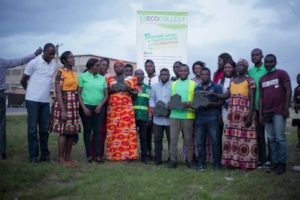
In lower-income countries, the social, economic and climate benefits of sustainable waste and resource management are sizeable, and to make the most of these through Nationally Determined Contributions (NDCs) will require the cooperation of the public, private and community sectors.
To support this type of cross-sector collaboration, WasteAid is running a multi-city circular economy network to identify opportunities for inclusive green growth, culminating in an innovation competition with prizes of up to 10,000 Euros of seed funding for the winners.
The network is encouraging collaboration and partnerships between producers, re-processors and grassroots innovators in Johannesburg, Ho Chi Minh and Guwahati through citywide and online activities (see circulareconomynetwork.co). WasteAid’s team is keen to expand this approach to other countries in the coming years.
An optimised circular economy in Africa will keep things local to reduce transport costs and emissions, and be designed according to the local context. Waste streams in lower-income countries have a higher proportion of wet waste, and a lower per capita generation. Technology is often prohibitively expensive, while unemployment rates among young and growing populations are high. The potential for waste management to bring about positive social, environmental and economic change is huge.
As governments in lower-income countries look to waste management as a pillar of climate resilience, it’s important that organisations like WasteAid are there to give impartial support and to offer solutions that prioritise the most vulnerable people. By working in partnership, we can help deliver waste and resource management systems that improve livelihoods and create a cleaner, cooler world for us all.
While planned programmes have been affected by the events of 2020, the importance of WasteAid’s corporate partnerships has grown. WasteAid is welcoming new partners to help grow its impact, and to help make a circular economy work for people everywhere.
This was first published in Circular.
News
Beyond the Numbers: The Human Impact of WasteAid’s Work
Members of WasteAid’s Gambia team, Lamin Janneh and Jojo Saho, recently investigated what our programmes mean to our individual participants by speaking to members...
News
Journey to Uganda: Stories from our projects
Recently, the Programme Management team travelled to Uganda to meet the people at the heart of our waste management programmes, connect with local stakeholders...
News
From E-Waste Skills to Sustainable Enterprise: Cosmo City Participants Take the Next Step
What if a broken laptop, television or other electronic appliance wasn’t waste, but an opportunity to repair, reuse and recycle? For participants in WasteAid’s Waste 2...
News
Lufthansa Group and WasteAid Launch Animation Film
WasteAid and Lufthansa Group have launched a new animated training film designed to help cabin crew improve onboard waste segregation, supporting efforts to increase...
News
How one community in The Gambia is changing its relationship with plastic
In Bakoteh, a community in the Greater Banjul Area of The Gambia, plastic waste has long been a serious problem. Home to the largest dumpsite in...
News
Women farmers in Kalaji turn organic waste into opportunity through the S-ORGANIC project
In Kalaji, a group of women farmers is demonstrating how organic waste can become a productive resource — supporting sustainable agriculture, strengthening livelihoods, and...
The island of Bali at the eastern fringe of Indonesia has long been considered a “paradise island”, but lately, locals have noticed its natural beauty eroding beneath an endless wave of plastic waste. Findings from The Bali Partnership show that just 48 per cent of waste from the Indonesian island is disposed of through recycling or landfill, while 33,000 tonnes of plastic waste ends up in the ocean each year.
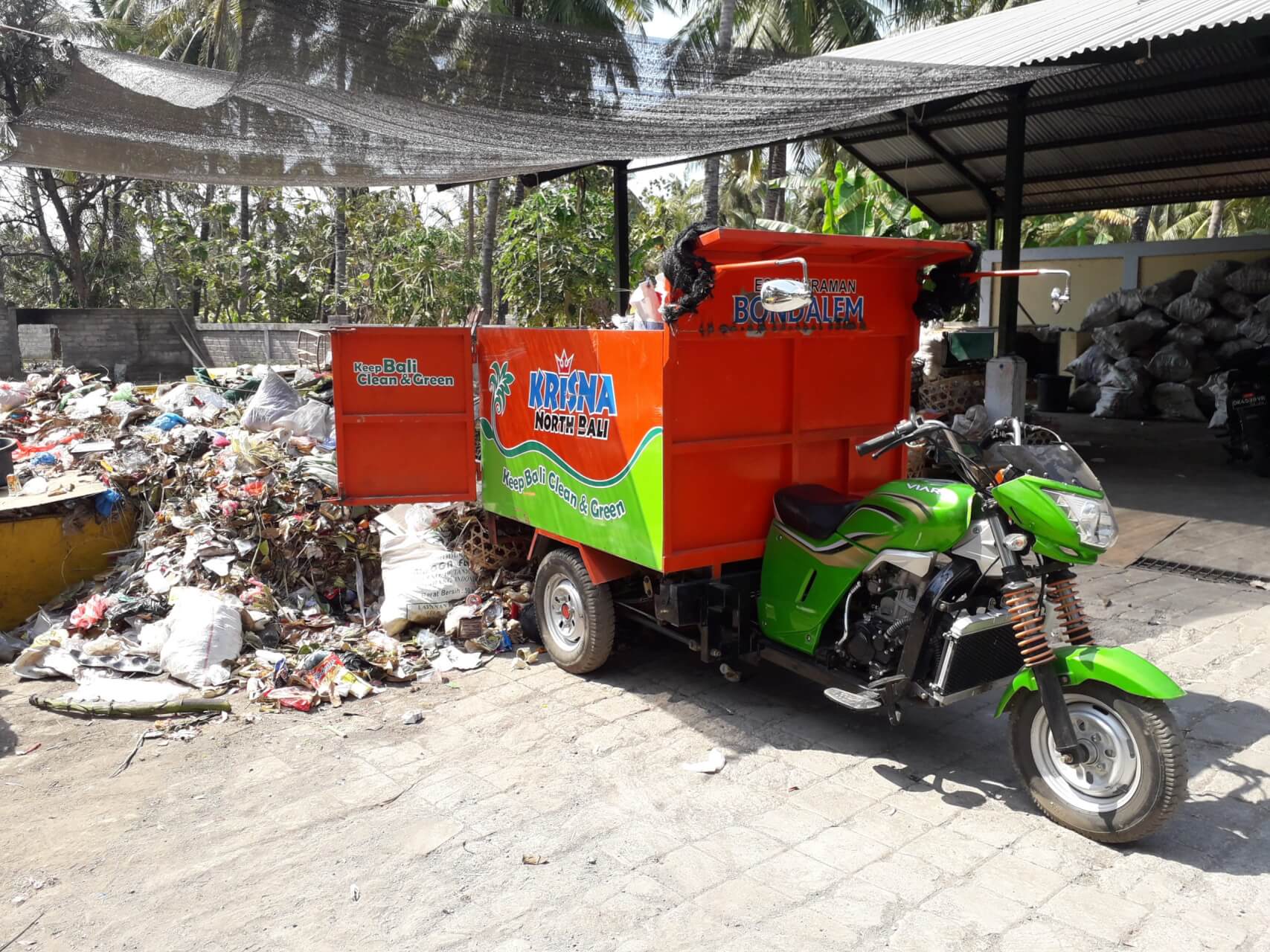
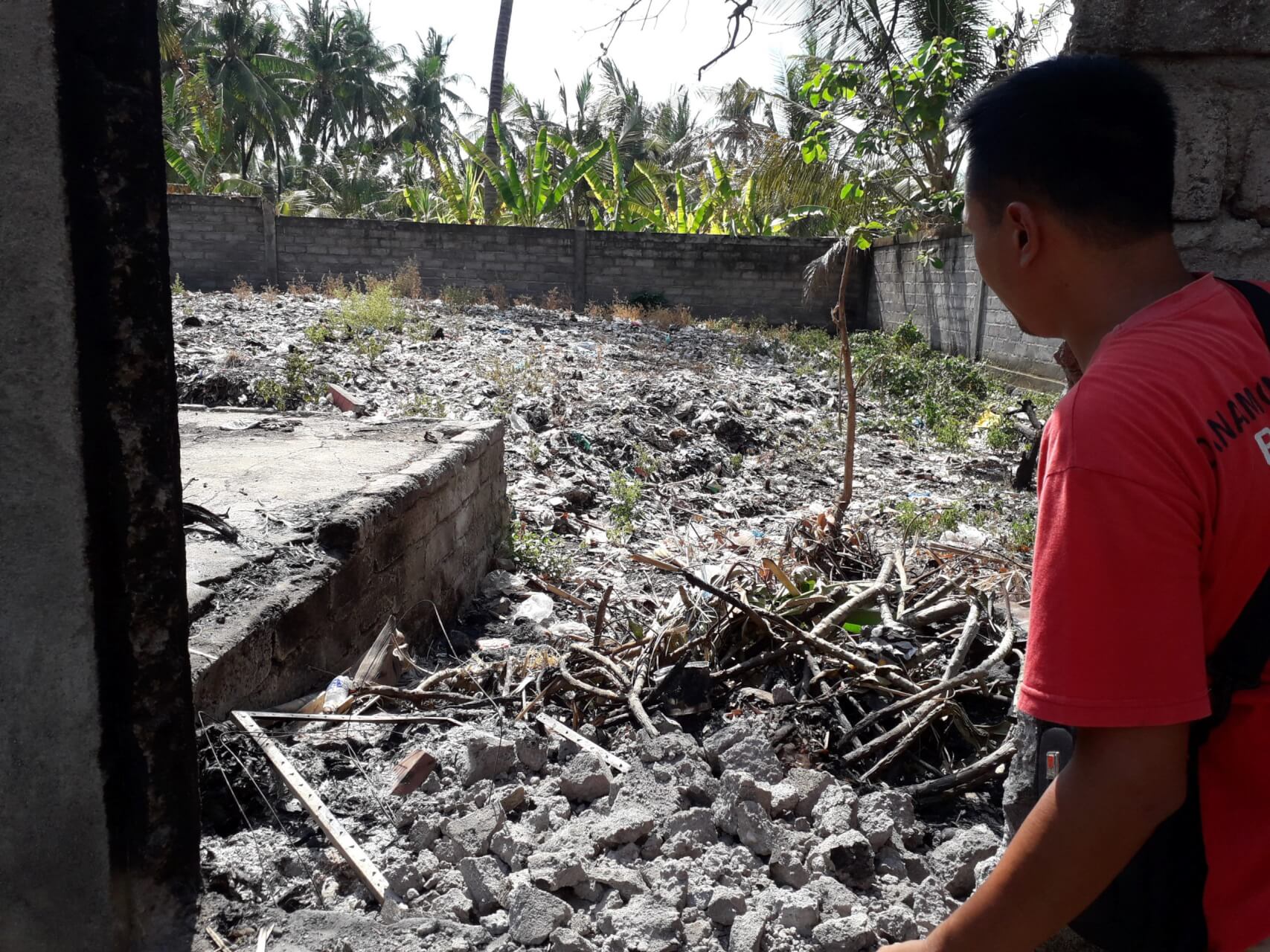
In 2018, WasteAid forged a partnership with R.O.L.E. Foundation (River, Ocean, Land, and Ecology) to share skills and know-how in managing plastic waste safely. The Zero Waste to Oceans Community Environment & Skills Centre in Bali is close to the south-eastern beach of Nusa Dua, which is lined with hotels, spas and luxury resorts. Much of the waste generated from these hotels, along with mixed waste from residential and business zones, currently ends up smouldering in informal dumpsites or in drainage ditches making its way to the coast.
Crucially, R.O.L.E. Foundation is also home to Bali WISE, a programme for empowering marginalised women through skills education, as a means to develop sustainable communities in Indonesia.
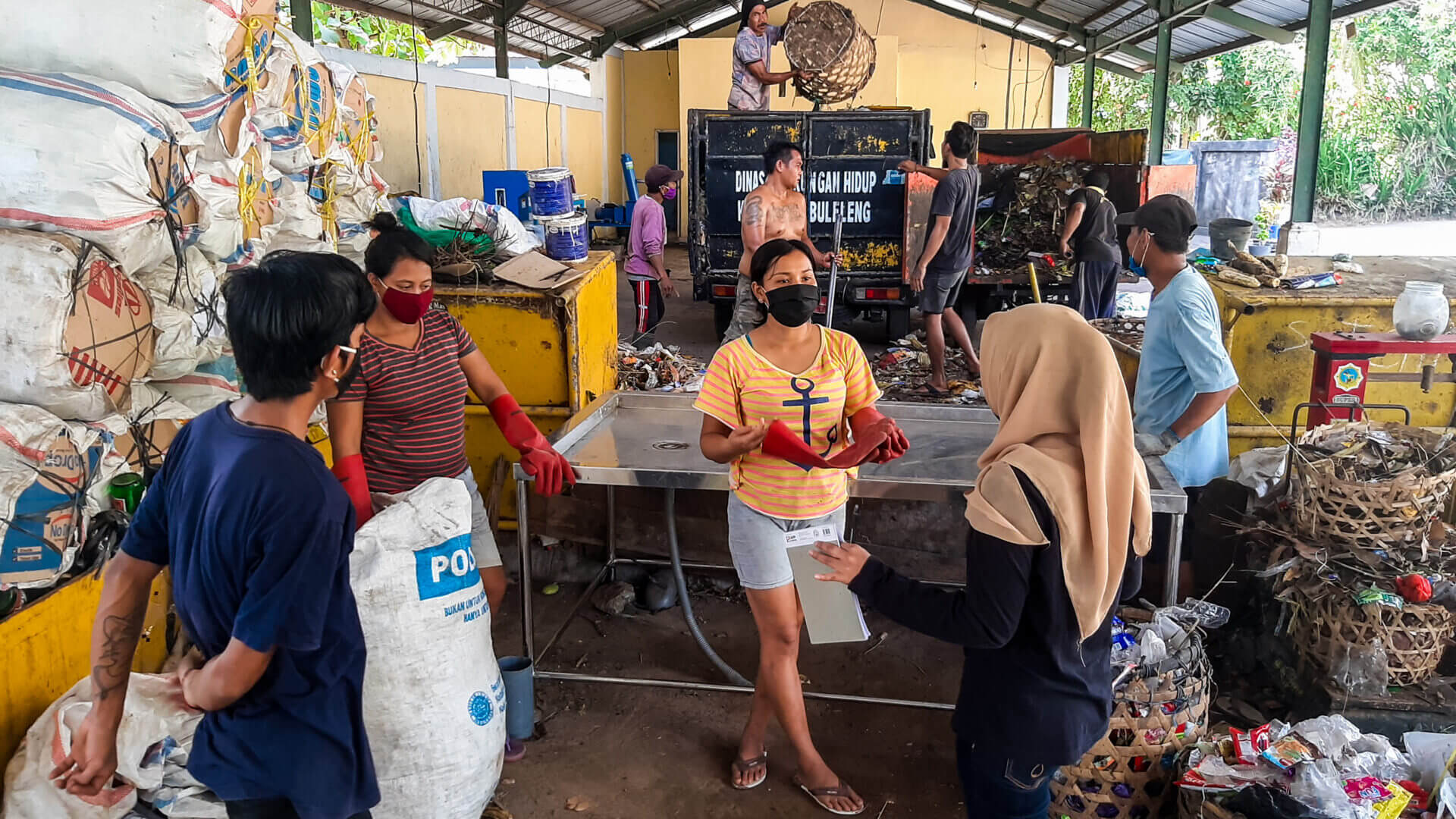
Meanwhile, on the more remote northern coast of Bali, local environmental champions are working towards the development of an eco-village. Through daily beach litter picks and a basic waste sorting centre, they have managed to establish a rudimentary system to keep waste out of the ocean, but with little funding or specialist skills, progress is slow.
Kadek Ada Maja, project manager of the Bondalem Eco Village Community Group said, “Plastic waste is the biggest problem. A river runs between Tejakula and Bondalem villages, and it is full of plastic. Culturally it is difficult to educate other communities about their plastic waste, so the focus is on ocean plastic. Plastic waste was blocking the street. Local people were angry, thinking that a waste facility was not important. There is so much waste at the facility but without it the waste is everywhere. Education is the most important thing.”
Launching a partnership
In September 2019, when Bunzl plc. approached WasteAid to help prevent ocean plastic pollution, the partners in Bali were recommended based on their potential to make instant strides towards sustainable waste management, and to empower people in poverty to generate sustainable income from recycling activities.
With Bunzl’s support, local leaders in Nusa Dua and Bondalem have been able to improve the condition of their plastic collection and sorting infrastructure, and start preparing plastics for either export to Java for recycling, or to be converted into useful products for the local market.
Objective: Prevent plastic pollution through sustainable livelihoods in waste management and recycling
Project goals:
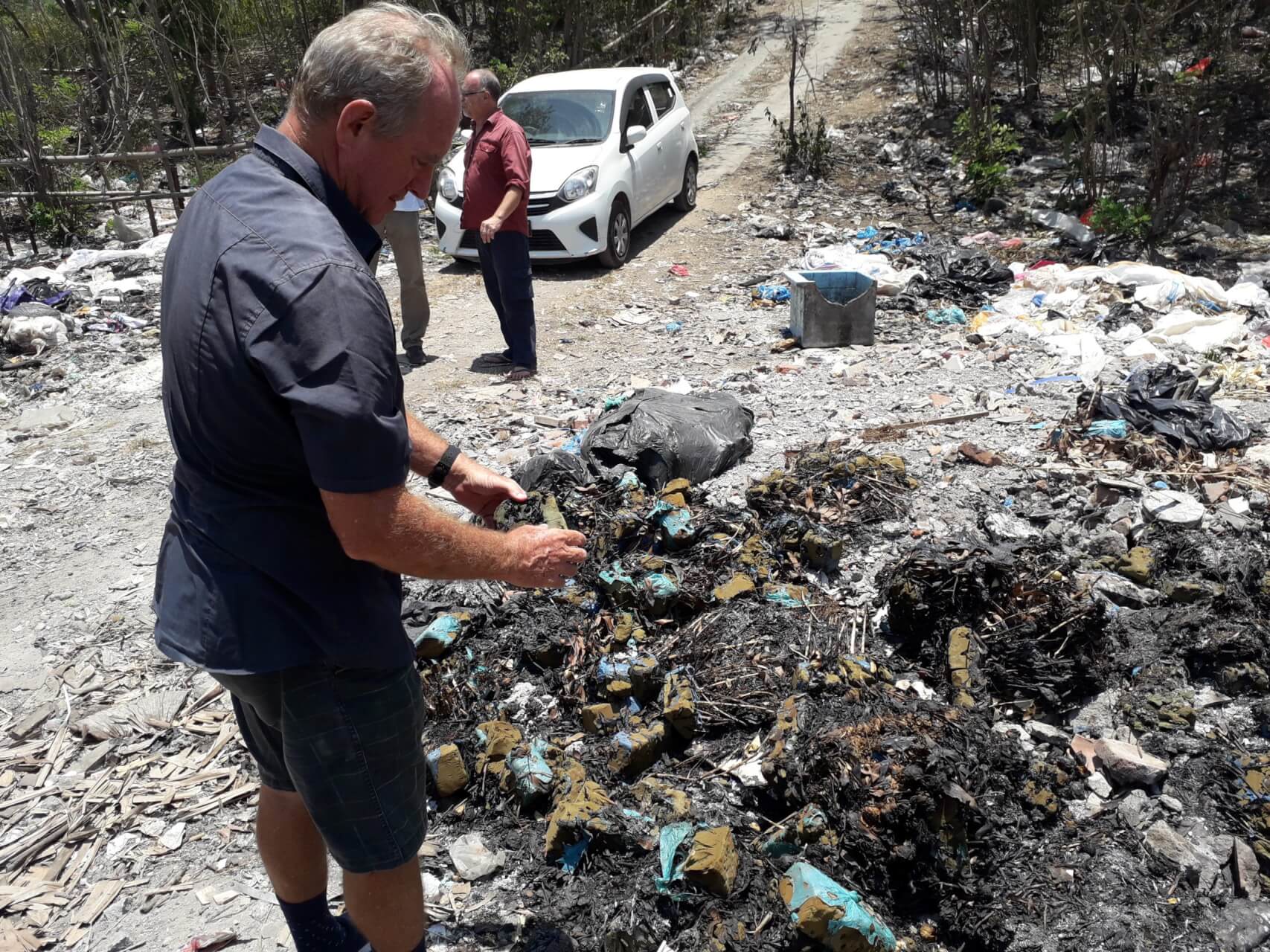
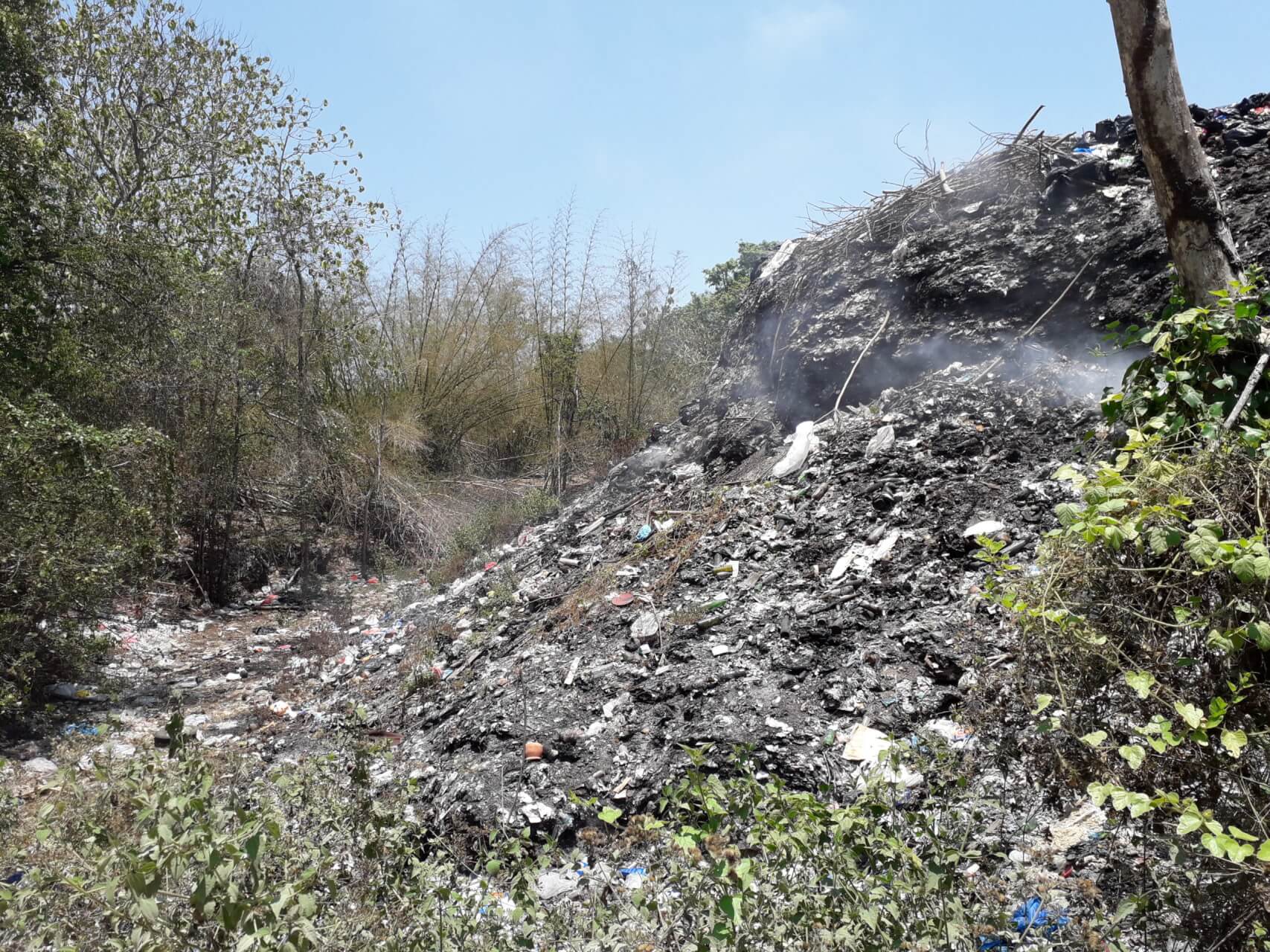
Sense of urgency: In 2018, Mike O’Leary, Founder of R.O.L.E. Foundation took WasteAid to visit the dumpsite in Nusa Dua. Waste from major hotel chains, including Moët bottles and oasis from flower arrangements, is dumped and burned here, polluting the beautiful island of Bali for current and future generations.
The Bali partners have put together a programme with local hotels and resorts to involve their guests in zero waste activities, which will start when the borders open and tourism starts to recover. The training curriculum in English and Bahasa Indonesia is also complete, and will be rolled out to Bali WISE recruits post-COVID.
Bunzl’s donation was in place just as the Covid lockdown began, and it seemed that the projects would go on hold. However, the positive effect of the situation coinciding with Bunzl’s funding was that our project managers had funds available during a quiet time, which enabled them to give their teams an excellent grounding before they start work in earnest when tourism resumes.
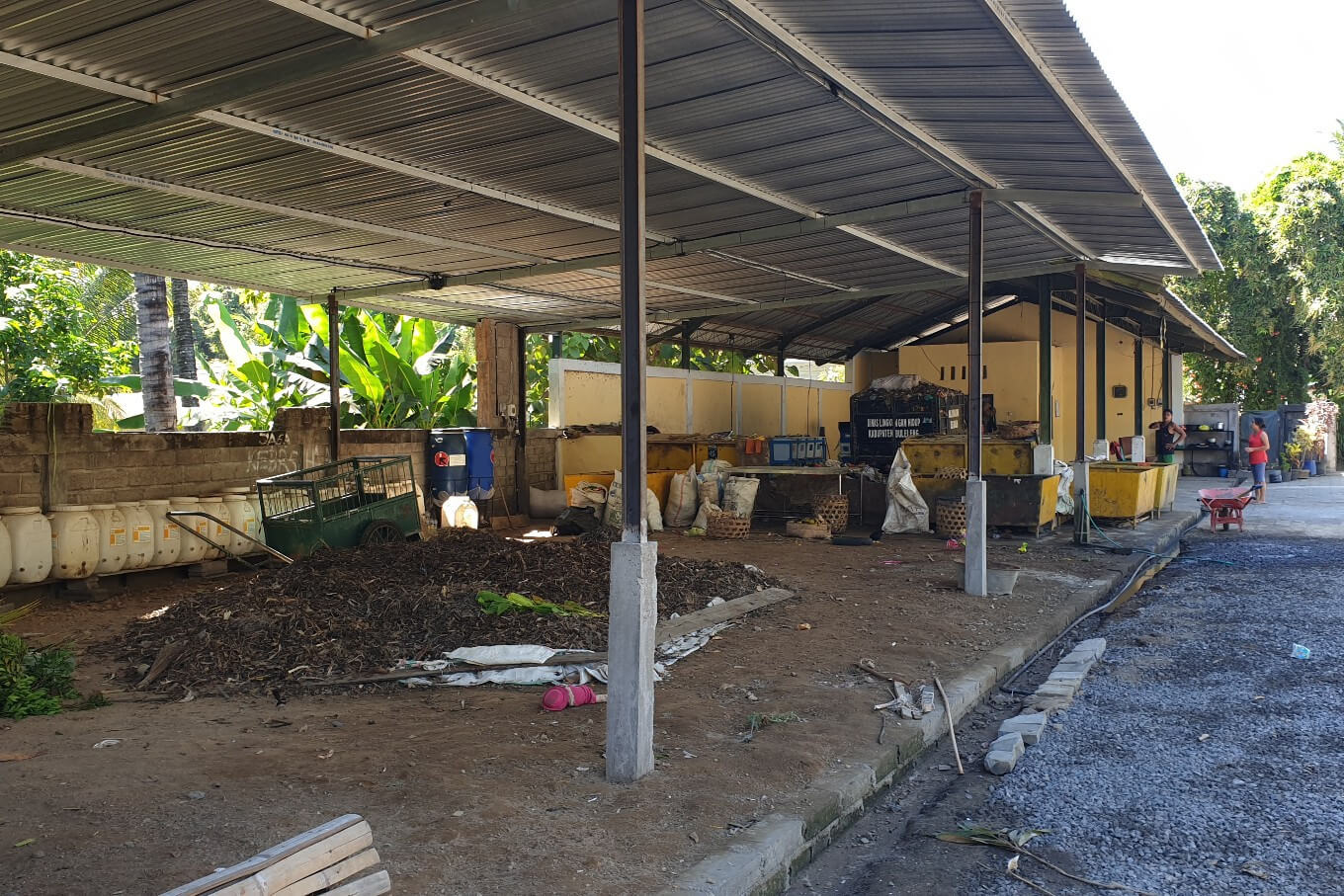
For example, Bunzl’s support has significantly improved conditions for people handling waste, including roofing structures and sorting tables. A glass crusher and plastics shredder have been bought and the teams will soon be trialing the conversion of some low-grade flexible plastics into paving tiles and other useful products. In addition, Bunzl is also supplying PPE for the teams to enable them to carry out their work in the safest possible conditions. The equipment is being supplied to the teams’ specifications, including overalls, gloves, boots and facemasks.
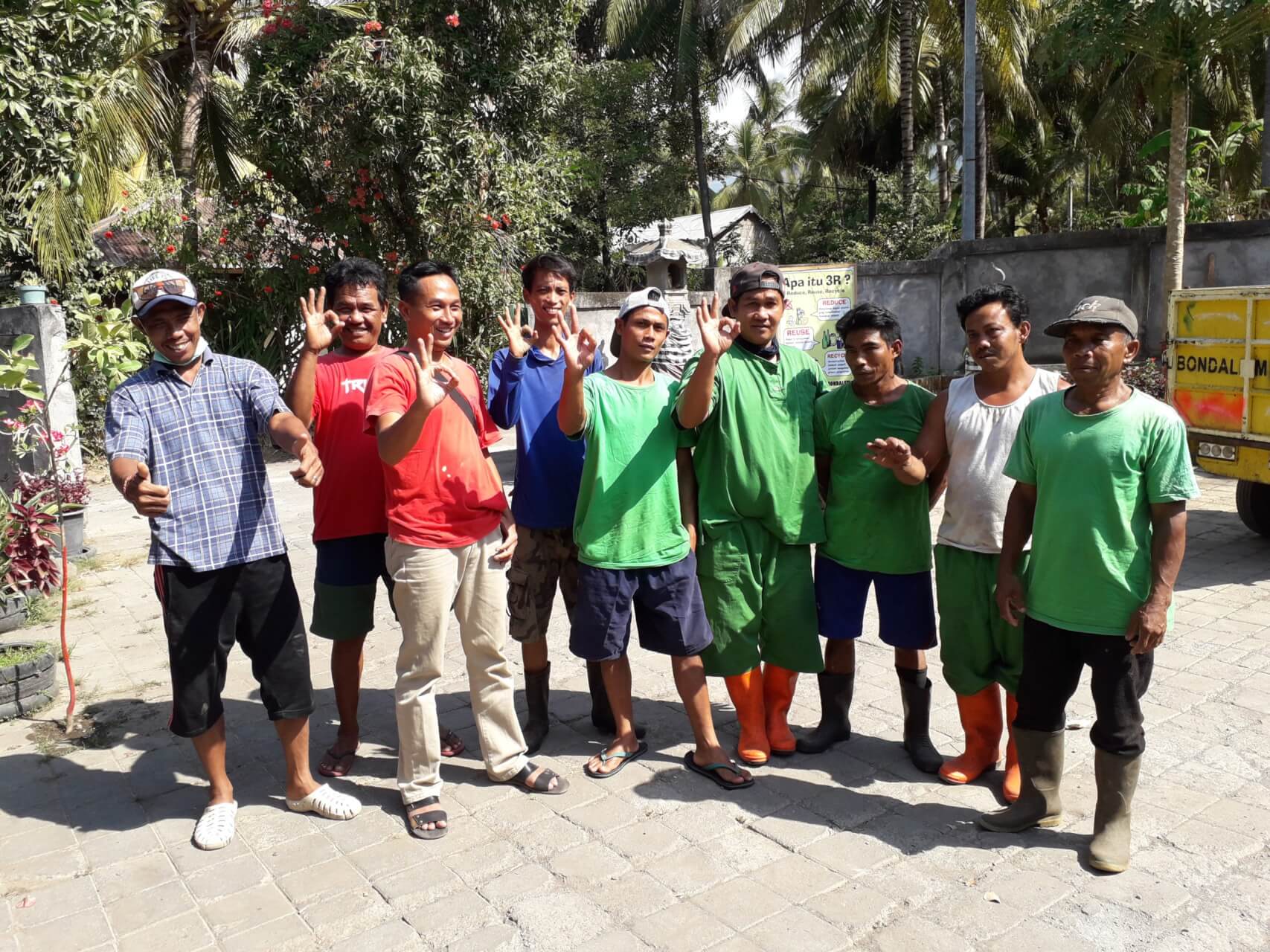
In the meantime, in Bondalem the team has already begun with the sorting of waste materials including different types of plastic, and has been meeting with local councils and building relationships to make sure plans are aligned for when the population (and waste generation) increases again. They are keeping daily records of the amount of waste sorted and its composition, and are growing in confidence about the way to handle and manage waste materials to reduce what needs disposing to less than 10% total waste arisings.
“Our immediate priorities are to support the well-being of the local farmers and domestic waste management, so that our village is both clean and healthy,” explained Kadek Ada Maja.
“The first step in realising our priorities is the new waste treatment plant set on a 500-square-meter site provided by the Bondalem village administration. The plant, which currently employs five full-time local staff, promotes the awareness of socially responsible garbage management, and to inspire the villagers to be active participants in the project.
“The plant, a first of its kind on the north coast of Bali, involves three levels of local government, involving cooperation between the village to the subdistrict of Tejakula, and the regency administration of Buleleng. The treatment site features a covered workspace for garbage processing upon newly purchased tables. The garbage is washed and sorted into organic and recycled waste, and organic waste is processed into compost, which is packaged and locally sold. The non-organic waste, especially paper, plastic bottles and bags and glass items, are washed and prepared for recycling.”
Following the training session at Bondalem Eco Village in August, the team started to record waste processing data. In the first 23 days, they processed 14 tonnes of waste, of which about 12 tonnes was organic (85%). The amount of plastic bags (including laminated bags) separated was 700kg (5%) and hard plastics about the same (5%). The amount sent to landfill was 680kg (5%). Of the plastic bags, 210kg were laminated and the rest either clear or coloured plastic bags. Hard plastics were about 300kg each of PET and PP and 100kg of other plastics.
Project manager, Piet Van Zyl, said: “The most sustainable way to manage waste materials is through separation at source. Since we have found that the majority of the waste generated in Bondalem is organic, we can now set about persuading the village to collect this material separately, which will make the plastics much easier to manage.”
Different types of plastic difficult to identify and the team has found that packaging marked with a recycling code is much easier to sort. It is hoped that in the future, more plastics will be identified in this way to aid recovery and recycling. Well-sorted plastics have a much higher market value and this is an important step in establishing sustainable resource management initiatives.
The value of plastics separated by our team over the 23 days was R1.5mill or GBP 78 and the value of the compost from the organics about Rp6.6mill or GBP 345.
The team has decided that long-term, there will be value in persuading the village to separate organics from plastics at source. This will enable good quality compost to be produced (without plastic contaminants) and for the recyclable and residual plastic waste to be managed in the most appropriate and sustainable way.
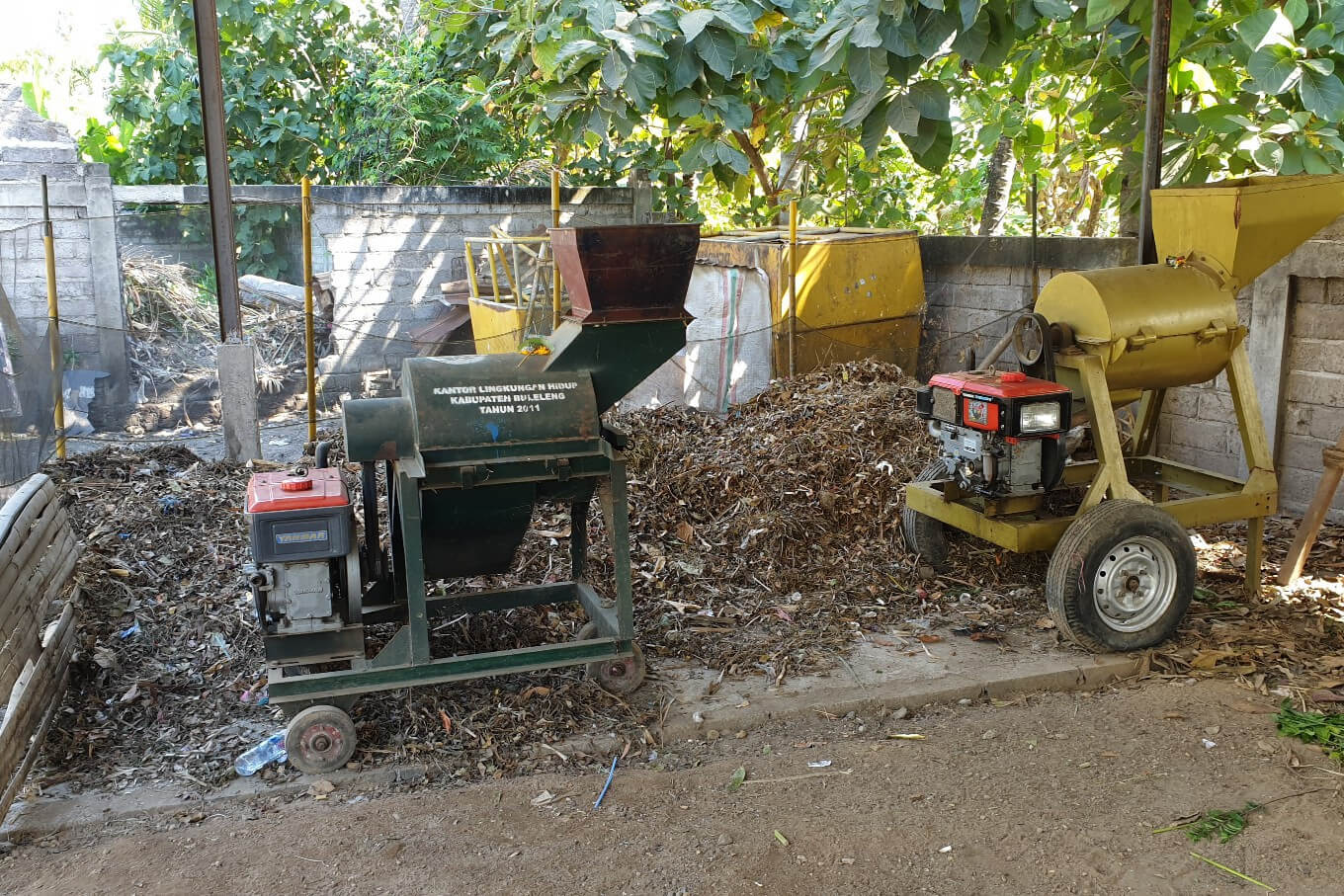
Zoë Lenkiewicz, Head of Programmes and Engagement at WasteAid, said: “The donation from Bunzl has been transformational for two communities suffering from endless plastic pollution on the beautiful island of Bali. The infrastructure the teams have invested in will provide a long-term solution for the safe and sustainable management of plastics and organics, and the training and advocacy elements of the partnership mean the benefits will be shared beyond these two communities.
“We are grateful to Bunzl for the donation, and are proud of our partner organisations, R.O.L.E. and Bondalem Eco Hub, for the progress they have made despite the restrictions in place due to COVID. They have made admirable progress and have built up their confidence and local networks so that when tourism returns, they can make a considerable and lasting impact. Nobody wants to see plastic pollution, and by working together in partnerships such as this, we are making a visible and tangible positive impact to protect human health, biodiversity, and the local economy that depends on the natural beauty and biodiversity of the island.”
In supporting these committed Indonesian partners, Bunzl plc and WasteAid have demonstrated the power of partnerships in tackling one of the most pressing challenges of this generation. In order to achieve the Global Goals for Sustainable Development, cooperation across borders and sectors is vital and this case study shows that when people work together, we can turn the tide on plastic pollution.
Written by Zoë Lenkiewicz
Jakarta Post article: https://www.thejakartapost.com/life/2020/08/12/north-bali-eco-hub-a-new-sustainable-community-project-with-a-grand-vision.html
News
Beyond the Numbers: The Human Impact of WasteAid’s Work
Members of WasteAid’s Gambia team, Lamin Janneh and Jojo Saho, recently investigated what our programmes mean to our individual participants by speaking to members...
News
Journey to Uganda: Stories from our projects
Recently, the Programme Management team travelled to Uganda to meet the people at the heart of our waste management programmes, connect with local stakeholders...
News
From E-Waste Skills to Sustainable Enterprise: Cosmo City Participants Take the Next Step
What if a broken laptop, television or other electronic appliance wasn’t waste, but an opportunity to repair, reuse and recycle? For participants in WasteAid’s Waste 2...
News
Lufthansa Group and WasteAid Launch Animation Film
WasteAid and Lufthansa Group have launched a new animated training film designed to help cabin crew improve onboard waste segregation, supporting efforts to increase...
News
How one community in The Gambia is changing its relationship with plastic
In Bakoteh, a community in the Greater Banjul Area of The Gambia, plastic waste has long been a serious problem. Home to the largest dumpsite in...
News
Women farmers in Kalaji turn organic waste into opportunity through the S-ORGANIC project
In Kalaji, a group of women farmers is demonstrating how organic waste can become a productive resource — supporting sustainable agriculture, strengthening livelihoods, and...
Huhtamaki and WasteAid announce global partnership to drive community-level circular economy innovation in key locations
Global food packaging leader Huhtamaki and international charity WasteAid have announced a €900,000 (£800,000) partnership to drive community-level circular economy innovation in Vietnam, India and South Africa for a two-year period. To mark its 100-year anniversary, Huhtamaki is donating €3 million to global sustainability initiatives with a local impact – acting today, educating for tomorrow and funding innovation for the future, making a difference where it matters most to help address global sustainability challenges and build circular economy initiatives.
The Huhtamaki funded project will provide financial support to WasteAid to deliver education and training on waste management and circular systems. It will enable WasteAid to work with key stakeholders in Johannesburg (South Africa), Ho Chi Minh City (Vietnam) and Guwahati (Assam, India) to fast-track and amplify local solutions that create value and reduce waste and pollution, in line with the UN’s Sustainable Development Goals.

Ceris Turner-Bailes, WasteAid Chief Executive said: “The shift towards a circular economy offers vast potential for global development and WasteAid is proud to be at the forefront of that change.
“This major partnership between WasteAid and Huhtamaki offers the opportunity for greater impact and is a huge milestone in the development of WasteAid as an organisation. We’re delighted to be working with the Huhtamaki team and look forward to delivering this groundbreaking initiative over the coming two years.”
President and CEO of Huhtamaki Charles Héaulmé said: “We want to make a difference, where it matters most. We want to support local communities concretely, by providing education and training on waste management and circular systems. Delivering on our ambitious sustainability agenda requires collaboration across the value chain.
“We chose to partner with WasteAid as it is already making a positive impact on plastic pollution. An illustration of this is their project in West Africa, where trainees are turning plastic waste into useful products like paving tiles. Very quickly the local team prevented a million plastic bags from being burned, or reaching the ocean. A year after, 55 families continue to collect, sort and process plastic waste, reducing pollution and carbon emissions and protecting the health of their community in Gunjur, Gambia. We will be learning from our partnership with WasteAid and will share our insights with global stakeholders as part of our sustainability journey to deliver on our 2030 strategy.”
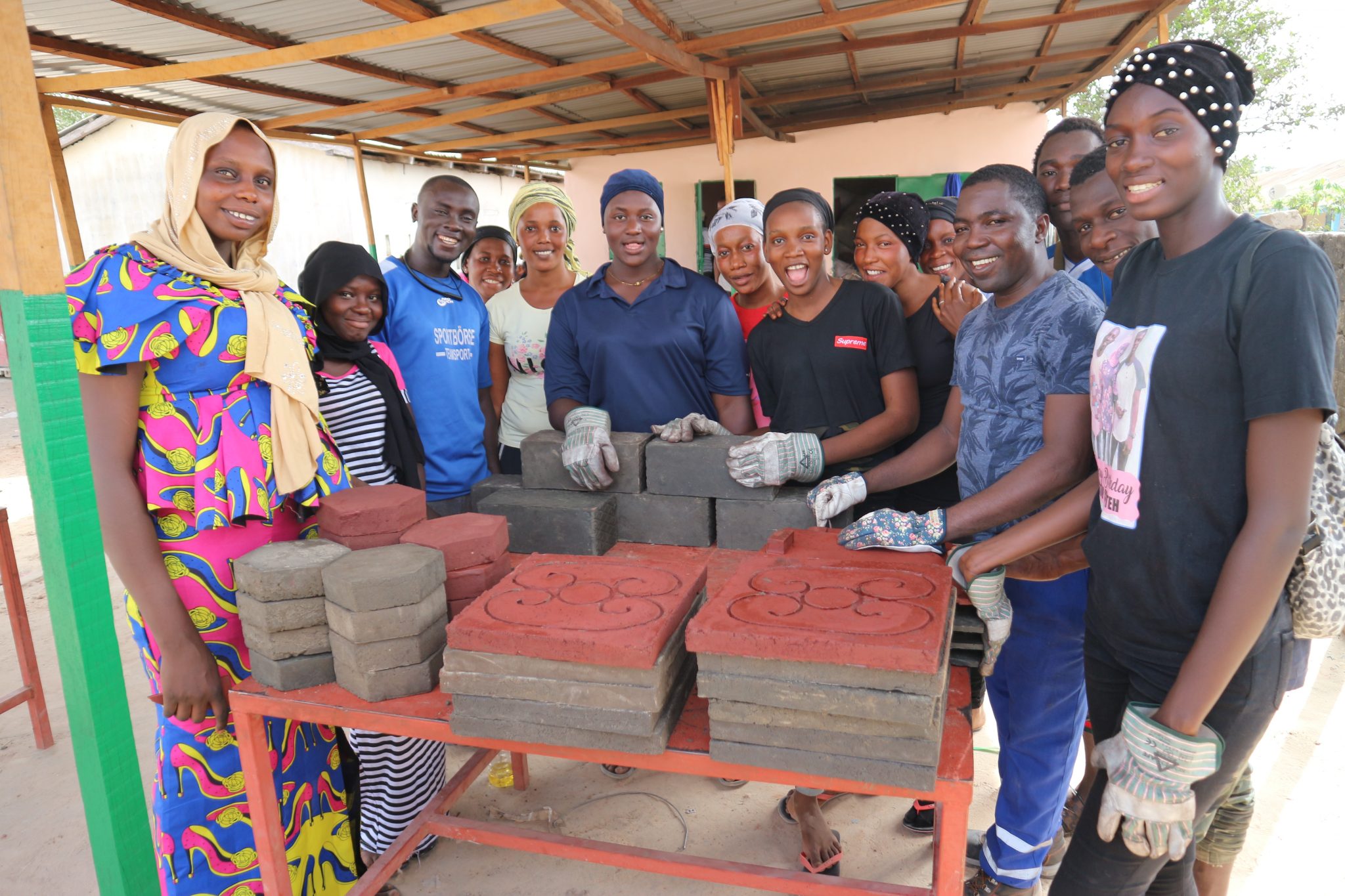
The project – WasteAid will bring its expertise in sustainable waste management to share skills, develop business ideas and create end-markets for recyclable materials, driving innovation and developing a new generation of green entrepreneurs locally. The two-year programme will be focused on educating diverse local communities via a cloud-based learning platform, networking events, training programmes and will seek to inspire innovative sustainable solutions through local innovation competitions.
The programme will accelerate knowledge transfer and cultivate great ideas within communities most affected by poor waste management. Developing alternatives to dumping and burning of waste makes homes more liveable, reduces health problems and builds stronger local economies.
Ray Georgeson, Interim Executive Support at WasteAid will continue to manage the partnership until a dedicated project director is appointed.
Written by Zoë Lenkiewicz
WasteAid is a UK registered charity set up by waste management professionals to tackle the global waste crisis. 2 billion people do not have their waste collected and 3 billion do not have a decent disposal site, and as a consequence waste ends up in rivers and ultimately the oceans.
WasteAid works with communities in low-income countries to address the root causes of climate change and marine plastic pollution.
WasteAid shares waste management knowledge and skills with communities in low-income countries; trains people to become self-employed recycling entrepreneurs; and influences decision-makers and the donor community to increase investment in waste management.
Huhtamaki is a key global player in sustainable food on-the-go and food on-the-shelf packaging solutions. Our innovative products help billions of consumers around the world make responsible lifestyle choices every day. Today, packaging plays a significant role in food safety and convenience. We are committed to making packaging more circular and we embed sustainability in everything we do. We are focused on achieving carbon neutral production and having all our products designed to be recyclable, compostable or reusable by 2030.
With 100 years of history and a strong Nordic heritage we operate in 35 countries and 81 sites around the world. Our 19,000 employees are working to deliver smart next generation packaging. Our 2019 net sales totaled EUR 3.4 billion. Huhtamaki Group has its head office in Espoo, Finland and the parent company Huhtamäki Oyj is listed on Nasdaq Helsinki Ltd. Find out more about our Sustainability Action Plan and our ambition at www.huhtamaki.com.
News
Beyond the Numbers: The Human Impact of WasteAid’s Work
Members of WasteAid’s Gambia team, Lamin Janneh and Jojo Saho, recently investigated what our programmes mean to our individual participants by speaking to members...
News
Journey to Uganda: Stories from our projects
Recently, the Programme Management team travelled to Uganda to meet the people at the heart of our waste management programmes, connect with local stakeholders...
News
From E-Waste Skills to Sustainable Enterprise: Cosmo City Participants Take the Next Step
What if a broken laptop, television or other electronic appliance wasn’t waste, but an opportunity to repair, reuse and recycle? For participants in WasteAid’s Waste 2...
News
Lufthansa Group and WasteAid Launch Animation Film
WasteAid and Lufthansa Group have launched a new animated training film designed to help cabin crew improve onboard waste segregation, supporting efforts to increase...
News
How one community in The Gambia is changing its relationship with plastic
In Bakoteh, a community in the Greater Banjul Area of The Gambia, plastic waste has long been a serious problem. Home to the largest dumpsite in...
News
Women farmers in Kalaji turn organic waste into opportunity through the S-ORGANIC project
In Kalaji, a group of women farmers is demonstrating how organic waste can become a productive resource — supporting sustainable agriculture, strengthening livelihoods, and...
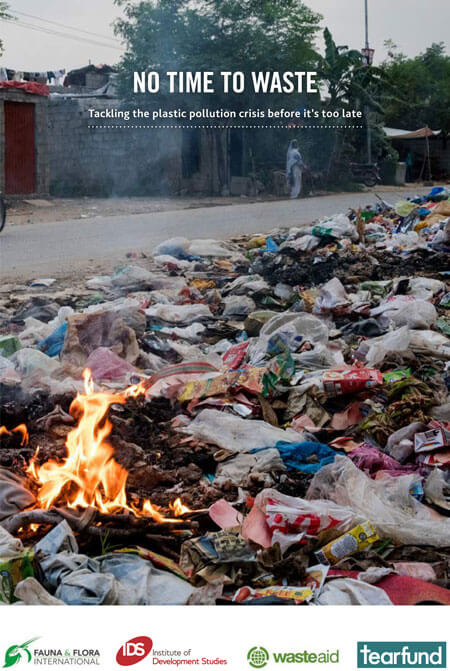 NO TIME TO WASTE
Download the full report (PDF)
One person is dying every 30 seconds in developing countries from diseases and illnesses caused by plastic pollution and uncollected rubbish dumped or burnt near homes.
The new figures were released in a report called No Time to Waste: Tackling the Plastic Pollution Crisis Before it’s Too Late by international relief and development agency Tearfund, in collaboration with conservation charity Fauna & Flora International (FFI), the Institute of Development Studies and waste management charity WasteAid. The report looks at the health impact of plastic pollution and rubbish on the world’s poorest people for the first time.
It found that each year between 400,000 and a million people (at the upper end one person every 30 seconds) are dying in developing countries from illnesses and diseases like diarrhoea, malaria and cancers caused by living near uncollected waste and plastic pollution.
The report calls on multinational companies to fundamentally change their business models by committing to reporting the number of single-use plastic items they distribute in developing countries by 2020, and halving this by 2025.
“This report is one of the first to highlight the impacts of plastic pollution not just on wildlife but also on the world’s poorest people,” Sir David, a vice president at Fauna & Flora International, said.
“It is high time we turn our attention fully to one of the most pressing problems of today – averting the plastic pollution crisis – not only for the health of our planet, but for the wellbeing of people around the world.”
“We need leadership from those who are responsible for introducing plastic to countries where it cannot be adequately managed, and we need international action to support the communities and governments most acutely affected by this crisis.”
Globally two billion people, (one in four), don’t have their rubbish collected, often leading to disease and death. When rubbish isn’t collected it often builds up in rivers and causes flooding, which can lead to diarrhoea and a host of infectious diseases.
Often the only other way to dispose of waste is to burn it in the streets, with the resulting fumes being extremely damaging to health as well as – in some countries – being the single largest source of carbon emissions, contributing to climate change.
Dr. Ruth Valerio, Global Advocacy & Influencing Director at Tearfund said: “Today Tearfund launches our new Rubbish Campaign, which calls for urgent action from four multinationals – Coca-Cola, Nestlé, PepsiCo and Unilever.
“They sell billions of products in single-use plastic packaging in poorer countries where waste isn’t collected, in the full knowledge that people will have no choice but to burn it, discard it in waterways or live among it.
“The CEOs running these multinationals can no longer ignore the human cost of single-use plastic – fundamental changes to business models are urgently required. There is no time to waste.”
Elisabeth Whitebread, Programme Manager, Marine Plastics for Fauna & Flora International said: “This report is a wake-up call to industry about the interconnected threat that plastic pollution poses to marine and human health. While the findings are shocking, this is not an unsolvable problem.
“As a first step, companies can commit to a full audit of product life cycles, including supply chains, so we can identify where plastic is polluting the environment and bring it to a stop.”
Patrick Schröder, Research Fellow at Institute for Development Studies, said:
“Plastic pollution is damaging our planet and our lives. The current model of ‘take, make, use and dispose’ is unsustainable. Businesses, governments and citizens need to embrace a ‘circular economy’ that promotes sustainable consumption and production and reduces environmental impacts.
“There are a growing number of examples of the circular economy in action – particularly across Africa and Asia – and we need to learn from these initiatives to inform and scale future efforts to tackle this pressing global challenge.”
Zoë Lenkiewicz, Head of Programmes and Engagement at WasteAid added: “The problems caused by plastic packaging waste are universal, with people and wildlife everywhere being seriously affected.
“Large companies place vast amounts of single-use plastic into communities that don’t have waste management, with significant and growing planetary health impacts. As this report shows, we cannot recycle our way out of plastic pollution – we need systemic change.”
Sir David will introduce the report later today at the Wall Street Journal’s CEO Council in London.
Other key facts in the report: (references in the report)
Written by Zoë Lenkiewicz
ENDS
STATISTICS EXPLAINED
The analysis conducted for No Time to Waste: Tackling the Plastic Pollution Crisis Before it’s Too Late was based on published data, academic research and expert opinion for three links between waste and health: air pollution from burnt waste, diarrhoeal disease caused by dumped waste, and mosquito-borne disease caused by dumped waste. This indicated that between 400,000 and 1 million people die each year because of diseases caused by mismanaged waste. One million people a year is approximately one every 30 seconds. The full methodology is described in an annex to the report.
CAMPAIGN
We want the companies (Coca-Cola, Nestlé, PepsiCo and Unilever) to take responsibility for their plastic waste in poorer countries by:
Tearfund is a Christian relief and development agency and a member of the Disasters’ Emergency Committee. Tearfund has been working around the world for more than 50 years responding to disasters and helping lift communities out of poverty. For more information about the work of Tearfund, please visit www.tearfund.org.
Fauna & Flora International (FFI) (www.fauna-flora.org) FFI protects threatened species and ecosystems worldwide, choosing solutions that are sustainable, based on sound science and that take account of human needs. Operating in more than 40 countries worldwide, FFI saves species from extinction and habitats from destruction, while improving the livelihoods of local people. Founded in 1903, FFI is the world’s longest established international wildlife conservation organisation and a registered charity. Nathan Williams, Press Officer, +44 (0)1223 749 010 or +44 (0)7725 594 205/ nathan.williams@fauna-flora.org
The Institute of Development Studies (IDS) is a global research and learning organisation for equitable and sustainable change. Hannah Corbett, Head of Communications and Engagement, +44 (0)1273 915640/ 07701286978/ h.corbett@ids.ac.uk
WasteAid is a UK registered charity set up by waste management professionals to tackle the global waste crisis. Contact Rose Bradbury, Senior Fundraising & Communications Officer, WasteAid, media@wasteaid.org
News
Beyond the Numbers: The Human Impact of WasteAid’s Work
Members of WasteAid’s Gambia team, Lamin Janneh and Jojo Saho, recently investigated what our programmes mean to our individual participants by speaking to members...
News
Journey to Uganda: Stories from our projects
Recently, the Programme Management team travelled to Uganda to meet the people at the heart of our waste management programmes, connect with local stakeholders...
News
From E-Waste Skills to Sustainable Enterprise: Cosmo City Participants Take the Next Step
What if a broken laptop, television or other electronic appliance wasn’t waste, but an opportunity to repair, reuse and recycle? For participants in WasteAid’s Waste 2...
News
Lufthansa Group and WasteAid Launch Animation Film
WasteAid and Lufthansa Group have launched a new animated training film designed to help cabin crew improve onboard waste segregation, supporting efforts to increase...
News
How one community in The Gambia is changing its relationship with plastic
In Bakoteh, a community in the Greater Banjul Area of The Gambia, plastic waste has long been a serious problem. Home to the largest dumpsite in...
News
Women farmers in Kalaji turn organic waste into opportunity through the S-ORGANIC project
In Kalaji, a group of women farmers is demonstrating how organic waste can become a productive resource — supporting sustainable agriculture, strengthening livelihoods, and...