News
Beyond the Numbers: The Human Impact of WasteAid’s Work
Members of WasteAid’s Gambia team, Lamin Janneh and Jojo Saho, recently investigated what our programmes mean to our individual participants by speaking to members...

On 12 May 2026, WasteAid’s Director of Programmes and Project Officer met with Turkish Ambassador F. Turker Oba at the Turkish Embassy in The Gambia to explore potential collaboration on environmental sustainability and waste management.
At WasteAid, we believe that lasting change comes from building local systems, strengthening community capacity, and forging partnerships that go beyond borders. Meetings like this one are central to that mission.
The conversation shone a spotlight on WasteAid’s flagship programmes in the country – focused on plastic reduction and organic waste management – while also providing insight into the Turkish government’s development work delivered through the Turkish Cooperation and Coordination Agency (TİKA). This includes tree planting, borehole construction at Bijilo Monkey Park, and the provision of tools and equipment to support local waste management efforts.
The meeting generated real enthusiasm for what a partnership could look like, bringing together WasteAid’s expertise in community-led capacity building with the reach and resources of the Turkish Embassy and TİKA. For WasteAid, partnerships like this are essential – tackling the waste crisis in lower-income countries requires collaboration across governments, communities, and international organisations, and no single actor can do it alone.
Discussions also touched on the Embassy’s broader network of partnerships in The Gambia – including with the Office of the First Lady, the Ministry of Environment, Climate Change and Natural Resources, and Brikama Area Council – reflecting a shared and sustained commitment to sustainable development across the country.
WasteAid looks forward to building on this promising start and working alongside the Turkish Embassy towards a cleaner, healthier Gambia – where waste is managed sustainably, livelihoods are strengthened, and no community is left behind.

News
Beyond the Numbers: The Human Impact of WasteAid’s Work
Members of WasteAid’s Gambia team, Lamin Janneh and Jojo Saho, recently investigated what our programmes mean to our individual participants by speaking to members...
News
Journey to Uganda: Stories from our projects
Recently, the Programme Management team travelled to Uganda to meet the people at the heart of our waste management programmes, connect with local stakeholders...
News
From E-Waste Skills to Sustainable Enterprise: Cosmo City Participants Take the Next Step
What if a broken laptop, television or other electronic appliance wasn’t waste, but an opportunity to repair, reuse and recycle? For participants in WasteAid’s Waste 2...
News
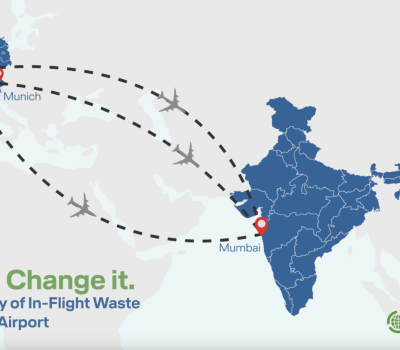
Lufthansa Group and WasteAid Launch Animation Film
WasteAid and Lufthansa Group have launched a new animated training film designed to help cabin crew improve onboard waste segregation, supporting efforts to increase...
News
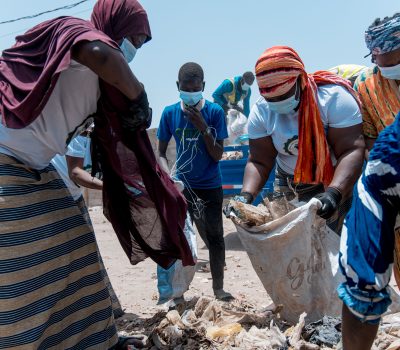
How one community in The Gambia is changing its relationship with plastic
In Bakoteh, a community in the Greater Banjul Area of The Gambia, plastic waste has long been a serious problem. Home to the largest dumpsite in...
News
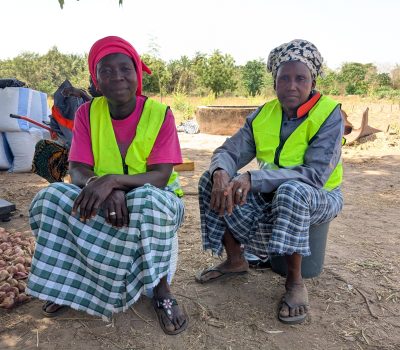
Women farmers in Kalaji turn organic waste into opportunity through the S-ORGANIC project
In Kalaji, a group of women farmers is demonstrating how organic waste can become a productive resource — supporting sustainable agriculture, strengthening livelihoods, and...
WasteAid and Kanifing Municipal Council have signed a new Memorandum of Understanding (MoU), marking an important milestone in a partnership that has developed over more than a decade.
The MoU, signed on 7 May 2026 by Akira Akazawa, Director of Programmes at WasteAid, and Paa Sait Ceesay, Chief Executive Officer of Kanifing Municipal Council (KMC), establishes a renewed framework for cooperation between WasteAid and KMC, further strengthening joint efforts to improve sustainable waste management, recycling, environmental protection, and circular economy initiatives in The Gambia.
WasteAid has worked closely with KMC for over ten years, supporting practical solutions to urban waste challenges and helping to build local capacity, strengthen community engagement, and promote more inclusive and sustainable approaches to waste management.
This new MoU builds on that long-standing relationship and provides a stronger basis for future collaboration. It sets out shared priorities including solid waste management, recycling and resource recovery, public awareness and behaviour change, capacity building, support for small-scale waste and recycling enterprises, and improved coordination between local government, communities, the private sector, and development partners. These priorities reflect the areas of cooperation outlined in the MoU framework.
Speaking at the signing, Akira Akazawa, Director of Programmes at WasteAid, welcomed the opportunity to deepen WasteAid’s partnership with KMC and continue working together to address the growing waste management challenges facing urban communities.
“WasteAid is proud to continue its long-standing partnership with Kanifing Municipal Council. This MoU builds on more than a decade of collaboration and gives us a stronger foundation to work together on practical, locally led solutions that improve waste management, support communities, and contribute to a cleaner and healthier environment.”
Waste management is not only an environmental issue. It is closely connected to public health, livelihoods, climate resilience, and quality of life. Through this renewed partnership, WasteAid and KMC aim to support practical, locally led solutions that reduce pollution, increase recycling, and create opportunities for communities and small enterprises.
The MoU also recognises the importance of inclusive approaches, including the participation of women, young people, vulnerable groups, community actors, and informal waste workers in waste management initiatives.
WasteAid looks forward to continuing its collaboration with KMC and other partners to support a cleaner, healthier, and more sustainable future for communities across the municipality and beyond.
News
Beyond the Numbers: The Human Impact of WasteAid’s Work
Members of WasteAid’s Gambia team, Lamin Janneh and Jojo Saho, recently investigated what our programmes mean to our individual participants by speaking to members...
News
Journey to Uganda: Stories from our projects
Recently, the Programme Management team travelled to Uganda to meet the people at the heart of our waste management programmes, connect with local stakeholders...
News
From E-Waste Skills to Sustainable Enterprise: Cosmo City Participants Take the Next Step
What if a broken laptop, television or other electronic appliance wasn’t waste, but an opportunity to repair, reuse and recycle? For participants in WasteAid’s Waste 2...
News
Lufthansa Group and WasteAid Launch Animation Film
WasteAid and Lufthansa Group have launched a new animated training film designed to help cabin crew improve onboard waste segregation, supporting efforts to increase...
News
How one community in The Gambia is changing its relationship with plastic
In Bakoteh, a community in the Greater Banjul Area of The Gambia, plastic waste has long been a serious problem. Home to the largest dumpsite in...
News
Women farmers in Kalaji turn organic waste into opportunity through the S-ORGANIC project
In Kalaji, a group of women farmers is demonstrating how organic waste can become a productive resource — supporting sustainable agriculture, strengthening livelihoods, and...
We have a wealth of evidence demonstrating the positive impact of our Wastepreneur programme. A key driver of this success is our proactive approach—identifying and resolving challenges as soon as they arise to ensure consistent results. This is evidenced by our creation of the HUBLINK project in Uganda.
At WasteAid, it is vital that our programmes serve the participants first and foremost. To ensure this, we integrate rigorous due diligence and maintain constant communication with waste collectors on the ground. Through these touchpoints, a significant barrier was brought to our attention: many Wastepreneurs lacked access to higher value markets, due to the quality of the aggregation bays.
Without a local hub to consolidate their materials, collectors were often forced to pay high transportation costs to reach distant buyers. In many cases, these costs swallowed their margins entirely, making it impossible to turn out a fair profit from the waste they had worked so hard to collect.
Rather than compromising the project’s future, we took decisive action to mitigate these risks. We transitioned the project to a new implementation anchor: the Halal Waste Group.
Halal Waste Group
The Halal Waste Group (HWG) was set up in 2019, when a few individuals responded to waste clogging drainage channels in their community, from that point onwards the group grew in size, it now includes 33 members and handles roughly 30-35 tonnes of waste material per month.
Whilst the group clearly demonstrates the power of local people responding to local problems. The group had larger ambition beyond its original scope and soon identified major logistical and infrastructure barriers that limited their efficiency and growth.
This is where we are able to offer support. By combining our global technical knowledge and resources with HWG’s deep local insights, we are working to scale their impact without losing the “community heart” that made them successful in the first place.
HUBLINK’s goal is to strengthen the Halal Waste Group as a compliant, community-rooted aggregation and market-linkage hub. By maintaining this local focus while professionalising operations, we aim to:
Convening Community Stakeholders
To ensure the best possible impact of the HUBLINK project, we recognised immediately the need to bring in other community stakeholders. On April 15th, WasteAid hosted a critical stakeholder engagement meeting with key partners including KCCA, TUNN, and Reclaim. The session was designed to build a shared roadmap for the hub, integrating expert lessons on infrastructure and health and safety into our operational plans. By clarifying the roles of every actor involved, we’ve created a unified front for implementation. This commitment was formalised at the close of the meeting with the official signing of the MoU between WasteAid and HWG.
The meeting as well as acting as a means to discuss the practicalities of HUBLINK going forward and ensuring its success. There was a palpable sense of momentum in the room, with stakeholders expressing deep enthusiasm for the project’s potential to transform both the local environment and community livelihoods.
Julius Mayanja, Local Council One Official
“This hub is coming as a real saver for our environment and for the livelihoods of our people. Even ourchildren already have [got involved] when they see a bottle, they step on it to reduce its size – so we must now match that energy with training, organisation and community awareness.
Emily Namanya, KCCA Representative
“Wasteaid is a welcome partner in the fight against environmental degradation. If Halal Waste Group needs recognition or accreditation, KCCA is ready to engage, because when informal waste pickers are organised and supported, both the environment and livelihoods improve.”

Fahad Serumpanise, TUNN
“This project gives Halal Waste Group a chance to move from struggling with space and logistics to operating in a more organised, safer and more business-minded way. Our aspiration is not only to collect waste, but to grow a hub that serves collectors and the wider community.”
We are excited about the future of HUBLINK. Our ambition is matched only by the dedication of our community partners, and we feel confident in what we can achieve together. By creating impact at both the individual level for waste collectors and across the wider community, we are building better livelihoods and a greener Uganda.
This vital work is made possible through the continued support of Bunzl. We are incredibly grateful for your partnership, which allows us to turn these ambitions into reality and directly scale our impact across the region.
News
Beyond the Numbers: The Human Impact of WasteAid’s Work
Members of WasteAid’s Gambia team, Lamin Janneh and Jojo Saho, recently investigated what our programmes mean to our individual participants by speaking to members...
News
Journey to Uganda: Stories from our projects
Recently, the Programme Management team travelled to Uganda to meet the people at the heart of our waste management programmes, connect with local stakeholders...
News
From E-Waste Skills to Sustainable Enterprise: Cosmo City Participants Take the Next Step
What if a broken laptop, television or other electronic appliance wasn’t waste, but an opportunity to repair, reuse and recycle? For participants in WasteAid’s Waste 2...
News
Lufthansa Group and WasteAid Launch Animation Film
WasteAid and Lufthansa Group have launched a new animated training film designed to help cabin crew improve onboard waste segregation, supporting efforts to increase...
News
How one community in The Gambia is changing its relationship with plastic
In Bakoteh, a community in the Greater Banjul Area of The Gambia, plastic waste has long been a serious problem. Home to the largest dumpsite in...
News
Women farmers in Kalaji turn organic waste into opportunity through the S-ORGANIC project
In Kalaji, a group of women farmers is demonstrating how organic waste can become a productive resource — supporting sustainable agriculture, strengthening livelihoods, and...
We have huge plans to further strengthen and scale our programmes in the countries we work in, evidenced by our recent expansion of our S-ORGANIC project to a national level initiative. Our programmes are designed to be country context specific, to maximise their impact, therefore it is vital that we have multi-stakeholder engagement.
On 15 April 2026, WasteAid brought together key voices from across the sector to discuss how we turn tried and tested circular economy practices into tangible action while strengthening sustainable waste management systems in The Gambia.
The workshop demonstrated the value of bringing together a diverse group of stakeholders, from government institutions, private sector actors, civil society and community-base waste collectors. This collaboration enabled effective problem-solving and opportunity scoping, leading to the co-development of practical, action-oriented solutions across policy, plastic waste value chains, and organic waste management.
These discussions are essential as we strengthen our Country Strategy for The Gambia. Engaging a broad range of stakeholders is essential to ensuring our strategy remains informed by local insights. This collaborative approach allows us to address real-world sector challenges and align on a unified vision for circular economy development.
The workshop highlighted several critical priorities, ranging from stronger policy coordination and more resilient markets for waste-derived products to improved infrastructure and financing. By identifying these pillars, we are well-positioned to address them head-on and drive the systemic change needed for a sustainable future.
The workshop was guided by clear objectives:
By fostering inclusive engagement and strengthening partnerships, the technical workshop represents an important step toward shaping a coordinated, evidence-based approach to sustainable waste management in The Gambia.
News
Beyond the Numbers: The Human Impact of WasteAid’s Work
Members of WasteAid’s Gambia team, Lamin Janneh and Jojo Saho, recently investigated what our programmes mean to our individual participants by speaking to members...
News
Journey to Uganda: Stories from our projects
Recently, the Programme Management team travelled to Uganda to meet the people at the heart of our waste management programmes, connect with local stakeholders...
News
From E-Waste Skills to Sustainable Enterprise: Cosmo City Participants Take the Next Step
What if a broken laptop, television or other electronic appliance wasn’t waste, but an opportunity to repair, reuse and recycle? For participants in WasteAid’s Waste 2...
News
Lufthansa Group and WasteAid Launch Animation Film
WasteAid and Lufthansa Group have launched a new animated training film designed to help cabin crew improve onboard waste segregation, supporting efforts to increase...
News
How one community in The Gambia is changing its relationship with plastic
In Bakoteh, a community in the Greater Banjul Area of The Gambia, plastic waste has long been a serious problem. Home to the largest dumpsite in...
News
Women farmers in Kalaji turn organic waste into opportunity through the S-ORGANIC project
In Kalaji, a group of women farmers is demonstrating how organic waste can become a productive resource — supporting sustainable agriculture, strengthening livelihoods, and...
At WasteAid, there is nothing more rewarding than witnessing a newly trained Wastepreneur take their first steps into business. Supporting individuals as they build their own sustainable livelihoods is at the heart of everything we do.
Having previously seen great results with the community in Diepsloot, we are now applying those lessons and successes to our ongoing work in Cosmo City. It’s an exciting chapter as we continue to support local residents in building a cleaner, more resilient future.
Cosmo City was originally established to showcase integrated living in a post-apartheid era, this area was a pioneer for shared resources and diverse communities. However, success has brought its own set of challenges.
Driven by a population nearing 100,000, the area is experiencing a “waste squeeze.” Rapid urbanisation and the rise of informal backyard subletting have left municipal collection services struggling to keep up. This gap in service has led to a surge in illegal dumping, particularly in the Itsoseng and Kya Sands corridors.
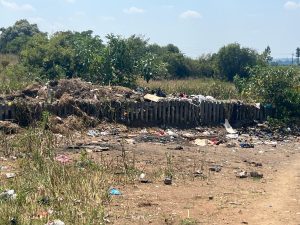
Waste management has become a significant challenge for the residents of Cosmo City
For the more economically marginalised living at the heart of this growth, waste management is no longer just a logistical hurdle—it is a critical environmental and social emergency.
Earlier this month Wasteaid inducted 20 new Wastepreneurs to help tackle the waste problem Cosmo City has been facing, whilst at the same time start their own waste business.
So far, our 20 participants have tackled two intensive modules focused on waste streams and environmental impact. The curriculum is designed to transform informal collection into a professional, safe, and sustainable career.
What they’ve learned:
What’s next? Knowledge is just the beginning. Upon completion, the group will move into intensive mentorship. Here, they will gain the tools to conduct community awareness campaigns and the opportunity to pitch for resources to turn their waste-collection visions into viable, long-term businesses.
This project would not have been possible without the support of our generous donors: EA Foundation and HCD Memorial Fund. Thank you once again for making this happen; we look forward to sharing more exciting updates with you soon.
News
Beyond the Numbers: The Human Impact of WasteAid’s Work
Members of WasteAid’s Gambia team, Lamin Janneh and Jojo Saho, recently investigated what our programmes mean to our individual participants by speaking to members...
News
Journey to Uganda: Stories from our projects
Recently, the Programme Management team travelled to Uganda to meet the people at the heart of our waste management programmes, connect with local stakeholders...
News
From E-Waste Skills to Sustainable Enterprise: Cosmo City Participants Take the Next Step
What if a broken laptop, television or other electronic appliance wasn’t waste, but an opportunity to repair, reuse and recycle? For participants in WasteAid’s Waste 2...
News
Lufthansa Group and WasteAid Launch Animation Film
WasteAid and Lufthansa Group have launched a new animated training film designed to help cabin crew improve onboard waste segregation, supporting efforts to increase...
News
How one community in The Gambia is changing its relationship with plastic
In Bakoteh, a community in the Greater Banjul Area of The Gambia, plastic waste has long been a serious problem. Home to the largest dumpsite in...
News
Women farmers in Kalaji turn organic waste into opportunity through the S-ORGANIC project
In Kalaji, a group of women farmers is demonstrating how organic waste can become a productive resource — supporting sustainable agriculture, strengthening livelihoods, and...
WasteAid is proud to announce it has stepped into the role of consortium leader of the EU-funded S-ORGANICS project. Building on its successful role as an implementing partner, WasteAid will now oversee the culmination of this flagship programme, continuing its partnership with the Trust Agency for Rural Development (TARUD) and Women Initiative Gambia (WIG).
Transforming Agriculture Through Circular Innovation
The S-ORGANIC project is a cornerstone of sustainable innovation in The Gambia, its primary goal is to transform soil fertility management by replacing expensive, imported chemical fertilisers with high-quality, locally produced organic alternatives.
By turning organic waste into nutrient-rich compost, the project is tackling two challenges at once: reducing the environmental burden of waste and strengthening national food security. This circular economy approach ensures that Gambian farmers and vegetable producers have access to affordable, sustainable tools to improve crop yields and nutrition across the country.
National Impact
Our transition to lead this consortium marks a pivotal moment for WasteAid, as we scale our organics work in country. WasteAid has been responding to the issue of organic waste in Gambia since 2021, but this project marks the first time we have had national reach. We are incredibly proud of this growth and look forward to the transformative impact this work will have across The Gambia.
A strong Foundation for the Final Year
As the project enters a critical phase, WasteAid’s leadership ensures a seamless transition and a focus on long-term sustainability.
“As an implementing partner of the S-ORGANIC project since day one, WasteAid is in a unique position to step into this leadership role,” says Ceris Turner-Bailes, Chief Executive Officer of WasteAid “we aren’t starting from scratch; we are building on the hard work and success already achieved to deliver an organics strategy at national level. This is a hugely exciting moment for WasteAid, and for creating a greener, more sustainable future for the people of The Gambia.”
Our Country Programme Manager of The Gambia Lamin Sanyang also had this to say:
“WasteAid is proud to step into the lead of the S-ORGANIC project, building on two years of deep-rooted partnership to transform organic waste management and soil health in The Gambia. By integrating action research with innovative production training, we are providing the tools necessary to foster a self-sufficient, circular agricultural ecosystem. We aren’t just finishing a project; we are securing a legacy of environmental resilience and economic empowerment for the entire country.”
We are delighted to be steering this initiative to its next phase. Alongside our partners at TARUD and WIG, WasteAid is committed to empowering local communities to build sustainable livelihoods and to securing a cleaner, greener future for The Gambia.
News
Beyond the Numbers: The Human Impact of WasteAid’s Work
Members of WasteAid’s Gambia team, Lamin Janneh and Jojo Saho, recently investigated what our programmes mean to our individual participants by speaking to members...
News
Journey to Uganda: Stories from our projects
Recently, the Programme Management team travelled to Uganda to meet the people at the heart of our waste management programmes, connect with local stakeholders...
News
From E-Waste Skills to Sustainable Enterprise: Cosmo City Participants Take the Next Step
What if a broken laptop, television or other electronic appliance wasn’t waste, but an opportunity to repair, reuse and recycle? For participants in WasteAid’s Waste 2...
News
Lufthansa Group and WasteAid Launch Animation Film
WasteAid and Lufthansa Group have launched a new animated training film designed to help cabin crew improve onboard waste segregation, supporting efforts to increase...
News
How one community in The Gambia is changing its relationship with plastic
In Bakoteh, a community in the Greater Banjul Area of The Gambia, plastic waste has long been a serious problem. Home to the largest dumpsite in...
News
Women farmers in Kalaji turn organic waste into opportunity through the S-ORGANIC project
In Kalaji, a group of women farmers is demonstrating how organic waste can become a productive resource — supporting sustainable agriculture, strengthening livelihoods, and...