News
Beyond the Numbers: The Human Impact of WasteAid’s Work
Members of WasteAid’s Gambia team, Lamin Janneh and Jojo Saho, recently investigated what our programmes mean to our individual participants by speaking to members...

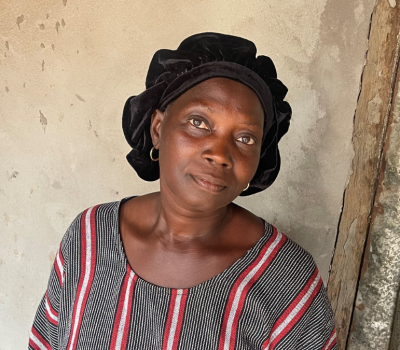
One of the first people to take part in WasteAid’s initiative in Cameroon was Djoukou Tapang Julienne who’s known to most as Mama Pasto. Her story truly shows how lives can be transformed when people have access to the right opportunity, support and tools.
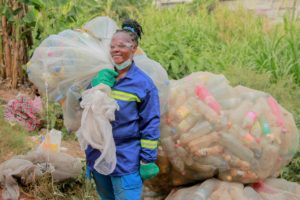
When WasteAid first met the 49-year-old mother of five she was working as a “Buy and Sellam” selling bread loaded with boiled and seasoned beans, after losing her job as fund collector at a savings and credit union following an accident.
As age began to catch up with her, Mama Pasto decided that she needed another way to support her family. Now, after receiving support from WasteAid, she runs her own informal cooperative of pickers, and provides training to others in the community to ensure she leaves a lasting legacy.
Mama Pasto initially took part in a training course delivered by WasteAid, to learn how to manufacture paving tiles but after realising that she didn’t have the space or time to make the tiles she joined the charity’s programme to become a waste collector.
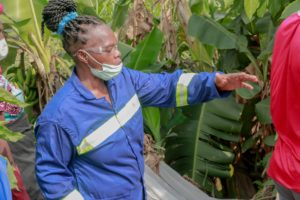 The WasteAid training scheme taught her collection techniques and how to manufacture paving tiles. From there Mama Pasto was given a paid internship with a local waste collection company where she collected waste from rivers and businesses. These two experiences gave her the skills and confidence she needed to become an independent collector with an income that has allowed her to support her family.
“Thanks to the training I received, this is the first year that none of my children have had to be taken out of school – I’ve been able to pay all the school fees for the whole year,” she said.
Collaboration and empowering communities are at the heart of WasteAid’s ethos and is a commitment that Mama Pasto is passionate about.
“Now, I’m also training others as we need to involve our peers so that the work can continue what has been started. Even if I am no longer here (I’m getting old at 49 you know!) I can say that I left a legacy and young people are working because of me.”
Her commitment to sharing the benefits of WasteAid’s programme has seen her launch her own paid summer internship for young people to help them earn money for notebooks. She is also committed to training members of her community.
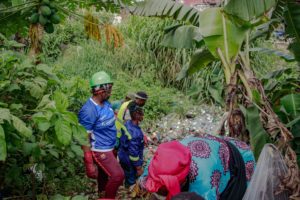
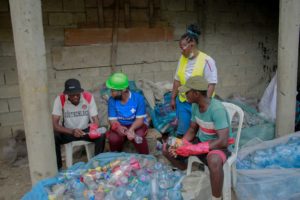
“I paid them around £91 per month and my concern was just to make sure that we were all making money together. More than 23 tonnes of plastic waste have been collected and sold this year through my endeavours and my wonderful team. While we have some work to do to improve the quality of plastic being collected, it’s a good start to see people recognising the work I am doing and getting involved.”
Not only has the support Mama Pasto received allowed her to support her children’s education and others in the community but it has also given her the opportunity to earn an income that has seen her buy land and gain an additional rental income.
“I was so happy to be part of this training programme and what I’m doing now is possible because of that training. I would like to thank WasteAid for the knowledge I gained as it’s unusual to receive such training for free.” she added.
Mama Pasto’s story is inspiring people throughout her community and beyond.
As WasteAid prepares to open the waste collection and sorting facility in Bilongué 2, Mama Pasto’s story shows just what is possible.
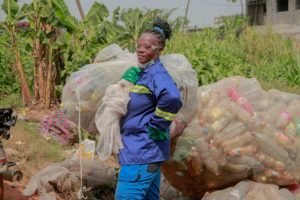 “What makes me proud is to see that people I worked with understand the work and the necessity to work – not only for money but to help the community to cope with their waste. I love how people’s understanding and behaviour evolves when they see how the things that I have done have changed people’s lives,” she said.
Please help us to support more people like Mama Pasto to create change by donating to WasteAid today.

News
Beyond the Numbers: The Human Impact of WasteAid’s Work
Members of WasteAid’s Gambia team, Lamin Janneh and Jojo Saho, recently investigated what our programmes mean to our individual participants by speaking to members...
News
Journey to Uganda: Stories from our projects
Recently, the Programme Management team travelled to Uganda to meet the people at the heart of our waste management programmes, connect with local stakeholders...
News
From E-Waste Skills to Sustainable Enterprise: Cosmo City Participants Take the Next Step
What if a broken laptop, television or other electronic appliance wasn’t waste, but an opportunity to repair, reuse and recycle? For participants in WasteAid’s Waste 2...
News
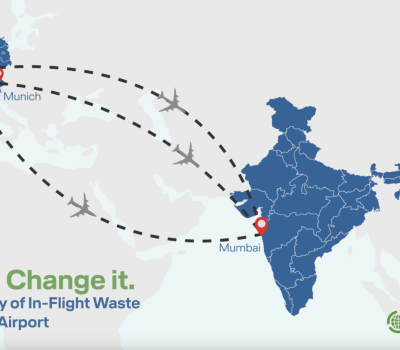
Lufthansa Group and WasteAid Launch Animation Film
WasteAid and Lufthansa Group have launched a new animated training film designed to help cabin crew improve onboard waste segregation, supporting efforts to increase...
News
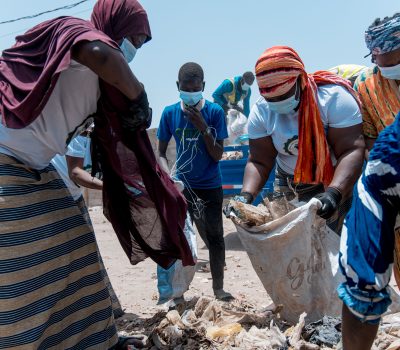
How one community in The Gambia is changing its relationship with plastic
In Bakoteh, a community in the Greater Banjul Area of The Gambia, plastic waste has long been a serious problem. Home to the largest dumpsite in...
News
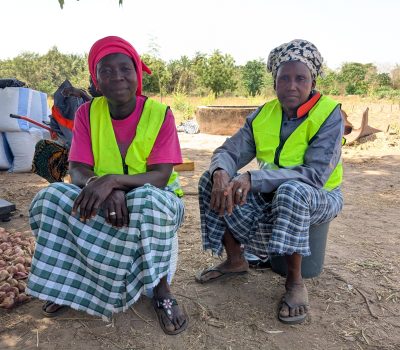
Women farmers in Kalaji turn organic waste into opportunity through the S-ORGANIC project
In Kalaji, a group of women farmers is demonstrating how organic waste can become a productive resource — supporting sustainable agriculture, strengthening livelihoods, and...
This thought piece is written by WasteAid’s Circular Economy and Waste Management Lead, Rebecca Colley-Jones, following a recent visit to one of WasteAid’s project locations in Douala, Cameroon.
Having joined WasteAid at the beginning of November 2022, I had the privilege of embarking on my first field visit to Douala, Cameroon two weeks later with our CEO Ceris Turner-Bailes. WasteAid has had links to Cameroon for a number of years and started formally delivering programmes in January 2020, funded initially through the UK AID Match programme.
The main focus of my visit, aside from familiarising myself with WasteAid’s work in Douala, was to follow up on our initiative to build and support a Plastics Recovery Facility (PRF) in Douala 3. Land for the PRF had been allocated by the municipality to build the facility, as the Mayor and his team were keen to see such a facility located within their district, and were excited by the potential of the PRF to assist in providing a solution to the area’s plastics pollution challenge. The aim of the PRF is to adopt a circular economy approach recapturing plastic materials, adding value to them and ultimately closing the loop on plastics.
WasteAid’s partnership with leading global private markets firm, Partners Group, began at an integral time for this programme. Funding from the Partners Group employee foundation, PG Impact, meant that we could scale the impact and increase livelihood opportunities for more young people, with positive outcomes for the wider community and environment. Cameroon has a population of 27 million with over 55% living in poverty[1], so it was significant that we are able to reach more people through this partnership.
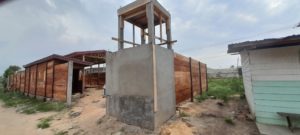
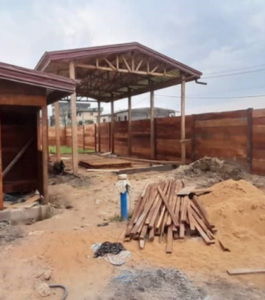 When arriving at the site, it was great to see that the construction work was well underway, with the office block, toilets and shower facilities as well as the main sorting area pretty much completed. The borehole had been drilled and installed and the tower for the water holding tank had been constructed.
In order to ensure that the infrastructure we provide is right and to make the site as self-contained as possible, we decided to look at the possibilities for rainwater harvesting to maximise water use and efficiency. Electricity can be sporadic so to tackle this challenge we decided to look at the possibility of installing solar panels, and also look at two types of bailers to be manufactured locally – one electric and one manual – and I am working with our Cameroon project team to source the right equipment.
In terms of activities on the site, we went out to interview potential users to see what they would need in order to add value. We will be catching up with some of these people and sharing their stories in the coming weeks, currently most collectors are working either out of their homes or at the side of the street. The PRF will enable collectors to increase efficiency and add value to the collected plastics. With more collectors on board thanks to Partners Group, we will be seeing a higher volume of plastic collected and diverted from drains, rivers and the ocean.
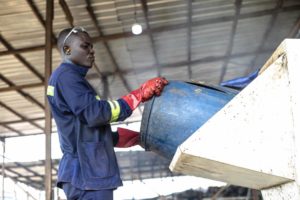
To ensure sustainability, WasteAid works within the existing value chain, finding ways of further supporting those working within it. To understand how best the PRF could integrate into the current local value chain, it was decided to assess the market. Visits were made to a number of off takers of plastics, NAME, SC2R and RedPlast. Following our visits, it was concluded that the best use of the site was for it to operate as a bulking and cleaning facility, users will be able to sort, clean and store quality plastic. By washing and baling plastic bottles, the collectors can access better markets, obtain a better price (almost double) when selling to off takers. This has the potential to make a huge difference to their livelihoods, improve the quality of the collected materials and prevent pollution by closing the loop on plastics. The PRF will support a further 45 people in the community of Bilongué 2 in Douala.
We have now appointed a PRF supervisor, and are sourcing the various pieces of equipment needed to complete the infrastructure at the facility. Recruiting of the collectors who will use this facility is currently underway. Many of the potential users of the PRF are actually graduates of WasteAid’s UK AID Match programme who now have small waste collection businesses and networks of collectors.
It was fantastic to see the enthusiasm for WasteAid’s activities in Cameroon, and get feedback on how WasteAid’s initiatives are making a real difference to waste collectors’ lives and helping build a circular solution for Doula’s plastics.
[1] https://www.wfp.org/countries/cameroon
News
Beyond the Numbers: The Human Impact of WasteAid’s Work
Members of WasteAid’s Gambia team, Lamin Janneh and Jojo Saho, recently investigated what our programmes mean to our individual participants by speaking to members...
News
Journey to Uganda: Stories from our projects
Recently, the Programme Management team travelled to Uganda to meet the people at the heart of our waste management programmes, connect with local stakeholders...
News
From E-Waste Skills to Sustainable Enterprise: Cosmo City Participants Take the Next Step
What if a broken laptop, television or other electronic appliance wasn’t waste, but an opportunity to repair, reuse and recycle? For participants in WasteAid’s Waste 2...
News
Lufthansa Group and WasteAid Launch Animation Film
WasteAid and Lufthansa Group have launched a new animated training film designed to help cabin crew improve onboard waste segregation, supporting efforts to increase...
News
How one community in The Gambia is changing its relationship with plastic
In Bakoteh, a community in the Greater Banjul Area of The Gambia, plastic waste has long been a serious problem. Home to the largest dumpsite in...
News
Women farmers in Kalaji turn organic waste into opportunity through the S-ORGANIC project
In Kalaji, a group of women farmers is demonstrating how organic waste can become a productive resource — supporting sustainable agriculture, strengthening livelihoods, and...
WasteAid’s Waste to Use Challenge was part of an initiative funded by the Chartered Institution of Wastes Management (CIWM) to fast-track circular economy initiatives in The Gambia. The Gambia is Africa’s smallest mainland country and has very limited waste management capacity. Open dumping and burning of waste leads to poor health, economic losses and climate emissions, and has been recognised at both local and national levels as a priority for sustainable development.
Positively, The Gambia is one of the few countries committed to meeting the Paris Agreement to keep global warming below 1.5C. Alongside reducing climate emissions, the Ministry of Environment is focused on protecting the country’s natural resources and building resilience to climate shocks such as drought and floods. Implementing circular waste and recycling initiatives such as the Waste to Use Challenge can play a significant role in preventing climate emissions, building climate resilience, and creating much-needed sustainable livelihood opportunities.
On 20th December, around 70 members of the Circular Economy Network gathered at the Sunset Beach Hotel, in Kotu to hear the pitches of the three finalists all active in the circular economy. All three initiatives were selected through a competitive process and prior to the pitch had been through a business incubation process, to help them hone their business plans and ideas. The training was complimented by one-to-one mentoring by business specialists over months leading up to the event. A huge thanks to the trainers and mentors that supported them throughout: Muhammed Danso from Startup Incubator Gambia, Mustapha J. from J Concepts, Youma Wally Ndong from GamPlus Clothing, Maurice Phillips from Sandele Foundation and Rory Dickens from Sustainable Design Studio.
Sulayman Darboe of Green Waste Initiative (GWI) was the first to present their business idea ‘Rinkoo’, a briquet made out of organic materials, an alternative to charcoal which burns for longer. GWI have established buyers at the community level as well as a product range and will be looking to expand their production capacity. Next up was African Swag Collection, led by Sainabou Gaye, who have produced a fashion range that reuses bubble wrap otherwise destined for landfill. They collect bubble wrap from trading outlets that are importing electrical equipment (packed in bubble wrap) and transform it into shower caps and aprons for use in the hair dressing and culinary trade as well as handbags and raincoats.
Finally, Plastics Recycling Gambia, led by Alieu Sowe, presented their core business. They collect up to 30 tonnes of hard plastic a month from 21 collection points, providing income for up to 21 waste collectors, and then distribute across the Greater Banjul Area. They sort, wash and grind down into plastic pellets to then sell to local plastic manufacturers.
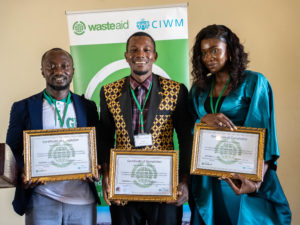
Michelle Wilson, Director of Programmes at WasteAid, said: “It was exciting to see the quality of ideas and level of the entrants which confirms to us that grass roots organisations are key to the development of a vibrant circular economy in The Gambia. It is impossible for local government to tackle the waste and environmental crisis on their own. The ambition and drive of all our entrants, particularly given their age, the majority are under 30, is amazing to see. WasteAid will continue to support the sector through the Circular Economy Network and looks forward to see these companies flourish”
The judges unanimously decided to award the investment to Plastic Recycling Gambia due to the strength of the business case presented, the environmental impact of the organisation in saving so much plastic from waterways and dump sites, and finally the income generating potential for informal waste collectors who are part of the collection network.
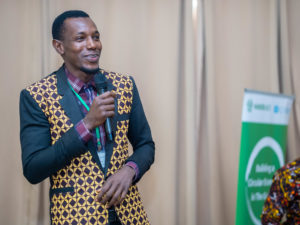
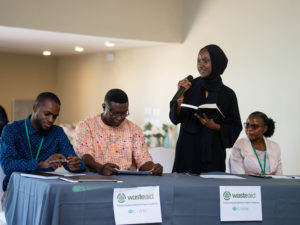
Waste to Use Challenge winner, Alieu Sowe, said: “Winning this competition has boosted mine and my team’s motivation, and will help us to grow Plastics Recycling Company. Reaching 50 tonnes regrinds monthly is sufficient for a financially stable and sustainable company. Above this turnover a modest profit can be made that will be reinvested to ensure organic growth of the company, and that growth includes expanding to reach other regions.”
Anna Willetts, President of CIWM said: “We are proud to see the positive difference that CIWM funding is making to these sustainable circular initiatives in The Gambia. As part of a delegation visiting next month, I am looking forward to seeing for myself each of the projects and how local entrepreneurs, the finalists and, of course, the winner continue to develop and contribute to CIWM’s ambition of a world beyond waste.”
WasteAid will continue to work with the runners up to hone their presented business plans. Representatives were present from the National Environment Agency as well as Local Councils and a panel made from business and government sector.
News
Beyond the Numbers: The Human Impact of WasteAid’s Work
Members of WasteAid’s Gambia team, Lamin Janneh and Jojo Saho, recently investigated what our programmes mean to our individual participants by speaking to members...
News
Journey to Uganda: Stories from our projects
Recently, the Programme Management team travelled to Uganda to meet the people at the heart of our waste management programmes, connect with local stakeholders...
News
From E-Waste Skills to Sustainable Enterprise: Cosmo City Participants Take the Next Step
What if a broken laptop, television or other electronic appliance wasn’t waste, but an opportunity to repair, reuse and recycle? For participants in WasteAid’s Waste 2...
News
Lufthansa Group and WasteAid Launch Animation Film
WasteAid and Lufthansa Group have launched a new animated training film designed to help cabin crew improve onboard waste segregation, supporting efforts to increase...
News
How one community in The Gambia is changing its relationship with plastic
In Bakoteh, a community in the Greater Banjul Area of The Gambia, plastic waste has long been a serious problem. Home to the largest dumpsite in...
News
Women farmers in Kalaji turn organic waste into opportunity through the S-ORGANIC project
In Kalaji, a group of women farmers is demonstrating how organic waste can become a productive resource — supporting sustainable agriculture, strengthening livelihoods, and...
As we come to the end of COP27, this thought piece will examine how WasteAid’s work is helping to address the climate crisis through green entrepreneurship and reinventing waste solutions, two topics that are being covered on Solutions Day at COP27.
It is encouraging to see a focus on these topics at COP27. At WasteAid we believe that support to green entrepreneurship is critical when transitioning to a circular economy and helps to recapture valuable materials to use in new products providing environmental, economic and social benefits.
 WasteAid invests in green entrepreneurs in the waste space for two main reasons, firstly we believe that some of the best ideas to solve the waste crisis are emerging locally. In countries like South Africa, India and Vietnam formal employment options are limited and we are seeing many ‘green entrepreneurs’ emerging out of necessity. Companies like VECA in Ho Chi Minh in Vietnam are an example of a typical green entrepreneur working in this space. They have developed a mobile app linking waste collectors to households, effectively an Uber for waste. Through funding from their partner Huhtamaki, a key global provider of sustainable packaging solutions, WasteAid has supplied business and capex funding to these local innovators, who have been able to extend their coverage into new districts, increase the number of households they collect from and waste collectors that can access the system. More opportunities for green entrepreneurs to expand their businesses has meant increased employment for local communities, and with more employment comes greater levels of independence. Finally we believe that green entrepreneurship will also help to keep materials closer to its source. In Vietnam for example, while 1.4 million tonnes of recycled plastic waste was imported in 2018, only 15-20% of current plastics in Vietnam are recovered and recycled. If green entrepreneurs can be supported to thrive in their locality, then we see the potential for reliable local supply chains to emerge and contribute to their local economies for manufacturing and use of recyclables.
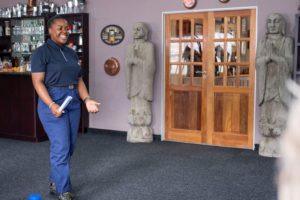 We are not alone in recognising that green entrepreneurs have ideas and solutions to solving the waste crisis. Over the last few years, we have seen initiatives funded by Hitachi, Circular Initiative, IKEA, and the UK Department of Trade and Industry to find and fund innovators and entrepreneurs who can develop solutions to help ‘close the loop’ on waste as a means of tackling the waste crisis, and in turn, the climate crisis. WasteAid celebrates these initiatives and also saw an opportunity to make initiatives even more inclusive, more local and more targeted.
WasteAid believes that there are two key ways to support green entrepreneurs. Firstly, through tailored support to the entrepreneur. So many courses, curricula and business incubation approaches could be better tailored to the waste industry. Through funding from Bunzl PLC, we have been working in South Africa with the Wot-If? Trust to develop a bespoke course to ‘waste-preneurs’ who are working in townships in Johannesburg. These young women and men are individuals who are already working in the world of waste but living very much day to day. Through a holistic and practical curriculum delivered by trainers with lived experience of making a living out of waste, and culminating in a pitch to access funds for a business idea, we are giving these waste-preneurs an opportunity to grow their income earning potential. See a clip below of some of our waste-preneurs in action.
Similarly in The Gambia, WasteAid has a ‘challenge fund’ element to a project supported by the Chartered Institution of Wastes Management (CIWM). It is inspirational to see young entrepreneurs fired up about resource recovery and creating jobs at the same time. Currently three semi-finalists are going through a tailored business support programme and will compete in December for access to capex funding. African Swag is a female-led Gambian-based company making clothing out of bubble wrap, from aprons to shower caps. Green Youth Collective are a group of entrepreneurs making briquets from organic waste, and Plastics Recycling Gambia is led by a Gambian entrepreneur who is working to help set up the first network of aggregators and recyclers across The Gambia. Here the focus is helping those on the first rung of the ladder move up the value chain through tailored business support. See a link to our finalists below.
Finally, as well as bespoke training, access to capex and ongoing venture capital is key. Many green entrepreneurs have the solutions but given the low-risk appetite of investors it is difficult for them to go to scale. In Egypt, as part of Dow’s project REFLEX, WasteAid is working with Alfanar, an Egyptian-based company that specialises in venture philanthropy methodology, to design a challenge competition focused on green entrepreneurship. Three semi-finalists will access £10k of seed capital and business training with a final winner having access to long-term investment capital. The challenge is focused on social enterprises that have market-based solutions to the recovery and reuse of flexible plastics in Aswan and beyond. The challenge is still open for applications until 30th November 2022, to apply click here.
WasteAid believes that by fast-tracking local solutions to the circular economy we will get to net zero faster, but perhaps more importantly we will also ensure that the benefits of the circular economy are shared with the poorest communities we serve.
Written by Michelle Wilson and Rebecca Colley-Jones.
News
Beyond the Numbers: The Human Impact of WasteAid’s Work
Members of WasteAid’s Gambia team, Lamin Janneh and Jojo Saho, recently investigated what our programmes mean to our individual participants by speaking to members...
News
Journey to Uganda: Stories from our projects
Recently, the Programme Management team travelled to Uganda to meet the people at the heart of our waste management programmes, connect with local stakeholders...
News
From E-Waste Skills to Sustainable Enterprise: Cosmo City Participants Take the Next Step
What if a broken laptop, television or other electronic appliance wasn’t waste, but an opportunity to repair, reuse and recycle? For participants in WasteAid’s Waste 2...
News
Lufthansa Group and WasteAid Launch Animation Film
WasteAid and Lufthansa Group have launched a new animated training film designed to help cabin crew improve onboard waste segregation, supporting efforts to increase...
News
How one community in The Gambia is changing its relationship with plastic
In Bakoteh, a community in the Greater Banjul Area of The Gambia, plastic waste has long been a serious problem. Home to the largest dumpsite in...
News
Women farmers in Kalaji turn organic waste into opportunity through the S-ORGANIC project
In Kalaji, a group of women farmers is demonstrating how organic waste can become a productive resource — supporting sustainable agriculture, strengthening livelihoods, and...
Yesterday’s themes at COP27 were Science and Youth and Future Generations. Two of the elements discussed during the day were around improving Africa’s resilience to climate change and the role of research, development and innovation in addressing climate change.
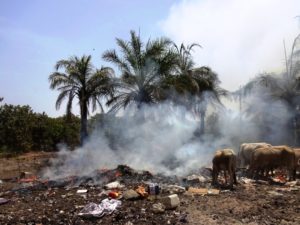 Economic development and population growth has seen the global demand for materials grow from 27 billion tonnes in 1970 to 89 billion tonnes in 2017 and this is forecast to double by 2060 to 167 billion tonnes (OECD 2019). According to the Circularity Gap Report 2022 70% of all global greenhouse gas emissions are related to material handling and use. Growing consumption of materials has consequently resulted in increasing waste generation, in 2020 only 8.6% of the materials we consume were circular i.e., recaptured and used again. To meet the internationally agreed targets to limit the rise in global temperature to below 1.5°C above pre-industrial levels, globally we need to adopt a more circular economy approach. Low- and middle-income countries are global producers of materials and consumption is increasing in these countries. Embedding restorative, regenerative circular principals can help meet the needs of this growing demand. This will require a systemic change replacing primary resources with secondary materials recovered from waste streams building resilience into the economy. Getting there will require collaboration across the value chain from all stakeholders including household, government, informal and formal sector. Proactive engagement is needed, through working together and understanding each other, and knowledge exchange is critical to achieving this. As well as understanding each other, we need fresh thinking and ideas to solve the growing ‘waste’ crisis and succeed in getting materials back into the system. Innovation does not happen in isolation; innovation is the outcome of a lot of smart people rowing in the same direction and will require proactive engagement.
WasteAid agrees knowledge exchange is critical. One area we are experimenting with is bringing experts together from the global north and south to solve common waste issues. In The Gambia, WasteAid, funded by the Chartered Institutions of Wastes Management (CIWM), has set up The Circular Economy Network Project, known locally as ‘Dennakuwo’ to fast-track local solutions to the circular economy. A key part of this project is to bring together members of CIWM in the UK, many of whom come from municipal councils as well as the private sector with their counter parts in The Gambia. In November we held our first virtual engagement meeting bringing together the head of Kanifing Municipal Council and 15 members of CIWM on a virtual platform to exchange information and challenges around the implementation of anti-littering law. It is clear that the challenges faced in the UK are not that dissimilar to those faced in the The Gambia. Our hope is to see these fora to enable knowledge to be shared and innovative solutions to emerge.
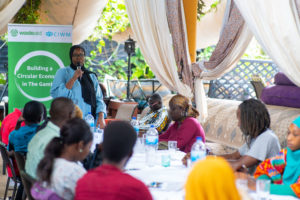
Enabling knowledge exchange across the value chain is also critical. In Egypt WasteAid is working with Dow on its REFLEX project, to identify new and emerging ways of valorising flexible plastic. The aim is to support the development of the flexible plastics value chain in Aswan. In September we brought together representatives from the informal sector, the governate, environmental affairs, NGOs and producers in Aswan. The different groups were able to bring their knowledge on the challenges and opportunities on the PE value chain, each bringing a unique perspective. Through these interactions, connections have been formed and a more formal stakeholder group has emerged to help plan and move forward together to ensure increased recovery or secondary materials.
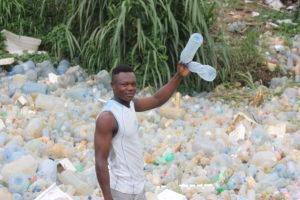 WasteAid has also been grateful to work with donors who bring individual expertise. In Cameroon, WasteAid is working with Douala Municipal Council to develop a Plastics Recovery Facility (PRF) that will be owned and run by the local community. One of our key partners Biffa plc were instrumental in supporting the design of the PRF, working with the team in Cameroon to tailor UK designs to something that would work in the context of Cameroon.
Circular economy provides great economic opportunities to preserve the value of materials and develop critical skills. The examples above demonstrate how we think knowledge exchange is central to solving issues caused by climate emissions that come from materials.
Written by Rebecca Colley-Jones and Michelle Wilson.
News
Beyond the Numbers: The Human Impact of WasteAid’s Work
Members of WasteAid’s Gambia team, Lamin Janneh and Jojo Saho, recently investigated what our programmes mean to our individual participants by speaking to members...
News
Journey to Uganda: Stories from our projects
Recently, the Programme Management team travelled to Uganda to meet the people at the heart of our waste management programmes, connect with local stakeholders...
News
From E-Waste Skills to Sustainable Enterprise: Cosmo City Participants Take the Next Step
What if a broken laptop, television or other electronic appliance wasn’t waste, but an opportunity to repair, reuse and recycle? For participants in WasteAid’s Waste 2...
News
Lufthansa Group and WasteAid Launch Animation Film
WasteAid and Lufthansa Group have launched a new animated training film designed to help cabin crew improve onboard waste segregation, supporting efforts to increase...
News
How one community in The Gambia is changing its relationship with plastic
In Bakoteh, a community in the Greater Banjul Area of The Gambia, plastic waste has long been a serious problem. Home to the largest dumpsite in...
News
Women farmers in Kalaji turn organic waste into opportunity through the S-ORGANIC project
In Kalaji, a group of women farmers is demonstrating how organic waste can become a productive resource — supporting sustainable agriculture, strengthening livelihoods, and...
On 18th October 2022, international NGO WasteAid hosted a Dragons Den style pitch event at the HTA School of Culinary Art in Randburg, where eighteen ‘wastepreneurs’ presented their business ideas to a panel of four independent judges as part of the “Bunzl Waste Entrepreneurial Challenge” pitch fund.
The pitch event was the culmination of a twelve-week tailored training programme designed and developed by the Wot-if? Trust for WasteAid, to support waste collectors in improving their income potential. The training curriculum included business and finance basics as well as understanding waste streams. The training combined both personal and practical skills to inspire the wastepreneurs to think of how they could grow their earning potential. The training also included coaching support to help them map out their ideas and to prepare for the final ‘pitch’ event. The pot allocation of seed funding for the wastepreneurs was £10k and is funded by WasteAid’s partner Bunzl Plc.
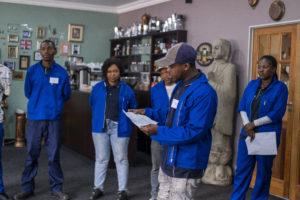
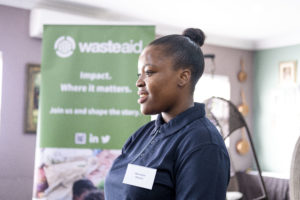
Bunzl Plc’s Head of Sustainability in the UK, James Pitcher, attended the event as well as Bunzl representatives from Australia. Four independent judges were also selected to sit on the panel, including local waste management and sustainability professionals Conny Sethaelo, Public Affairs and Stakeholder Engagement Manager for Nestle South Africa; Debbie Du Preez, Regional Manager of Pikitup; Sbusiso Shongwe of BoombaDotMobi, WasteAid’s Circular Economy Network member and winner of the Zero Waste Cities Challenge; and Claudio Buffa Pace of Community Bin Project.
Sbusiso Shongwe of BoombaDotMobi expressed that: “Wastepreneurship is thriving in this country, and South African wastepreneurs are changing the perceptions in this sector. If there was any time to invest in the waste space, now is the right time.”
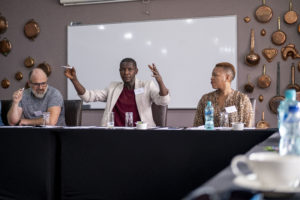
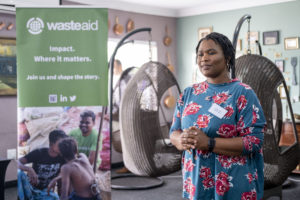
After deliberation the judging team consulted on the appropriate allocation of funds for each wastepreneur. The business ideas presented by the wastepreneurs ranged from education resources made from recyclable materials to the creation of a community food garden to incentivise separation at source and recycling by households in the community. At one training hub, four individuals formed an association to create a Buy-Back and Collection Centre in their community. At another hub, a cooperative of ten youths strengthened their aggregation potential in Freedom Park in Soweto, by focusing on the development office infrastructure on their collection site. One of the candidates, a young man living with a disability, was granted the design and development of a specific waste trolley and safety shoes.
CEO of WasteAid, Ceris Turner-Bailes, said: “We are extremely grateful for Bunzl’s ongoing partnership and support. The Bunzl Waste Entrepreneurial Challenge has enabled WasteAid to support the economic empowerment of some of the poorest members of the waste value chain in South Africa. Through collaborative local partnerships, circular economy initiatives and a tailored curriculum on the World of Waste, this programme is helping to improve the lives and livelihoods of wastepreneurs and their communities within South Africa’s informal sector.”
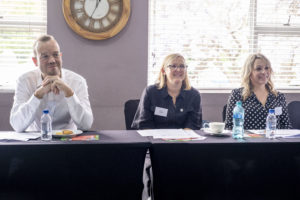 James Pitcher, Head of Sustainability at Bunzl Plc, said:
“The informal waste economy in countries like South Africa is such a big part of these communities. What I hope moving forward is that we’ll continue to be able to provide micro-grants to more communities of people, to help grow the informal waste economy and provide them with jobs that they can be proud of.”
WasteAid will continue to mentor the wastepreneurs through the implementation phase and looks forward to training more wastepreneurs in the months to come.
ENDS
NOTES TO EDITORS
About WasteAid
About Bunzl Plc
About the Wot-if? Trust
News
Beyond the Numbers: The Human Impact of WasteAid’s Work
Members of WasteAid’s Gambia team, Lamin Janneh and Jojo Saho, recently investigated what our programmes mean to our individual participants by speaking to members...
News
Journey to Uganda: Stories from our projects
Recently, the Programme Management team travelled to Uganda to meet the people at the heart of our waste management programmes, connect with local stakeholders...
News
From E-Waste Skills to Sustainable Enterprise: Cosmo City Participants Take the Next Step
What if a broken laptop, television or other electronic appliance wasn’t waste, but an opportunity to repair, reuse and recycle? For participants in WasteAid’s Waste 2...
News
Lufthansa Group and WasteAid Launch Animation Film
WasteAid and Lufthansa Group have launched a new animated training film designed to help cabin crew improve onboard waste segregation, supporting efforts to increase...
News
How one community in The Gambia is changing its relationship with plastic
In Bakoteh, a community in the Greater Banjul Area of The Gambia, plastic waste has long been a serious problem. Home to the largest dumpsite in...
News
Women farmers in Kalaji turn organic waste into opportunity through the S-ORGANIC project
In Kalaji, a group of women farmers is demonstrating how organic waste can become a productive resource — supporting sustainable agriculture, strengthening livelihoods, and...