News
How one community in The Gambia is changing its relationship with plastic
In Bakoteh, a community in the Greater Banjul Area of The Gambia, plastic waste has long been a serious problem. Home to the largest dumpsite in...

Blog written by Angela Ludek, WasteAid’s Project Officer for Informal Sector Engagement in South Africa
Without a Doubt – Reclaiming!
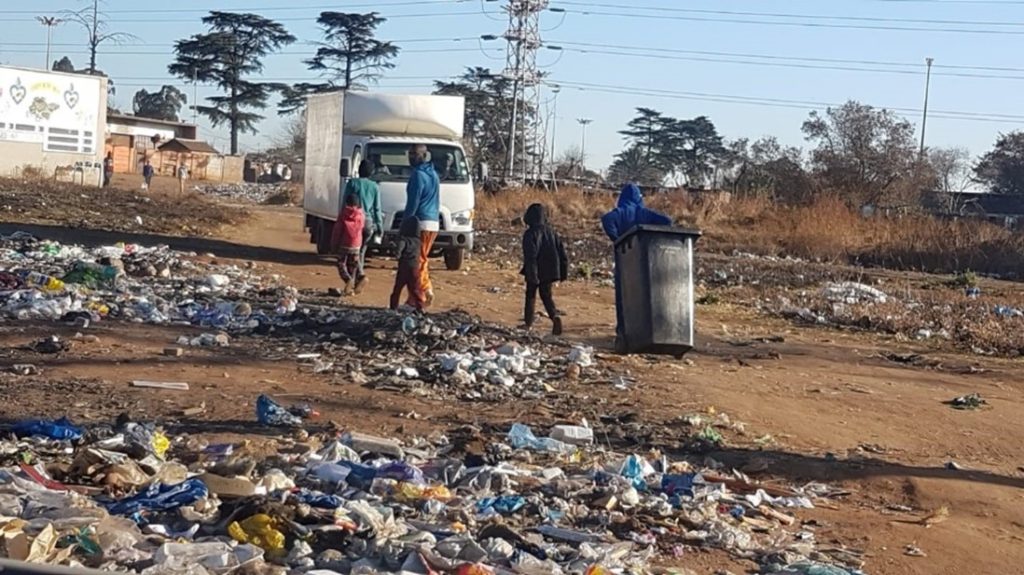
Without a doubt, if you refer to the informal waste sector in South Africa, the first thing that comes to mind is the waste picker, also known as waste reclaimers. The daily sight of waste pickers pulling, pushing and riding waste carts on small wheels in the greater Gauteng province is as common as the local taxi networks. The waste pickers ebb and flow on roads and in neighbourhoods, providing an essential service by diverting valuable recyclables from overflowing landfill sites.
The increase in size of the informal waste sector has been further spurred on by the COVID pandemic as levels of unemployment and waste increased. When you talk to waste pickers, you get the feeling that there is a strong desire within the sector to retain the flexibility of this type of livelihood and thankfully policy responses are beginning to reflect this. A key guiding document, the Waste Picker Integration Guideline for South Africa [1] carefully reflects the voice of the informal sector and puts forward clear recommendations on how waste pickers should be put at the front and centre, and how efforts to ‘formalise’ the informal is not necessary the end goal.
Efforts to formalise are often linked to trying to increase the income of waste pickers. Waste pickers tend to make the lowest margins across the waste value chain. An average waste picker will earn 2-4 rand per kilo for PET for example compared to those who are trading in bigger volumes earning 8-10 rand. With the advent of Extended Producer Responsibility, waste pickers are seeing the long-term potential of waste as a business and have a desire to progress and grow.
The options to grow their business are directly linked to collecting better quality and volume of recyclables, joining with others to start to aggregate on a larger scale and or developing a bigger network of buyers so as to drive the price up.
A Circular Economy
WasteAid has been trying to address the issues highlighted above through its new Bunzl Entrepreneurial Challenge Initiative. Building on the work started through the Circular Economy Network and the Zero Waste Cities Challenge [2], WasteAid is supporting the economic empowerment of the poorest members of the waste value chain in South Africa in two ways. Firstly, we are building their capacity through a tailored curriculum which tackles some of the basics of business, rights and responsibilities of waste and environmental impact, waste streams, economic and financial literacy, business and entrepreneurial skills, personal development and digital skills. At the end of the course the ‘wastepreneurs’ will have an opportunity to access small investments so that they are able to put their business ideas into practice. The project is to refer to waste pickers as wastepreneurs, to represent their blend of skills as waste pickers and entrepreneurs within the informal waste sector.
WasteAid’s project which will run for 2 years, is active in 2 Buy Back Centres in Gauteng and is funded by Bunzl Plc, one of the largest value-added service providers and distributors in the world.
From Waste Picker to Wastepreneur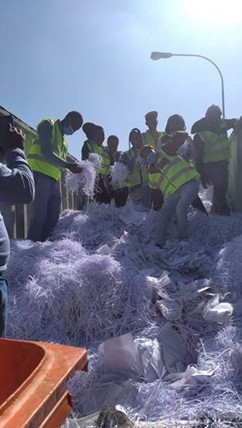
To select the first cohort of wastepreneurs, WasteAid’s Project Officer for Informal Sector Engagement, Angela Ludek, reached out to established buy-back centres and community cleaning organisations for referrals (Makhabisi Recycling and Trading in Reiger Park in the Ekurhuleni municipality and Waste Collection Community Association (WCCA)) in Gauteng province.
A variety of waste pickers were interviewed from across communities in Johannesburg to establish the skill training needs as well as to identify trainers from across the industry. The training needs identified combine hard and soft skills with an overarching personal development approach to establish a core set of skills that will enable business growth.
WasteAid has worked in conjunction with the Wot-If Trust, based in Diepsloot township in Johannesburg, South Africa. Founder of the Wot-If Trust, Gail Styger – affectionately referred to as sister G – takes a strategic and systematic approach to programme development and has been hands-on in research of the local waste management systems, and approaches toward attitudinal and behavioural change.
Over the next two years, WasteAid will be hosting the training of a minimum of 50 wastepreneurs over 12 weeks once a week. Coaches are being assigned to support each participant along the way to ensure learning can be consolidated and issues and challenges can be addressed on an individual basis.
The key advantage of this approach is that all the core trainers have developed successful businesses from waste. Mandlenkosi Nkosi of MAN Recycling, Harriet Matjila of Makhabisi Recycling and Trading, Zweli Sono and Matsabola Maripane of Waste Collection Community Association (WCCA) are the wastepreneur trainers for the programme and have all contributed to the curriculum development.
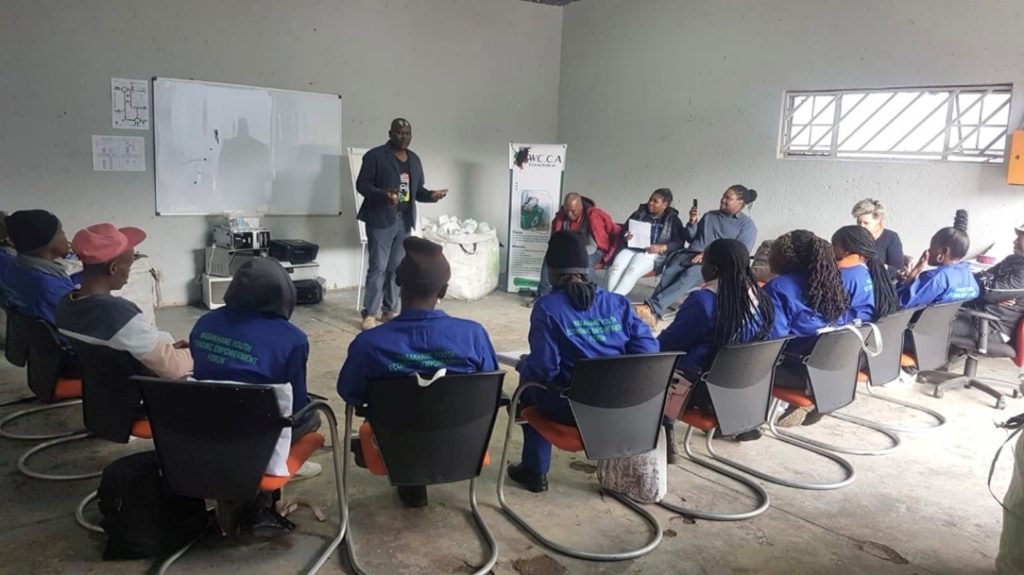
Through this personal and business development training programme, the vision is to establish confident wastepreneur innovators that will enable a greater impact on their direct livelihoods and that of their communities.
Trainer and owner of Makhabisi Recycling and Trade, Harriet Matjila, said of the waste picker participants after the orientation session, “It was indeed an insightful session. We begin to see that we do make a positive impact on individuals as the comments we received today were amazing. They are beginning to get the ‘feel’ of things in this sector”.
Link to Makhabisi Recycling and Trading video: https://www.groundup.org.za/article/where-others-see-trash-anna-harriet-see-treasure/
Follow the development of the waste pickers into wastepreneurs through WasteAid’s social media channels and get involved in the shared value by separating and sorting your household waste for collection in your neighbourhood.
[1] Waste Picker Integration Guidelines 2020; Department of Environment, Forestry and Fisheries Department of Science and Innovation
[2] To find out more about the Circular Economy Network: https://wasteaid.org/grassroots-circular-economy-talent-celebrated-in-johannesburg/

News
How one community in The Gambia is changing its relationship with plastic
In Bakoteh, a community in the Greater Banjul Area of The Gambia, plastic waste has long been a serious problem. Home to the largest dumpsite in...
News
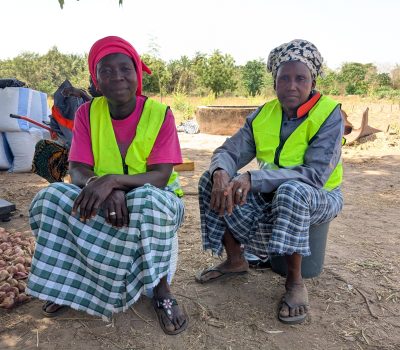
Women farmers in Kalaji turn organic waste into opportunity through the S-ORGANIC project
In Kalaji, a group of women farmers is demonstrating how organic waste can become a productive resource — supporting sustainable agriculture, strengthening livelihoods, and...
News
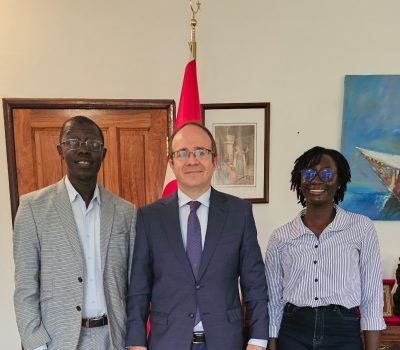
WasteAid and the Turkish Embassy: A New Partnership for Sustainable Change in The Gambia
On 12 May 2026, WasteAid’s Director of Programmes and Project Officer met with Turkish Ambassador F. Turker Oba at the Turkish Embassy in The...
News
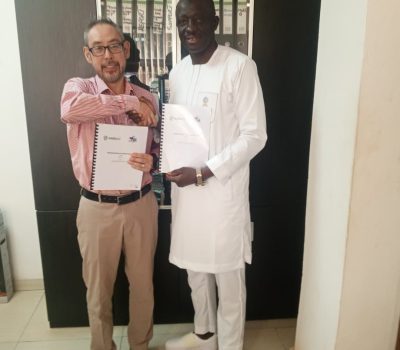
WasteAid and Kanifing Municipal Council sign MoU to strengthen long-standing partnership on sustainable waste management
WasteAid and Kanifing Municipal Council have signed a new Memorandum of Understanding (MoU), marking an important milestone in a partnership that has developed over more than a decade. ...
News
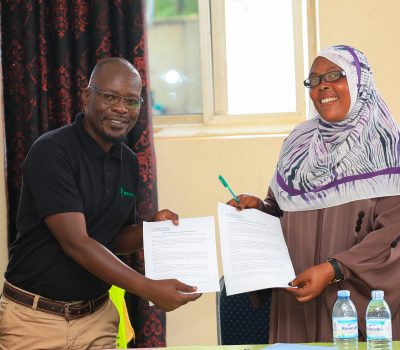
Responding to Community Needs: The Commencement of HUBLINK with Halal Waste Group in Uganda
We have a wealth of evidence demonstrating the positive impact of our Wastepreneur programme. A key driver of this success is our proactive approach—identifying and resolving challenges as soon...
News
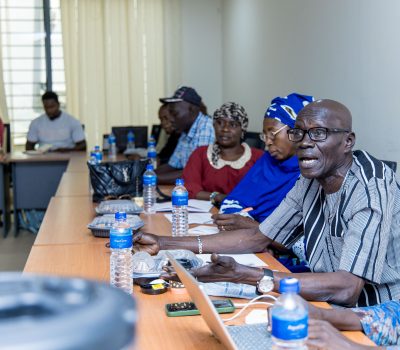
Strengthening The Gambia’s Circular Economy: Insights from WasteAid’s Stakeholder Engagement
We have huge plans to further strengthen and scale our programmes in the countries we work in, evidenced by our recent expansion of our...
PRESS RELEASE
WasteAid is one of six organisations that have been awarded funding through The International Circular Plastic Flagship Projects Competition, facilitated by the Waste Resources Action Programme (WRAP) and UK Research and Innovation (UKRI).
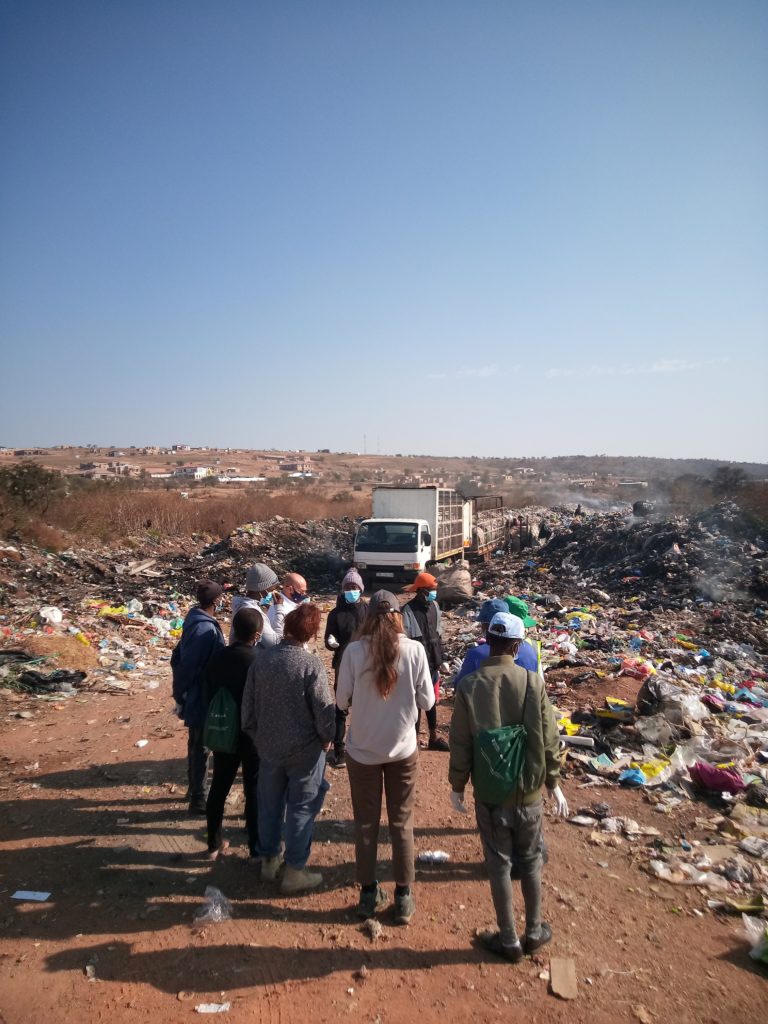
Through the funding, WasteAid is pioneering a feasibility study on developing a circular economy alongside expert partners, The University of Portsmouth and The Department of Agriculture Rural Development Land and Environmental Affairs (DARDLEA), in Mpumalanga, South Africa. This project will be focusing on three challenges centred around plastic pollution: reducing the littering of flexible packets, understanding where there is a lack of knowledge and operational resources in collections through to processing; and stimulating end-markets in Mpumalanga for these recyclable materials.
In places like Mpumalanga with minimal waste collection, littering is a huge problem that not only impacts the environment, but also public health. With little to no options for disposing of these materials, they often end up entering waterways and eventually harming marine life. Open burning is still a predominant option chosen to avoid the problems of litter, but not only are the emissions harmful to climate change, the pollutants also pose a risk to lung health for local communities.
Alongside the University of Portsmouth, WasteAid will be testing participatory approaches to drive improved source segregation of waste at a household level. This will raise awareness of the issues caused by the litter of flexible plastics and encourage people to separate their waste for recycling.
During a field visit to Mpumalanga, possible points of intervention to improve recycling rates were identified, and representatives from WasteAid and the University of Portsmouth had the opportunity to identify creatives and work with them to co-design behaviour change campaigns.
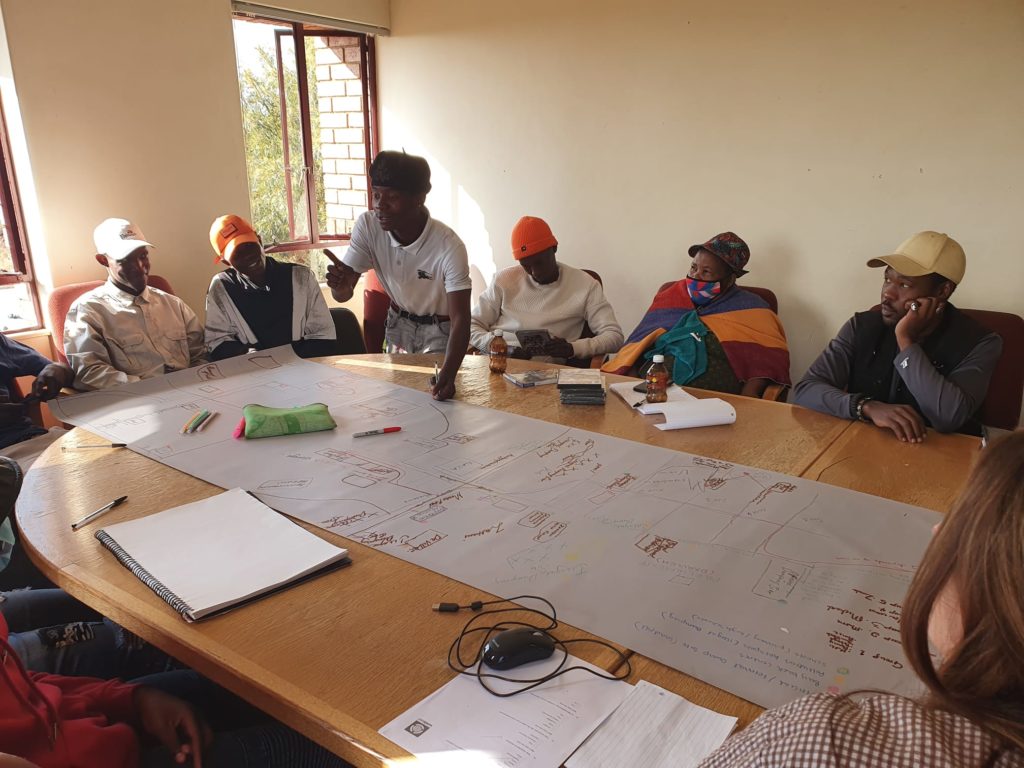
Together with local partner DARDLEA, WasteAid will be supporting to increase the collection and processing of the segregated waste on the ground. By stimulating these areas in the waste value chain, WasteAid and DARDLEA will then work with local processors to develop their capacity, which in turn will allow for recovered materials to stay in the local economy – promoting circularity and closing the loop.
Michelle Wilson, Circular Economy Network Director for WasteAid said: “We are honoured to be one of the projects selected to be part of the Plastics Challenge Competition and look forward to working with the University of Portsmouth and the local Municipality in South Africa to test methods that will improve the recovery rates of recycled plastic as well as closing the loop on materials locally”
WasteAid is committed to supporting the setup of systems that reduce the impacts of waste, improve local knowledge and build capacity for collection through to end markets. Incorporating circularity in waste management allows us to drive people-orientated solutions to improve livelihoods and progress on the United Nations Sustainable Development Goals in low-income communities.
For more information visit: https://wrap.org.uk/what-we-do/our-services/grants-and-investments/international-circular-plastics-flagship-competition
ENDS
NOTES TO EDITORS
About WasteAid
About WRAP
About UKRI
Contact:
Rose Bradbury, Senior Fundraising & Communications Officer, WasteAid. media@wasteaid.org
News
How one community in The Gambia is changing its relationship with plastic
In Bakoteh, a community in the Greater Banjul Area of The Gambia, plastic waste has long been a serious problem. Home to the largest dumpsite in...
News
Women farmers in Kalaji turn organic waste into opportunity through the S-ORGANIC project
In Kalaji, a group of women farmers is demonstrating how organic waste can become a productive resource — supporting sustainable agriculture, strengthening livelihoods, and...
News
WasteAid and the Turkish Embassy: A New Partnership for Sustainable Change in The Gambia
On 12 May 2026, WasteAid’s Director of Programmes and Project Officer met with Turkish Ambassador F. Turker Oba at the Turkish Embassy in The...
News
WasteAid and Kanifing Municipal Council sign MoU to strengthen long-standing partnership on sustainable waste management
WasteAid and Kanifing Municipal Council have signed a new Memorandum of Understanding (MoU), marking an important milestone in a partnership that has developed over more than a decade. ...
News
Responding to Community Needs: The Commencement of HUBLINK with Halal Waste Group in Uganda
We have a wealth of evidence demonstrating the positive impact of our Wastepreneur programme. A key driver of this success is our proactive approach—identifying and resolving challenges as soon...
News
Strengthening The Gambia’s Circular Economy: Insights from WasteAid’s Stakeholder Engagement
We have huge plans to further strengthen and scale our programmes in the countries we work in, evidenced by our recent expansion of our...
On 19 May 2022, WasteAid brought together local government, municipalities, national-level stakeholders and community-based organisations at MyFarm in Sukuta Nema, to share experiences and ideas on improving solid waste management in The Gambia.
The Gambia is the smallest country in mainland Africa, with a population of 2 million. It is among the least developed countries in the world, ranking 172 out of 189 countries on the Human Development Index. Most waste in The Gambia is disposed of at informal dumpsites, where opportunities to recycle and recover value are not leveraged, and where people put themselves at significant risk by scavenging amongst toxic waste. WasteAid’s Circular Economy Network Project, known locally as the Dennakuwo Project, will bridge gaps between waste management professionals and practices in The Gambia by supporting innovation and collaborative partnerships. It will also address health risks to people and the planet by improving working conditions through training and developing new waste and recycling livelihood initiatives.
The meeting was moderated by WasteAid’s Project Coordinator in The Gambia, Ingrid Henrys, who informed local stakeholders on project activities and registered interest in joining and operating a circular economy network. Twenty-five stakeholders across the waste management, recycling and environmental protection sectors attended the meeting, taking part in discussions and team building exercises with everyone expressing a keenness to join the network.
During the meeting, Sambou Kinteh, Climate Change Officer from the Ministry of Environment, Climate Change and Natural Resources (MECCNAR) gave an informative presentation including a discussion on government policies and the current institutional framework relating to waste management. This was followed by an innovative presentation and discussion on the policies developed to support a circular economy led by Dr Dawda Badgie, the Deputy Executive Director of the National Environment Agency (NEA).
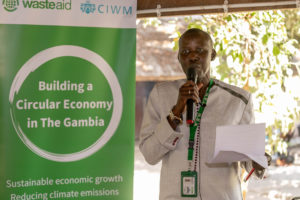
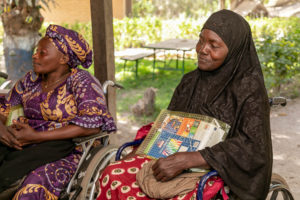
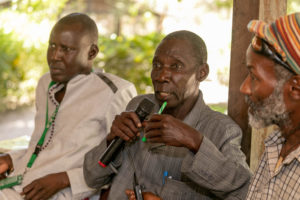
Dr Dawda Badgie and Kanifing Municipality Council’s representative Mr Doudou Jallow, both highlighted the need to add value to waste to ensure collective participation and benefit to individuals and for society. Participants shared their experiences and challenges in reaching their waste management goals.
Dr Badgie stated that the Circular Economy Network “is a very good initiative, where the necessary key stakeholders are present. We are here to share ideas, share different perspectives on how we see waste, and how we can make the best use of this waste”.
The Circular Economy Network Project will be shaped by local stakeholders who are interested in collaborating and joining the network. A significant aim of the project is to ensure that it is sustainable, and that the Circular Economy Network will continue to be operational and effective in delivering improved waste management practices in The Gambia following the end of the project in 2023. During the meeting, the participants went on to propose the conception of a steering committee to include community-based and private sector organisations within the network, to work with the advisory board and identify thematic areas of focus for the Circular Economy Network.
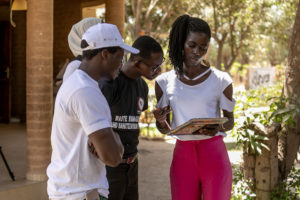
The second networking meeting will take place in June 2022, with members addressing key areas of interest such as waste generated by chemical fertiliser and the production of organic fertiliser, alternative packaging solutions, and local regulations on waste management in line with the circular economy model.
WasteAid along with the project funder and technical supporter, the Chartered Institution of Wastes Management (CIWM) will soon be launching the Waste to Use Challenge. This challenge is an opportunity for businesses already pioneering ways to recover, reuse and ultimately divert as much waste from landfill in the Greater Banjul Area as well as creating much needed livelihoods for people in poverty, to receive seed funding to develop their successful business model. The top three applicants will be given business mentoring and support, and the best solution will receive an investment of D350,000. Any businesses looking to apply will first need to become a member of the Circular Economy Network in The Gambia.
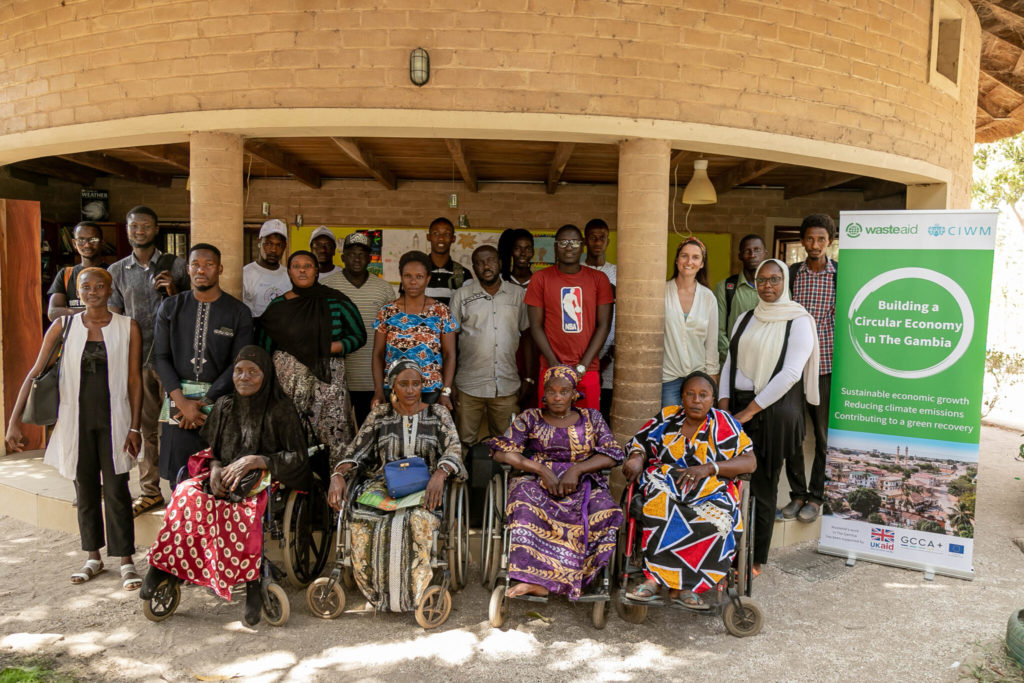
WasteAid welcomes all interested parties to join the Circular Economy Network and to register their interest in the Waste to Use Challenge by contacting WasteAid’s Project Coordinator in The Gambia, via gambiaCEN@wasteaid.org.
News
How one community in The Gambia is changing its relationship with plastic
In Bakoteh, a community in the Greater Banjul Area of The Gambia, plastic waste has long been a serious problem. Home to the largest dumpsite in...
News
Women farmers in Kalaji turn organic waste into opportunity through the S-ORGANIC project
In Kalaji, a group of women farmers is demonstrating how organic waste can become a productive resource — supporting sustainable agriculture, strengthening livelihoods, and...
News
WasteAid and the Turkish Embassy: A New Partnership for Sustainable Change in The Gambia
On 12 May 2026, WasteAid’s Director of Programmes and Project Officer met with Turkish Ambassador F. Turker Oba at the Turkish Embassy in The...
News
WasteAid and Kanifing Municipal Council sign MoU to strengthen long-standing partnership on sustainable waste management
WasteAid and Kanifing Municipal Council have signed a new Memorandum of Understanding (MoU), marking an important milestone in a partnership that has developed over more than a decade. ...
News
Responding to Community Needs: The Commencement of HUBLINK with Halal Waste Group in Uganda
We have a wealth of evidence demonstrating the positive impact of our Wastepreneur programme. A key driver of this success is our proactive approach—identifying and resolving challenges as soon...
News
Strengthening The Gambia’s Circular Economy: Insights from WasteAid’s Stakeholder Engagement
We have huge plans to further strengthen and scale our programmes in the countries we work in, evidenced by our recent expansion of our...
More than £100,000 was raised for WasteAid at a spectacular gala event attended by some of Biffa’s largest customers, suppliers, advisors and key business partners.

Celebrating the fourth year of their proud partnership, Biffa and WasteAid hosted the fundraising event at Oxford Natural History Museum on May 11. The total amount raised on the night was an incredible £104,000.
The money raised from table sponsorships, along with individual donations and a raffle, will help WasteAid expand its work fighting plastic pollution in Cameroon, building a circular economy network in The Gambia, and supporting waste picker groups in South Africa.
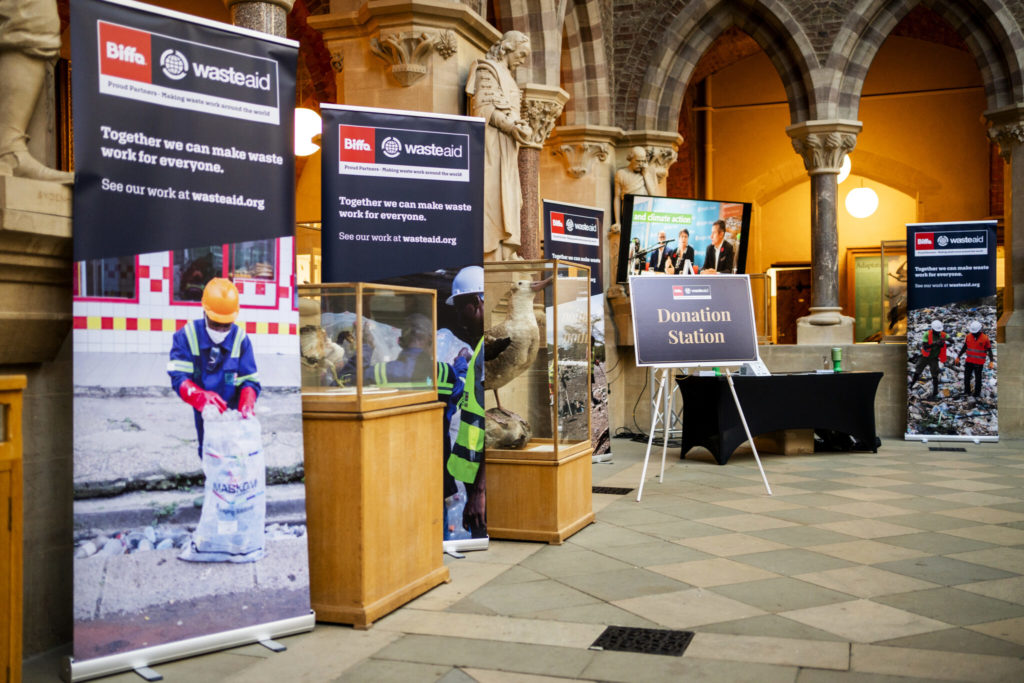
Ceris Turner-Bailes, WasteAid Chief Executive Officer, said: “It is hard to put into words how critical Biffa’s proud partnership has been to WasteAid but, more importantly, to advancing WasteAid’s mission of a world in which waste causes no harm, and where people in poverty are empowered to recover its value.
“Biffa have been a critical supporter since the earliest years of the organisation and their support has been central to our ability to expand our programme portfolio across Africa and into Asia.
“We are delighted and very grateful to Biffa for hosting this fundraising event and would like to express our thanks to everyone who attended and made it such an unforgettable night.”
With Biffa’s support, WasteAid has quadrupled in size over the last two years. Alongside fundraising and financial support, Biffa employees contribute their passion, time and technical expertise to help WasteAid deliver waste management and recycling programmes where they are most needed.
Michael Topham, Biffa Chief Executive, said: “It was fantastic to see so many of Biffa’s key partners come together in Oxford to raise such an incredible amount of money for such a worthwhile cause.
“Our on-going partnership with WasteAid in parts of the world that urgently need to tackle the complex issue of how to manage waste in a sustainable manner is one of Biffa’s proudest achievements.
“Our financial and technical support provides more communities with much needed help so even more people can benefit from being part of a circular economy, with all the long-term benefits that brings.”
Written by Zoë Lenkiewicz
News
How one community in The Gambia is changing its relationship with plastic
In Bakoteh, a community in the Greater Banjul Area of The Gambia, plastic waste has long been a serious problem. Home to the largest dumpsite in...
News
Women farmers in Kalaji turn organic waste into opportunity through the S-ORGANIC project
In Kalaji, a group of women farmers is demonstrating how organic waste can become a productive resource — supporting sustainable agriculture, strengthening livelihoods, and...
News
WasteAid and the Turkish Embassy: A New Partnership for Sustainable Change in The Gambia
On 12 May 2026, WasteAid’s Director of Programmes and Project Officer met with Turkish Ambassador F. Turker Oba at the Turkish Embassy in The...
News
WasteAid and Kanifing Municipal Council sign MoU to strengthen long-standing partnership on sustainable waste management
WasteAid and Kanifing Municipal Council have signed a new Memorandum of Understanding (MoU), marking an important milestone in a partnership that has developed over more than a decade. ...
News
Responding to Community Needs: The Commencement of HUBLINK with Halal Waste Group in Uganda
We have a wealth of evidence demonstrating the positive impact of our Wastepreneur programme. A key driver of this success is our proactive approach—identifying and resolving challenges as soon...
News
Strengthening The Gambia’s Circular Economy: Insights from WasteAid’s Stakeholder Engagement
We have huge plans to further strengthen and scale our programmes in the countries we work in, evidenced by our recent expansion of our...
On 26 April 2022, international NGO WasteAid hosted a celebratory event at the HTA School of Culinary Art in Randburg, bringing together entrepreneurs and industry leaders from the across the city at an event branded “Making the Circular Economy a Reality in Johannesburg”.
The event was the culmination of a two-year programme to support innovators and business start-ups that help keep “wasted” resources in the loop, creating a cleaner city and sustainable livelihood opportunities. The Circular Economy Network programme, run by WasteAid, aimed to fast-track local solutions to a circular economy in Johannesburg.
A wide variety of stakeholders attended the event including representatives from the Foreign and Commonwealth Development Office, Business Finland, Tourvest, packaging recovery organisation Plastics SA and programme sponsor Huhtamaki, a global supplier of packaging solutions. Juan Mulder, OpEx Manager at Huhtamaki, was full of praise for the entrepreneurs, saying, “This was a fantastic event, and we need more like them!”
 Launching the proceedings, Mr Mulder thanks WasteAid for bringing local innovators, entrepreneurs and circular economy business leaders together, and shared insights into Huhtamaki’s commitments to sustainability across the supply chain.
Michelle Wilson, Circular Economy Network Director at WasteAid then shared the achievements of the initiative, with 36 companies given business incubator support and 60,000 Euros of seed funding to expand their businesses. Ms Wilson comments, ““It was great to see so many entrepreneurs and innovators making connection here today! It was truly the Circular Economy Network in action”.
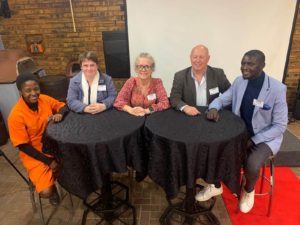
Panel discussion: L-R Nondumiso Sibiya (Boombadotmobi), Ceris Turner-Bailes (CEO WasteAid), Michelle Wilson (Circular Economy Network Director, WasteAid), Douw Steyn (Plastics SA), Sbusiso Shongwe (Boombadotmobi)
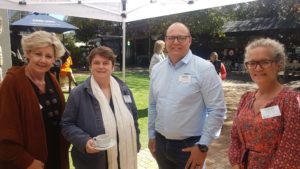
Left: Claudio BuffaPace – Community Bin Project & Advocate Zweli Sono of WCCA (Windsor Community Cleaning Association) Right: Gail Styger (The Wot-If Trust), Ceris Turner-Bailes (WasteAid), Juan Mulder (Huhtamaki), Michelle Wilson (WasteAid)
Angela Ludek, Project Officer for Informal Sector Engagement at WasteAid, led a spotlight session on seven of the semi-finalists of WasteAid’s Zero Waste Cities challenge.
Boombadotmobi, who work in Diepsloot one of Johannesburg’s biggest townships to eradicate illegal dumping, were one of 2 winners of the competition. They described the impact of winning the competition on their business; “Before we relied on a business model where 75% of the income went to the transporter but now we have swapped it around through the purchase of a truck”. Thanks to the Zero Waste Cities Challenge prize money, Boombadotmobi are now able to save and invest more of their earnings into developing their business.
Makhabisi Recycling and Trade, an all-female recycling outfit described the challenges they still face. Their buy-back centre, housed in a disused steel factory is without direct power which makes it difficult to operate their bailers/compactors to capacity. Life in the waste value chain is still very much hand to mouth with very little regulation of pricing of plastics which leaves waste collectors and aggregators very exposed to income fluctuations.
With many parts of Johannesburg still underserved with waste collections and recycling, these grassroots entrepreneurs are providing a much-needed value to society.
Following the spotlight session, a panel event was held with Douw Steyn from Plastics SA, Ceris Turner Bailes CEO of WasteAid and Sbusiso Shongwe and Nondumiso Sibiya from Boombadotmobi to explore the question “What is needed to support waste entrepreneurs?” Some of the key points raised included:
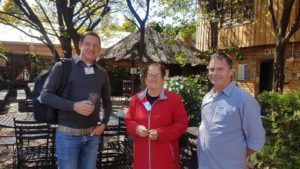
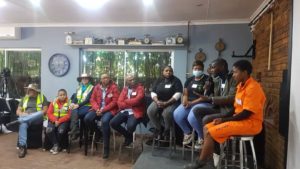
Left: Marc Myers (Tourvest), Winnie McHenry and Mark Fruhauf (Upcycle) Right: Circular Economy Network members in Johannesburg on stage – Claudio BuffaPace, Thapelo Thabokgane, Antoinette Botha (Community Bin); Nokuthula Nkosi and Mandkenkosi Nkosi (Man Recycling); Harriet Matjila and Jaqueline Hartebeest (Makhabisi Recycling); Sbusiso Shongwe and Nondumiso Sibiya (Boombadotmobi)
Following the panel discussion, four innovators presented their businesses including Winnie McHenry from Upcycle, who challenged the view that upcycling had to be a small cottage industry. She described how she was able to fulfil an order from a corporate client for 3,000 glasses made of disused bottles through a dedicated network of producers. Ms McHenry’s aim is to build on existing skills in the community (such as crocheting and knitting) and to swap traditional materials for plastics that would otherwise become a waste.
The whole event was designed with circularity in mind. Branded gift bags were made by Upcycle, a local Circular Economy Network member that works across South Africa to build the skills of unemployed youth with products made from unwanted waste material. They also provided pens and notepads that were rejects from corporate branding exercises, that would have ended up in a landfill.
An exhibition gave the local innovators chance to promote their solutions, including Community Bin, Upcycle, Makhabisi and Bokashi Bran. The zero waste lunch was provided by Nosh Food Rescue and prepared by Celebrity Chef Citrum Thembinkosi Khumalo. Nosh Food Rescue regularly feeds hundreds of meals to the local community with delicious and nutritious food that otherwise would have ended up at landfill.
Written by Zoë Lenkiewicz
NOTES TO EDITORS
About WasteAid
Contact:
Rose Bradbury
Senior Fundraising & Communications Officer, WasteAid
News
How one community in The Gambia is changing its relationship with plastic
In Bakoteh, a community in the Greater Banjul Area of The Gambia, plastic waste has long been a serious problem. Home to the largest dumpsite in...
News
Women farmers in Kalaji turn organic waste into opportunity through the S-ORGANIC project
In Kalaji, a group of women farmers is demonstrating how organic waste can become a productive resource — supporting sustainable agriculture, strengthening livelihoods, and...
News
WasteAid and the Turkish Embassy: A New Partnership for Sustainable Change in The Gambia
On 12 May 2026, WasteAid’s Director of Programmes and Project Officer met with Turkish Ambassador F. Turker Oba at the Turkish Embassy in The...
News
WasteAid and Kanifing Municipal Council sign MoU to strengthen long-standing partnership on sustainable waste management
WasteAid and Kanifing Municipal Council have signed a new Memorandum of Understanding (MoU), marking an important milestone in a partnership that has developed over more than a decade. ...
News
Responding to Community Needs: The Commencement of HUBLINK with Halal Waste Group in Uganda
We have a wealth of evidence demonstrating the positive impact of our Wastepreneur programme. A key driver of this success is our proactive approach—identifying and resolving challenges as soon...
News
Strengthening The Gambia’s Circular Economy: Insights from WasteAid’s Stakeholder Engagement
We have huge plans to further strengthen and scale our programmes in the countries we work in, evidenced by our recent expansion of our...
 I think it is a great indicator of WasteAid’s current workload that January has already passed in a blur of project launch ceremonies, project planning, impact reports and monitoring visits to our current programmes. The start of 2022 has been so busy for WasteAid that it is only now half way through February that I am sitting down to write my first CEO’s Update of 2022.
WasteAid starts 2022 as a much-changed organisation. In terms of size and scale, we have never been larger and our impact has never been greater. In the first quarter of 2022, we are launching three new programmes: our CIWM-funded Circular Economy Network in The Gambia; our intervention to tackle plastic waste in Aswan, Egypt, generously supported by Dow Packaging; and a programme to reduce waste and offer increased livelihood opportunities to the most vulnerable in both Cameroon and in South Africa funded by Bunzl Plc.
In addition to these projects, the staff of our Proud Partner, Biffa Plc, have pledged to raise funds to construct a Materials Recovery Facility in Douala to allow WasteAid to support even more waste collectors and collections.
We are faced with a global waste crisis which shows no sign of relenting and therefore neither will our response – despite many of our growing team being engaged on current projects, we still found time to explore new partnerships and continue to develop new projects that we believe will tackle some of the worst effects of the waste crisis and showcase the opportunities that can arise from waste.
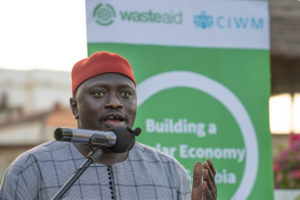
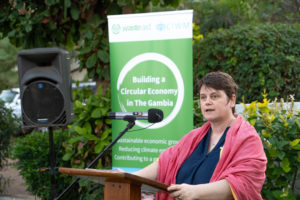
For myself, the biggest highlight of 2022 so far has to be my visit to The Gambia to launch our Circular Economy Network, funded by the Chartered Institution of Wastes Management, and also to follow up on the progress of our EU-funded climate change initiative in partnership with Kanifing Municipal Council. It was fantastic to finally pay a visit to The Gambia, which has been at the heart of WasteAid’s programmes since the beginning. The scale of the waste crisis is sobering and there are very real issues that urgently need tackling, starting with some of the most basic elements of a waste management system.
However, it was inspiring to meet key individuals and organisations that are really committed to solving the waste crisis in The Gambia. I was delighted to meet with the Minister of Environment once again, His Excellency Mr Lamin Dibba, and to hear his thoughts on how WasteAid’s work could support The Gambia. I was also honoured to meet with the members of the National Environment Agency, Kanifing Municipal Council, and Banjul City Council who are very much aligned on the need for WasteAid’s work and who are key collaborators in our latest project. Finally, I was hugely grateful for the support of the British High Commission. High Commissioner David Belgrove and his team could not have been more supportive of our work and we are so grateful to him for lending us his beautiful residence garden to launch the Gambian Circular Economy Network.
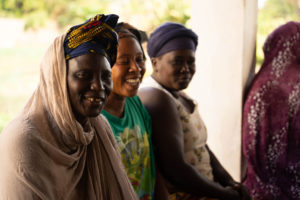
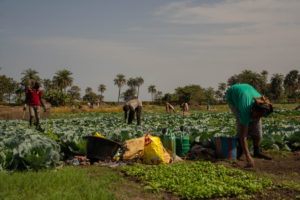
It was equally encouraging to meet those who will directly benefit from WasteAid’s programmes. I had the pleasure of spending a morning with women gardeners from Bakau Women’s Garden who will be benefitting from WasteAid’s composting project, sponsored by the EU’s Global Climate Change Alliance+ initiative. The project is truly circular in that WasteAid (in partnership with Kanifing Municipal Council) will be taking organic waste from markets and training women to turn this into compost, which will in turn be used to increase crop yield. It was important for me to hear first hand the benefits that this project could bring them – allowing small scale farmers greater financial security and income generation, as well as reducing waste and reducing reliance on potentially damaging and expensive chemical fertilisers. The gardens were absolutely beautiful and painstakingly tended to by the women. The WasteAid team in The Gambia is doing a fabulous job and we have such an opportunity to deliver real impact.
Finally, I would like to welcome Jessica Stickland, who has joined WasteAid in the new role of Head of Development. Jessica is focusing on helping the team grow our impact in partnership with other organisations and businesses.
The next few months will see exciting developments taking place in Cameroon and The Gambia, and our plastic recycling initiative start to take shape in Egypt. WasteAid has a lot of potential and we’re excited about what the future holds.
News
How one community in The Gambia is changing its relationship with plastic
In Bakoteh, a community in the Greater Banjul Area of The Gambia, plastic waste has long been a serious problem. Home to the largest dumpsite in...
News
Women farmers in Kalaji turn organic waste into opportunity through the S-ORGANIC project
In Kalaji, a group of women farmers is demonstrating how organic waste can become a productive resource — supporting sustainable agriculture, strengthening livelihoods, and...
News
WasteAid and the Turkish Embassy: A New Partnership for Sustainable Change in The Gambia
On 12 May 2026, WasteAid’s Director of Programmes and Project Officer met with Turkish Ambassador F. Turker Oba at the Turkish Embassy in The...
News
WasteAid and Kanifing Municipal Council sign MoU to strengthen long-standing partnership on sustainable waste management
WasteAid and Kanifing Municipal Council have signed a new Memorandum of Understanding (MoU), marking an important milestone in a partnership that has developed over more than a decade. ...
News
Responding to Community Needs: The Commencement of HUBLINK with Halal Waste Group in Uganda
We have a wealth of evidence demonstrating the positive impact of our Wastepreneur programme. A key driver of this success is our proactive approach—identifying and resolving challenges as soon...
News
Strengthening The Gambia’s Circular Economy: Insights from WasteAid’s Stakeholder Engagement
We have huge plans to further strengthen and scale our programmes in the countries we work in, evidenced by our recent expansion of our...