News
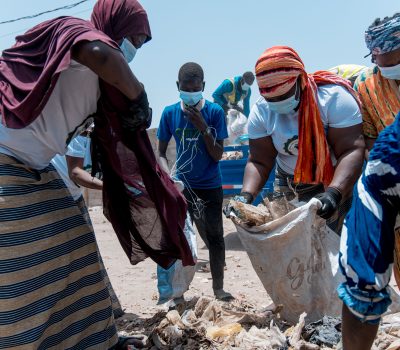
How one community in The Gambia is changing its relationship with plastic
In Bakoteh, a community in the Greater Banjul Area of The Gambia, plastic waste has long been a serious problem. Home to the largest dumpsite in...

WasteAid, the UK-based environmental and development charity, has announced an innovative collaboration with Lufthansa Group to identify ways to reduce the amount of waste from its flights that end up in landfill.
The initiative will focus on flights arriving at Mumbai airport in India and aims to find ways to increase circularity as well as recycling rates of onboard materials coming into Mumbai Airport. The project’s initial stage includes a scoping study to map and showcase the current waste management practices at the Lufthansa’s outstation in Mumbai airport and learn what Lufthansa can do to improve circularity of the materials on their flights. The project also aims to pilot approaches to return in-flight items to the circular economy and keep finite resources within a closed loop for as long as possible in order to reduce their consumption.
WasteAid will work closely with Lufthansa Group and it’s airlines (Lufthansa and SWISS), Mumbai airport, and suppliers such as catering companies and local recycling businesses.
Manuel Henle, Sustainability Onboard and Lounges at Lufthansa Group, said: “Our ambition is to only have items onboard that can be reused, recycled, or composted after flights. We have already implemented several initiatives to replace single-use plastics and aluminium on our flights, but recognise that there is more to do. Recycling is a major step towards not wasting finite resources.”
According to Manuel, “Projects such as our partnership with WasteAid in Mumbai are a crucial step on our flight path to making our ambition a reality. We’re looking forward to working with the WasteAid team and our stakeholders to identify steps that we can take to increase waste recycling while also creating opportunities to support the local green economy.”
More than 80 Lufthansa Group flights arrive at Mumbai airport every month carrying more than 20 000 passengers. This equates to approximately 15,000 kilograms of potential recyclables every year. While the company has made strides in reducing the waste generated in Europe, they are keen to identify further steps they can take at their multiple outstations.
Ceris Turner-Bailes, Chief Executive Officer at WasteAid, said: “The global airline industry is one of the largest emitters of greenhouse gas emissions on the planet, so we’re really pleased to see Lufthansa Group taking these positive steps to reduce its environmental impact while also creating economic opportunities for local communities.
“By adopting Circular Economy practices, airlines can enhance sustainability, reduce costs, improve efficiency, and authentically improve their green credentials while positively contributing to the environment and local communities.”.
More than two-thirds of the world’s population has no access to formal waste management infrastructure leaving them with little alternative but to dump or burn their waste. This releases more CO2 and other harmful toxins into the atmosphere than the global aviation industry and increases the risk of health issues, particularly among children.
WasteAid works with communities around the world who are facing some of the greatest challenges caused by the global waste crisis. Our flagship programmes provide training, mentoring, investment, and collaboration opportunities to deliver sustainable waste management solutions that improve the environment while empowering local communities to leverage the value of waste to their benefit.

News
How one community in The Gambia is changing its relationship with plastic
In Bakoteh, a community in the Greater Banjul Area of The Gambia, plastic waste has long been a serious problem. Home to the largest dumpsite in...
News
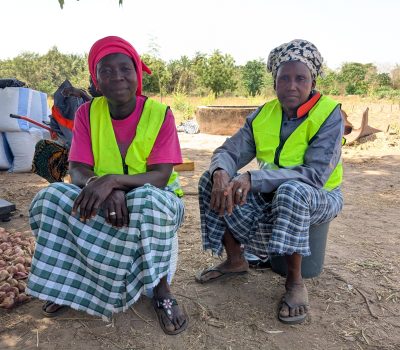
Women farmers in Kalaji turn organic waste into opportunity through the S-ORGANIC project
In Kalaji, a group of women farmers is demonstrating how organic waste can become a productive resource — supporting sustainable agriculture, strengthening livelihoods, and...
News
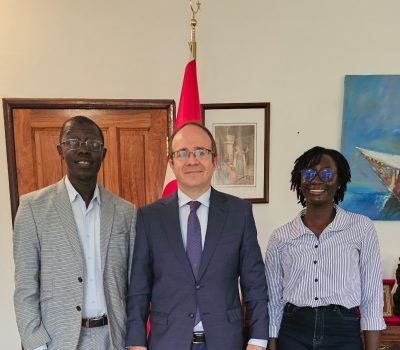
WasteAid and the Turkish Embassy: A New Partnership for Sustainable Change in The Gambia
On 12 May 2026, WasteAid’s Director of Programmes and Project Officer met with Turkish Ambassador F. Turker Oba at the Turkish Embassy in The...
News
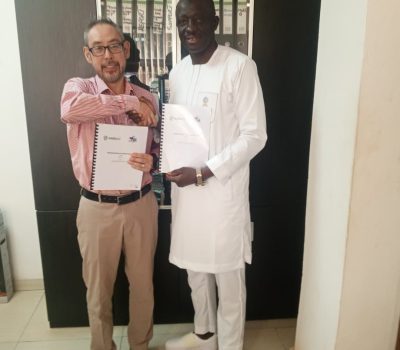
WasteAid and Kanifing Municipal Council sign MoU to strengthen long-standing partnership on sustainable waste management
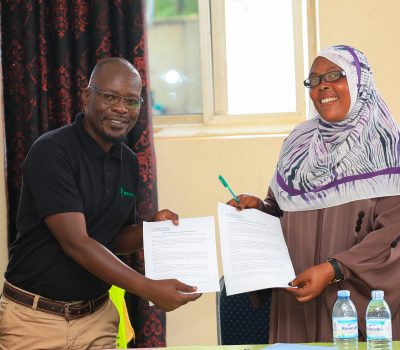
WasteAid and Kanifing Municipal Council have signed a new Memorandum of Understanding (MoU), marking an important milestone in a partnership that has developed over more than a decade. ...
News
Responding to Community Needs: The Commencement of HUBLINK with Halal Waste Group in Uganda
We have a wealth of evidence demonstrating the positive impact of our Wastepreneur programme. A key driver of this success is our proactive approach—identifying and resolving challenges as soon...
News
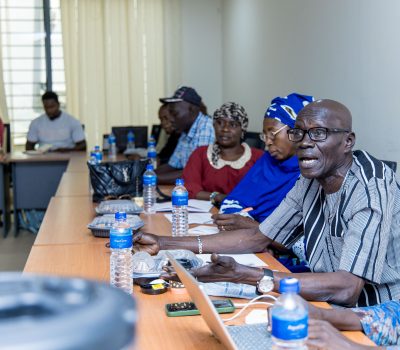
Strengthening The Gambia’s Circular Economy: Insights from WasteAid’s Stakeholder Engagement
We have huge plans to further strengthen and scale our programmes in the countries we work in, evidenced by our recent expansion of our...
Imagine what can be achieved when you bring together over 200 people who share a common purpose of wanting to solve their country’s growing waste crisis.

Earlier this month, members of our Circular Economy Network in The Gambia were joined by local dignitaries, and health specialists to launch our second Waste-To-Use Challenge. The event was generously hosted by the British High Commission in Banjul and The High Commissioner, Harriet King, officially launched the challenge.
The Network, funded by the UK’s Chartered Institution of Wastes Management (CIWM) aims to fast-track circular economy initiatives by supporting innovative green businesses with training and investment. Helping sustainable businesses to scale will tackle the environmental impact of waste and create economic opportunities that can support The Gambia’s green recovery. This innovation challenge showcases how much of a resource waste can be by offering grassroots entrepreneurs and innovators the opportunity to access business training and mentoring that would otherwise be impossible.
The competition will conclude in December with a pitch day where finalists will pitch their newly developed business plans to an expert panel. The panel will select the best enterprises who will then receive an investment to help take them to the next level.

Last year’s finalists included a plastics recycling business, an organic biofuel enterprise, and a recycled textiles clothing company. We are excited to see just what kind of businesses we will be supporting this year. Open to all members of WasteAid’s Gambia Circular Economy Network, the challenge offers a unique opportunity for entrepreneurs to secure up to £12,000 of funding as well as training.
This type of challenge is relatively unique, conceived by WasteAid on the back of 2020’s Zero Waste Cities Challenge. Although there are innovation challenges around the world, none intervene at this level and in the countries where WasteAid is present. WasteAid’s experience of delivering 2020’s challenge, which targeted enterprises that were already on the way to becoming successful green businesses, made the charity evaluate further its approach.
The critical question was how can local solutions and businesses be supported to scale in the countries where we work earlier in their journey to give them a greater chance of success. Also, how can WasteAid support in contexts where entrepreneurship is particularly challenging in areas where access to finance and business support is difficult? It was in response to these questions that the grassroots competitions in The Gambia were born.
Our Waste-to-Use launch event was attended by 70 key individuals spanning the waste value chain. Guests included members of our Circular Economy Network, local mayors, government officials, members of the Medical Research Council, local business people, and representatives from WasteAid. This launch marked the opening of the challenge to applications.
This year’s challenge specifically addresses textile, plastic, and organic waste – waste streams that have been identified by the network members as particularly challenging. These businesses will preferably be pioneering ways to recover, reuse and ultimately divert waste from landfill, while also creating livelihood opportunities for communities in the Greater Banjul Area.
Vicky Rollinson, Country Manager (The Gambia), said: “Thank you to everyone who came along to the launch of our Waste-to-Use Challenge. We look forward to engaging with
 the circular businesses involved in this initiative and continuing our efforts to develop a thriving circular economy in The Gambia.”
Harriet King, British High Commissioner to the Gambia said: “The Gambia has made excellent progress in recent years towards resolving its waste management challenges. This is no small feat, and it is heartening to see WasteAid, with the support of the UK’s Chartered Institution of Wastes Management, take this important step to support the professionalisation of the sector. It is an honour to be hosting an event celebrating an initiative that is doing so much to drive positive change here in The Gambia”.
Six businesses will be selected to receive tailored business training and mentoring. The challenge will culminate with the participants pitching their business idea to a panel of judges for a chance to secure a share of the £12,000 investment.
News
How one community in The Gambia is changing its relationship with plastic
In Bakoteh, a community in the Greater Banjul Area of The Gambia, plastic waste has long been a serious problem. Home to the largest dumpsite in...
News
Women farmers in Kalaji turn organic waste into opportunity through the S-ORGANIC project
In Kalaji, a group of women farmers is demonstrating how organic waste can become a productive resource — supporting sustainable agriculture, strengthening livelihoods, and...
News
WasteAid and the Turkish Embassy: A New Partnership for Sustainable Change in The Gambia
On 12 May 2026, WasteAid’s Director of Programmes and Project Officer met with Turkish Ambassador F. Turker Oba at the Turkish Embassy in The...
News
WasteAid and Kanifing Municipal Council sign MoU to strengthen long-standing partnership on sustainable waste management
WasteAid and Kanifing Municipal Council have signed a new Memorandum of Understanding (MoU), marking an important milestone in a partnership that has developed over more than a decade. ...
News
Responding to Community Needs: The Commencement of HUBLINK with Halal Waste Group in Uganda
We have a wealth of evidence demonstrating the positive impact of our Wastepreneur programme. A key driver of this success is our proactive approach—identifying and resolving challenges as soon...
News
Strengthening The Gambia’s Circular Economy: Insights from WasteAid’s Stakeholder Engagement
We have huge plans to further strengthen and scale our programmes in the countries we work in, evidenced by our recent expansion of our...
One of the most extensive studies ever undertaken into waste management in Uganda has been launched by WasteAid. We are leading two initiatives involving more than 1,000 people to explore whether textile waste can be saved from landfill and reused to support the local economy in the country’s capital Kampala.
The move comes as the Ugandan Government considers banning second-hand textile imports in a bid to stimulate domestic manufacturing and tackle its growing waste issues. Estimates suggest that Uganda imports more than 90,000 tones of second-hand clothing and other textiles each year – the equivalent of around 40,000 cars.
In one of the largest studies undertaken in Uganda, we are surveying more than 1,000 traders at Kampala’s largest second-hand textile market, Owino,. The research will provide us with a detailed understanding of the textile value chain and identify the textiles that can best be reused and recycled. As part of the assessment, the survey team is also meeting with policymakers, and business leaders to provide comprehensive insights into the challenges of tackling this complex issue.
Our Uganda Circular Textile Project aims to support a transition to a local Ugandan textile manufacturing base by identifying how unwanted clothing and other textiles can be redirected away from landfill to local businesses that will turn them into new products and items for resale. It’s one of 28 projects globally funded by the Foreign Commonwealth and Development Office under the Sustainable Manufacturing and Environmental Programme (SMEP).
This is the first time that WasteAid has been active in Uganda. It allows us to bring proven approaches and experience developed in countries including South Africa and The Gambia and adapt them to address Uganda’s textile challenges.
It’s hoped this initiative project could provide useful data to the Ugandan government to inform a textile policy that works for the 5,000 women and men who currently rely on second-hand clothes for their livelihood as well as one that helps to inform how to stimulate the local textile economy.
WasteAid’s Director of Programmes, Michelle Wilson said: “The second-hand textiles market is integral to Uganda’s economy, providing vital income, particularly for women who rely on the sale of second-hand clothes to feed their families and send their children to school.
“Ultimately, we would like this initiative to contribute to the second-hand textile policy development in Uganda – to support the development of a policy that supports the livelihoods of the informal sector, enables home-grown Ugandan textile trade to expand and but also reduces the amount of textile waste polluting the environment.”
In a second, connected initiative, WasteAid has begun working with the Ugandan Tailors Association, which represents 3,000 Ugandan tailors and a government-run college that provides students – particularly women – with practical training, to help locals develop skills and access equipment to repurpose discarded textiles.
We are working with these partners to explore reuse options such as creating household cleaning items such as mops, upholstery stuffing, and other clothing items from discarded textiles and other scraps that would otherwise be dumped or burned as a cheap alternative to fuel.
The study and textile waste repurposing programme marks an important step towards addressing the textile waste crisis in Uganda. The study is expected to be completed later in the summer and will offer valuable insights to guide future efforts in reducing textile waste. A final report will be published in the Autumn.
To find out how you can support WasteAid in tackling the global waste crisis click here.
News
How one community in The Gambia is changing its relationship with plastic
In Bakoteh, a community in the Greater Banjul Area of The Gambia, plastic waste has long been a serious problem. Home to the largest dumpsite in...
News
Women farmers in Kalaji turn organic waste into opportunity through the S-ORGANIC project
In Kalaji, a group of women farmers is demonstrating how organic waste can become a productive resource — supporting sustainable agriculture, strengthening livelihoods, and...
News
WasteAid and the Turkish Embassy: A New Partnership for Sustainable Change in The Gambia
On 12 May 2026, WasteAid’s Director of Programmes and Project Officer met with Turkish Ambassador F. Turker Oba at the Turkish Embassy in The...
News
WasteAid and Kanifing Municipal Council sign MoU to strengthen long-standing partnership on sustainable waste management
WasteAid and Kanifing Municipal Council have signed a new Memorandum of Understanding (MoU), marking an important milestone in a partnership that has developed over more than a decade. ...
News
Responding to Community Needs: The Commencement of HUBLINK with Halal Waste Group in Uganda
We have a wealth of evidence demonstrating the positive impact of our Wastepreneur programme. A key driver of this success is our proactive approach—identifying and resolving challenges as soon...
News
Strengthening The Gambia’s Circular Economy: Insights from WasteAid’s Stakeholder Engagement
We have huge plans to further strengthen and scale our programmes in the countries we work in, evidenced by our recent expansion of our...
At WasteAid, we work with communities and policymakers in countries impacted by the global waste crisis to help them implement waste management and recycling programmes through education, networking, and training.
Our approach is anchored on inclusive circular economy principles to ensure that people and the planet thrive.
But we often get asked, “What is the circular economy?”. Here we explore things in a bit more detail.
In a circular economy, goods are kept in circulation and are either reused for their initial purpose or repurposed and given a new lease of life. By reusing and recycling products, businesses reduce waste and harmful emissions. For example, Veja Sneakers which uses recycled plastic bottles and polyester in its shoes; or Nudie Jeans which uses recycled cotton and also sells repurposed and repaired old jeans. The circular economy covers many different product sectors; e.g. food, clothes, plastics and takes as its model, Nature, where the end-products of one life cycle provide the beginning for the next, and so on.
This approach makes absolute sense when you consider the scale of waste we produce. More than two billion tons of waste each year. That’s six times the weight of the total population of the planet. And it’s growing fast – modern society’s disposable lifestyle is impacting every corner of the planet. Despite this, just 9% of the global economy is circular – so there is plenty of opportunity for WasteAid’s project to make a positive difference to people and the environment!
At WasteAid we work in low-income countries and communities to provide practical waste-systems solutions. But – importantly – these solutions are also designed to provide dignified, sustainable and valuable livelihoods (and markets) for people living at the sharp end of the waste crisis. Our projects are based upon a circular economy approach, where waste products and goods are given a second life.

WasteAid’s commitment to developing a Circular Economy.
For WasteAid, a circular economy has the following five features:
Reduce: In South Africa, around 1 in 3 people don’t have access to regular waste collection services. Leaving them with no choice but to dump or burn their waste.
WasteAid, alongside researchers from the University of Portsmouth, ran a pilot study in the Thembisile Hani Local Municipality of the Mpumalanga Province. We worked with community, and educational leaders and artists to educate people on the dangers of dumping and burning waste through art and song. The project also aimed to increase recycling, support informal waste collectors and introduce community drop-off points for recyclables.
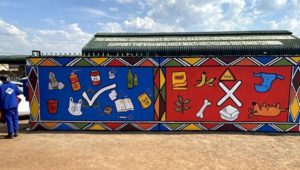
Our aim was to increase recycling, support informal waste collectors and introduce community drop-off points for recyclables. This was a success. By the end of the pilot, the amount of dumped and burned waste in the region, had fallen by 27.7%.
Reuse: Embracing a circular economy by diverting electronic, textiles, and organic waste from landfills for upcycling. not only reduces the demand for new resources, but also minimises environmental pollution. Take Mpho Motatinyane in South Africa, who took part in our Wastepreneur programme. Here she tells us how she is able to make an income by reusing cardboard to make educational resources.

Mpho Motatinyane entered our Waste Entrepreneurial Fund Challenge to help get her recycling business off the ground. She noticed the high amount of cardboard boxes and paper discarded by her son’s school and spotted an opportunity to reuse the materials, turning them into spelling and educational cards for students. Mpho enrolled in our 12-week course where she learned about the circular economy and business basics such as budgeting and forecasting. With WasteAid’s support, Mpho’s business secured 80 orders in the first month alone and she hired two part-time employees.
Recycle: One of the ways we help communities tackle the global waste crisis is by supporting waste collectors. We help waste collectors to better sort and clean their waste. We’ve helped them to foster links with buy-back centres and supported buy-back centres to access onward markets to improve the value waste collectors receive for their waste and help build demand for the waste.
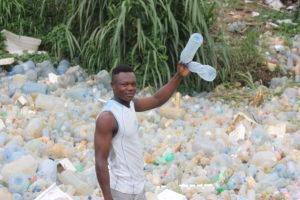
For example, waste collectors often collect flexible plastics which have been dumped. Buy-back centres then sell the plastic to large manufacturers who shred the plastic and then it gets sold again to recyclers. This is when the plastic gets a new lease of life. The benefit of supporting waste collectors is that it not only helps the environment but it also provides job opportunities, changing the lives of the communities where our programmes are implemented.
Repeatable: Our programmes are proven to work and are designed to be implemented in new regions, markets and economies. For example, we recently announced that we’re launching our ‘wastepreneur’ programme in Uganda for the first time – after previously testing it in South Africa.
Relationships: A circular economy approach is not just about individual businesses but will ideally engage the wider social economy in a region. It is a new way of thinking about materials and markets. So, we bring together people at every stage of the waste value chain to provide mentoring, technical training, and facilitate innovative solutions to community waste challenges.
We run a Circular Economy Network in countries including Gambia and South Africa. The purpose of the network is to raise awareness of a circular economy and its benefits and connect stakeholders with individuals who are working to find solutions to the waste crisis. Currently, in The Gambia, the Circular Economy Network has around 165 active members.
We are seeing exciting progress with many of our projects. We are ambitious about what we think is possible in the near future. We’re currently aiming to raise £1 million in time for for our 10-year anniversary next year. This fundraising campaign will allow us to support even more people impacted by the daily consequences of the global waste crisis through our programmes, such as those related to the circular economy.
Discover you can support our campaign here.
News
How one community in The Gambia is changing its relationship with plastic
In Bakoteh, a community in the Greater Banjul Area of The Gambia, plastic waste has long been a serious problem. Home to the largest dumpsite in...
News
Women farmers in Kalaji turn organic waste into opportunity through the S-ORGANIC project
In Kalaji, a group of women farmers is demonstrating how organic waste can become a productive resource — supporting sustainable agriculture, strengthening livelihoods, and...
News
WasteAid and the Turkish Embassy: A New Partnership for Sustainable Change in The Gambia
On 12 May 2026, WasteAid’s Director of Programmes and Project Officer met with Turkish Ambassador F. Turker Oba at the Turkish Embassy in The...
News
WasteAid and Kanifing Municipal Council sign MoU to strengthen long-standing partnership on sustainable waste management
WasteAid and Kanifing Municipal Council have signed a new Memorandum of Understanding (MoU), marking an important milestone in a partnership that has developed over more than a decade. ...
News
Responding to Community Needs: The Commencement of HUBLINK with Halal Waste Group in Uganda
We have a wealth of evidence demonstrating the positive impact of our Wastepreneur programme. A key driver of this success is our proactive approach—identifying and resolving challenges as soon...
News
Strengthening The Gambia’s Circular Economy: Insights from WasteAid’s Stakeholder Engagement
We have huge plans to further strengthen and scale our programmes in the countries we work in, evidenced by our recent expansion of our...
WasteAid’s Director of Programmes, Michelle Wilson, joined experts from around the globe at a special UN conference in Geneva last month to explore the issue of waste crimes and the environment.
She was invited to participate by UNCTAD (UN Trade & Development), as a key partner on FCDO’s global Sustainable Manufacturing and Environmental Pollution Programme (SMEP). The event aimed to gain a better understanding of the scale, scope, and dynamics of illicit trade flows in solid waste so that policies can be better tailored to address the root problem from a development perspective. It also sought to foster collaboration among stakeholders so that a comprehensive approach to combat the illicit trade in waste could be developed.
According to UNCTAD, illicit waste trade is considered the most profitable environmental crime and encompasses activities across sorting, transporting, and disposing of waste that does not abide by regulations. The profit generated from illicit waste amounts to US$ 10–12 billion annually, which puts it on a par with other major crime areas such as human trafficking.
Michelle was invited to be a panellist where she, and others, were asked to reflect on the topic of waste crimes that affect the environment, particularly concerning imports and exports of textile.
Here, Michelle shares her thoughts on this important event.
This year’s conference theme was The Global Analysis on Crimes that Affect the Environment: Waste Crime and Trafficking. I was there in the capacity of representing WasteAid’s FCDO funded project, Sustainable Manufacturing and Environmental Pollution Programme (SMEP) which focuses on the recovery and repurposing of secondary textiles in Uganda.
There were some excellent issues raised during the panel session. The UNODC (UN Office on Drugs and Crime) discussed the difficulties in tracking waste crimes due to a simple lack of harmonisation of the waste codes that are used in waste imports. There are currently four sets of codes that are; Basel Convention Codes, OECD Codes, EU Waste Codes and HS Codes all used by exporters. There was a general plea for harmonisation and consolidation across the import coding regime.
A hot topic in terms of textiles is the efficacy of bans on second hand textile trade. With potential secondary textile bans from Europe and into countries like Uganda, in the presentation I delved a bit into the evidence on efficacy of blanket bans. From my research evidence suggests that illegal trade occurs mainly where there are blanket bans on secondary clothing imports in place. For example, South Africa and Nigeria used to ranked 11th and 15th out of 50 destinations for used clothing exports from OECD countries, despite markets being officially closed and bans in place. From the evidence, it seems that outright bans are problematic to implement, create illegal trade and result in vital lost tax revenue for the state. A consensus seemed to be that rather than outright textile bans, a better approach would be to design an export/import coding regime that lets in textiles that can be resold and repurposed and to keep out those textiles that cannot.
WasteAid’s project in Uganda will hopefully help to contribute to this body of knowledge. The project also seeks to add to the body of knowledge of how much of the imported clothes become ‘waste’. For example from research carried out in Kenya and Ghana, rejection rates of second hand clothing appears to between 3% and 10%, far lower than the 40% figure read in reports from West Africa (Mountains of clothes washed up on Ghana beach show cost of fast fashion | The Independent. Our project in Uganda seeks to add to this body of knowledge and to support the development of policy which can protect jobs and the environment at the same time.
Global discussions to find local solutions to textile waste.
The UN event was useful and has clear implications for our project in Uganda. There are two key areas where I believe we can contribute to the global discussion on textile crimes.
Read more about our work in Uganda here.
News
How one community in The Gambia is changing its relationship with plastic
In Bakoteh, a community in the Greater Banjul Area of The Gambia, plastic waste has long been a serious problem. Home to the largest dumpsite in...
News
Women farmers in Kalaji turn organic waste into opportunity through the S-ORGANIC project
In Kalaji, a group of women farmers is demonstrating how organic waste can become a productive resource — supporting sustainable agriculture, strengthening livelihoods, and...
News
WasteAid and the Turkish Embassy: A New Partnership for Sustainable Change in The Gambia
On 12 May 2026, WasteAid’s Director of Programmes and Project Officer met with Turkish Ambassador F. Turker Oba at the Turkish Embassy in The...
News
WasteAid and Kanifing Municipal Council sign MoU to strengthen long-standing partnership on sustainable waste management
WasteAid and Kanifing Municipal Council have signed a new Memorandum of Understanding (MoU), marking an important milestone in a partnership that has developed over more than a decade. ...
News
Responding to Community Needs: The Commencement of HUBLINK with Halal Waste Group in Uganda
We have a wealth of evidence demonstrating the positive impact of our Wastepreneur programme. A key driver of this success is our proactive approach—identifying and resolving challenges as soon...
News
Strengthening The Gambia’s Circular Economy: Insights from WasteAid’s Stakeholder Engagement
We have huge plans to further strengthen and scale our programmes in the countries we work in, evidenced by our recent expansion of our...
Our BBC Radio 4 Appeal is now live!
We’re thrilled to feature on BBC Radio 4 this week where our fundraising appeal is being broadcast to the nation!
Renowned chef, vocal environmentalist, and journalist Hugh Fearnley-Whittingstall is championing our appeal and we couldn’t ask for a better advocate. He shared our appeal on Radio 4 on Sunday, and it will be broadcast again this Thursday. You can also listen to it on BBC Sounds.
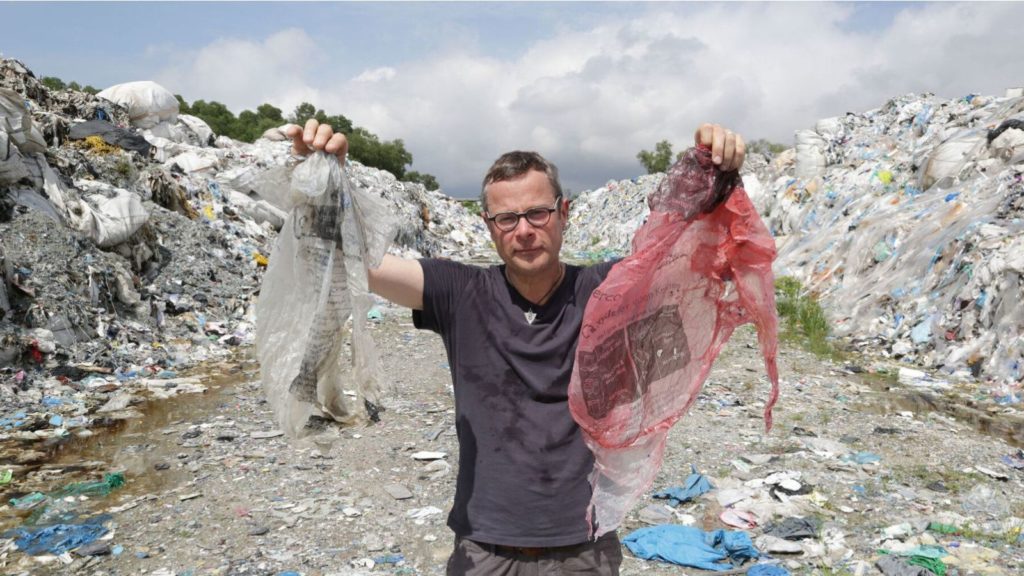
Being part of the BBC Radio 4 appeal is a huge step forward in our campaign to raise £1 million in time for our 10th anniversary next year. Every donation made to the Radio 4 appeal is being matched by a generous donor up to a total of £15k so every pound donated is effectively doubled!
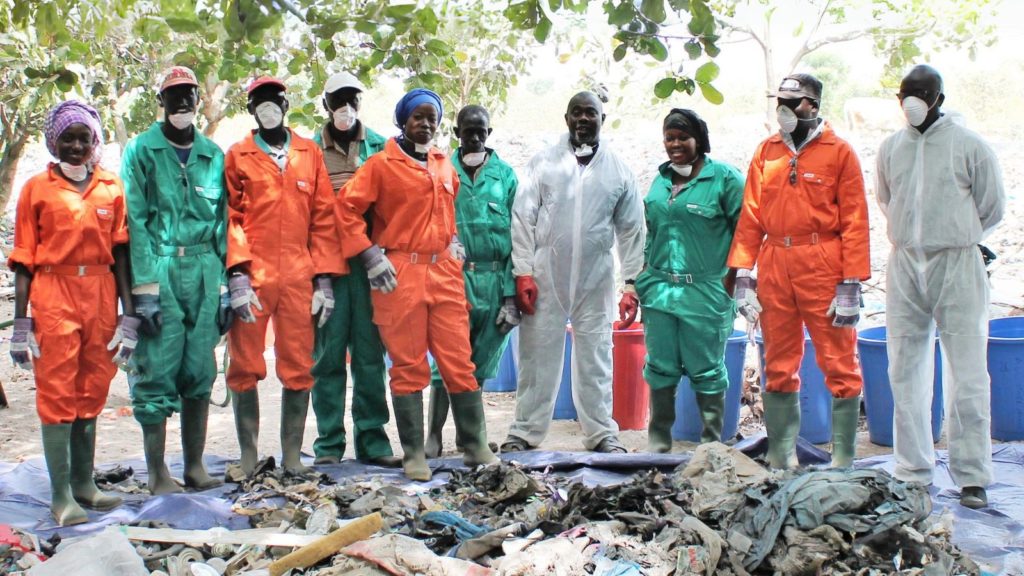
We’re hugely grateful for donations of any size – they all add up to allow us to support even more communities to find value in waste while addressing the health, environmental, and economic consequences of the global waste crisis. £30 provides collectors with protective clothing and safety equipment while £50 allows a waste-picker to attend a training day – improving their knowledge and skills.
To support the appeal, donations can be made via this link from Sunday 28th April: https://www.bbc.co.uk/programmes/m001yqhr
Why Hugh has chosen to support WasteAid
Hugh has been vocal throughout his career about his conservation and environmental passions. He has seen the devastating impact of the waste crisis first-hand while filming his documentary series War on Plastics and Hugh’s War on Waste.
On the global waste crisis, Hugh said: “The true scale of the global waste crisis was brought home to me while filming in Malaysia a few years ago. We came across a mountain of dumped plastic containers, bottles, bags – all sorts and all shipped in from around the world.”
He added: “The thing I really like about WasteAid’s work is it isn’t just about cleaning up the planet, it’s about working with local communities and empowering them too.”
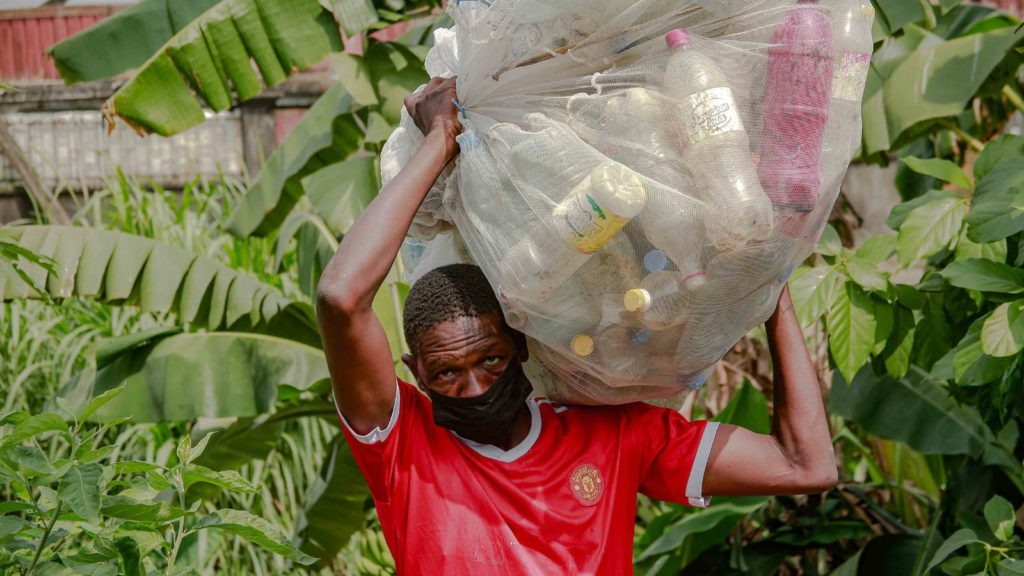
WasteAid works hard to support the people most impacted by the daily consequences of the global waste crisis. The communities we operate in don’t have the infrastructure in place to cope with the amount of waste produced, leading it to be dumped or burned which causes more CO2 to be released into the atmosphere than the global aviation industry. Through mentoring and coaching programmes, access to investments and technical knowledge sharing we work with communities to find lasting solutions to their waste challenges while also helping them to improve their economic outlook.
Our CEO, Ceris Turner-Bailes, said: “We are so grateful to Hugh for shining a light on the work WasteAid is doing to empower communities that are the worst affected by the global waste crisis and helping them to implement lasting and sustainable solutions that both improve their futures and the environment.
“With his support, we’re hopeful our BBC Radio 4 appeal will be a significant step forward in our £1 million fundraising campaign.”
You can listen again to WasteAid’s BBC Radio 4 Appeal on Thursday 2nd May at 3:27 pm.
Donations can be made here https://www.bbc.co.uk/programmes/m001yqhr
Please note that donations can be made to this page until 11.59 pm on Saturday 4 May. Any donations made after this time may go to a different charity.

News
How one community in The Gambia is changing its relationship with plastic
In Bakoteh, a community in the Greater Banjul Area of The Gambia, plastic waste has long been a serious problem. Home to the largest dumpsite in...
News
Women farmers in Kalaji turn organic waste into opportunity through the S-ORGANIC project
In Kalaji, a group of women farmers is demonstrating how organic waste can become a productive resource — supporting sustainable agriculture, strengthening livelihoods, and...
News
WasteAid and the Turkish Embassy: A New Partnership for Sustainable Change in The Gambia
On 12 May 2026, WasteAid’s Director of Programmes and Project Officer met with Turkish Ambassador F. Turker Oba at the Turkish Embassy in The...
News
WasteAid and Kanifing Municipal Council sign MoU to strengthen long-standing partnership on sustainable waste management
WasteAid and Kanifing Municipal Council have signed a new Memorandum of Understanding (MoU), marking an important milestone in a partnership that has developed over more than a decade. ...
News
Responding to Community Needs: The Commencement of HUBLINK with Halal Waste Group in Uganda
We have a wealth of evidence demonstrating the positive impact of our Wastepreneur programme. A key driver of this success is our proactive approach—identifying and resolving challenges as soon...
News
Strengthening The Gambia’s Circular Economy: Insights from WasteAid’s Stakeholder Engagement
We have huge plans to further strengthen and scale our programmes in the countries we work in, evidenced by our recent expansion of our...